'%3E%3Cpath d='M16.3574 35.6519H12.9537L15.0491 18.8873L16.3574 35.6519ZM30.4229 54.0093L22.309 0.994385H7.91795L0 54.0093H10.6634L11.5802 46.3855H17.4014L17.9914 54.0093H30.4229Z' fill='%23971B20'/%3E%3Cpath d='M48.2073 41.8813C48.2073 43.4049 47.4892 44.0011 46.1144 44.0011H43.7595V11.0687H46.1144C47.4892 11.0687 48.2073 11.6636 48.2073 13.1885V41.8813ZM59.5273 43.6695V11.3326C59.5273 3.71323 53.5729 0.994385 47.8157 0.994385H31.7213V54.0093H47.8157C53.5729 54.0093 59.5273 51.29 59.5273 43.6695Z' fill='%23971B20'/%3E%3Cpath d='M90.183 0.994385H78.6039L75.0711 30.6157L71.9955 0.994385H59.4346L69.2474 54.0093H80.373L90.183 0.994385Z' fill='%23971B20'/%3E%3Cpath d='M107.063 42.3448C107.063 43.7359 105.951 44.5974 104.643 44.5974C103.269 44.5974 102.157 43.7359 102.157 42.3448V12.658C102.157 11.2676 103.269 10.4058 104.643 10.4058C105.951 10.4058 107.063 11.2676 107.063 12.658V42.3448ZM119.233 43.2723V11.7312C119.233 6.36384 112.952 -3.8147e-06 104.643 -3.8147e-06C96.2667 -3.8147e-06 89.9867 6.36384 89.9867 11.7312V43.2723C89.9867 48.6393 96.2667 55 104.643 55C112.952 55 119.233 48.6393 119.233 43.2723Z' fill='%23971B20'/%3E%3Cpath d='M150.976 43.9349V33.7309H139.069V42.3448C139.069 43.7359 137.957 44.5974 136.582 44.5974C135.076 44.5974 133.964 43.7359 133.964 42.3448V12.658C133.964 11.2676 135.076 10.4058 136.582 10.4058C137.957 10.4058 139.069 11.2676 139.069 12.658V21.2723H150.976V11.0687C150.976 5.70107 145.283 -3.8147e-06 136.582 -3.8147e-06C127.75 -3.8147e-06 121.796 5.70107 121.796 11.0687V43.9349C121.796 49.3022 127.75 55 136.582 55C145.283 55 150.976 49.3022 150.976 43.9349Z' fill='%23971B20'/%3E%3Cpath d='M167.478 35.6519H164.076L166.17 18.8873L167.478 35.6519ZM181.544 54.0093L173.432 0.994385H159.037L151.123 54.0093H161.785L162.704 46.3855H168.523L169.114 54.0093H181.544Z' fill='%23971B20'/%3E%3Cpath d='M205.412 10.4058V0.994385H177.081V10.4058H185.392V54.0093H197.428V10.4058H205.412Z' fill='%23971B20'/%3E%3Cpath d='M230.002 54.0093V43.9349H218.914V31.8746H226.635V21.8028H218.914V10.4058H230.002V0.994385H206.875V54.0093H230.002Z' fill='%23971B20'/%3E%3C/g%3E%3Cdefs%3E%3CclipPath id='clip0_260_7080'%3E%3Crect width='230' height='55' fill='white'/%3E%3C/clipPath%3E%3C/defs%3E%3C/svg%3E)
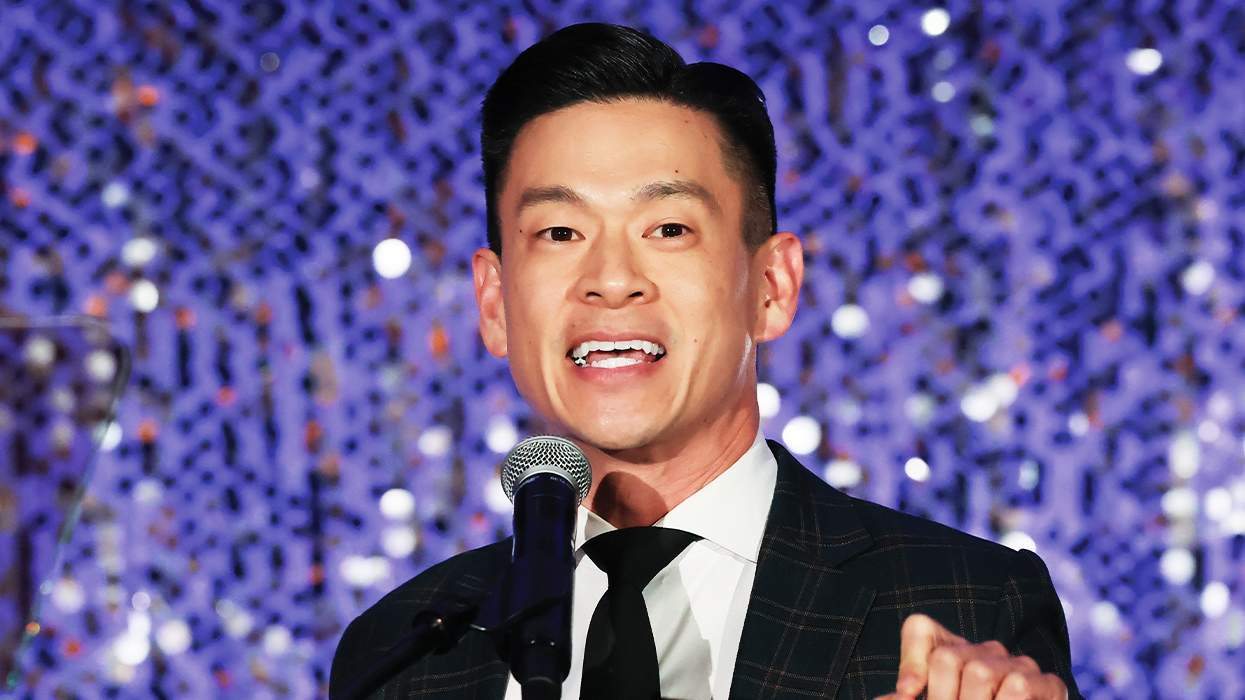
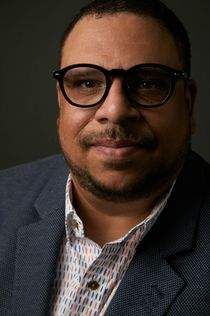
Amid a torrent of anti-LGBTQ+ legislation and a national political climate increasingly defined by fear and distortion, Evan Low has come to an unsettling realization: What the country is living through right now is not normal.
Low, the president and CEO of the LGBTQ+ Victory Fund and Victory Institute and a former California state lawmaker, had just returned from Creating Change, the annual gathering of LGBTQ+ advocates and organizers hosted by the National LGBTQ Task Force in January. The conversations, he said, were less about inspiration than confirmation that the scope, coordination, and intensity of attacks on LGBTQ+ people have crossed into something new.
“Being in a room together helps confirm that what we’re seeing isn’t normal,” Low says. “And that matters, because it shapes how we respond.”
The scale of the backlash helps explain the urgency. In 2025 alone, lawmakers introduced more than 600 anti-LGBTQ+ bills nationwide, according to tracking by the American Civil Liberties Union, the majority aimed at transgender people and often framed around children, schools, and health care. In the first 29 days of 2026, state legislatures introduced 366 additional anti-LGBTQ+ bills, ACLU data shows. The effort spans statehouses, courts, school boards, and federal agencies, and advocates describe it as a coordinated attempt not simply to roll back rights but to narrow who is permitted to exist openly in public life.
For much of the past decade, LGBTQ+ political organizing has been largely defensive, stopping the worst bills, preserving fragile gains, limiting harm. Heading into the 2026 midterm elections, Low argues, that posture is no longer sufficient.
“We didn’t ask to be in the crosshairs,” he says. “But now that we are, the response has to be power.”
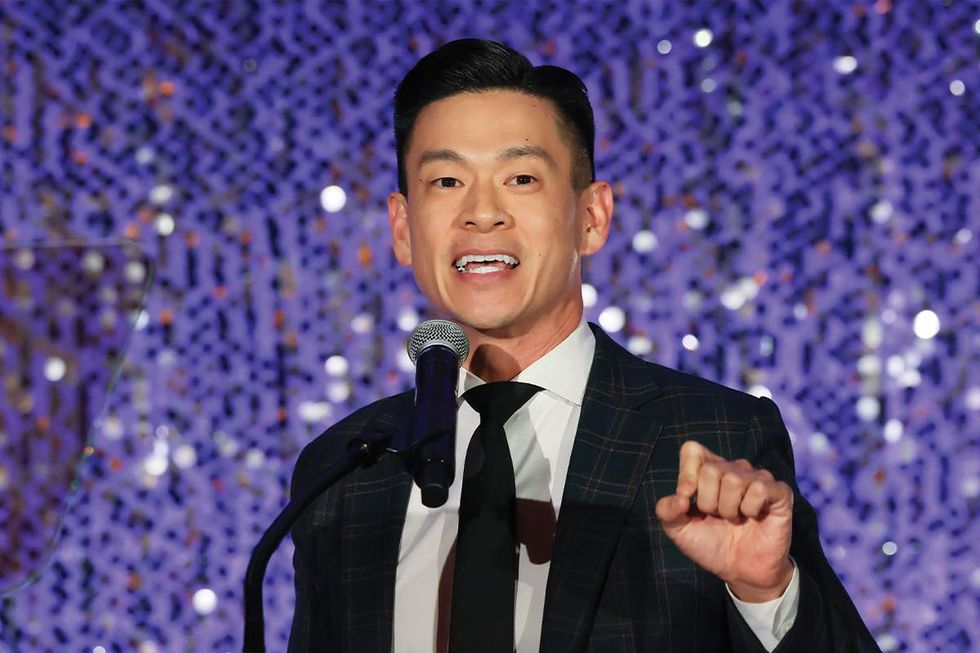 Evan Low speaking at event in Los Angeles, CaliforniaRodin Eckenroth/Getty Images for CAPE (Coalition of Asian Pacifics in Entertainment)
That shift is already under way. Victory Fund is tracking what it describes as a record number of queer and trans candidates running at every level of government in 2026. More than 80 LGBTQ+ candidates are seeking federal office this cycle, according to Victory’s internal tracking, alongside hundreds more running for state and local seats. Particularly notable is the rise in transgender candidates, many of whom entered politics after being pushed out of public institutions, including the military and state agencies.
When Victory Institute launched a pilot training program specifically for transgender candidates, it offered 15 slots. Nearly 60 people applied.
“That tells you something important,” Low says. “People are not retreating. They’re stepping forward.”
Crucially, those candidates are not running single-issue campaigns. Transgender candidates, Low says, consistently center on the same concerns that drive voters across the political spectrum: affordability, infrastructure, health care, and public safety. Identity, he emphasizes, is not the platform — lived experience is the lens.
That approach aligns with what political strategists at Fight for Our Rights, a PAC focused on defeating anti-LGBTQ+ lawmakers, say their data shows. After reviewing election cycles from Kansas to Kentucky to Pennsylvania, the group has reached a blunt conclusion: Campaigns built on anti-trans panic tend to falter when voters are offered a credible alternative.
“Voters care about kitchen-table issues,” says Chris Maggiano, a Fight For Our Rights board member and veteran strategist who previously worked on the fight for marriage equality. “They see these attacks as distractions.”
Post-election research conducted by Fight for Our Rights, in partnership with polling and messaging firms, found that while anti-trans rhetoric can be emotionally evocative, it rarely ranks as a decisive factor at the ballot box. Even voters who express discomfort with transgender inclusion in sports or schools overwhelmingly prioritize economic stability, health care access, and education when choosing candidates. Many also view government intervention in transgender people’s lives as overreach — a perception sharpened after the U.S. Supreme Court’s 2022 abortion decision in Dobbs v. Jackson Women’s Health Organization.
Recent elections illustrate the pattern.
In Kansas, Democratic Gov. Laura Kelly faced sustained anti-trans advertising tied to her veto of a sports ban. She addressed the attacks briefly, labeled them dishonest, and returned to a message focused on schools and grocery prices. Kelly won reelection, outperforming President Joe Biden’s 2020 margins in every county in the state, according to Fight for Our Rights’ analysis.
Gov. Andy Beshear of Kentucky countered millions of dollars in anti-trans attack ads by grounding his campaign in economic recovery, disaster response, and a moral argument rooted in faith. Voters rewarded him with another term.
At the state legislative level, Fight for Our Rights backed a challenger who unseated Iowa Senate President Jake Chapman, a leading proponent of “groomer” rhetoric, by avoiding culture-war traps and focusing on everyday concerns. Similar dynamics played out in Pennsylvania school board races, where voters dismantled far-right majorities after two years of book bans and restrictions targeting LGBTQ+ students.
The lesson, Maggiano says, is not that anti-LGBTQ+ rhetoric has vanished, but that it carries a political cost when confronted directly.
“If you don’t respond, the lies stick,” he says. “But when you call them out and pivot to what actually matters, voters move with you.”
Those lessons were reinforced in Virginia in 2025, when Democrat Abigail Spanberger won the governorship (she’s the first woman to hold the position) in a decisive victory that many strategists now view as an early signal for 2026. Spanberger rejected fear-based messaging around transgender people that defined much of her opponent’s campaign, instead emphasizing affordability, health care, and pragmatic governance. She won over suburban and independent voters.
Her inauguration underscored the broader implications of that approach. As she took office alongside a diverse slate of statewide leaders looking on, including out transgender state Sen. Danica Roem, Spanberger invoked Virginia’s civil rights history and called on residents to “stand shoulder to shoulder” despite disagreement.
None of this, advocates caution, guarantees success. In deeply gerrymandered districts or low-turnout primaries, anti-LGBTQ+ messaging can still shape outcomes, particularly when paired with voter suppression or disinformation. Electoral strategy alone cannot undo structural barriers. But the data suggest that fear-based campaigns are far less durable than their architects assume and are increasingly vulnerable when challenged.
For LGBTQ+ advocates, that reality sharpens the stakes heading into 2026. With control of Congress in play and anti-LGBTQ+ policy increasingly concentrated at the state level, the midterms represent a structural inflection point. The question is no longer whether representation matters, but whether enough of it can be built quickly enough to blunt the backlash.
For readers exhausted by the pace of bad news, Low offers guidance that has become Victory’s organizing mantra: “Don’t get mad. Get elected.”
“There is no cavalry coming,” he says. “We are it.”
This article is part of The Advocate’s Mar-Apr 2026 print issue, which hits newsstands March 24. Support queer media and subscribe — or download the issue through Apple News+, Zinio, Nook, or PressReader.