'%3E%3Cpath d='M16.3574 35.6519H12.9537L15.0491 18.8873L16.3574 35.6519ZM30.4229 54.0093L22.309 0.994385H7.91795L0 54.0093H10.6634L11.5802 46.3855H17.4014L17.9914 54.0093H30.4229Z' fill='%23971B20'/%3E%3Cpath d='M48.2073 41.8813C48.2073 43.4049 47.4892 44.0011 46.1144 44.0011H43.7595V11.0687H46.1144C47.4892 11.0687 48.2073 11.6636 48.2073 13.1885V41.8813ZM59.5273 43.6695V11.3326C59.5273 3.71323 53.5729 0.994385 47.8157 0.994385H31.7213V54.0093H47.8157C53.5729 54.0093 59.5273 51.29 59.5273 43.6695Z' fill='%23971B20'/%3E%3Cpath d='M90.183 0.994385H78.6039L75.0711 30.6157L71.9955 0.994385H59.4346L69.2474 54.0093H80.373L90.183 0.994385Z' fill='%23971B20'/%3E%3Cpath d='M107.063 42.3448C107.063 43.7359 105.951 44.5974 104.643 44.5974C103.269 44.5974 102.157 43.7359 102.157 42.3448V12.658C102.157 11.2676 103.269 10.4058 104.643 10.4058C105.951 10.4058 107.063 11.2676 107.063 12.658V42.3448ZM119.233 43.2723V11.7312C119.233 6.36384 112.952 -3.8147e-06 104.643 -3.8147e-06C96.2667 -3.8147e-06 89.9867 6.36384 89.9867 11.7312V43.2723C89.9867 48.6393 96.2667 55 104.643 55C112.952 55 119.233 48.6393 119.233 43.2723Z' fill='%23971B20'/%3E%3Cpath d='M150.976 43.9349V33.7309H139.069V42.3448C139.069 43.7359 137.957 44.5974 136.582 44.5974C135.076 44.5974 133.964 43.7359 133.964 42.3448V12.658C133.964 11.2676 135.076 10.4058 136.582 10.4058C137.957 10.4058 139.069 11.2676 139.069 12.658V21.2723H150.976V11.0687C150.976 5.70107 145.283 -3.8147e-06 136.582 -3.8147e-06C127.75 -3.8147e-06 121.796 5.70107 121.796 11.0687V43.9349C121.796 49.3022 127.75 55 136.582 55C145.283 55 150.976 49.3022 150.976 43.9349Z' fill='%23971B20'/%3E%3Cpath d='M167.478 35.6519H164.076L166.17 18.8873L167.478 35.6519ZM181.544 54.0093L173.432 0.994385H159.037L151.123 54.0093H161.785L162.704 46.3855H168.523L169.114 54.0093H181.544Z' fill='%23971B20'/%3E%3Cpath d='M205.412 10.4058V0.994385H177.081V10.4058H185.392V54.0093H197.428V10.4058H205.412Z' fill='%23971B20'/%3E%3Cpath d='M230.002 54.0093V43.9349H218.914V31.8746H226.635V21.8028H218.914V10.4058H230.002V0.994385H206.875V54.0093H230.002Z' fill='%23971B20'/%3E%3C/g%3E%3Cdefs%3E%3CclipPath id='clip0_260_7080'%3E%3Crect width='230' height='55' fill='white'/%3E%3C/clipPath%3E%3C/defs%3E%3C/svg%3E)
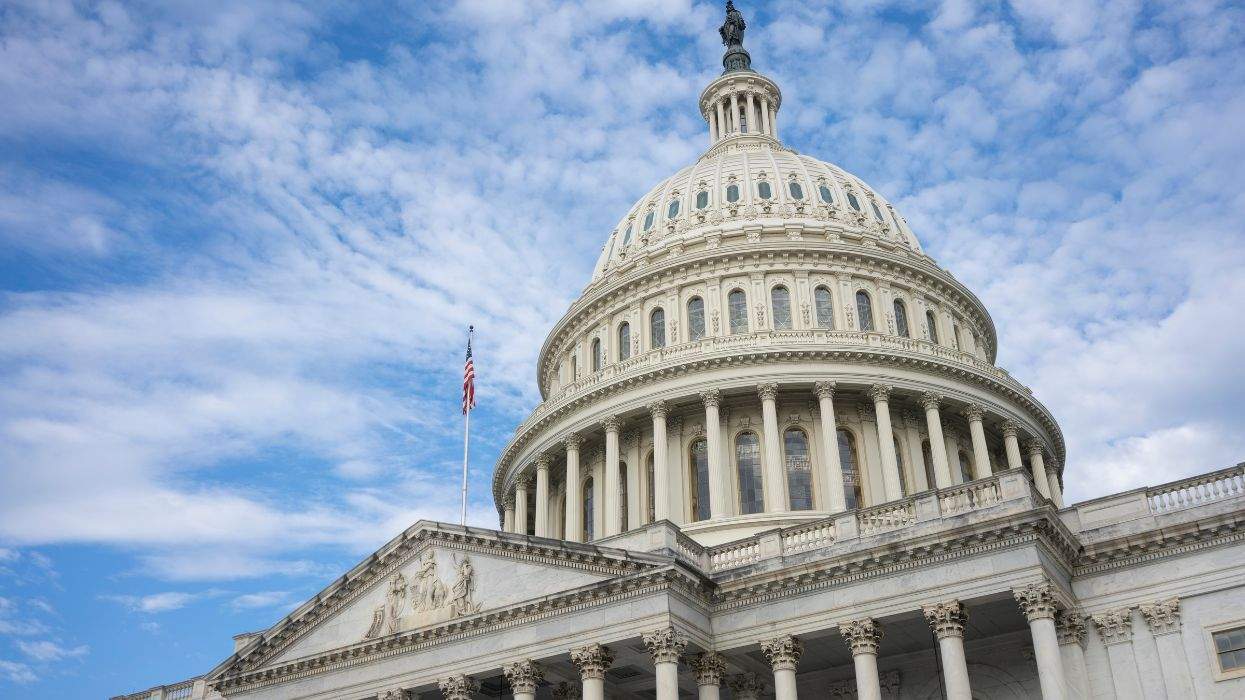

The U.S. House and Senate have negotiated final appropriations bills to fund the federal government through September 30, and they’ve been stripped of anti-transgender provisions.
These provisions, known as “riders” because they’re unrelated to the primary purpose of the bill in question, were attached to almost every appropriations bill in the House of Representatives, though not in the Senate, Erin Reed reports at her Erin in the Morning Substack column.
The “most extreme” ones were in the bills to fund the Department of Education and the Department of Health and Human Services, Reed notes. These included “language barring ‘any federal funds’ from supporting gender-affirming care at any age and threatening funding for schools that support transgender students,” she writes. “Taken together, those measures would have posed a sweeping threat to transgender people’s access to education and health care nationwide.”
Anti-trans riders were stripped from each bill as it was considered by House and Senate negotiators working out differences, and Tuesday morning the two chambers released the Consolidated Appropriations Act, which includes the appropriations for Education, HHS, Labor, Homeland Security, Housing and Urban Development, Defense, and Transportation. There are no anti-trans provisions in the act, which is still subject to a vote by the two chambers.
U.S. Rep. Sarah McBride of Delaware, a Democrat and the first out trans person in Congress, “was proud to work relentlessly with her colleagues in ensuring these funding bills did not include anti-LGBTQ provisions,” a McBride staff member told Erin in the Morning. McBride thanked Rep. Rosa DeLauro, the top Democrat on the House Appropriations Committee, and Sen. Patty Murray, the top Democrat on the Senate Appropriations Committee, and Democratic leaders “for prioritizing the removal of these harmful riders,” the staffer said.
Congress must pass all the appropriations bills by the end of January to avoid another government shutdown like last fall’s. Some have passed each chamber already.
Related: USDA website blames SNAP benefits expiring on trans people, immigrants amid shutdown
Some aspects of the remaining appropriations bills may still be hard for Democrats to support. The Homeland Security bill does not include deep cuts or broad reforms to Immigration and Customs Enforcement. Democrats and many others have criticized ICE policies as brutal, especially after the killing of Minneapolis resident Renee Nicole Good by an ICE officer this month.
The ICE funding “is a surrender to Trump’s lawlessness,” Rep. Ro Khanna of California told NBC News Tuesday. “I will be a strong no and help lead the opposition to it.”
DeLauro issued a statement saying she shares her colleagues’ “frustration with the out-of-control agency” and that they should vote based on what’s “best for their constituents,” NBC reports. But “the Homeland Security funding bill is more than just ICE,” she added. A lapse in funding would mean Transportation Security Administration agents would work without pay, and Federal Emergency Management Administration services could be delayed, she said.
Republicans have agreed to hold a vote on the Homeland Security bill separately from the others, “which would give Democrats an opportunity to oppose it, without moving Washington toward another shutdown,” according to NBC.
What’s more, the HHS bill doesn’t include an extension of subsidies for health insurance policies bought under the Affordable Care Act, The Hill reports. Disagreement between Republicans and Democrats on this issue caused last year’s shutdown.
“Some Democrats could also hold back their support of the package until their concerns regarding President Trump’s threats to Venezuela and Greenland are addressed,” The Hill adds.