'%3E%3Cpath d='M16.3574 35.6519H12.9537L15.0491 18.8873L16.3574 35.6519ZM30.4229 54.0093L22.309 0.994385H7.91795L0 54.0093H10.6634L11.5802 46.3855H17.4014L17.9914 54.0093H30.4229Z' fill='%23971B20'/%3E%3Cpath d='M48.2073 41.8813C48.2073 43.4049 47.4892 44.0011 46.1144 44.0011H43.7595V11.0687H46.1144C47.4892 11.0687 48.2073 11.6636 48.2073 13.1885V41.8813ZM59.5273 43.6695V11.3326C59.5273 3.71323 53.5729 0.994385 47.8157 0.994385H31.7213V54.0093H47.8157C53.5729 54.0093 59.5273 51.29 59.5273 43.6695Z' fill='%23971B20'/%3E%3Cpath d='M90.183 0.994385H78.6039L75.0711 30.6157L71.9955 0.994385H59.4346L69.2474 54.0093H80.373L90.183 0.994385Z' fill='%23971B20'/%3E%3Cpath d='M107.063 42.3448C107.063 43.7359 105.951 44.5974 104.643 44.5974C103.269 44.5974 102.157 43.7359 102.157 42.3448V12.658C102.157 11.2676 103.269 10.4058 104.643 10.4058C105.951 10.4058 107.063 11.2676 107.063 12.658V42.3448ZM119.233 43.2723V11.7312C119.233 6.36384 112.952 -3.8147e-06 104.643 -3.8147e-06C96.2667 -3.8147e-06 89.9867 6.36384 89.9867 11.7312V43.2723C89.9867 48.6393 96.2667 55 104.643 55C112.952 55 119.233 48.6393 119.233 43.2723Z' fill='%23971B20'/%3E%3Cpath d='M150.976 43.9349V33.7309H139.069V42.3448C139.069 43.7359 137.957 44.5974 136.582 44.5974C135.076 44.5974 133.964 43.7359 133.964 42.3448V12.658C133.964 11.2676 135.076 10.4058 136.582 10.4058C137.957 10.4058 139.069 11.2676 139.069 12.658V21.2723H150.976V11.0687C150.976 5.70107 145.283 -3.8147e-06 136.582 -3.8147e-06C127.75 -3.8147e-06 121.796 5.70107 121.796 11.0687V43.9349C121.796 49.3022 127.75 55 136.582 55C145.283 55 150.976 49.3022 150.976 43.9349Z' fill='%23971B20'/%3E%3Cpath d='M167.478 35.6519H164.076L166.17 18.8873L167.478 35.6519ZM181.544 54.0093L173.432 0.994385H159.037L151.123 54.0093H161.785L162.704 46.3855H168.523L169.114 54.0093H181.544Z' fill='%23971B20'/%3E%3Cpath d='M205.412 10.4058V0.994385H177.081V10.4058H185.392V54.0093H197.428V10.4058H205.412Z' fill='%23971B20'/%3E%3Cpath d='M230.002 54.0093V43.9349H218.914V31.8746H226.635V21.8028H218.914V10.4058H230.002V0.994385H206.875V54.0093H230.002Z' fill='%23971B20'/%3E%3C/g%3E%3Cdefs%3E%3CclipPath id='clip0_260_7080'%3E%3Crect width='230' height='55' fill='white'/%3E%3C/clipPath%3E%3C/defs%3E%3C/svg%3E)
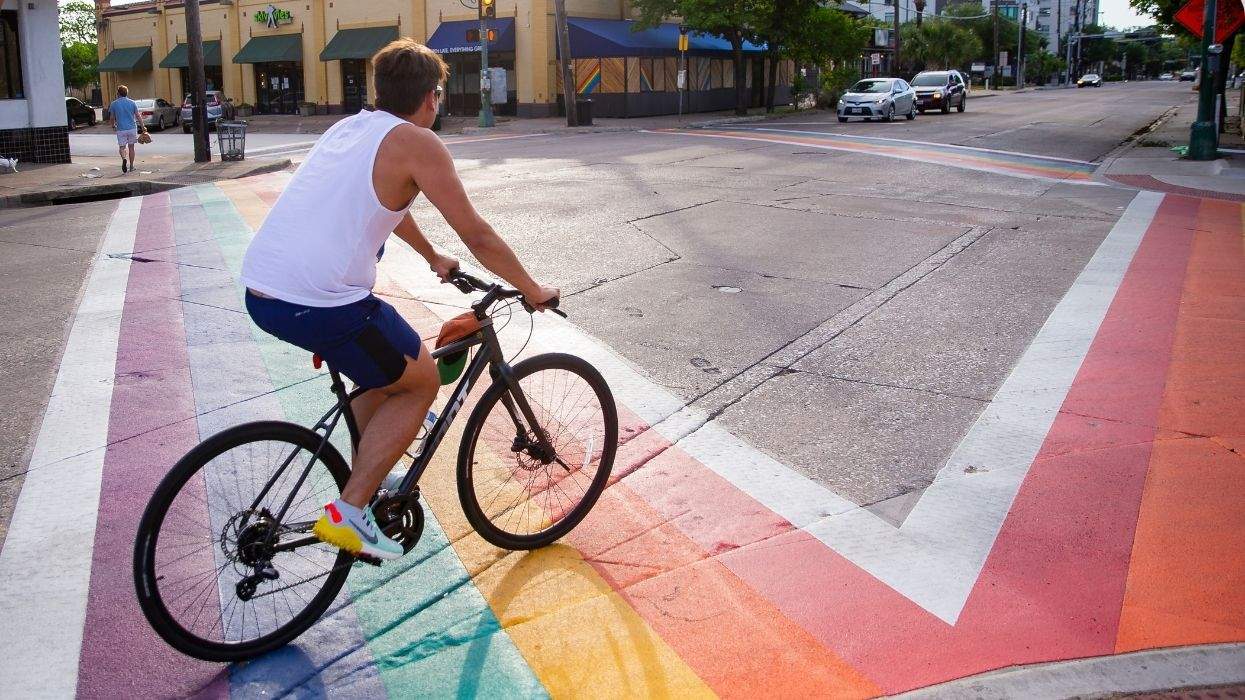
Early Monday morning, responding to a demand from the Texas Department of Transportation, crews showed up at a busy intersection in Dallas and got to work.
At Cedar Springs Road and Oak Lawn Avenue, in the heart of the city’s LGBTQ+ district, they began washing away the rainbow crosswalks. Within hours, the color that had marked the neighborhood for years was fading into standard white lines.
Keep up with the latest in LGBTQ+ news and politics. Sign up for The Advocate's email newsletter.
It’s the first step in a citywide, three-week project to remove about 30 decorative crossings, including both Pride crosswalks and Black Lives Matter crosswalks in South Dallas, according to local Fox affiliate KDFW. City officials say the work is expected to wrap up by late April, bringing all intersections into compliance with state standards. Dallas leaders didn’t plan to do this on their own volition.
The removals come after TxDOT told the city that decorative crosswalks don’t meet the state’s traffic control standards, which govern how roads are marked and designed. U.S. Transportation Secretary Sean Duffy has suggested that rainbow crosswalks pose traffic hazards.
Related: Meet the lesbian minister whose church clapped back at Texas's ban on rainbow crosswalks
Related: Texas follows Florida's lead in demanding end to rainbow crosswalks and street art
City leaders asked for an exception. The state denied it and made the stakes clear: comply or risk losing transportation funding.
The directive stems from an order by Gov. Greg Abbott, a Republican, whose administration has insisted the issue is one of safety and uniformity, arguing roads should not include markings that could distract drivers.
Local officials and advocates say there’s little evidence to support that claim. Many of the crosswalks were installed with private donations, not taxpayer money.
To understand why this moment feels bigger than road paint, you have to understand Oak Lawn.
It’s long been the center of LGBTQ+ life in Dallas. It’s a place where people have gathered for decades, especially when it wasn’t always safe to be visible elsewhere, according to the Texas State Historical Association. Cedar Springs Road runs through it like a spine, lined with bars, clubs, and community spaces.
The crosswalks weren’t just decoration. They told people where they were and, for some who’d never before been told so, that they were welcome. “It’s attempting to demoralize,” resident Justin Longoria said, calling the move “punching down,” according to The Dallas Morning News. Others said the Pride and Black Lives Matter crosswalks made communities that are often targeted feel visible in public space.
Related: Overnight standoff over Houston’s rainbow crosswalks ends with arrests
Related: Transportation Secretary Sean Duffy implies rainbow crosswalks could lead to traffic dangers
In Houston, when a rainbow crosswalk in the Montrose neighborhood was removed last October, protesters showed up and tried to stop it. Some stood in the street. Others refused to move. Police arrested several people who stayed.
In San Antonio, officials also removed Pride crosswalks in December after the state denied an exemption, but quickly began looking for ways to move those symbols off the road and into nearby spaces.
And beyond Texas, the same kind of conflict is playing out under different reasoning.
In Washington, D.C., the large “Black Lives Matter” mural painted on a street near the White House, created during the 2020 protests after George Floyd’s murder, was dismantled after Republican lawmakers threatened to withhold federal funding unless it was removed.
In Maryland, a mayor ordered a Pride crosswalk milled away at dawn, citing government neutrality. In Florida, even a rainbow-colored bike rack became a political flashpoint.
Back in Dallas, officials are already trying to figure out what comes next.
The city’s Office of Arts and Culture is planning community meetings in April to explore other ways neighborhoods can express identity, without putting it on the street, where state rules apply.