'%3E%3Cpath d='M16.3574 35.6519H12.9537L15.0491 18.8873L16.3574 35.6519ZM30.4229 54.0093L22.309 0.994385H7.91795L0 54.0093H10.6634L11.5802 46.3855H17.4014L17.9914 54.0093H30.4229Z' fill='%23971B20'/%3E%3Cpath d='M48.2073 41.8813C48.2073 43.4049 47.4892 44.0011 46.1144 44.0011H43.7595V11.0687H46.1144C47.4892 11.0687 48.2073 11.6636 48.2073 13.1885V41.8813ZM59.5273 43.6695V11.3326C59.5273 3.71323 53.5729 0.994385 47.8157 0.994385H31.7213V54.0093H47.8157C53.5729 54.0093 59.5273 51.29 59.5273 43.6695Z' fill='%23971B20'/%3E%3Cpath d='M90.183 0.994385H78.6039L75.0711 30.6157L71.9955 0.994385H59.4346L69.2474 54.0093H80.373L90.183 0.994385Z' fill='%23971B20'/%3E%3Cpath d='M107.063 42.3448C107.063 43.7359 105.951 44.5974 104.643 44.5974C103.269 44.5974 102.157 43.7359 102.157 42.3448V12.658C102.157 11.2676 103.269 10.4058 104.643 10.4058C105.951 10.4058 107.063 11.2676 107.063 12.658V42.3448ZM119.233 43.2723V11.7312C119.233 6.36384 112.952 -3.8147e-06 104.643 -3.8147e-06C96.2667 -3.8147e-06 89.9867 6.36384 89.9867 11.7312V43.2723C89.9867 48.6393 96.2667 55 104.643 55C112.952 55 119.233 48.6393 119.233 43.2723Z' fill='%23971B20'/%3E%3Cpath d='M150.976 43.9349V33.7309H139.069V42.3448C139.069 43.7359 137.957 44.5974 136.582 44.5974C135.076 44.5974 133.964 43.7359 133.964 42.3448V12.658C133.964 11.2676 135.076 10.4058 136.582 10.4058C137.957 10.4058 139.069 11.2676 139.069 12.658V21.2723H150.976V11.0687C150.976 5.70107 145.283 -3.8147e-06 136.582 -3.8147e-06C127.75 -3.8147e-06 121.796 5.70107 121.796 11.0687V43.9349C121.796 49.3022 127.75 55 136.582 55C145.283 55 150.976 49.3022 150.976 43.9349Z' fill='%23971B20'/%3E%3Cpath d='M167.478 35.6519H164.076L166.17 18.8873L167.478 35.6519ZM181.544 54.0093L173.432 0.994385H159.037L151.123 54.0093H161.785L162.704 46.3855H168.523L169.114 54.0093H181.544Z' fill='%23971B20'/%3E%3Cpath d='M205.412 10.4058V0.994385H177.081V10.4058H185.392V54.0093H197.428V10.4058H205.412Z' fill='%23971B20'/%3E%3Cpath d='M230.002 54.0093V43.9349H218.914V31.8746H226.635V21.8028H218.914V10.4058H230.002V0.994385H206.875V54.0093H230.002Z' fill='%23971B20'/%3E%3C/g%3E%3Cdefs%3E%3CclipPath id='clip0_260_7080'%3E%3Crect width='230' height='55' fill='white'/%3E%3C/clipPath%3E%3C/defs%3E%3C/svg%3E)


The Equal Employment Opportunity Commission has rescinded LGBTQ-inclusive guidance about what workplace harassment looks like and how to fight it, enraging community activists and allies.
The commission, which enforces federal antidiscrimination laws and can take employers to court, voted 2-1 Thursday to withdraw the document, which was approved in 2024, when Joe Biden was president, multiple media outlets report. It took up nearly 200 pages and included more than 70 examples of on-the-job harassment.
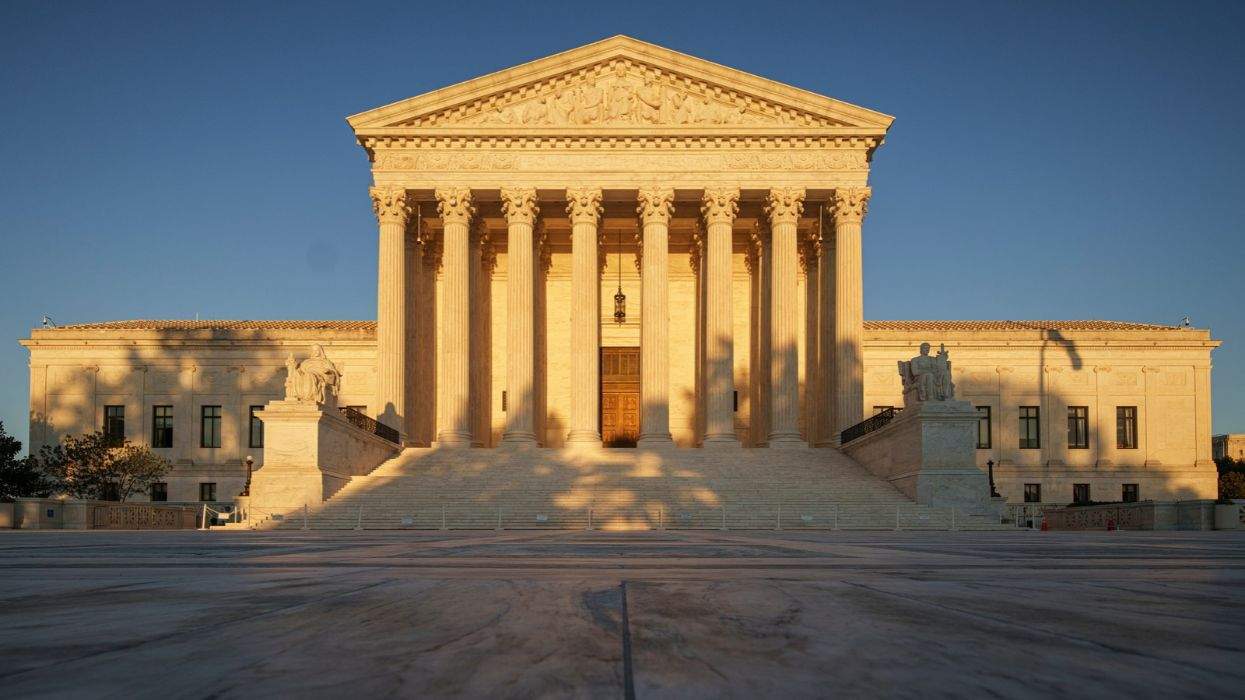
“While much of that guidance wasn’t new, one addition that rankled many conservatives was a section on gender identity and sexual orientation,” NPR reports. That was added to be in keeping with the U.S. Supreme Court’s Bostock v. Clayton County decision. The court ruled in 2020 that Title VII of the Civil Rights Act of 1964, in banning sex discrimination in the workplace, also banned discrimination based on sexual orientation and gender identity.
EEOC Chair Andrea Lucas, appointed by Donald Trump in 2020 and named chair by him last year, had said that under her watch, the agency would not advocate for transgender and nonbinary people, in keeping with Trump’s “two sexes” executive order.
She “announced that one of her priorities — for compliance, investigations, and litigation — is to defend the biological and binary reality of sex and related rights, including women’s rights to single-sex spaces at work,” an EEOC press release stated in January.
She didn’t have authority to unilaterally remove references to gender identity from certain documents, but with the rescission of the 2024 guidance, many references are now gone. She voted against the guidance. “Biological sex is real, and it matters. Sex is binary (male and female) and is immutable," she wrote at the time. “It is not harassment to acknowledge these truths — or to use language like pronouns that flow from these realities, even repeatedly.”
Related: Lawsuit challenges EEOC's failure to investigate anti-transgender discrimination
Lucas views the Bostock decision as applying only to hiring and firing, not to pronoun use, dress codes, restroom access, or other workplace conditions, NPR notes. Her biography on the EEOC’s website says she “understands that our nation’s civil rights laws reject identity politics and instead focus on individual rights and equality” and that she is committed to rooting out discrimination that supposedly arises from diversity, equity, and inclusion programs.
Her interpretation of Bostock is the same as that expressed by far-right, Trump-appointed U.S. District Judge Matthew Kacsmaryk of Texas. In May, he ruled that under Bostock, Title VII bans “firing someone simply for being homosexual or transgender” but “does not bar workplace employment policies that protect the inherent differences between men and women.” His ruling came in a case brought against the EEOC by the state of Texas and the ultraconservative Heritage Foundation, the force behind Project 2025.
Given Kacsmaryk’s ruling, which the EEOC did not appeal, some questioned whether rescission of the guidance was necessary, NPR reports. But Lucas wanted to withdraw the entire document, and she got permission from the White House to put that to a vote, without the public comment period that is common in such cases.
Rescission of the guidance “will not leave a void where employers are free to harass wherever they see fit, leaving a trail of victims in their wake,” Lucas said before the vote, according to NPR.
“Let me be perfectly clear: The EEOC will not tolerate unlawful harassment, as was the case before the guidance document was issued and will remain so even after the guidance document is rescinded,” she said.
“Indeed, nothing about the federal laws that protect workers of all backgrounds from discrimination in the workplace has changed,” NPR reports. “Yet the EEOC — for now — will no longer serve as the guide to how that law applies to real-world situations.”
And employers are still free to accommodate LGBTQ+ employees in any way they see fit, such as using an employee’s chosen pronouns or allowing them access to restrooms that match their gender identity. But if an employer does not have LGBTQ-inclusive policies — for instance, denying a trans woman access to the women’s restroom — the EEOC will no longer consider that harassment, and employees cannot turn to the agency for help, at least for now.
Related: Congress members demand that EEOC address gender identity discrimination
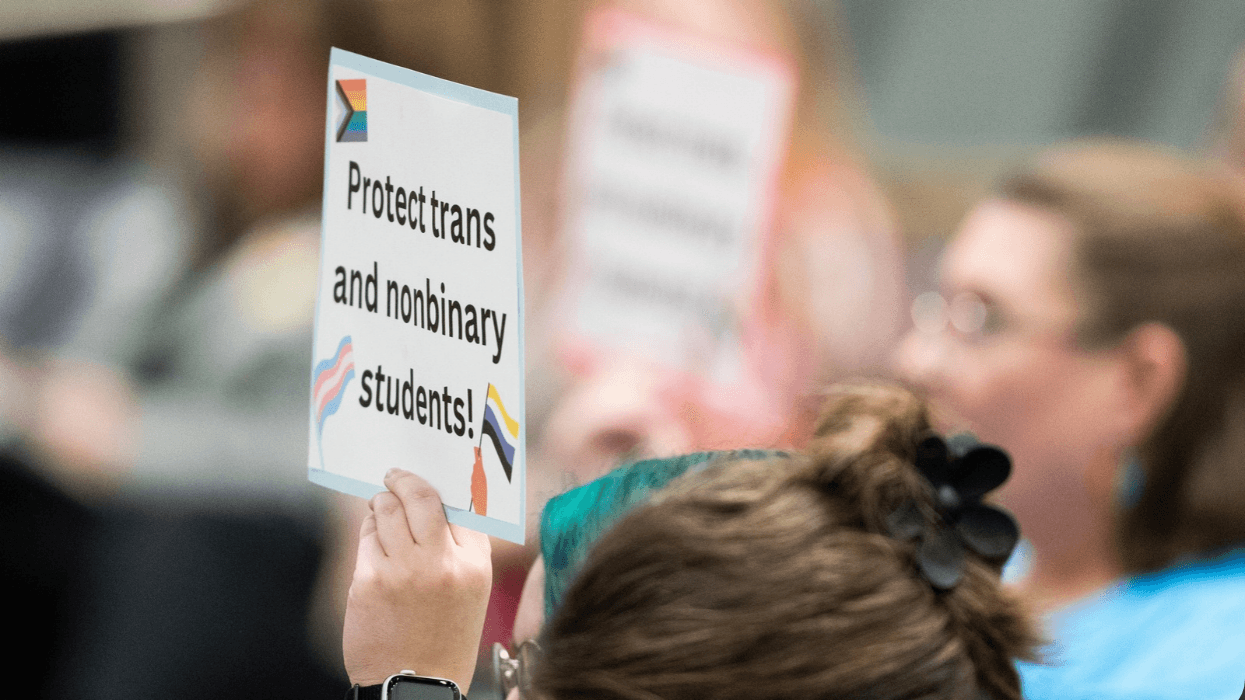
LGBTQ+ activists and Democratic politicians denounced the EEOC’s move. At a press conference ahead of the vote Thursday, Human Rights Campaign Senior Director of Legal Policy Cathryn Oakley said, “We all deserve a country that protects and defends civil rights for all, where our laws are enforced equally, our workplaces are safe for everyone, and people are held accountable for their actions. But the EEOC’s move to rescind guidance protecting workers from discrimination and harassment will destabilize our understanding of civil rights protections — for communities across the board — that generations of Americans have fought for, demanded, and defended. But we will not give up. We will not stop fighting for civil rights. We will not stop fighting for an America where people can go to work, get a paycheck, and make it home for their kids’ soccer practice without having to fear that their ability to provide for themselves and their family hinges on weathering discrimination and bigotry in the workplace.”
From Congress, the chairs of the Democratic Women’s Caucus, Asian Pacific American Caucus, Equality Caucus, Hispanic Caucus, and Black Caucus issued this statement: “The Equal Employment Opportunity Commission is supposed to protect vulnerable workers, including women, people of color, and LGBTQI+ workers, from discrimination on the job. Yet, since the start of her tenure, the EEOC Chair has consistently undermined protections for women, people of color, and LGBTQI+ workers. Now, she is taking away guidance intended to protect workers from harassment on the job, including instructions on anti-harassment policies, trainings, and complaint processes — and doing so outside of the established rulemaking process. When workers are sexually harassed, called racist slurs, or discriminated against at work, it harms our workforce and ultimately our economy. Workers can’t afford this — especially at a time of high costs, chaotic tariffs, and economic uncertainty. Women and vulnerable workers deserve so much better.”