'%3E%3Cpath d='M16.3574 35.6519H12.9537L15.0491 18.8873L16.3574 35.6519ZM30.4229 54.0093L22.309 0.994385H7.91795L0 54.0093H10.6634L11.5802 46.3855H17.4014L17.9914 54.0093H30.4229Z' fill='%23971B20'/%3E%3Cpath d='M48.2073 41.8813C48.2073 43.4049 47.4892 44.0011 46.1144 44.0011H43.7595V11.0687H46.1144C47.4892 11.0687 48.2073 11.6636 48.2073 13.1885V41.8813ZM59.5273 43.6695V11.3326C59.5273 3.71323 53.5729 0.994385 47.8157 0.994385H31.7213V54.0093H47.8157C53.5729 54.0093 59.5273 51.29 59.5273 43.6695Z' fill='%23971B20'/%3E%3Cpath d='M90.183 0.994385H78.6039L75.0711 30.6157L71.9955 0.994385H59.4346L69.2474 54.0093H80.373L90.183 0.994385Z' fill='%23971B20'/%3E%3Cpath d='M107.063 42.3448C107.063 43.7359 105.951 44.5974 104.643 44.5974C103.269 44.5974 102.157 43.7359 102.157 42.3448V12.658C102.157 11.2676 103.269 10.4058 104.643 10.4058C105.951 10.4058 107.063 11.2676 107.063 12.658V42.3448ZM119.233 43.2723V11.7312C119.233 6.36384 112.952 -3.8147e-06 104.643 -3.8147e-06C96.2667 -3.8147e-06 89.9867 6.36384 89.9867 11.7312V43.2723C89.9867 48.6393 96.2667 55 104.643 55C112.952 55 119.233 48.6393 119.233 43.2723Z' fill='%23971B20'/%3E%3Cpath d='M150.976 43.9349V33.7309H139.069V42.3448C139.069 43.7359 137.957 44.5974 136.582 44.5974C135.076 44.5974 133.964 43.7359 133.964 42.3448V12.658C133.964 11.2676 135.076 10.4058 136.582 10.4058C137.957 10.4058 139.069 11.2676 139.069 12.658V21.2723H150.976V11.0687C150.976 5.70107 145.283 -3.8147e-06 136.582 -3.8147e-06C127.75 -3.8147e-06 121.796 5.70107 121.796 11.0687V43.9349C121.796 49.3022 127.75 55 136.582 55C145.283 55 150.976 49.3022 150.976 43.9349Z' fill='%23971B20'/%3E%3Cpath d='M167.478 35.6519H164.076L166.17 18.8873L167.478 35.6519ZM181.544 54.0093L173.432 0.994385H159.037L151.123 54.0093H161.785L162.704 46.3855H168.523L169.114 54.0093H181.544Z' fill='%23971B20'/%3E%3Cpath d='M205.412 10.4058V0.994385H177.081V10.4058H185.392V54.0093H197.428V10.4058H205.412Z' fill='%23971B20'/%3E%3Cpath d='M230.002 54.0093V43.9349H218.914V31.8746H226.635V21.8028H218.914V10.4058H230.002V0.994385H206.875V54.0093H230.002Z' fill='%23971B20'/%3E%3C/g%3E%3Cdefs%3E%3CclipPath id='clip0_260_7080'%3E%3Crect width='230' height='55' fill='white'/%3E%3C/clipPath%3E%3C/defs%3E%3C/svg%3E)
Before a would-be assassin and the resulting security scare forced the cancellation of Saturday night’s White House Correspondents’ Dinner itself and dominated headlines for days afterward, the main conversation in Washington was not about attending the dinner. It was about Grindr.
On Friday night, as the city’s political operatives, journalists, lawmakers, business leaders, and entertainment personalities moved through the familiar circuit of receptions and private parties, the invitation everyone wanted was not for the Washington Hilton ballroom. It was for Grindr’s first official White House Correspondents’ Dinner weekend party.
For a company long associated with queer nightlife, hookup culture, and a kind of intimate urban geography mapped in feet rather than miles, the event was also a statement: Grindr was not just attending Washington’s power weekend. It was hosting it.
Related: Grindr’s White House Correspondents’ Dinner pre-party is the hottest ticket in Washington
The anticipation had started hours earlier downtown.
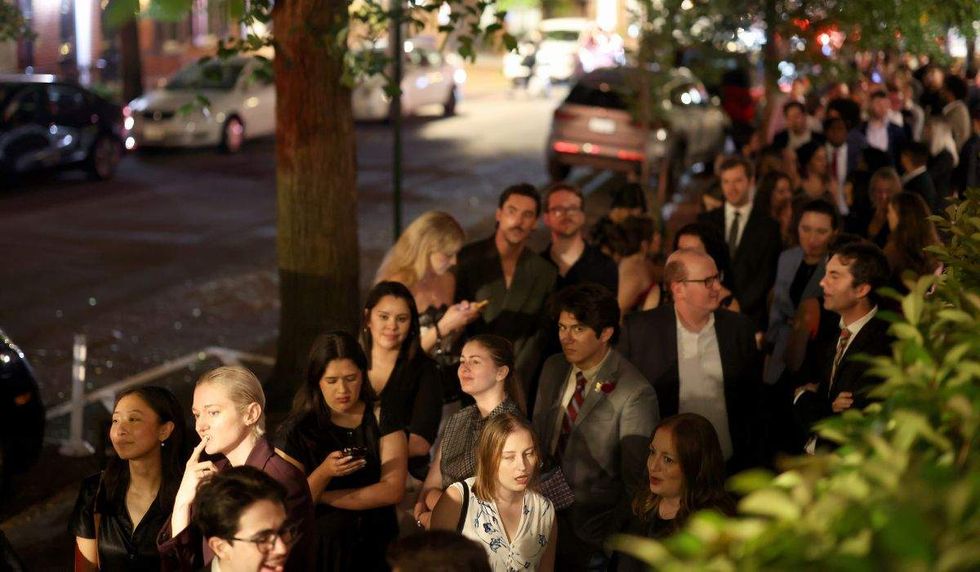 The line stretched around the block at Grindr's Georgetown WHCD pre-party.Tasos Katopodis/Getty Images for Grindr Inc.
At Crooked Media’s annual “Drinks!” event at Cafe Riggs, held from 5:30 to 8 p.m., much of the conversation among prominent guests centered on timing their exit for Grindr. Attendees openly discussed when they needed to leave in order to make it across town and actually get inside. There was a shared suspicion that more invitations had gone out than there was room for at the 12,000-square-foot Georgetown estate hosting the party.
That instinct turned out to be right.
The party took place at LXIV, a sprawling private mansion tucked into Georgetown’s manicured quiet, where layered garden terraces, hidden lounges, and multi-level entertaining spaces made the evening feel less like a political media function and more like a carefully staged afterparty imported from Los Angeles.
Related: HRC uses Grindr to target Washington’s White House Correspondents’ Dinner power crowd
Outside, the line stretched around the block. At one point, roughly 300 people were waiting for entry, with hundreds ultimately turned away. Paparazzi stood outside photographing arrivals and exits, turning the sidewalk into its own performance of access and exclusion.
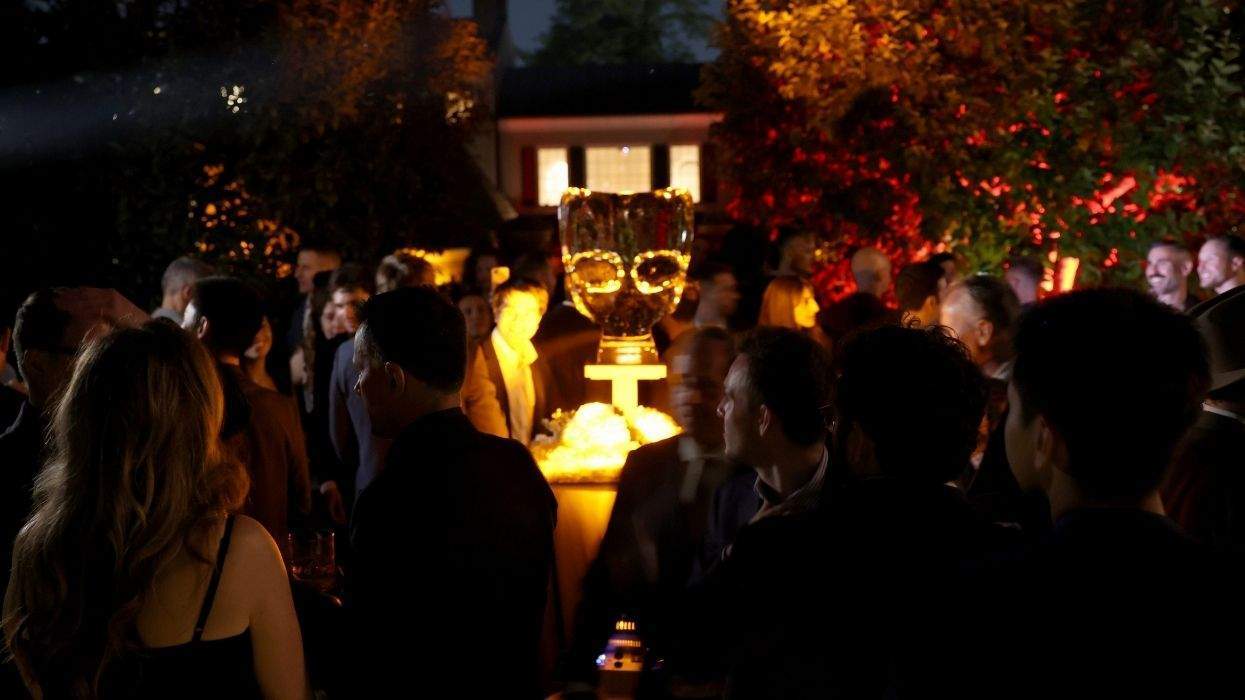
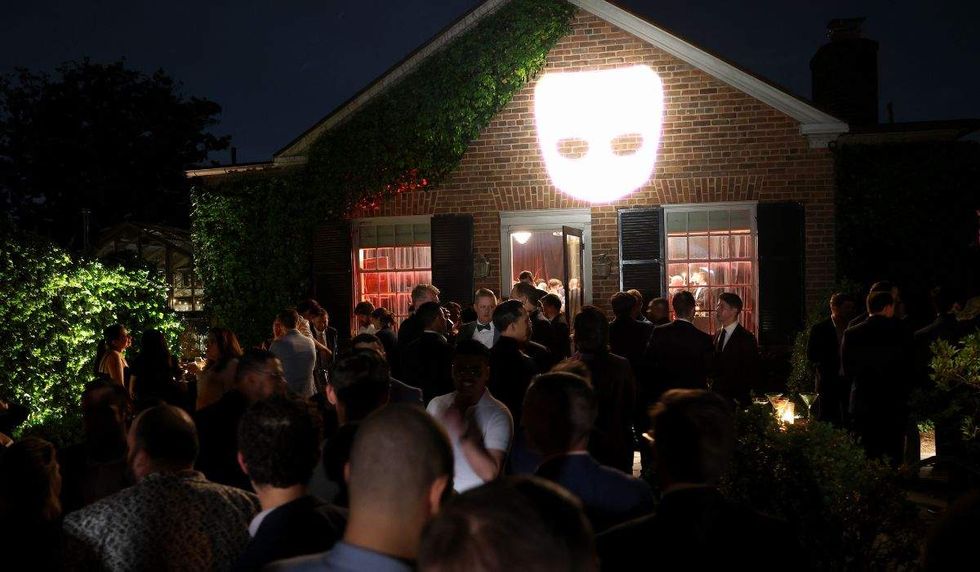 The Grindr logo was projected onto the side of buildings at the company's WHCD party.Tasos Katopodis/Getty Images for Grindr Inc.
Inside, the shift in atmosphere was immediate.
Most rooms were lit in deep red, with electronic music from a live DJ filling the property, and the soft disorientation of low lighting making everyone look slightly more glamorous than they probably were. It felt like an elevated lounge — the sort of place where members of Congress, cable news talent, influencers, and reality television personalities could all plausibly occupy the same space without explanation.
Related: Why is Grindr cozying up to Trump’s Washington?
Grindr made sure no one forgot whose event it was. Staff wore black shirts stamped with the company’s logo. Its signature mask icon was projected across the exterior walls of the mansion. On the third level of the garden, at the top of a wide staircase, an ice sculpture shaped like the Grindr logo greeted guests who had made their way through the packed lower floors.
That upper terrace also held the truffle ice cream station, an indoor bar, and one of the few places where it was possible to pause long enough to look down over the rest of the crowd.
The Advocate arrived shortly before 8 p.m., stepping out of one of a row of black SUVs, and was quickly ushered in along with other early-arriving guests. Inside, staff shucked oysters on demand, opening shells one by one for guests as they moved through the party. A large table held wagyu burgers and French fries. Waiters passed trays of champagne and wine. Signature martini stations drew their own long lines of guests waiting for drinks.
Related: Grindr's surprising ties to the Republican Party, explained
Truffle ice cream topped with caviar and gummy bears quickly became one of the night’s most discussed menu items — excessive enough to be funny, expensive enough to feel perfectly on brand, with a taste that had to be acquired.
Even getting a cocktail required strategy. Every bar had a line, and as the night wore on, the demand became so intense that the party began running low on alcohol. By 9:30 p.m., high-profile guests, including Don Lemon and CNN anchor Kaitlan Collins, were still slipping past the crowd outside.
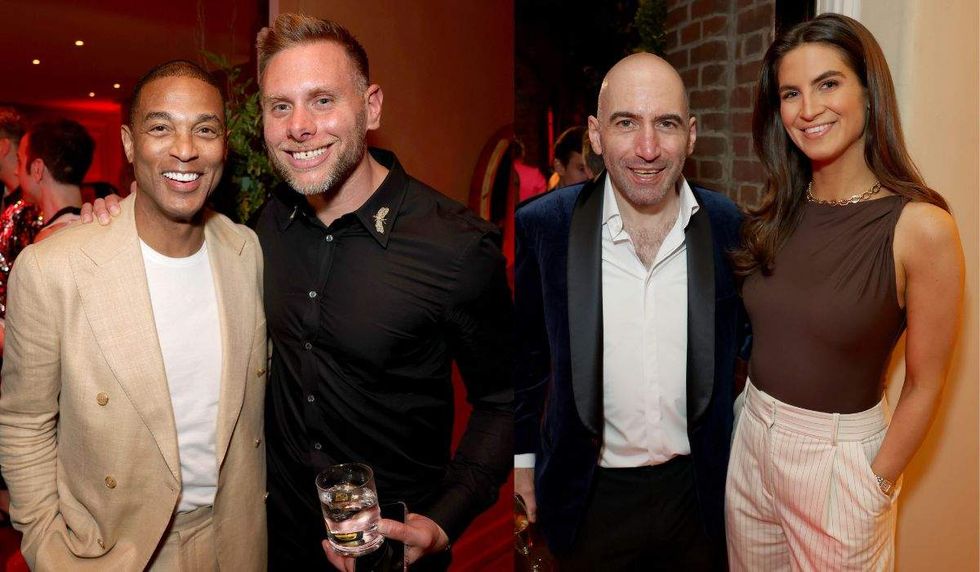 Don Lemon with Grindr head of global government affairs Joe Hack and CNN's Kaitlan Collins with Grindr CEO George Arison.Tasos Katopodis/Getty Images for Grindr Inc.
Florida Democratic Rep. Jared Moskowitz was there holding court, alongside Democratic National Committee Chair Ken Martin, “holding space” journalist Tracy E. Gilchrist, and Tony Morrison, CEO of Morrison Media Group. Tech journalist Taylor Lorenz made the rounds, as did activist Charlotte Clymer, strategist Keith Edwards, Crooked Media’s Tommy Vietor and Jon Lovett, and Bronwyn Newport of The Real Housewives of Salt Lake City.
At one point, Lorenz told The Advocate she had decided against leaving after taking stock of the scene outside. “There are paparazzi outside and a line around the block,” she said.
And when guests eventually left, the branding followed them out.
As flashes from photographers lit the sidewalk, attendees were handed black gift bags. Inside was a black hat embroidered with the phrase “0 feet away,” a reference to the app’s signature proximity feature.
This year’s White House Correspondents’ Dinner weekend had already become more fraught than festive under President Donald Trump’s second administration — a collision of politics, media, celebrity, and grievance, with persistent questions about legitimacy, access, and whether the ritual still made sense at all. The attempted attack and abrupt evacuation only intensified that tension.
Which made Grindr’s arrival feel strangely fitting.
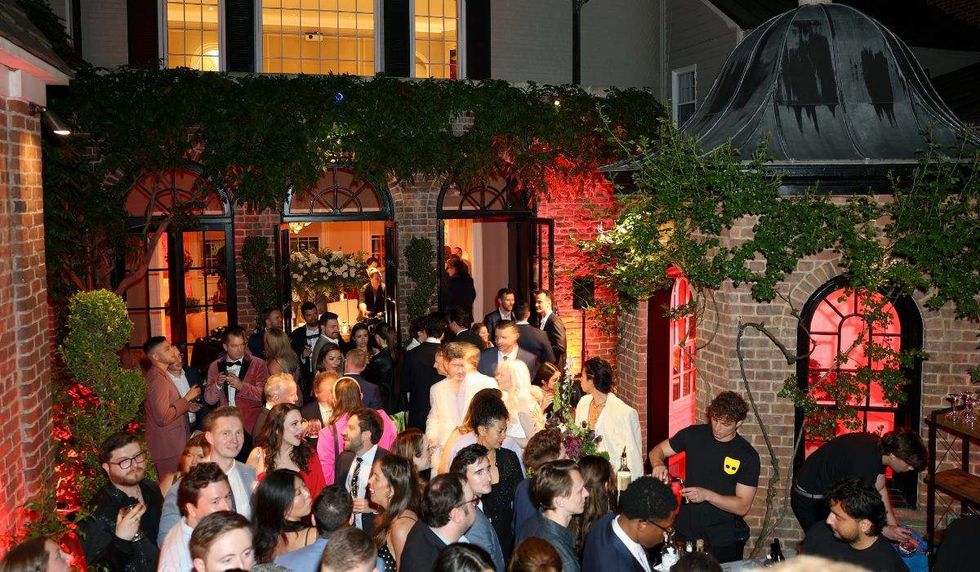 Guests attend Grindr White House Correspondents' Dinner Weekend Party 2026 at LXIV DC on April 24, 2026 in Washington, DC. Tasos Katopodis/Getty Images for Grindr Inc.
The app has long occupied a central place in queer culture, but its formal debut as a WHCD weekend host underscored that LGBTQ+ visibility is no longer on the periphery of Washington’s power scene. It is part of it.
That political visibility has also drawn scrutiny. Arison, an out gay executive who shares two children with his husband, faced backlash after old social media posts resurfaced showing him describing himself as “a conservative” who agreed with some of Donald Trump’s policies. Hack is a longtime Republican operative who previously served as chief of staff to Sen. Deb Fischer of Nebraska.
The Human Rights Campaign took advantage of the buzz, launching a geofenced ad campaign on Grindr throughout the weekend, targeting users near the dinner and the Grindr party with messaging about HIV prevention and access to care.
“Dinner guests and partygoers are going to rub elbows with folks undermining access to HIV prevention and care here in D.C. and across the country, and we want them to know what’s at stake — and to stay safe, no matter who they go home with,” an HRC spokesperson told The Advocate.
The ads directed users to the group’s “My Body, My Health” campaign and broader “100 Days of Healthcare” initiative, focused on HIV prevention, access to care, and fighting stigma as advocates warn the Trump administration’s broader health agenda threatens LGBTQ+ public health infrastructure.