'%3E%3Cpath d='M16.3574 35.6519H12.9537L15.0491 18.8873L16.3574 35.6519ZM30.4229 54.0093L22.309 0.994385H7.91795L0 54.0093H10.6634L11.5802 46.3855H17.4014L17.9914 54.0093H30.4229Z' fill='%23971B20'/%3E%3Cpath d='M48.2073 41.8813C48.2073 43.4049 47.4892 44.0011 46.1144 44.0011H43.7595V11.0687H46.1144C47.4892 11.0687 48.2073 11.6636 48.2073 13.1885V41.8813ZM59.5273 43.6695V11.3326C59.5273 3.71323 53.5729 0.994385 47.8157 0.994385H31.7213V54.0093H47.8157C53.5729 54.0093 59.5273 51.29 59.5273 43.6695Z' fill='%23971B20'/%3E%3Cpath d='M90.183 0.994385H78.6039L75.0711 30.6157L71.9955 0.994385H59.4346L69.2474 54.0093H80.373L90.183 0.994385Z' fill='%23971B20'/%3E%3Cpath d='M107.063 42.3448C107.063 43.7359 105.951 44.5974 104.643 44.5974C103.269 44.5974 102.157 43.7359 102.157 42.3448V12.658C102.157 11.2676 103.269 10.4058 104.643 10.4058C105.951 10.4058 107.063 11.2676 107.063 12.658V42.3448ZM119.233 43.2723V11.7312C119.233 6.36384 112.952 -3.8147e-06 104.643 -3.8147e-06C96.2667 -3.8147e-06 89.9867 6.36384 89.9867 11.7312V43.2723C89.9867 48.6393 96.2667 55 104.643 55C112.952 55 119.233 48.6393 119.233 43.2723Z' fill='%23971B20'/%3E%3Cpath d='M150.976 43.9349V33.7309H139.069V42.3448C139.069 43.7359 137.957 44.5974 136.582 44.5974C135.076 44.5974 133.964 43.7359 133.964 42.3448V12.658C133.964 11.2676 135.076 10.4058 136.582 10.4058C137.957 10.4058 139.069 11.2676 139.069 12.658V21.2723H150.976V11.0687C150.976 5.70107 145.283 -3.8147e-06 136.582 -3.8147e-06C127.75 -3.8147e-06 121.796 5.70107 121.796 11.0687V43.9349C121.796 49.3022 127.75 55 136.582 55C145.283 55 150.976 49.3022 150.976 43.9349Z' fill='%23971B20'/%3E%3Cpath d='M167.478 35.6519H164.076L166.17 18.8873L167.478 35.6519ZM181.544 54.0093L173.432 0.994385H159.037L151.123 54.0093H161.785L162.704 46.3855H168.523L169.114 54.0093H181.544Z' fill='%23971B20'/%3E%3Cpath d='M205.412 10.4058V0.994385H177.081V10.4058H185.392V54.0093H197.428V10.4058H205.412Z' fill='%23971B20'/%3E%3Cpath d='M230.002 54.0093V43.9349H218.914V31.8746H226.635V21.8028H218.914V10.4058H230.002V0.994385H206.875V54.0093H230.002Z' fill='%23971B20'/%3E%3C/g%3E%3Cdefs%3E%3CclipPath id='clip0_260_7080'%3E%3Crect width='230' height='55' fill='white'/%3E%3C/clipPath%3E%3C/defs%3E%3C/svg%3E)
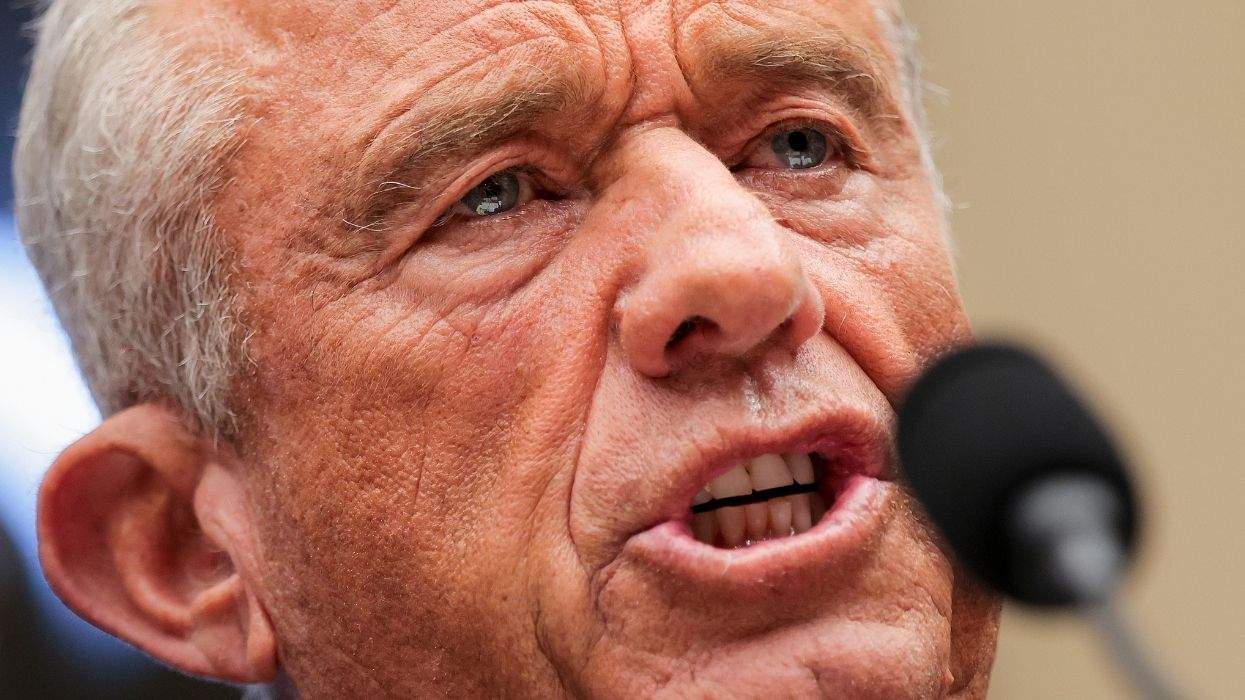

A federal judge in Oregon on Saturday forcefully struck down Health and Human Services Secretary Robert F. Kennedy Jr.’s attempt to impose far-reaching restrictions on gender-affirming care for minors, ruling the policy unlawful and blocking its enforcement in the states that challenged it.
In a final judgment dated April 18, U.S. District Judge Mustafa T. Kasubhai vacated the so-called "Kennedy Declaration," finding it exceeded the administration’s authority, violated federal rulemaking requirements, and conflicted with existing law.
The ruling delivers a sharp rebuke to one of the Trump administration’s most aggressive efforts to reshape transgender health care policy through executive action alone.
Related: RFK Jr. and Dr. Oz announce sweeping measures to ban gender-affirming care for trans youth
The court held that federal officials "lack the authority to unilaterally establish standards of care" for gender-affirming treatment and cannot exclude providers from Medicare or Medicaid for offering care consistent with accepted medical guidelines. Judge Kasubhai also permanently enjoined the federal government from enforcing the declaration or any similar policy against providers in the plaintiff states, ordering agencies to halt enforcement and notify officials within seven days.
A forceful opening
The opinion opened with unusually blunt language, calling out the case as a broader test of the rule of law.
“Unserious leaders are unsafe. There is nothing more serious than our leaders’ dedication to the rule of law so that we might maintain the integrity of our constitutional democracy,” Kasubhai wrote.
“This case highlights a leader’s unserious regard for the rule of law,” the judge continued, adding that such disregard “does not merely result in an abstract infraction” but “causes very real harm to very real people.”
Kasubhai said the court’s role was to evaluate not just policy outcomes but whether the government followed the law in creating them, writing that it “can and does judge the lawfulness of the process (or lack thereof) by which any policy choice might be made.”
The opinion sharply criticized the policy's rollout, noting that Kennedy “unlawfully issued a declaration threatening to cut federal funding” to medical providers and failed to follow required rulemaking procedures.
If the administration had acted lawfully, the judge wrote, “there might have been ample time and opportunity” for providers, families, and children — “all people and institutions of our great nation” — to adjust or seek alternatives. Instead, the abrupt threat of enforcement “caused chaos and terror for all those people and institutions of our great nation.”
The case centers on a December 2025 directive in which Kennedy declared gender-affirming care for minors “neither safe nor effective” and warned that providers could be cut off from federal health programs. The declaration was part of a broader push by the Trump administration, including proposals from Centers for Medicare and Medicaid Services Administrator Mehmet Oz, to strip federal funding from hospitals providing such care to transgender youth and bar Medicaid and CHIP from covering it entirely.
Related: Supreme Court hands RFK Jr. new power over Americans’ health, buried in PrEP case ruling
Experts had warned at the time that the administration’s approach was likely unlawful. “They are trying to do something that CMS simply isn’t empowered to do,” a former senior Centers for Medicare & Medicaid Services official from the Biden administration told The Advocate, noting that federal law bars the agency from regulating the practice of medicine. “The authority that they are citing for these actions does not exist.”
The court agreed, finding the policy was issued without the notice-and-comment rulemaking required under the Administrative Procedure Act and that it improperly attempted to supersede established standards of care.
The pressure had immediate effects. In the weeks after the policy was announced, hospitals across the country began abruptly scaling back or halting care for transgender youth, with dozens of health systems pausing treatments such as puberty blockers and hormone therapy amid fears of losing federal funding or facing investigation.
Plaintiffs argued that the directive interfered with their authority to regulate medicine and threatened access to care protected under state law, including Medicaid coverage for gender-affirming treatment.
Advocates respond
LGBTQ+ advocates were quick to praise the decision. Equality California Executive Director Tony Hoang said the ruling confirms that the federal government cannot circumvent the law to target transgender youth.
"'Unserious leaders are unsafe,' a federal judge wrote in today's decision," Hoang said in a statement to The Advocate. "This ruling confirms what we have said all along: the federal government cannot ignore the law to push a political agenda at the expense of people’s lives."
Related: Judge blocks RFK Jr.’s dangerous vaccine policy changes. Ex-CDC leader calls it ‘big news’
Hoang called the policy “dangerous and unlawful," saying it threatened to strip providers of funding and put transgender young people and their families “in harm’s way by threatening access to medically necessary, evidence-based healthcare." He also credited California Attorney General Rob Bonta for joining the multistate lawsuit that led to the ruling.
High stakes for providers and patients
Court records show federal officials began acting on the declaration within days of its release, referring hospitals and health systems for potential exclusion from Medicare and Medicaid. The court noted that the penalty can function as a "financial death sentence" for providers reliant on federal funding.
By classifying gender-affirming care as outside "professionally recognized standards," the declaration could reshape access nationwide. The court’s ruling restores the status quo in the plaintiff states, allowing providers to continue offering care without the threat of losing federal funding.
Related: Federal judge blocks RFK Jr. from limiting care for trans youth
Gender-affirming care has been deemed safe, effective, and evidence- based and is supported by major medical associations, including the American Medical Association and the American Academy of Pediatrics.
A broader legal battle
The lawsuit was brought by a coalition of states led by Oregon and including California, New York, Washington, and others — all of which maintain policies protecting access to gender-affirming care for minors.
The Trump administration is expected to appeal. For now, however, the decision marks a significant legal setback for efforts to restrict transgender health care through federal administrative action and a meaningful victory for the states, providers, and advocates defending access to care.
"Secretary Kennedy’s unlawful declaration harmed children,” Kasubhai wrote. “This case illustrates that when a leader acts without authority and in the absence of the rule of law, he acts with cruelty."