'%3E%3Cpath d='M16.3574 35.6519H12.9537L15.0491 18.8873L16.3574 35.6519ZM30.4229 54.0093L22.309 0.994385H7.91795L0 54.0093H10.6634L11.5802 46.3855H17.4014L17.9914 54.0093H30.4229Z' fill='%23971B20'/%3E%3Cpath d='M48.2073 41.8813C48.2073 43.4049 47.4892 44.0011 46.1144 44.0011H43.7595V11.0687H46.1144C47.4892 11.0687 48.2073 11.6636 48.2073 13.1885V41.8813ZM59.5273 43.6695V11.3326C59.5273 3.71323 53.5729 0.994385 47.8157 0.994385H31.7213V54.0093H47.8157C53.5729 54.0093 59.5273 51.29 59.5273 43.6695Z' fill='%23971B20'/%3E%3Cpath d='M90.183 0.994385H78.6039L75.0711 30.6157L71.9955 0.994385H59.4346L69.2474 54.0093H80.373L90.183 0.994385Z' fill='%23971B20'/%3E%3Cpath d='M107.063 42.3448C107.063 43.7359 105.951 44.5974 104.643 44.5974C103.269 44.5974 102.157 43.7359 102.157 42.3448V12.658C102.157 11.2676 103.269 10.4058 104.643 10.4058C105.951 10.4058 107.063 11.2676 107.063 12.658V42.3448ZM119.233 43.2723V11.7312C119.233 6.36384 112.952 -3.8147e-06 104.643 -3.8147e-06C96.2667 -3.8147e-06 89.9867 6.36384 89.9867 11.7312V43.2723C89.9867 48.6393 96.2667 55 104.643 55C112.952 55 119.233 48.6393 119.233 43.2723Z' fill='%23971B20'/%3E%3Cpath d='M150.976 43.9349V33.7309H139.069V42.3448C139.069 43.7359 137.957 44.5974 136.582 44.5974C135.076 44.5974 133.964 43.7359 133.964 42.3448V12.658C133.964 11.2676 135.076 10.4058 136.582 10.4058C137.957 10.4058 139.069 11.2676 139.069 12.658V21.2723H150.976V11.0687C150.976 5.70107 145.283 -3.8147e-06 136.582 -3.8147e-06C127.75 -3.8147e-06 121.796 5.70107 121.796 11.0687V43.9349C121.796 49.3022 127.75 55 136.582 55C145.283 55 150.976 49.3022 150.976 43.9349Z' fill='%23971B20'/%3E%3Cpath d='M167.478 35.6519H164.076L166.17 18.8873L167.478 35.6519ZM181.544 54.0093L173.432 0.994385H159.037L151.123 54.0093H161.785L162.704 46.3855H168.523L169.114 54.0093H181.544Z' fill='%23971B20'/%3E%3Cpath d='M205.412 10.4058V0.994385H177.081V10.4058H185.392V54.0093H197.428V10.4058H205.412Z' fill='%23971B20'/%3E%3Cpath d='M230.002 54.0093V43.9349H218.914V31.8746H226.635V21.8028H218.914V10.4058H230.002V0.994385H206.875V54.0093H230.002Z' fill='%23971B20'/%3E%3C/g%3E%3Cdefs%3E%3CclipPath id='clip0_260_7080'%3E%3Crect width='230' height='55' fill='white'/%3E%3C/clipPath%3E%3C/defs%3E%3C/svg%3E)
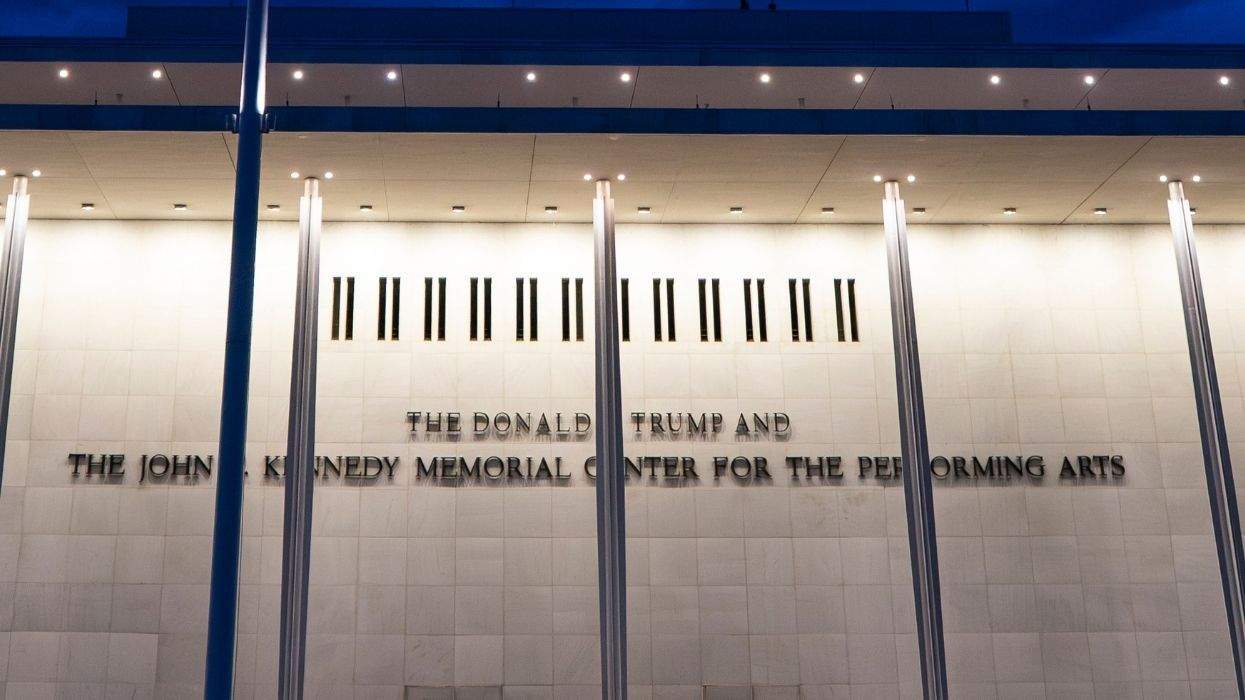
A federal judge on Friday ordered the Kennedy Center to remove President Donald Trump's name from the institution, ruling that Congress alone has the authority to rename the nation's official memorial to President John F. Kennedy.
In a scathing 94-page opinion, U.S. District Judge Christopher Cooper rejected the Kennedy Center board's decision to rebrand the institution as the "Trump Kennedy Center," concluding that trustees lacked the power to alter a name established by federal law more than six decades ago.
"The Kennedy Center's organic statute makes crystal clear that the Center is to be named for President Kennedy," Cooper wrote. "Congress gave the Kennedy Center its name, and only Congress can change it."
The ruling is a significant setback for Trump's effort to remake one of the nation's most prominent cultural institutions after installing allies on its governing board and assuming a direct role in its leadership.
Related: Drag group slams Donald Trump for takeover of Kennedy Center board and vowing to end drag shows
The dispute traces back to Trump's unprecedented takeover of the Kennedy Center in February 2025. After criticizing the institution for hosting drag performances and what he called "anti-American propaganda," Trump removed board members, named himself chairman, and installed longtime ally Richard Grenell as the center's interim executive director. Trump promised a new "golden age" for American arts and culture under his leadership.
Grenell, a former ambassador to Germany and one of the highest-profile gay Republicans in the country, quickly became the public face of the administration's overhaul. His tenure became one of the most politically contentious periods in the center's history, marked by artist boycotts, canceled performances, criticism from LGBTQ+ advocates, and declining ticket sales. Lin-Manuel Miranda canceled a planned production of the Tony-winning musical Hamilton, actor Issa Rae withdrew a sold-out appearance, and several WorldPride events were relocated after organizers said the venue no longer felt welcoming.
By March of this year, Grenell stepped down as president and was replaced by facilities executive Matt Floca, though he remained involved as an adviser to the institution.
Related: Kennedy Center Honors to be renamed for Donald Trump, happening at ‘yet to be determined’ new venue
"Early last year, however, rumblings of change reverberated through the Kennedy Center," the judge wrote before recounting how Trump replaced trustees, appointed himself to the board, became chairman, replaced the institution's president, stripped ex officio trustees of voting rights, renamed the center, and later announced plans to close it for two years.
The lawsuit was brought by Rep. Joyce Beatty of Ohio, an ex officio member of the Kennedy Center board who challenged the renaming and several related actions by the institution's new leadership.
According to the court's findings, the vote to rename the center came during a December 2025 board meeting where the proposal was not listed on the agenda. Beatty said she attempted to object but found herself muted as trustees moved toward a vote. Cooper noted that no discussion took place regarding the legal risks of renaming the institution and that the record contained no evidence that board counsel advised trustees on whether the move complied with federal law.
The board approved the change anyway.
The next day, workers installed new signage on the building's front portico, placing Trump's name above Kennedy's. The institution's website, promotional materials, and subscriber communications were quickly updated to reflect the new branding. Cooper observed that both sides agreed the speed of the installation indicated the signage had been prepared before the trustees formally voted.
Related: Trump's gay Kennedy Center president demands $1M from performer who canceled Christmas Eve show
After Kennedy’s assassination in 1963, Congress designated the institution as the John F. Kennedy Center for the Performing Arts and established it as the sole national memorial to Kennedy in Washington and its surrounding area. Federal law also prohibits installing additional memorials in most public areas of the center.
"The Center cannot bear any other formal name or public memorial based on the Board's unilateral say-so," Cooper wrote.
Cooper also ruled that the board improperly stripped ex officio trustees of voting rights, finding that the Kennedy Center's governing statute makes no distinction between appointed trustees and ex officio members with respect to the core powers of administering the institution.
In a separate victory for Beatty, the judge preliminarily blocked plans to close the Kennedy Center for two years while extensive renovations are carried out.
At one point, Cooper described the closure vote as "one of the more consequential decisions in the institution's lifespan" and concluded that the board's process fell "below even a forgiving standard of prudence."