'%3E%3Cpath d='M16.3574 35.6519H12.9537L15.0491 18.8873L16.3574 35.6519ZM30.4229 54.0093L22.309 0.994385H7.91795L0 54.0093H10.6634L11.5802 46.3855H17.4014L17.9914 54.0093H30.4229Z' fill='%23971B20'/%3E%3Cpath d='M48.2073 41.8813C48.2073 43.4049 47.4892 44.0011 46.1144 44.0011H43.7595V11.0687H46.1144C47.4892 11.0687 48.2073 11.6636 48.2073 13.1885V41.8813ZM59.5273 43.6695V11.3326C59.5273 3.71323 53.5729 0.994385 47.8157 0.994385H31.7213V54.0093H47.8157C53.5729 54.0093 59.5273 51.29 59.5273 43.6695Z' fill='%23971B20'/%3E%3Cpath d='M90.183 0.994385H78.6039L75.0711 30.6157L71.9955 0.994385H59.4346L69.2474 54.0093H80.373L90.183 0.994385Z' fill='%23971B20'/%3E%3Cpath d='M107.063 42.3448C107.063 43.7359 105.951 44.5974 104.643 44.5974C103.269 44.5974 102.157 43.7359 102.157 42.3448V12.658C102.157 11.2676 103.269 10.4058 104.643 10.4058C105.951 10.4058 107.063 11.2676 107.063 12.658V42.3448ZM119.233 43.2723V11.7312C119.233 6.36384 112.952 -3.8147e-06 104.643 -3.8147e-06C96.2667 -3.8147e-06 89.9867 6.36384 89.9867 11.7312V43.2723C89.9867 48.6393 96.2667 55 104.643 55C112.952 55 119.233 48.6393 119.233 43.2723Z' fill='%23971B20'/%3E%3Cpath d='M150.976 43.9349V33.7309H139.069V42.3448C139.069 43.7359 137.957 44.5974 136.582 44.5974C135.076 44.5974 133.964 43.7359 133.964 42.3448V12.658C133.964 11.2676 135.076 10.4058 136.582 10.4058C137.957 10.4058 139.069 11.2676 139.069 12.658V21.2723H150.976V11.0687C150.976 5.70107 145.283 -3.8147e-06 136.582 -3.8147e-06C127.75 -3.8147e-06 121.796 5.70107 121.796 11.0687V43.9349C121.796 49.3022 127.75 55 136.582 55C145.283 55 150.976 49.3022 150.976 43.9349Z' fill='%23971B20'/%3E%3Cpath d='M167.478 35.6519H164.076L166.17 18.8873L167.478 35.6519ZM181.544 54.0093L173.432 0.994385H159.037L151.123 54.0093H161.785L162.704 46.3855H168.523L169.114 54.0093H181.544Z' fill='%23971B20'/%3E%3Cpath d='M205.412 10.4058V0.994385H177.081V10.4058H185.392V54.0093H197.428V10.4058H205.412Z' fill='%23971B20'/%3E%3Cpath d='M230.002 54.0093V43.9349H218.914V31.8746H226.635V21.8028H218.914V10.4058H230.002V0.994385H206.875V54.0093H230.002Z' fill='%23971B20'/%3E%3C/g%3E%3Cdefs%3E%3CclipPath id='clip0_260_7080'%3E%3Crect width='230' height='55' fill='white'/%3E%3C/clipPath%3E%3C/defs%3E%3C/svg%3E)
There is a wall inside Central Intelligence Agency headquarters in Langley, Virginia, carved with words meant to outlast the administrations whose officials pass beneath them. “And ye shall know the truth and the truth shall make you free,” it reads. Nearby, the agency’s Memorial Wall holds nameless stars for fallen officers. Julia Curlee knew some of them.
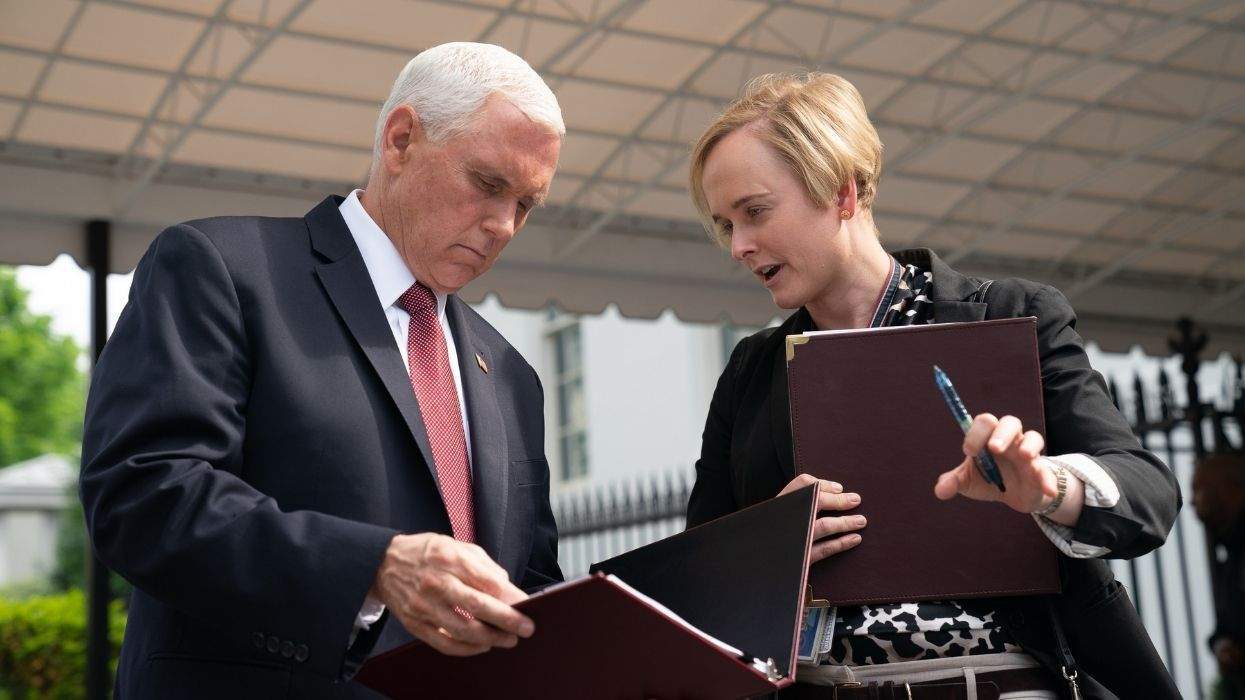
“I had this amazing experience which at some times felt like I was living in a parallel universe where Mike Pence had a gay, trans PDB briefer and no one cared,” Curlee says.
“It hurts to see something you really believed in taken away from you,” Curlee tells The Advocate in a new hourlong interview.
For nearly two decades, she worked in the shadow of both walls. She survived rocket attacks, traveled through 35 countries, briefed former President George W. Bush and President Donald Trump, and became Vice President Mike Pence’s regular intelligence briefer. Almost all of it was work she could not discuss.
Now, after resigning from the CIA, Curlee is doing something once unimaginable for a career officer. She is introducing herself to America and warning that the Trump administration is casting out the people who quietly keep the country safe.
Career intelligence officers are trained to leave politics at the gate, suppress their egos, and do work for which they can rarely claim credit. LGBTQ+ officers have done the same while often keeping their personal lives and identities outside the frame — a second cover layered over the secrets they already carry.
In Curlee’s telling, Trump inverted that order. She sees Defense Secretary Pete Hegseth and other administration figures as “playacting to an audience of one,” confusing the image of power with the substance of governing while career professionals do the work that keeps institutions running.
“You cannot grow a 20-year CIA analyst or a multi-tour operations officer overnight,” she says. “They’re going to move on with their lives, and the country is going to suffer for it.”
What keeps Curlee up at night is the possibility that transgender people are only “the tip of the spear.”
“Following after me are going to be hundreds of other people who have decades of experience who we vitally need for our national security,” she says. “We’re just throwing away a generation of people that have given their lives to their country.”
Two dreams
Curlee says the week her essay appeared was the second-craziest of her life. The first was in June 2013, when she walked into CIA headquarters as Julia.
In “The Wrong Kind of American,” a first-person essay published in The Atlantic last week, Curlee revealed that she was the transgender officer who served Pence and helped the second Trump administration take control of sensitive intelligence programs. The White House retained her after removing scores of national security professionals. Curlee believes it removed her once her identity became a public political problem.
Growing up in Hawaii, Curlee wanted to see the world and become an intelligence officer. Her parents stressed service, and The Hunt for Red October supplied the image of the analyst as hero. She also knew she was a girl.
“I had two great dreams in life,” she says. “I wanted to be a CIA officer, and I wanted to be a girl. And for a while, I got to do both of those things before my government decided otherwise.”
Curlee attended American University and the National War College, and worked as a young analyst in Baghdad before joining the CIA in 2007.
 Julia Curlee deployed in Iraq before her transition.Courtesy of Julia Curlee
Before transitioning, Curlee says she presented as a man at work while living as a woman elsewhere. She says a previous CIA employee who tried to transition had been pushed out. When Curlee approached ANGLE, the agency’s LGBTQ+ employee group, its members identified her as the first transgender person to come to them.
On June 12, 2013, Curlee sat in the CIA parking lot fearing the end of her career. Instead, a guard greeted her as “ma’am,” colleagues gave her a gift card for a new wardrobe, and younger employees largely wanted to get back to work.
“It was a huge nothingburger for everyone else,” she says. “They went on with their lives. And I got to spend the next decade really just being myself.”
Curlee became the first known CIA officer to transition openly and remain. In a 2014 interview with The Advocate, speaking as “Jenny,” she described how professionally the agency handled her transition. She later wrote under a pseudonym to show LGBTQ+ people they could serve. Some officers inspired by those essays, she says, have now been forced out.
Then came the assignment that seemed to prove the country had changed.
Curlee volunteered for the President’s Daily Brief staff during Trump’s first term and was asked to become Pence’s regular briefer.
Pence’s opposition to LGBTQ+ rights was clear, but Curlee found him attentive and demanding. He eventually asked her to extend an assignment that lasted about a year and a half.
“He was an excellent user of intelligence,” she says. “He was serious, and he had a good head on his shoulders when it came to foreign policy, and he used it.”
Pence and his staff knew Curlee was transgender and married to a woman. She says they treated her with dignity. When her assignment ended, Pence invited Curlee’s family to the White House. With Curlee’s wife beside her, the vice president took her mother’s hand and told her she should be proud of her daughter.
Pence responded to Curlee’s account on Sunday during an interview from Kyiv, Ukraine, on CNN’s State of the Union. He appeared to stumble at first, repeating himself before thanking her.
“I haven’t — I haven’t read the article,” Pence said. “I appreciate the kind words.”
His answer then briefly became tangled as he tried to connect his conservative politics, Christian faith, and marriage to the principle of treating others respectfully, while seemingly avoiding pronouns to describe Curlee.
“My conservative values are fairly well-known, but maybe some people didn’t quite know that among our Christian values is — my wife and I believe in treating others the way that we’d like to be treated, with decency and respect,” Pence said.
Eventually, he arrived at his response to Curlee.“I was heartened to hear Julia reflect that that was the experience that took place in our office,” he said.
Curlee does not claim to know how Pence reconciled his private conduct with his public politics. To her, what matters is that respect was possible — and that its disappearance was a choice.
“It doesn’t have to be this way,” she says. “And it wasn’t this way. But it’s a choice to pursue a politics of exclusion and demonization.”
The third day
Curlee later joined President Joe Biden’s National Security Council as a director for intelligence programs. During the 2024 campaign, she watched from the Situation Room as Trump’s “Kamala is for they/them” advertisements portrayed transgender people as a threat — a tactic she had analyzed abroad.
“I’m watching it, and it’s the dehumanization of a tiny minority,” she says. “I’ve written PDBs about this on Russia and Iran and Hungary, and I’m watching it happen to me.”
Still, she stayed. As Biden’s political appointees departed, Curlee became acting senior director for intelligence programs and the most senior career intelligence official remaining at the White House, helping oversee the peaceful transfer of power.
On January 22, 2025 — the third day of Trump’s new administration — Curlee was briefing the deputy national security adviser when about 160 career NSC detailees were summoned to a group call and given 15 minutes to leave the White House complex. Curlee says she was the only person summoned to that call who was retained.
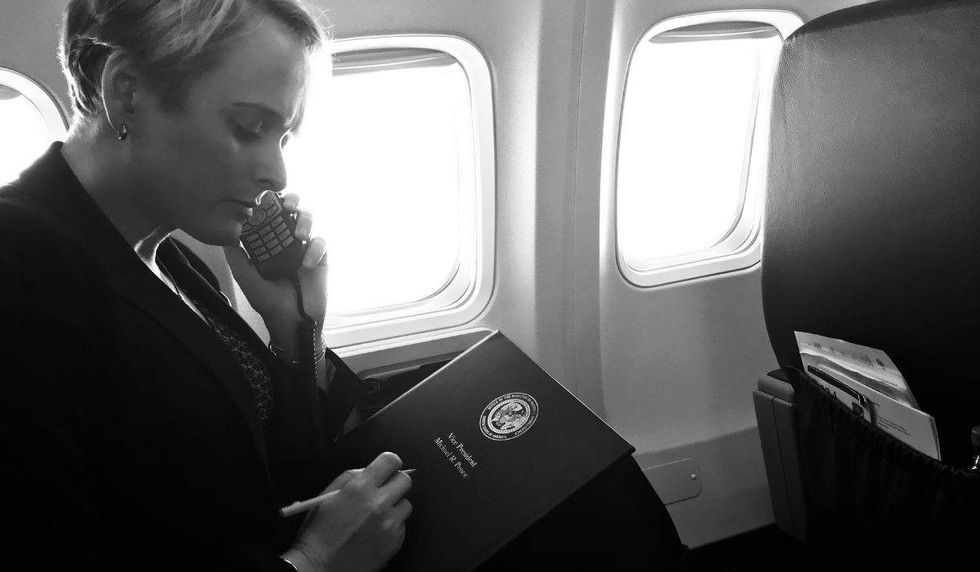 Julia Curlee aboard Air Force Two.Courtesy of Julia Curlee
Trump officials knew Curlee was transgender, she says, but told her they needed her experience: “‘You, we need you. You’re indispensable.’”
For 69 days, Curlee helped incoming officials access the most sensitive classified programs and receive the President’s Daily Brief. At the same time, she says, the administration’s policies barred her from women’s restrooms on White House grounds and ended her insurance coverage for estrogen.
“Somehow I’m indispensable in a White House but not welcome in the restroom,” she said in a Lawfare podcast interview.
On a Saturday in late March, Curlee’s boss called while she was eating with her family in Roanoke, Virginia. The White House chief of staff had ended her detail. No reason was provided. She was told to be discreet — and asked to return Monday because the administration still needed her.
Then her phone began filling with messages about Laura Loomer. The far-right conspiracy theorist, who held no government position, had posted about an unnamed transgender “Biden holdover” in the intelligence directorate and demanded the person’s identity.
Curlee does not know whether Trump personally ordered her removal. She believes an insider supplied Loomer with information and used her as a conduit.
“She doesn’t sit in the Situation Room,” Curlee says. “She doesn’t walk herself onto the White House compound, get a meeting with the president, walk into the Oval Office. Somebody from the inside had to have decided that using this outside person was the cleanest way to get rid of me.”
Back at CIA headquarters, a large photograph of Curlee aboard Air Force One remained in the agency museum — near a restroom she says she could no longer enter. By June 2025, the CIA’s LGBTQ+ group had been banned. Curlee withheld her customary Pride message, fearing it would be used against her. She resigned this May.
The Advocate contacted the CIA and the White House for comment. The CIA did not respond. White House deputy press secretary Anna Kelly says in a statement, “President Trump is the duly elected President of the United States. He can remove any executive branch official at his discretion. Trump administration officials are entrusted with advancing the America First agenda that nearly 80 million Americans elected him to implement. Anyone who writes a 3,000-word op-ed bragging about themselves while attacking the President clearly doesn’t belong in public service.”
A White House official also characterizes Curlee as “a Biden-era appointee whose end date was scheduled for mid-2025.” Curlee, however, was a career CIA officer detailed to the NSC, not one of the Biden political appointees whose departures left her in charge of the intelligence directorate during the presidential transition. The White House ended her detail before the date it now says had been scheduled.
“An intelligence officer is not in the business of advancing the political agenda of a particular president,” Curlee says. “We swear an oath to the Constitution, to the office, not the man.”
‘Amateur hour’
Curlee points first to the practical cost of purging a diverse intelligence workforce. America needs, as she puts it, “gay, trans, Chinese language-speaking cyber operators” and officers from immigrant communities who know languages and cultures others do not.
“You wouldn’t want to send someone like me into Peshawar, Pakistan,” she says. “But you might need somebody who fits in there and knows the culture and the language — and guess what, they might be from an immigrant community in America.”
Curlee also connects the removal of career professionals to the government’s performance during the ongoing war with Iran and the months of global economic disruption caused by Iran’s effective closure of the Strait of Hormuz. Even if Trump had made the same decisions, she argues, a functioning NSC could have anticipated the consequences and coordinated the response.
“If there had been a competent process and a National Security Council intact, with an intelligence community that was allowed to tell the president not just what he wanted to hear,” she says, “it would not have been as bad and as uncoordinated.”
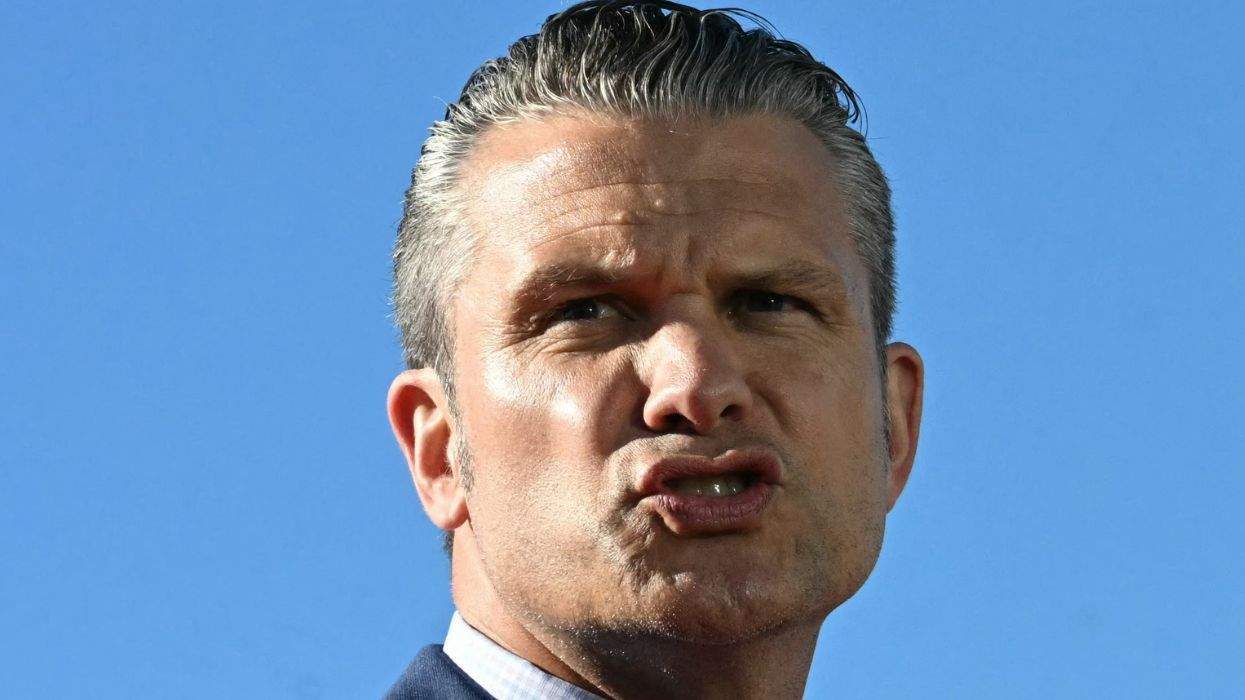
Her criticism extends to Hegseth, whom Curlee describes as a “weekend talk show host elevated to be the head of the Defense Department, the biggest institution on the planet.”
Hegseth has overseen the removal of transgender service members and an end to transition-related care. In July, however, he ordered mandatory testosterone deficiency screening as part of periodic health assessments for troops age 30 and older, with targeted testosterone therapy available. The distinction drew questions from U.S. District Judge Ana Reyes, who is overseeing a challenge to the transgender military ban.
“The same man who decides to drive two-decade career military people out because they’re trans launches his own gender-affirming care program for cis men,” Curlee says.
Curlee was still at the NSC when Atlantic editor-in-chief Jeffrey Goldberg was inadvertently added to a Signal chat in which Hegseth shared details about impending strikes in Yemen. She says she had explicitly briefed officials not to bring cellphones into sensitive spaces or use commercial apps for high-level government business. Hegseth has denied sharing classified information, although the messages included aircraft, weapons and attack times.
“How in the world did anyone think that a high-level meeting of our government should be happening on anyone’s cellphones?” Curlee asks. To her, the discussion showed “amateur hour.”
Two covers
For LGBTQ+ officers who remain, the calculation is complicated. Some are returning to the closet, Curlee says. Intelligence officers already maintain professional secrecy; concealing their identities adds what she calls a “second cover.”
Going public has brought another cost. Internet users have circulated Curlee’s former name, which, she says, “is no secret,” and sought information about her family.
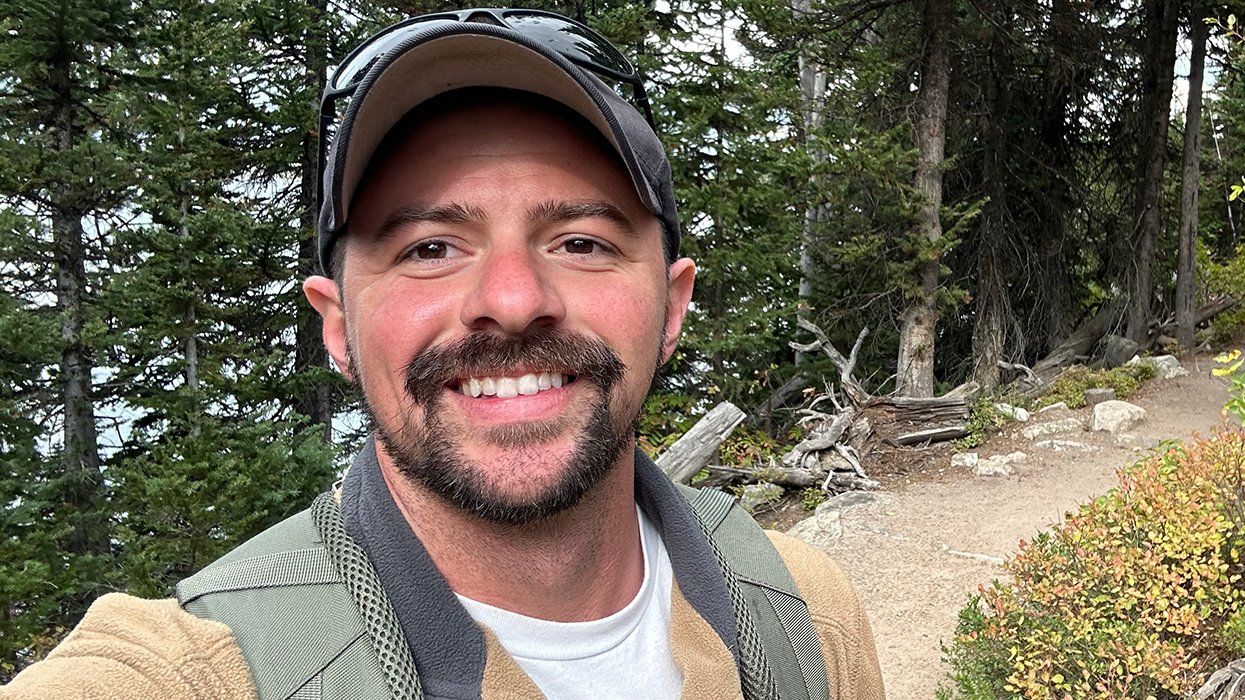
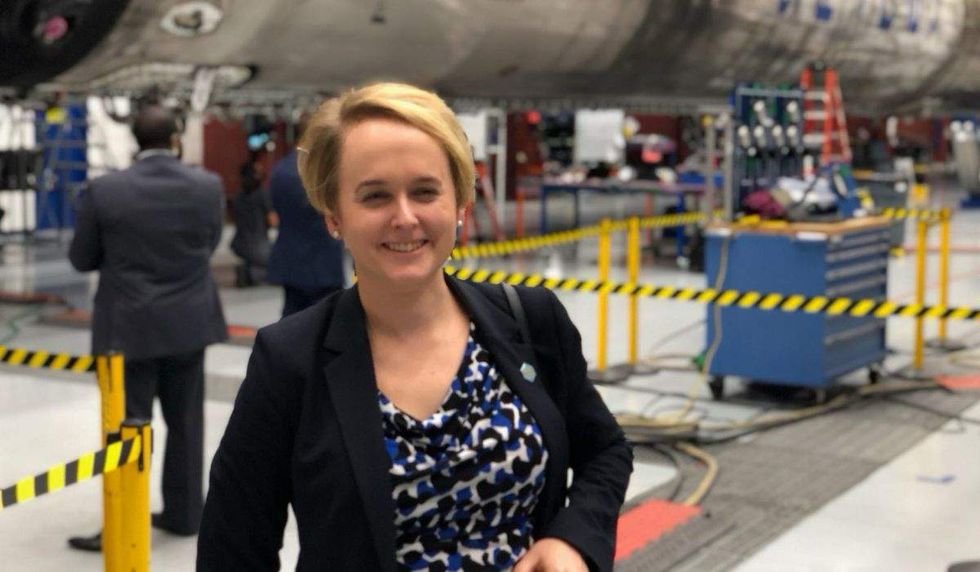 Julia Curlee is a former CIA officer and briefer who oversaw the Trump transition on the National Security Council before she was fired for being trans.Courtesy of Julia Curlee
“Most of my life, when people were shooting at me, they had the decency to be across the street,” she says. “You do fear that they’re going to go after your family for no reason other than who you are.”
Yet the messages that affect her most come from frightened parents of transgender children searching for proof that their children could have expansive futures.
Curlee says she did not meet another transgender adult until she was about 30. When she transitioned, her mentors made her promise not to disappear into a new life, as generations of transgender people had been advised to do.
Now she is keeping that promise as a wife, mother, guitarist, gardener, analyst, and self-described boring middle-aged “white trans lady” who spent nearly two decades serving her country.
“There’s so precious few people like that out in the world,” Curlee says, holding back tears. “I really feel obligated to talk about my experience so that doesn’t ever happen again.”