'%3E%3Cpath d='M16.3574 35.6519H12.9537L15.0491 18.8873L16.3574 35.6519ZM30.4229 54.0093L22.309 0.994385H7.91795L0 54.0093H10.6634L11.5802 46.3855H17.4014L17.9914 54.0093H30.4229Z' fill='%23971B20'/%3E%3Cpath d='M48.2073 41.8813C48.2073 43.4049 47.4892 44.0011 46.1144 44.0011H43.7595V11.0687H46.1144C47.4892 11.0687 48.2073 11.6636 48.2073 13.1885V41.8813ZM59.5273 43.6695V11.3326C59.5273 3.71323 53.5729 0.994385 47.8157 0.994385H31.7213V54.0093H47.8157C53.5729 54.0093 59.5273 51.29 59.5273 43.6695Z' fill='%23971B20'/%3E%3Cpath d='M90.183 0.994385H78.6039L75.0711 30.6157L71.9955 0.994385H59.4346L69.2474 54.0093H80.373L90.183 0.994385Z' fill='%23971B20'/%3E%3Cpath d='M107.063 42.3448C107.063 43.7359 105.951 44.5974 104.643 44.5974C103.269 44.5974 102.157 43.7359 102.157 42.3448V12.658C102.157 11.2676 103.269 10.4058 104.643 10.4058C105.951 10.4058 107.063 11.2676 107.063 12.658V42.3448ZM119.233 43.2723V11.7312C119.233 6.36384 112.952 -3.8147e-06 104.643 -3.8147e-06C96.2667 -3.8147e-06 89.9867 6.36384 89.9867 11.7312V43.2723C89.9867 48.6393 96.2667 55 104.643 55C112.952 55 119.233 48.6393 119.233 43.2723Z' fill='%23971B20'/%3E%3Cpath d='M150.976 43.9349V33.7309H139.069V42.3448C139.069 43.7359 137.957 44.5974 136.582 44.5974C135.076 44.5974 133.964 43.7359 133.964 42.3448V12.658C133.964 11.2676 135.076 10.4058 136.582 10.4058C137.957 10.4058 139.069 11.2676 139.069 12.658V21.2723H150.976V11.0687C150.976 5.70107 145.283 -3.8147e-06 136.582 -3.8147e-06C127.75 -3.8147e-06 121.796 5.70107 121.796 11.0687V43.9349C121.796 49.3022 127.75 55 136.582 55C145.283 55 150.976 49.3022 150.976 43.9349Z' fill='%23971B20'/%3E%3Cpath d='M167.478 35.6519H164.076L166.17 18.8873L167.478 35.6519ZM181.544 54.0093L173.432 0.994385H159.037L151.123 54.0093H161.785L162.704 46.3855H168.523L169.114 54.0093H181.544Z' fill='%23971B20'/%3E%3Cpath d='M205.412 10.4058V0.994385H177.081V10.4058H185.392V54.0093H197.428V10.4058H205.412Z' fill='%23971B20'/%3E%3Cpath d='M230.002 54.0093V43.9349H218.914V31.8746H226.635V21.8028H218.914V10.4058H230.002V0.994385H206.875V54.0093H230.002Z' fill='%23971B20'/%3E%3C/g%3E%3Cdefs%3E%3CclipPath id='clip0_260_7080'%3E%3Crect width='230' height='55' fill='white'/%3E%3C/clipPath%3E%3C/defs%3E%3C/svg%3E)
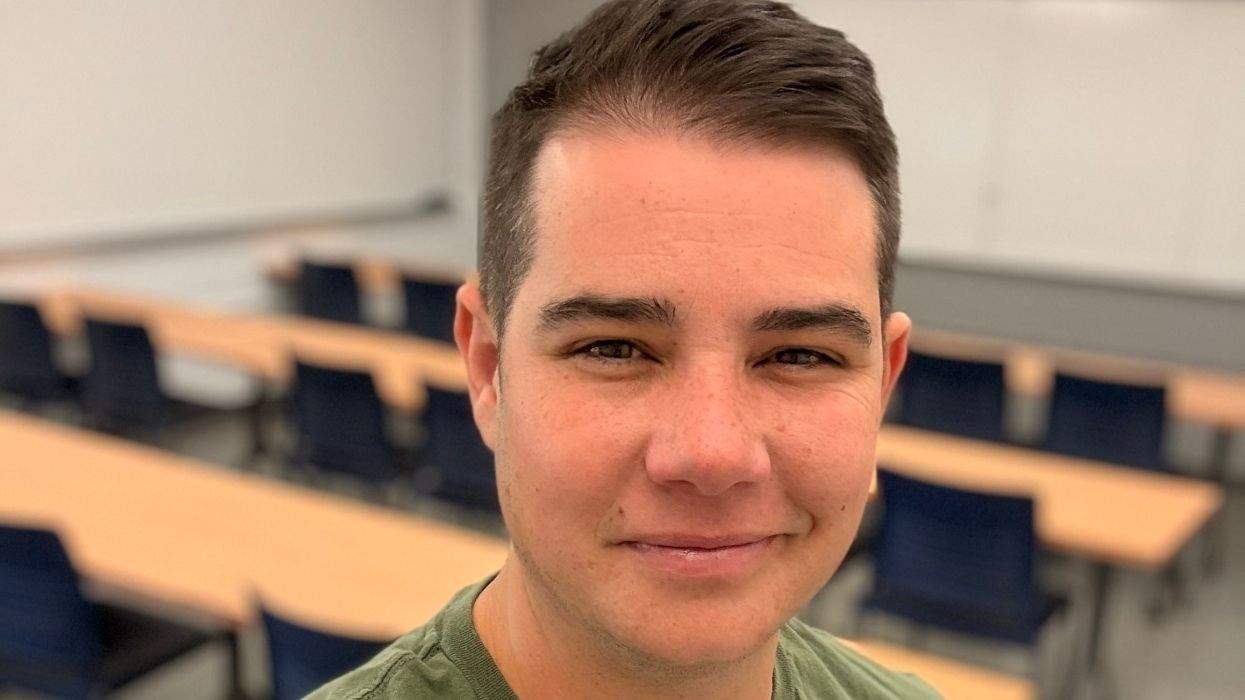

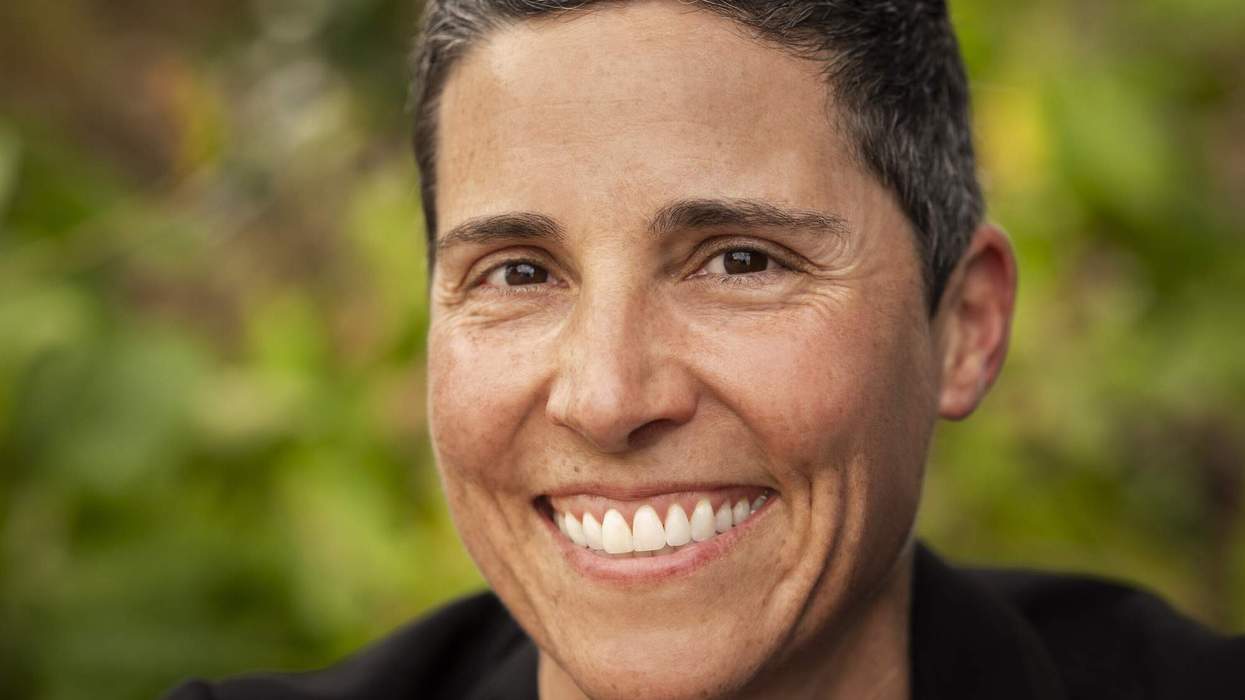
Flint Del Sol thought the government might tell him no. He did not expect it to say the quiet part in writing.
For nearly three years, Del Sol, an educator and author, had been pursuing a workplace discrimination complaint with the U.S. Equal Employment Opportunity Commission against his former employer, a Southern California school district where he taught for more than a decade. As a transgender man, he says he filed the complaint after years of threats, scrutiny, and what he described as discriminatory treatment tied to his transition and his advocacy for LGBTQ+ students.
Related: EEOC won't advocate for trans and nonbinary people, in keeping with Trump's 'two sexes' order
'It's coming from the chain of command'
Then, on Tuesday, he said, an EEOC investigator called with an update. The agency could no longer move forward.
“I’m sorry to let you know, but we are not pursuing transgender discrimination cases,” Del Sol recalled the investigator telling him. “It’s coming from the top.”
Del Sol asked the investigator to confirm the conversation by email. The response, reviewed by The Advocate, was a gut punch.
“That is correct,” the investigator wrote. “We are not permitted to conduct/continue any investigation regarding transgender cases, and that is coming from the chain of command.”
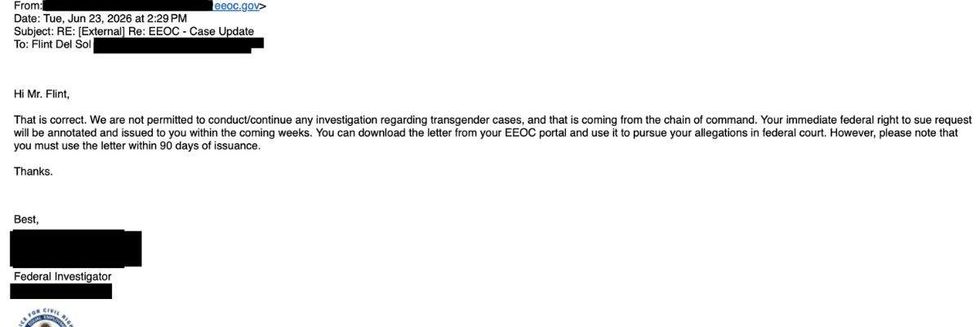 Flint Del Sol received an email from an investigator with the EEOC that said that his discrimination case investigation would not move forward because those at the top have said that transgender people's claims cannot continue.Email obtained by The Advocate
The investigator said Del Sol’s immediate federal right-to-sue request would be issued in the coming weeks and that he could use it to pursue his allegations in federal court. The letter must be used within 90 days of issuance, the investigator wrote.
“I wasn’t just being shuffled to the bottom,” Del Sol told The Advocate. “I was being told outright that I wasn’t worth protecting.”
The Advocate requested comment from the EEOC on Friday, asking whether investigators have been instructed not to conduct or continue investigations involving transgender discrimination claims and how such a directive could be reconciled with Title VII and the Supreme Court’s 2020 decision in Bostock v. Clayton County, which held that federal employment law protects workers from being fired for being gay or transgender.
The EEOC did not answer any of The Advocate’s questions, citing confidentiality. "Under federal law, both charges filed with, and charge inquiries made to the EEOC are confidential," an EEOC spokesperson wrote. "The EEOC can neither confirm nor deny the existence [of] any charge or charge inquiry."
A target in his own classroom
Del Sol filed his EEOC complaint after leaving the school district where, he said, his transition and support for LGBTQ+ students made him a target. He had built an LGBTQ+ student library and advised an LGBTQ+ student club. The work brought attention, including from Fox News, and then threats.
He said threatening letters were mailed to the school and placed in his mailbox. People called the school, threatening violence. One instance, he said, involved a bomb threat to his classroom.
“I didn’t know about it until I got to school and there was a police officer in my classroom telling me that they were going to do a scan to try to see if there was an explosive device in my room,” he said. “And I thought they were going to cancel class or send me home, and they just moved me to another room and had me keep teaching.”
He also described a district employee going through his classroom library and removing LGBTQ+ books that officials believed could cause problems. “What happened to me in my school district,” Del Sol said, “I really wanted for it to never happen to another teacher again.”
He filed with the EEOC in November 2023 and refiled in May 2024 after some of his claims fell outside the three-year filing window. He said the agency accepted the complaint and began the investigation process.
“I wasn’t very hopeful,” he said. “And then when they reviewed my case, they accepted it, and they said they were going to start the investigation process.”
Related: LGBTQ+ employees now have more trouble fighting harassment in the workplace
Then the rules changed
That entire sequence — the filing, the refiling, the acceptance, the investigation — happened under the rules as they were under the Biden administration. Then the rules changed.
Before President Donald Trump returned to office, gender identity was an accepted basis for an EEOC complaint. In January 2025, Trump signed an executive order declaring that the federal government would recognize only two sexes and directing agencies to remove policies and materials the administration characterized as promoting “gender ideology.”
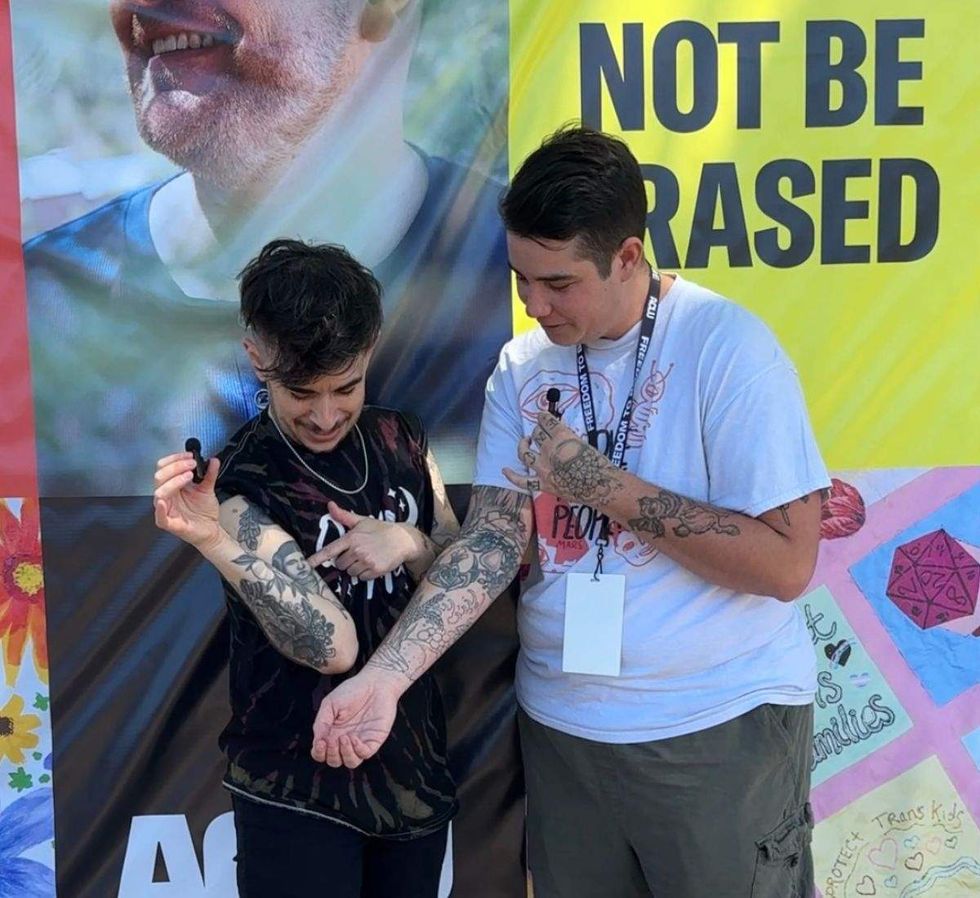 Flint Del Sol (right) compares his tattoos to those of ACLU attorney Chase Strangio.Courtesy Flint Del Sol
Under EEOC Chair Andrea Lucas, the agency moved swiftly to comply, dropping its own pending lawsuits on behalf of transgender workers, rescinding Biden-era guidance that said misgendering or denying bathroom access consistent with gender identity could constitute unlawful workplace harassment, and routing gender identity complaints to headquarters for review. Lucas has defended the shift as a matter of fidelity to the law's text. “Biology is not bigotry,” she said in an early statement, pledging to defend “the biological and binary reality of sex.”
Critics say the posture defies the Supreme Court, since Bostock left gender identity discrimination actionable under Title VII regardless of how the agency spends its resources. So far, the courts have largely declined to intervene. On June 12, a federal judge in Maryland dismissed a lawsuit challenging what advocates call the agency’s “Trans Exclusion Policy,” ruling that the commission’s decisions about which cases to pursue are discretionary and unreviewable, even as the judge called the policy “deeply troubling.” For someone in Del Sol’s position, it means the right to sue may be the only path left, and not a guaranteed one.
Legal experts weigh in
Shannon Minter, legal director of the National Center for LGBTQ+ Rights, said the agency’s stance cannot be squared with the law. "The EEOC's decision directly conflicts with controlling Supreme Court precedent in Bostock," Minter told The Advocate. "The agency is openly defying the Supreme Court and refusing to apply the law."
The practical effect, Minter said, is to shift the cost of enforcement onto the very people the agency exists to protect. "This puts the burden on individuals to pay to pursue their own private lawsuits. The function of the EEOC is to avoid putting that burden on private individuals, and to ensure that our nation's employment discrimination laws are fully and fairly enforced."
Minter also stressed the stakes of the clock now facing Del Sol and others like him: "Once you receive a right-to-sue letter, you have 90 days to file a lawsuit. That is a strict deadline. If you do not file within those 90 days, you will miss your opportunity to bring a case."
Gregory Nevins, senior counsel and director of the Employment Fairness Project at Lambda Legal, said Del Sol's experience fits a clear pattern. "From the very outset, they moved to dismiss every transgender case that they were already involved in," he said, noting that when the EEOC abandoned those suits, private lawyers and advocacy groups stepped in to represent the workers it left behind.
Nevins drew a distinction between the agency's broad latitude over which cases to pursue and the policy now in place. The EEOC has always had wide discretion to set enforcement priorities, he said, "it's okay to have priorities” — but that is different from a categorical refusal. "That doesn't mean it's okay to adopt a blanket position like, 'Oh, we won't take any cases on behalf of this group or that group.' That's not okay."
The difficulty, he said, is that courts have historically treated such enforcement choices as committed to an agency's discretion and have been reluctant to second-guess them, which is why a decision that would normally reflect real needs in the workforce can instead be wielded, in his words, "as a political bludgeon against a particular group of people that are protected by Title VII."
Related: Lawsuit challenges EEOC's failure to investigate anti-transgender discrimination
'I felt nothing'
Del Sol said he understood his case had likely been abandoned after the administration’s shift. But hearing it directly from an investigator, and then reading it in writing, felt different.
“No one pretends that anti-trans discrimination isn’t happening,” he said. “We know discrimination happens, but usually they don’t tell you that they’re doing it.”
After the call ended, Del Sol had about 10 minutes before he had to teach a class. He is now teaching in higher education in New Mexico. He said he did what he had done so many times before: Put the feeling away and go to work.
“The reason I felt broken was that I felt nothing,” he said. “That’s when you know that something is disconnected.”
In an Instagram post that has drawn tens of thousands of likes, Del Sol described the call as one that “might have actually broken me.” He wrote that all of his jobs now feel “a little bit like a hostage situation."
He told The Advocate that feeling comes from knowing how much of American life depends on employment. “In this country, everything is tied to employment,” he wrote in his post. “I will likely never have a future employer who does not know that I am trans.”
Related: Trump administration moves to strip transgender people of employment discrimination protections
The man who wrote the guide
There is a particular cruelty to where Del Sol now finds himself. He is, almost literally, the person who wrote the guide. His book, Teach Like an Ally: An Educator’s Guide to Nurturing LGBTQ+ Students, draws on more than a decade in the classroom and his experience coming out as trans on the job allowed him to walk other teachers through the exact questions now being legislated across the country — what to do when a student uses one name at school and another at home, how a bathroom policy can quietly harm the most vulnerable kids, what to do when a teacher’s values collide with school policy. A follow-up workbook, based on interviews with 11 educators working to support LGBTQ+ students in hostile states, is due at the end of August.
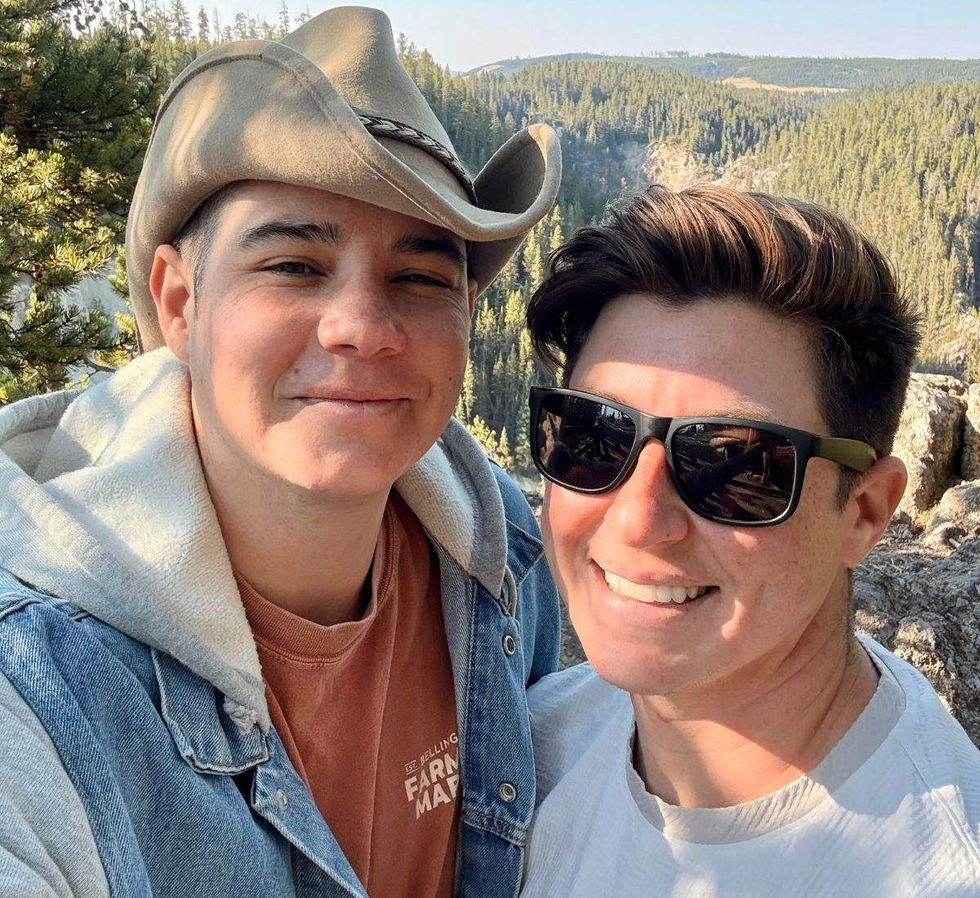 Flint Del Sol and his husband Xilo Del Sol.Flint Del Sol
That work is part of why he says he feels an obligation to use the right-to-sue notice once it arrives, even though the timeline is punishing. He has 90 days to find representation, assess the case, and decide whether to file a lawsuit against his former employer in federal court. He is out of the job now, with a steady income and a working husband. Many of the people writing to him have neither.
“I think it would be insulting to every other trans person who’s facing discrimination for me not to take the position I’m in, which is one of relative privilege,” he said. “All I ever wanted was the chance to try to fight against a system that abandoned us when it was inconvenient.”
He often thinks about the students who cannot picture a future. Early in his New Mexico job, Del Sol decided to stay closeted, but abandoned the effort three weeks in, after a student came out to him in a journal on the first day of class.
“This kid decided to show up completely as himself,” he said. “I owe him me.”
'Is this my life now?'
For Del Sol, the EEOC email became a document of the moment, a record that a federal civil rights agency had said, plainly, that it could not continue investigating transgender discrimination cases.
“I wanted a physical thing that existed in the world that proved that this moment happened,” Del Sol said. “I wanted you to either deny it or I want you to tell me in your words that this is happening from our government. And he did.”
Del Sol said he keeps turning over a harder question about the investigator himself — how someone whose job is to help people facing discrimination ends up sending an email telling a person that discrimination against them will go unexamined. His anger, he said, is his own, and he is wary of misdirecting it at someone who could not change the outcome. He compared it to the teachers he interviewed for his forthcoming book, educators in hostile states who quietly rename a banned student club or find ways to avoid misgendering a kid — small acts that bend a system without breaking with it.
Maybe, he said, putting the directive in writing was that investigator's version of the same thing. "Maybe this agent for the EEOC, by putting this in writing, is the thing that he's doing," Del Sol said. He can't know. But he wonders whether the confirmation he now holds was, in its own small way, an act of resistance.
Del Sol said he has received messages from other transgender people who say their own EEOC cases have stalled or disappeared.
“There’s this feeling where we know that we’re likely facing discrimination, but there’s no way to prove it, and there’s no way to move forward with it,” he said. “And you just have to wonder, is this my life now?”
Even so, Del Sol said he does not regret being out.
“I wouldn’t trade my life with any other version of what I could have had,” he said. “There’s no version of me that wants to go back to who I could have been.”