'%3E%3Cpath d='M16.3574 35.6519H12.9537L15.0491 18.8873L16.3574 35.6519ZM30.4229 54.0093L22.309 0.994385H7.91795L0 54.0093H10.6634L11.5802 46.3855H17.4014L17.9914 54.0093H30.4229Z' fill='%23971B20'/%3E%3Cpath d='M48.2073 41.8813C48.2073 43.4049 47.4892 44.0011 46.1144 44.0011H43.7595V11.0687H46.1144C47.4892 11.0687 48.2073 11.6636 48.2073 13.1885V41.8813ZM59.5273 43.6695V11.3326C59.5273 3.71323 53.5729 0.994385 47.8157 0.994385H31.7213V54.0093H47.8157C53.5729 54.0093 59.5273 51.29 59.5273 43.6695Z' fill='%23971B20'/%3E%3Cpath d='M90.183 0.994385H78.6039L75.0711 30.6157L71.9955 0.994385H59.4346L69.2474 54.0093H80.373L90.183 0.994385Z' fill='%23971B20'/%3E%3Cpath d='M107.063 42.3448C107.063 43.7359 105.951 44.5974 104.643 44.5974C103.269 44.5974 102.157 43.7359 102.157 42.3448V12.658C102.157 11.2676 103.269 10.4058 104.643 10.4058C105.951 10.4058 107.063 11.2676 107.063 12.658V42.3448ZM119.233 43.2723V11.7312C119.233 6.36384 112.952 -3.8147e-06 104.643 -3.8147e-06C96.2667 -3.8147e-06 89.9867 6.36384 89.9867 11.7312V43.2723C89.9867 48.6393 96.2667 55 104.643 55C112.952 55 119.233 48.6393 119.233 43.2723Z' fill='%23971B20'/%3E%3Cpath d='M150.976 43.9349V33.7309H139.069V42.3448C139.069 43.7359 137.957 44.5974 136.582 44.5974C135.076 44.5974 133.964 43.7359 133.964 42.3448V12.658C133.964 11.2676 135.076 10.4058 136.582 10.4058C137.957 10.4058 139.069 11.2676 139.069 12.658V21.2723H150.976V11.0687C150.976 5.70107 145.283 -3.8147e-06 136.582 -3.8147e-06C127.75 -3.8147e-06 121.796 5.70107 121.796 11.0687V43.9349C121.796 49.3022 127.75 55 136.582 55C145.283 55 150.976 49.3022 150.976 43.9349Z' fill='%23971B20'/%3E%3Cpath d='M167.478 35.6519H164.076L166.17 18.8873L167.478 35.6519ZM181.544 54.0093L173.432 0.994385H159.037L151.123 54.0093H161.785L162.704 46.3855H168.523L169.114 54.0093H181.544Z' fill='%23971B20'/%3E%3Cpath d='M205.412 10.4058V0.994385H177.081V10.4058H185.392V54.0093H197.428V10.4058H205.412Z' fill='%23971B20'/%3E%3Cpath d='M230.002 54.0093V43.9349H218.914V31.8746H226.635V21.8028H218.914V10.4058H230.002V0.994385H206.875V54.0093H230.002Z' fill='%23971B20'/%3E%3C/g%3E%3Cdefs%3E%3CclipPath id='clip0_260_7080'%3E%3Crect width='230' height='55' fill='white'/%3E%3C/clipPath%3E%3C/defs%3E%3C/svg%3E)
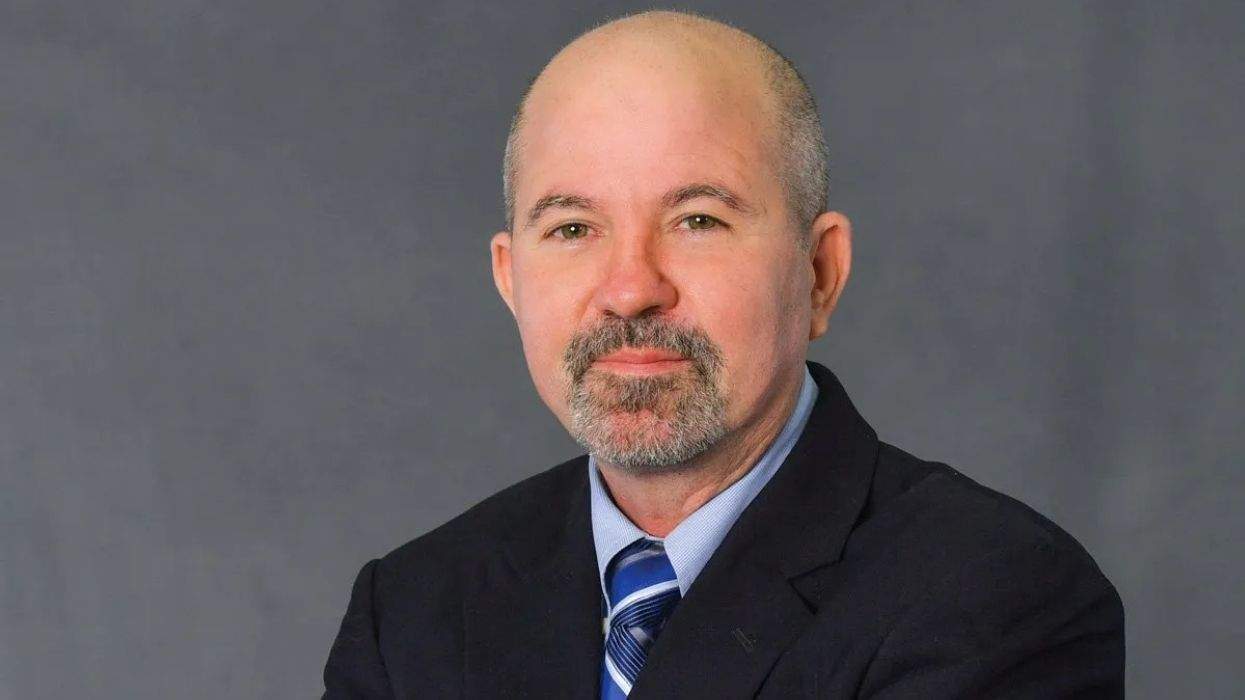
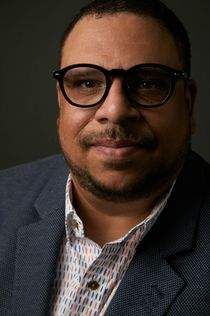
At a moment when the legal ground beneath transgender Americans feels increasingly unstable, Shannon Minter is being recognized as one of the most influential people in the world, a distinction he says reflects the urgency of the moment as much as his decades of work.
Minter, legal director of the National Center for LGBTQ+ Rights and one of the most prominent transgender attorneys in the U.S., was named to the TIME100 list of the most influential people on Wednesday. For one of the country's most consequential LGBTQ+ civil rights attorneys, the honor arrives amid a warning signal that the fights he spent his career waging are far from over.
"I think it's a mark of the gravity of these issues right now in our country," Minter told The Advocate in an interview following the announcement. He said recognition from a mainstream institution like Time is reassuring because it shows that what transgender people are experiencing is being seen and understood as significant.
Minter appears on the TIME100 list’s “Pioneers” roster, alongside figures including Reid Wiseman, the NASA astronaut who just returned from a historic crewed mission around the moon. As commander of Artemis II, Wiseman led the first human lunar flyby in more than 50 years, a 10-day journey that marked a new chapter in space exploration and set records for the farthest distance humans have traveled from Earth.
Related: Meet 5 LGBTQ+ lawyers standing up to Donald Trump to protect trans Americans
Related: The Supreme Court’s conversion therapy ruling is being misunderstood
Time honors Minter as an attorney whose work is grounded in a belief that the Constitution’s promise is real and that law, used with precision and courage, can deliver genuine justice.
That visibility stands in sharp contrast to the legal reality Minter now confronts.
"There's something really profoundly unsettling about realizing that we are now re-litigating some of the just fundamental protections that I thought we had achieved," Minter said.
Few attorneys are as closely tied to those protections as Minter. Early in his career, he helped support Farmer v. Brennan, the Supreme Court decision establishing that incarcerated people have a constitutional right to protection from sexual violence. Today, he said, similar questions are once again before the courts, including whether transgender women can be housed in conditions where they face a known risk of assault.
Minter spoke about Dee Deidre Farmer as a defining relationship that shaped his understanding of the work. He described her as someone who endured extraordinary punishment for asserting her rights, including repeated transfers within the prison system after filing complaints, and said her persistence remains a source of inspiration decades later.
Farmer, reflecting on that history, described Minter's role in deeply personal terms.
"Nearly 40 years ago, when I entered federal prison as a terrified, isolated 19-year-old transgender woman, the world told me I had no rights. In that darkness, I prayed for an answer, and I got Shannon Minter,” Farmer said in a statement. “Shannon told me — and showed me — that I am somebody. I carried that truth with me all the way to the United States Supreme Court, where I stood before the nation insisting that I had a constitutional right not to be raped.”
That same throughline runs through Minter's current work, challenging the Trump administration's renewed ban on transgender military service. The case, Talbott v. USA, reprises litigation NCLR and GLAD Law first brought in 2017 against a similar policy. Lead plaintiff Second Lieutenant Nicolas Talbott said Minter's role extends well beyond legal strategy.
"I've known Shannon Minter for nearly 10 years, and he is an incredible mentor and friend,” Talbott said in a statement. Shannon exemplifies everything a role model should be. I aspire to be the kind of leader to my soldiers that Shannon is to those around him."
When asked which cases feel most consequential under the current Trump administration, Minter identified two as defining the moment. Challenges to the military ban remain central, he said, because they target people who have already demonstrated their commitment to the country and are being excluded despite exemplary service. Simultaneously, litigation over prison policies carries urgent stakes, as those conditions can expose transgender people to physical harm and sexual violence.
Related: The Federal Bureau of Prisons is running a conversion therapy program. We must not let it stand
He described the two issues as sides of the same coin, in which one excludes transgender people from full participation in public life, and the other places them in situations where their safety is actively at risk.
Beyond those high-profile cases, Minter said asylum cases involving LGBTQ+ migrants are not receiving the attention they deserve. He described situations in which transgender and gay people are deported, or face deportation, to countries where they could be tortured or killed, calling it one of the most troubling threads running through his work right now.
The throughline of his career, from that early work to his role in Obergefell v. Hodges and other landmark cases, has been a belief that law works best when it centers on human experience. In a 2025 print feature with The Advocate, Minter called on advocates to return to clear, relatable language about transgender lives.
"Transgender people just want to lead their lives, work, go to school, have families, exactly like other people," he said.
In that earlier conversation, Minter described a path to the law that was anything but linear. He grew up in a conservative Texas family, struggled to understand himself in an environment that didn't accept him, and entered law school without a clear direction. He also reflected on his own experience as a transgender man, describing years of confusion before he understood his identity and the profound shift that followed his transition. Before transitioning, he said, he struggled to feel comfortable even making eye contact and lived with a constant sense that something was wrong. Afterward, he finally felt at ease in his own life, describing the change as moving from deep discomfort to a sense of happiness and ordinariness that had previously seemed out of reach.
A clerkship at NCLR gave his legal career its direction. He described the experience as exhilarating because it let him help people while engaging with meaningful legal questions.
That combination of personal experience and legal strategy continues to shape his approach. In courtrooms where arguments are often rooted in misunderstanding or misinformation about transgender people, Minter said effective advocacy requires patience, clarity, and a commitment to explaining rather than reacting.
The stakes reach far beyond the courtroom. On Wednesday, Minter spoke about the emotional toll on families as policies increasingly restrict transgender life, especially for children. "I was just on the phone with the mother of a transgender girl," he said, describing how the child had been excluded from activities one after another. "That level of grief is really profound."
He warned that the cumulative weight of such policies could fundamentally reshape daily life for transgender Americans in ways that go beyond any single restriction. "I worry that we're moving towards a legal regime that's trying to criminalize ordinary everyday activities and make it impossible to be a transgender person," he said.
Even so, Minter sees the moment as one that demands persistence rather than despair. Progress, he said, depends on bringing people along, even when that means moving incrementally. "We need to build on [our progress] and find some ways to bring people along with us," he said.
For Minter, the Time recognition carries weight not only for what it says about his work but for what it signals to the community he has spent his career fighting for.
"I hope it gives people hope and courage," he said. "The very fact that Time recognized the importance of what's happening should tell us that all the efforts that we are making are actually making a difference."