'%3E%3Cpath d='M16.3574 35.6519H12.9537L15.0491 18.8873L16.3574 35.6519ZM30.4229 54.0093L22.309 0.994385H7.91795L0 54.0093H10.6634L11.5802 46.3855H17.4014L17.9914 54.0093H30.4229Z' fill='%23971B20'/%3E%3Cpath d='M48.2073 41.8813C48.2073 43.4049 47.4892 44.0011 46.1144 44.0011H43.7595V11.0687H46.1144C47.4892 11.0687 48.2073 11.6636 48.2073 13.1885V41.8813ZM59.5273 43.6695V11.3326C59.5273 3.71323 53.5729 0.994385 47.8157 0.994385H31.7213V54.0093H47.8157C53.5729 54.0093 59.5273 51.29 59.5273 43.6695Z' fill='%23971B20'/%3E%3Cpath d='M90.183 0.994385H78.6039L75.0711 30.6157L71.9955 0.994385H59.4346L69.2474 54.0093H80.373L90.183 0.994385Z' fill='%23971B20'/%3E%3Cpath d='M107.063 42.3448C107.063 43.7359 105.951 44.5974 104.643 44.5974C103.269 44.5974 102.157 43.7359 102.157 42.3448V12.658C102.157 11.2676 103.269 10.4058 104.643 10.4058C105.951 10.4058 107.063 11.2676 107.063 12.658V42.3448ZM119.233 43.2723V11.7312C119.233 6.36384 112.952 -3.8147e-06 104.643 -3.8147e-06C96.2667 -3.8147e-06 89.9867 6.36384 89.9867 11.7312V43.2723C89.9867 48.6393 96.2667 55 104.643 55C112.952 55 119.233 48.6393 119.233 43.2723Z' fill='%23971B20'/%3E%3Cpath d='M150.976 43.9349V33.7309H139.069V42.3448C139.069 43.7359 137.957 44.5974 136.582 44.5974C135.076 44.5974 133.964 43.7359 133.964 42.3448V12.658C133.964 11.2676 135.076 10.4058 136.582 10.4058C137.957 10.4058 139.069 11.2676 139.069 12.658V21.2723H150.976V11.0687C150.976 5.70107 145.283 -3.8147e-06 136.582 -3.8147e-06C127.75 -3.8147e-06 121.796 5.70107 121.796 11.0687V43.9349C121.796 49.3022 127.75 55 136.582 55C145.283 55 150.976 49.3022 150.976 43.9349Z' fill='%23971B20'/%3E%3Cpath d='M167.478 35.6519H164.076L166.17 18.8873L167.478 35.6519ZM181.544 54.0093L173.432 0.994385H159.037L151.123 54.0093H161.785L162.704 46.3855H168.523L169.114 54.0093H181.544Z' fill='%23971B20'/%3E%3Cpath d='M205.412 10.4058V0.994385H177.081V10.4058H185.392V54.0093H197.428V10.4058H205.412Z' fill='%23971B20'/%3E%3Cpath d='M230.002 54.0093V43.9349H218.914V31.8746H226.635V21.8028H218.914V10.4058H230.002V0.994385H206.875V54.0093H230.002Z' fill='%23971B20'/%3E%3C/g%3E%3Cdefs%3E%3CclipPath id='clip0_260_7080'%3E%3Crect width='230' height='55' fill='white'/%3E%3C/clipPath%3E%3C/defs%3E%3C/svg%3E)
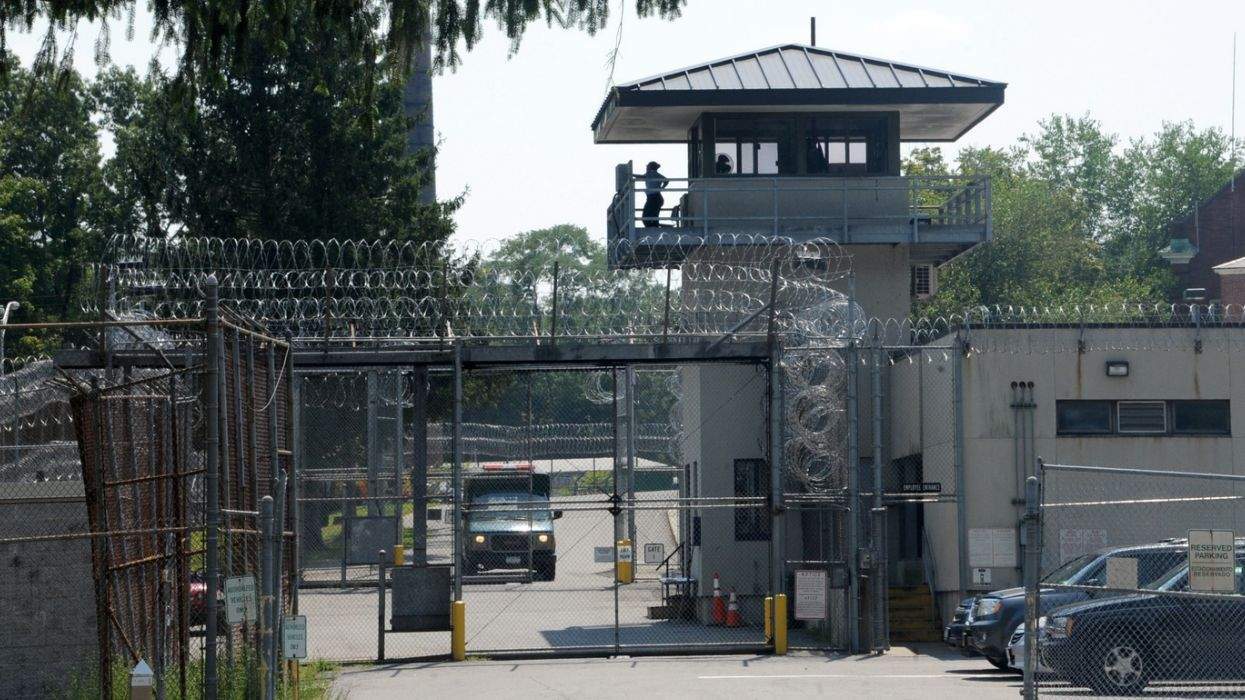
The Trump administration has once again all but erased transgender people from reports about sexual violence in prisons and jails across the country — except to report data about trans people as perpetrators of violence. The same reports mention transgender victims behind labels such as “other.”
The two Bureau of Justice Statistics reports, based on the results of the anonymous National Inmate Survey conducted in 2023 and 2024, that were released last week, glaringly obscure data about trans people as victims of violence behind bars.
The reports, which focus on prisons and local jails, respectively, categorize individual respondents’ “personal identity” as a man, woman, or “other.” And those prisoners dubbed “other” reported sexual abuse at incredibly high rates — at roughly 32 percent in prison and 26 percent in jail.
The only time the word “transgender” actually appears is in tables describing the perceived identity of perpetrators and in methodology footnotes explaining how respondents were classified, but do not use that label in the victim demographic tables.
Related: Trump just rolled out a cruel anti-trans prison policy doctors are calling ‘dangerous’
Trans survivors describe rampant abuse behind bars
Sara Kielly, a trans woman incarcerated in New York, told The Advocate that trans people “are overrepresented and maliciously underprotected” behind bars in the United States. Kielly is a journalist who routinely reports on conditions behind bars from the Bedford Hills Correctional Facility.
“I am not surprised that the current administration does not take seriously the barriers to safety and bodily integrity/autonomy faced by trans people incarcerated nationwide,” she said. “Sexual harassment and abuse of trans people in our nation’s prisons is rampant, and often committed with impunity.”
Kielly said over the course of about a decade in New York men’s prisons, she was repeatedly assaulted.
“It was a daily, sometimes minute-by-minute struggle,” she said. “I have been raped by male inmates and by prison guards on numerous occasions. Each time I tried to report it, I either was made out to be a liar or that it was my fault and I’d brought it upon myself because I ‘chose’ to be trans in prison.”
The two reports also detail the disproportionate sexual violence that lesbian, gay, bisexual, and other non-heterosexual incarcerated people face. Each of those groups reported sexual victimization by other incarcerated people at rates more than seven times as high as those of heterosexual people in prisons and more than five times as high in local jails.
Related: Lawsuit accuses Trump DOJ of stripping anti-rape protections from trans prisoners
LGBTQ+ survivors say the system failed to protect them
Rodney Roussell was in prison in Louisiana when he took the survey that informed these latest reports and said he thought the survey was “grossly unfair.”
“I think [DOC] was doing something to say it did something,” he said. “It didn’t feel like [the survey] was aimed toward actually finding anything out of any type of credence that is aimed toward any mission at all. I think they just felt like ‘okay, we have to do something. Here’s what it is.’”
Roussell has spoken openly about the repeated sexual assaults he endured behind bars.
“People just assume automatically that if you’re gay, trans, or whatever, prison is a daycare for you,” he said. “I was basically every day fighting for my life.”
He said that when he was first incarcerated and sexually assaulted, he knew how to report the attack and seek help. But he said that the attitude of encouraging people to know their rights and report violence changed almost immediately under Trump.
“But this administration came and said, ‘no, no, none of that.’ And so it’s like they want to erase the fact that we’re targeted in prison.”
Roussell is now a member of a council of formerly incarcerated people working with Just Detention International, an organization that aims to end sexual abuse in detention. Another member of that council, Jonas Caballero, said prejudice among staff and other incarcerated people makes violence against LGBTQ+ people — particularly sexual violence — especially difficult to address.
“You have LGBTQ people who are already coming into the institutions vulnerable to harassment to discrimination, many with sexual violence experiences,” he said. “But you know then that vulnerability is basically compounded when the people who are responsible for protecting them then hold the same prejudices against them.
Caballero was incarcerated in New York, now serves as a staff attorney at the Pennsylvania Institutional Law Project, and sits on Just Detention International’s board of directors.
“When I was incarcerated, I was sexually assaulted within like two months of me being at Rikers, and immediately afterward, you know, as I was like still reeling from the experience and trying to figure out like, ‘what am I supposed to do now,’ you know, this female corrections officer tells me, ‘well, I should have enjoyed it because I’m gay.’”
Related: Federal judge again blocks Trump from moving trans women into men’s prisons
The government collected trans identity data, then obscured it
The reports follow earlier criticism of the administration’s handling of data on sexual violence against trans people behind bars.
The administration previously omitted data last year about trans people from estimates of sexual violence that were also based on the anonymous survey, the fourth of its kind since 2007 as part of the NIS. This latest report details characteristics of victims and perpetrators, like race, age, gender, and sexual orientation, as well as data about the incidents
The bureau previously released the anonymous questionnaires provided to prisoners as part of the survey, showing that respondents were specifically asked whether they were transgender, suggesting that the data was collected but remains unreleased.
And experts like Richard Saenz, senior counsel at Lambda Legal, say this latest erasure is just another part of the Trump Administration’s efforts to demonize trans people everywhere — incarcerated or not — to paint them as violent and unstable, and to ultimately create a pathway for further discrimination and abuse.
Saenz also pointed to the contrast between explicitly identifying gay, lesbian, bisexual, and other non-heterosexual victims and using different labels for trans victims. While the Trump administration may be trying to sow divisions within the queer community, Saenz said the issues are intrinsically linked.
“You can’t deny that this is a failure of the system to protect people from sexual violence, and as the broader LGBTQ community, we should be asking questions of, like, ‘look, if we know that this harm exists, and there’s this serious risk to LGB people, we can’t leave out trans people in reporting this.’”
Related: Judges on both coasts weigh transgender prisoners’ rights as Trump targets prison policies
Trump administration targets protections against prison sexual abuse
Late last year, the Trump administration also revealed plans to amend standards under the Prison Rape Elimination Act that aim to protect trans and intersex people from sexual violence behind bars.
According to a December memo sent to auditors who inspect facilities for compliance with those standards, the planned changes specifically target rules governing how trans and intersex people are screened for their risk of sexual abuse and how facilities use that information to make housing decisions. The memo also targets protections allowing trans and intersex people to shower separately from other prisoners.
Experts warn that weakening those protections would increase the risk of assaults against trans and intersex prisoners, many of whom have already endured such violence.
Related: Judge weighs sanctions after Trump administration violates court order protecting trans prisoners
CeCe Herrera, another trans woman incarcerated at Bedford Hills, said she doesn’t think the Trump administration “sees us as people sometimes when dealing with sexual violence, homophobia, and transphobia.”
She added, “I think there is still a huge barrier between the trans community and [the] administration. We are women; we are somebody’s daughter. I shouldn’t be hated for embracing who I am.”
The U.S. Department of Justice did not respond to requests for comment.