'%3E%3Cpath d='M16.3574 35.6519H12.9537L15.0491 18.8873L16.3574 35.6519ZM30.4229 54.0093L22.309 0.994385H7.91795L0 54.0093H10.6634L11.5802 46.3855H17.4014L17.9914 54.0093H30.4229Z' fill='%23971B20'/%3E%3Cpath d='M48.2073 41.8813C48.2073 43.4049 47.4892 44.0011 46.1144 44.0011H43.7595V11.0687H46.1144C47.4892 11.0687 48.2073 11.6636 48.2073 13.1885V41.8813ZM59.5273 43.6695V11.3326C59.5273 3.71323 53.5729 0.994385 47.8157 0.994385H31.7213V54.0093H47.8157C53.5729 54.0093 59.5273 51.29 59.5273 43.6695Z' fill='%23971B20'/%3E%3Cpath d='M90.183 0.994385H78.6039L75.0711 30.6157L71.9955 0.994385H59.4346L69.2474 54.0093H80.373L90.183 0.994385Z' fill='%23971B20'/%3E%3Cpath d='M107.063 42.3448C107.063 43.7359 105.951 44.5974 104.643 44.5974C103.269 44.5974 102.157 43.7359 102.157 42.3448V12.658C102.157 11.2676 103.269 10.4058 104.643 10.4058C105.951 10.4058 107.063 11.2676 107.063 12.658V42.3448ZM119.233 43.2723V11.7312C119.233 6.36384 112.952 -3.8147e-06 104.643 -3.8147e-06C96.2667 -3.8147e-06 89.9867 6.36384 89.9867 11.7312V43.2723C89.9867 48.6393 96.2667 55 104.643 55C112.952 55 119.233 48.6393 119.233 43.2723Z' fill='%23971B20'/%3E%3Cpath d='M150.976 43.9349V33.7309H139.069V42.3448C139.069 43.7359 137.957 44.5974 136.582 44.5974C135.076 44.5974 133.964 43.7359 133.964 42.3448V12.658C133.964 11.2676 135.076 10.4058 136.582 10.4058C137.957 10.4058 139.069 11.2676 139.069 12.658V21.2723H150.976V11.0687C150.976 5.70107 145.283 -3.8147e-06 136.582 -3.8147e-06C127.75 -3.8147e-06 121.796 5.70107 121.796 11.0687V43.9349C121.796 49.3022 127.75 55 136.582 55C145.283 55 150.976 49.3022 150.976 43.9349Z' fill='%23971B20'/%3E%3Cpath d='M167.478 35.6519H164.076L166.17 18.8873L167.478 35.6519ZM181.544 54.0093L173.432 0.994385H159.037L151.123 54.0093H161.785L162.704 46.3855H168.523L169.114 54.0093H181.544Z' fill='%23971B20'/%3E%3Cpath d='M205.412 10.4058V0.994385H177.081V10.4058H185.392V54.0093H197.428V10.4058H205.412Z' fill='%23971B20'/%3E%3Cpath d='M230.002 54.0093V43.9349H218.914V31.8746H226.635V21.8028H218.914V10.4058H230.002V0.994385H206.875V54.0093H230.002Z' fill='%23971B20'/%3E%3C/g%3E%3Cdefs%3E%3CclipPath id='clip0_260_7080'%3E%3Crect width='230' height='55' fill='white'/%3E%3C/clipPath%3E%3C/defs%3E%3C/svg%3E)


Attacks on transgender rights didn’t start with Donald Trump — but neither did the movements resisting them.
Since 2022, 25 states have banned most gender-affirming care for trans youth, six of which make it a felony for doctors to provide the treatment. Two have banned surgery only. While only 14 and the District of Columbia have shield laws protecting the care, a small but growing coalition of “sanctuary cities” for trans people are filling in the gaps.
Many may know the term in reference to municipalities that limit cooperation with federal authorities like Immigration and Customs Enforcement that target immigrant communities, but “sanctuary cities” is also used to describe these places that aim to help transgender people.
These cities — of which there are an estimated fewer than 10 in the U.S. — are not superficial “safe spaces.” For trans kids and their families, they are meant to ensure that local resources aren’t used to aid officials from other jurisdictions prosecuting them or their doctors. They also prohibit officials from sharing information about someone’s gender, sex, or health care.
While the resolutions can’t overturn state or federal laws, “the closest point to the community is a council,” says Eric Guerra, mayor pro tem of Sacramento. The City Council voted unanimously to make Sacramento a sanctuary city in March 2024. It was the first state capital to adopt that status.
“It goes down to the fundamental belief that people are people, and we should respect people for who they are,” says Guerra, who was a council member at the time. “And that has helped let our cities move forward.”
Sanctuary city resolutions usually come when residents approach their city council members with evidence showing why they’re needed.
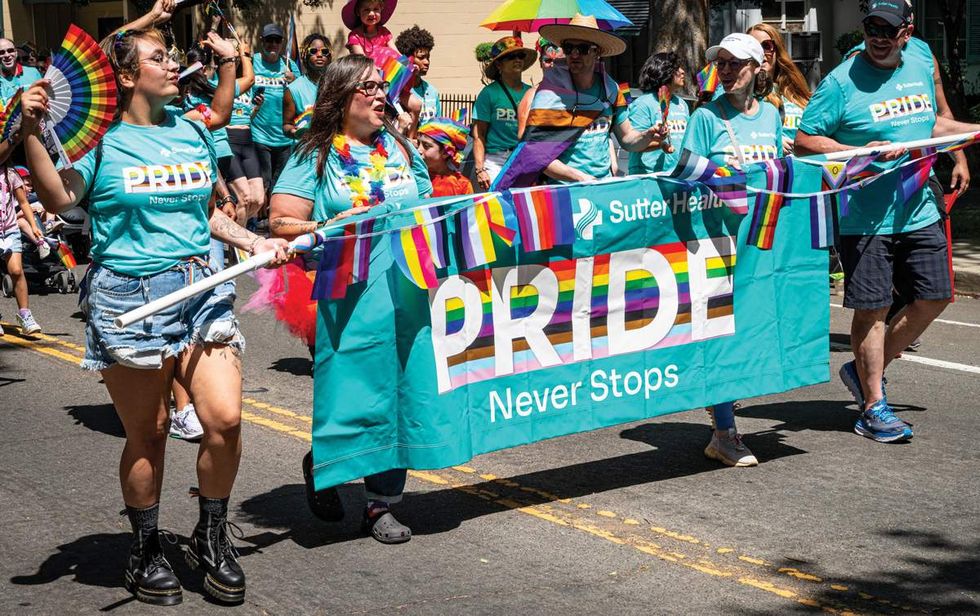 2024 Sacramento Pride ParadeChris Allan/Shutterstock
There wasn’t just one person who came forward and motivated officials to declare Olympia, Washington, a sanctuary city in January. Instead, several LGBTQ+ residents commented publicly that they were “feeling very fearful and unsafe” in the wake of Trump’s election, says Assistant City Manager Stacey Ray. The City Council initiated the resolution in response.
Public testimonials from community members about how they have been negatively impacted by anti-LGBTQ+ laws is what Guerra says can be legally considered “factual points of incidents that occur that go contrary to our nation’s fundamental beliefs.”
From there, resolutions go to city attorneys, who must make sure that they don’t go against the state or U.S. Constitution. Ray describes it as a “long, arduous process,” and says officials must consult with local law enforcement about “what we can do within our legal parameters” to enforce the resolution.
“One of the things our council said is they wanted something that was actionable. Not just ‘pretty words,’ but they really wanted something that would be seen as authentically providing the safety that folks were asking for,” Ray says.
California and Washington State have shield laws for abortion and gender-affirming care, making resolutions like those in Sacramento and Olympia in line with state law. Democratic-controlled cities passing local ordinances in Republican-controlled states can lead to more complications, like in Kansas City, Missouri.
The City Council there approved a sanctuary resolution for gender-affirming care in May 2023, shortly after the state legislature passed a bill banning the treatment for trans minors. While the city could not overturn state law, Mayor Quinton Lucas, who introduced the resolution, ordered local police and city personnel to make enforcement “their lowest priority.”
“It just means you have more fights, frankly,” Lucas says. “It also means that here in the red states, we have a little more experience with fighting.”
Sanctuary city resolutions are still helpful in blue states, especially under a federal government hostile to LGBTQ+ people. Since taking office in January, Trump has signed executive orders denying the existence of transgender people and banning federal support for gender-affirming care for those under 19.
“Trump has the authority over a bunch of federal employees, like with the civil rights protections he’s rolled back in hiring specifically for the federal government,” Guerra says. “I think people forget that those roles and those stages also exist in their local community.”
Trump has threatened to withhold federal funding from immigration sanctuary cities and could potentially do the same for cities that protect transgender health care and abortion access, prompting more than a dozen local governments — including the city of Sacramento — to file a lawsuit against the administration.
For Guerra, who is an immigrant, the benefits of protecting a marginalized group far outweigh the risk the Trump administration poses. Lucas also “encourage[s] every mayor with that opportunity to” stand up for LGBTQ+ rights.
“The thing that motivated me was our shared humanity,” he says. “When your state government or your federal government is saying you don’t deserve to exist and [is] trying to remove you as a human being, I think that those of us with whatever power, we have a duty to act.”
This article is part of The Advocate's Nov/Dec 2025 issue, on newsstands now. Support queer media and subscribe — or download the issue through Apple News, Zinio, Nook, or PressReader.