'%3E%3Cpath d='M16.3574 35.6519H12.9537L15.0491 18.8873L16.3574 35.6519ZM30.4229 54.0093L22.309 0.994385H7.91795L0 54.0093H10.6634L11.5802 46.3855H17.4014L17.9914 54.0093H30.4229Z' fill='%23971B20'/%3E%3Cpath d='M48.2073 41.8813C48.2073 43.4049 47.4892 44.0011 46.1144 44.0011H43.7595V11.0687H46.1144C47.4892 11.0687 48.2073 11.6636 48.2073 13.1885V41.8813ZM59.5273 43.6695V11.3326C59.5273 3.71323 53.5729 0.994385 47.8157 0.994385H31.7213V54.0093H47.8157C53.5729 54.0093 59.5273 51.29 59.5273 43.6695Z' fill='%23971B20'/%3E%3Cpath d='M90.183 0.994385H78.6039L75.0711 30.6157L71.9955 0.994385H59.4346L69.2474 54.0093H80.373L90.183 0.994385Z' fill='%23971B20'/%3E%3Cpath d='M107.063 42.3448C107.063 43.7359 105.951 44.5974 104.643 44.5974C103.269 44.5974 102.157 43.7359 102.157 42.3448V12.658C102.157 11.2676 103.269 10.4058 104.643 10.4058C105.951 10.4058 107.063 11.2676 107.063 12.658V42.3448ZM119.233 43.2723V11.7312C119.233 6.36384 112.952 -3.8147e-06 104.643 -3.8147e-06C96.2667 -3.8147e-06 89.9867 6.36384 89.9867 11.7312V43.2723C89.9867 48.6393 96.2667 55 104.643 55C112.952 55 119.233 48.6393 119.233 43.2723Z' fill='%23971B20'/%3E%3Cpath d='M150.976 43.9349V33.7309H139.069V42.3448C139.069 43.7359 137.957 44.5974 136.582 44.5974C135.076 44.5974 133.964 43.7359 133.964 42.3448V12.658C133.964 11.2676 135.076 10.4058 136.582 10.4058C137.957 10.4058 139.069 11.2676 139.069 12.658V21.2723H150.976V11.0687C150.976 5.70107 145.283 -3.8147e-06 136.582 -3.8147e-06C127.75 -3.8147e-06 121.796 5.70107 121.796 11.0687V43.9349C121.796 49.3022 127.75 55 136.582 55C145.283 55 150.976 49.3022 150.976 43.9349Z' fill='%23971B20'/%3E%3Cpath d='M167.478 35.6519H164.076L166.17 18.8873L167.478 35.6519ZM181.544 54.0093L173.432 0.994385H159.037L151.123 54.0093H161.785L162.704 46.3855H168.523L169.114 54.0093H181.544Z' fill='%23971B20'/%3E%3Cpath d='M205.412 10.4058V0.994385H177.081V10.4058H185.392V54.0093H197.428V10.4058H205.412Z' fill='%23971B20'/%3E%3Cpath d='M230.002 54.0093V43.9349H218.914V31.8746H226.635V21.8028H218.914V10.4058H230.002V0.994385H206.875V54.0093H230.002Z' fill='%23971B20'/%3E%3C/g%3E%3Cdefs%3E%3CclipPath id='clip0_260_7080'%3E%3Crect width='230' height='55' fill='white'/%3E%3C/clipPath%3E%3C/defs%3E%3C/svg%3E)
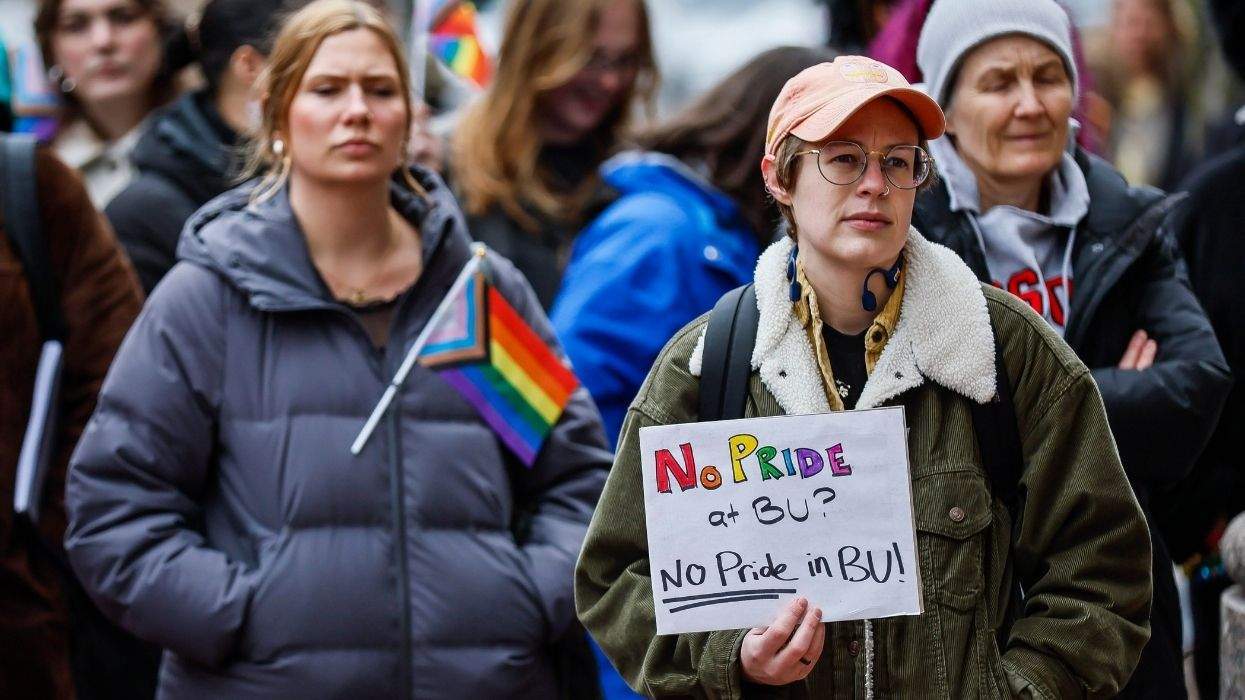
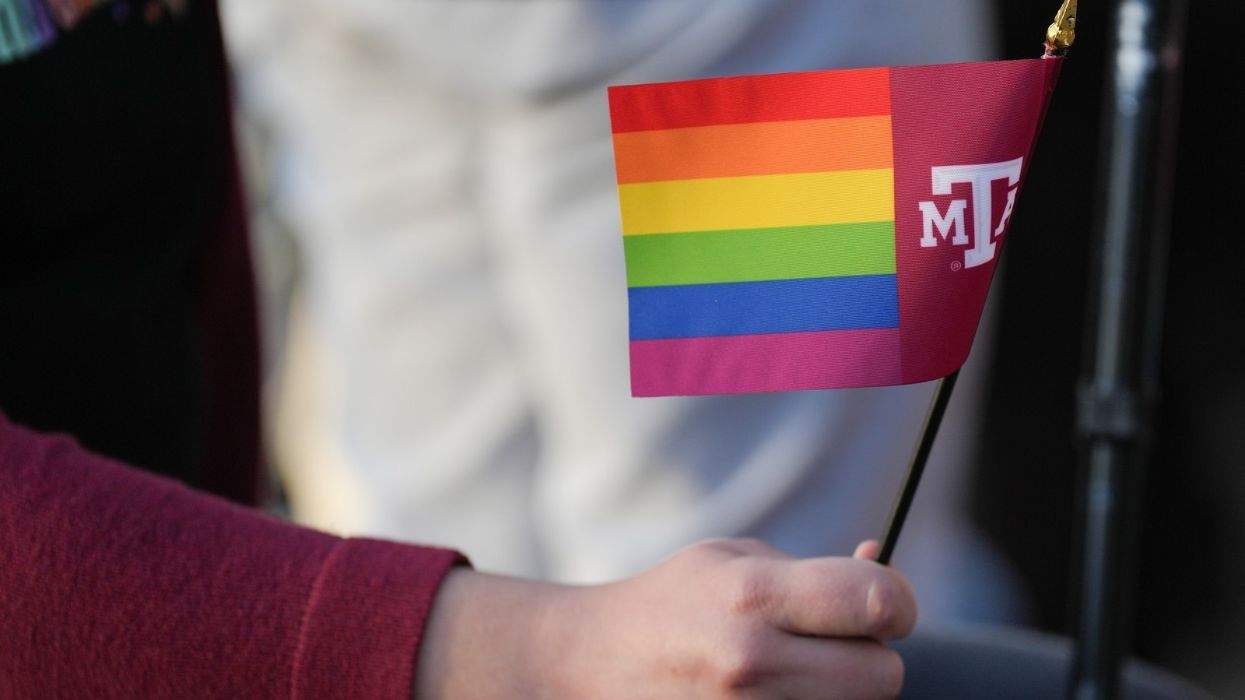
Boston University has paused enforcement of a policy that led to the removal of Pride flags from campus offices, stepping back after weeks of escalating protests and faculty warnings that the school was suppressing free expression.
Keep up with the latest in LGBTQ+ news and politics. Sign up for The Advocate's email newsletter.
In a letter to the campus community on Monday, Boston University President Melissa Gilliam said the school would temporarily halt the removals and acknowledged the harm the policy had caused.
“Our university and our policies exist within a larger social context, one that is dynamic and complex,” Gilliam wrote. “I have heard how difficult and painful that has been. I am deeply sorry.”
Gilliam described the decision not as a reversal but as a pause.
“What began as questions regarding a long-standing, routine university policy has evolved into something that has surfaced deep questions and concerns about belonging, expression, safety, and respect,” she wrote, adding that the university needs “more time and opportunity” to consider those issues.
Related: Campus is not a closet: Why removing Pride flags from Boston University is not 'neutral'
Related: Utah becomes the first state to ban Pride and other flags on public schools and government buildings
She also emphasized that LGBTQ+ members of the campus community “belong here and are needed here” and that the university remains committed to ensuring they “feel welcome” and “respected.”
The controversy, however, has been building for weeks.
As early as mid-March, faculty members raised alarms after Pride flags were repeatedly removed from office windows, in violation of the university’s “time, place, and manner” signage rules. Professor Nathan Phillips told Boston NPR affiliate WGBH that he rehung his flag after it was taken down, only to see it removed again days later.
“I just felt very strongly that I really had to maintain the line on freedom of expression,” Phillips said.
The policy dates to a 2024 update governing outward-facing displays, which the university has defended as content-neutral. But faculty say enforcement has not been neutral in practice and that it intensified at a particularly fraught political moment.
In a letter to Gilliam, leaders of the university’s chapter of the American Association of University Professors warned that the policy was chilling speech and urged administrators to stop “selectively targeting” expression, according to GBH.
Related: Brown University is ‘functionally inaccessible’ to transgender students after Trump settlement
Related: The Only Consistency in BYU's Treatment of LGBTQ Students Is Cruelty
That concern helped transform a campus policy dispute into a broader flashpoint.
By early April, protests had spread across campus, a petition had drawn more than 2,000 signatures, and alumni, including a former plaintiff in a free speech case against the university, warned that the administration was revisiting settled legal ground.
The backlash also unfolded against a wider national backdrop. Universities have spent more than a year navigating intensifying conflicts over speech, protest, and institutional neutrality, from pro-Palestinian demonstrations in 2024 to renewed scrutiny of diversity initiatives under President Donald Trump’s second term.
That pressure has already had tangible consequences on other campuses. At Brown University, students told The Advocate last year that policy shifts tied to federal pressure left some transgender students feeling unsafe and uncertain about their privacy and place on campus, even as peers remained supportive.
At Boston University, critics said the removal of Pride flags, widely understood as symbols of safety and belonging, carried particular weight. “They symbolize inclusion, welcoming, safety, and acceptance,” sociology professor Joseph Harris told WGBH. “When those are attacked, communities are attacked.”
The university has maintained that the policy is not about viewpoint. Administrators have said the rules apply broadly to outward-facing signage and that displays can be relocated inside offices.
Still, Gilliam’s letter suggests the administration recognizes the limits of that argument. “It is critical that we can hold these matters separate,” she wrote, distinguishing between a policy discussion and questions about “core values.”
For many faculty, that distinction remains unresolved.