'%3E%3Cpath d='M16.3574 35.6519H12.9537L15.0491 18.8873L16.3574 35.6519ZM30.4229 54.0093L22.309 0.994385H7.91795L0 54.0093H10.6634L11.5802 46.3855H17.4014L17.9914 54.0093H30.4229Z' fill='%23971B20'/%3E%3Cpath d='M48.2073 41.8813C48.2073 43.4049 47.4892 44.0011 46.1144 44.0011H43.7595V11.0687H46.1144C47.4892 11.0687 48.2073 11.6636 48.2073 13.1885V41.8813ZM59.5273 43.6695V11.3326C59.5273 3.71323 53.5729 0.994385 47.8157 0.994385H31.7213V54.0093H47.8157C53.5729 54.0093 59.5273 51.29 59.5273 43.6695Z' fill='%23971B20'/%3E%3Cpath d='M90.183 0.994385H78.6039L75.0711 30.6157L71.9955 0.994385H59.4346L69.2474 54.0093H80.373L90.183 0.994385Z' fill='%23971B20'/%3E%3Cpath d='M107.063 42.3448C107.063 43.7359 105.951 44.5974 104.643 44.5974C103.269 44.5974 102.157 43.7359 102.157 42.3448V12.658C102.157 11.2676 103.269 10.4058 104.643 10.4058C105.951 10.4058 107.063 11.2676 107.063 12.658V42.3448ZM119.233 43.2723V11.7312C119.233 6.36384 112.952 -3.8147e-06 104.643 -3.8147e-06C96.2667 -3.8147e-06 89.9867 6.36384 89.9867 11.7312V43.2723C89.9867 48.6393 96.2667 55 104.643 55C112.952 55 119.233 48.6393 119.233 43.2723Z' fill='%23971B20'/%3E%3Cpath d='M150.976 43.9349V33.7309H139.069V42.3448C139.069 43.7359 137.957 44.5974 136.582 44.5974C135.076 44.5974 133.964 43.7359 133.964 42.3448V12.658C133.964 11.2676 135.076 10.4058 136.582 10.4058C137.957 10.4058 139.069 11.2676 139.069 12.658V21.2723H150.976V11.0687C150.976 5.70107 145.283 -3.8147e-06 136.582 -3.8147e-06C127.75 -3.8147e-06 121.796 5.70107 121.796 11.0687V43.9349C121.796 49.3022 127.75 55 136.582 55C145.283 55 150.976 49.3022 150.976 43.9349Z' fill='%23971B20'/%3E%3Cpath d='M167.478 35.6519H164.076L166.17 18.8873L167.478 35.6519ZM181.544 54.0093L173.432 0.994385H159.037L151.123 54.0093H161.785L162.704 46.3855H168.523L169.114 54.0093H181.544Z' fill='%23971B20'/%3E%3Cpath d='M205.412 10.4058V0.994385H177.081V10.4058H185.392V54.0093H197.428V10.4058H205.412Z' fill='%23971B20'/%3E%3Cpath d='M230.002 54.0093V43.9349H218.914V31.8746H226.635V21.8028H218.914V10.4058H230.002V0.994385H206.875V54.0093H230.002Z' fill='%23971B20'/%3E%3C/g%3E%3Cdefs%3E%3CclipPath id='clip0_260_7080'%3E%3Crect width='230' height='55' fill='white'/%3E%3C/clipPath%3E%3C/defs%3E%3C/svg%3E)
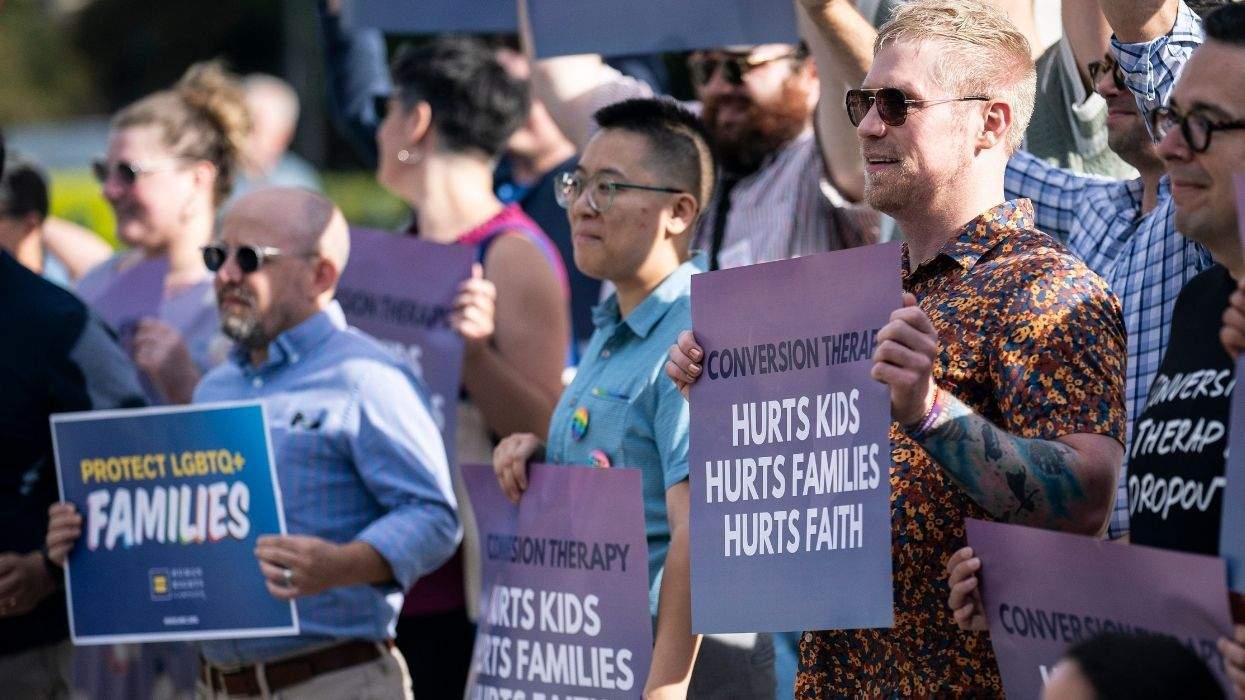

The U.S. Supreme Court’s 8–1 ruling in Chiles v. Salazar landed with the force of a culture war flashpoint, with some headlines declaring conversion therapy “legalized." Advocates warn of harm, while supporters call it a victory for free speech. But legal experts say the truth is both narrower and more substantial.
Keep up with the latest in LGBTQ+ news and politics. Sign up for The Advocate's email newsletter.
The decision, they argue, turns on a technical First Amendment question of how Colorado wrote its law, while leaving intact the overwhelming medical consensus that conversion therapy is harmful. But it also makes it harder for states to proactively protect LGBTQ+ minors from the practice.
“This was a case about the First Amendment, not about whether conversion therapy works or is safe,” Shannon Minter, legal director at the National Center for LGBTQ+ Rights, said during a press briefing with reporters.
A ruling about speech, not science
Colorado’s law barred licensed therapists from engaging in so-called “conversion therapy” with minors. The court’s majority found the statute unconstitutional because it regulated speech in a way that was not “viewpoint neutral,” effectively allowing affirming counseling while prohibiting non-affirming approaches. That distinction, largely invisible outside legal circles, is what drove the outcome.
Related: Kids can be subjected to harmful 'conversion therapy,’ U.S. Supreme Court rules
Related: How the Supreme Court’s conversion therapy case could reshape LGBTQ+ protections across America
“The court was exclusively concerned with the construction of the statute,” Minter said, emphasizing that the justices did not weigh in on the scientific validity or harms of conversion therapy.
What the decision does not do
Despite sweeping interpretations, the court did not declare conversion therapy safe, ethical, or medically accepted. “Nothing in this opinion is an endorsement of conversion therapy,” Minter said.
Major medical organizations, including the American Psychological Association, continue to reject the practice as ineffective and harmful. That consensus went largely unaddressed in the opinion.
The ruling also does not shield practitioners from liability. Patients who are harmed may still bring malpractice or consumer fraud claims, a point the court itself acknowledged, legal experts on the briefing highlighted.
The risk of the headline
The 8–1 margin has amplified the perception of a wide-ranging, substantive shift, the kind of decisive ruling that appears to settle a national debate. But legal observers say that reading is misleading.
Minter said the concern is that the headline number, more than the opinion itself, will drive public perception.
“We live in a world where people are going to see that headline, 8–1, and not understand what the case was actually about,” he said.
Related: The Supreme Court just handed conversion therapy a new license for violence
Still, the optics matter. An 8–1 decision carries institutional weight, suggesting consensus across ideological lines. That can obscure the reality that the agreement here was limited to a technical legal framework, not the underlying issue of whether conversion therapy harms young people.
Justice Ketanji Brown Jackson, the lone dissenter, underscored that gap. In warning that the ruling could “open a dangerous can of worms,” she pointed to the broader implications of elevating speech protections in contexts where professional conduct and patient safety are intertwined. Her dissent sees the case not as a tidy First Amendment dispute, but as one with potential downstream effects on public health and the regulation of licensed professionals.
What changes now
Advocates say it will be more difficult for states to block conversion therapy before it happens, shifting the burden toward after-the-fact accountability with lawsuits, licensing discipline, and fraud claims.
Casey Pick, director of law and policy at The Trevor Project, said that means “it will make it that much harder for us to protect LGBTQ+ young people before the harm is actually done.”
At the same time, the ruling leaves room for states to try again. Several justices signaled that laws written with clearer neutrality could survive constitutional scrutiny.
“The takeaway is not that conversion therapy is now ‘legal,’” Minter said. “It’s that this particular way of regulating it has been called into question.”
Experts say the real-world impact of conversion therapy is often obscured by how it is described, particularly when it’s described as “talk therapy.”
Dr. Julia Sadusky, a therapist who submitted expert testimony in the case, said that the description is misleading.
“Young people I meet with … have heard things that increase shame and make them feel like something is fundamentally wrong with them,” Sadusky said during the press briefing.
She added that focusing therapy on changing identity can delay treatment for depression, anxiety, and self-harm. “Their depression did not improve, their anxiety did not improve,” she said.
Sadusky pushed back on the idea that harmful therapy can be separated from speech. “Talk therapy absolutely can be harmful,” she said, describing patients left with lasting shame and self-doubt.
What’s missing from the court’s analysis
For researchers and clinicians, the most striking aspect of the ruling is what it sidelines. Decades of research, including findings cited by the Trevor Project, link conversion therapy to higher rates of depression, anxiety, and suicide attempts among LGBTQ+ youth.
But those harms were largely absent from the court’s reasoning. “In no part of the conversation really was there discussion of the harms,” Pick said. For LGBTQ+ advocates, the result is a landscape that is legally unsettled and politically volatile.
“Nothing that the court said changes the fact that conversion therapy remains harmful, ineffective, and that every major medical and mental health association in the United States has condemned these practices and called for them to be put to an end,” Pick said.