'%3E%3Cpath d='M16.3574 35.6519H12.9537L15.0491 18.8873L16.3574 35.6519ZM30.4229 54.0093L22.309 0.994385H7.91795L0 54.0093H10.6634L11.5802 46.3855H17.4014L17.9914 54.0093H30.4229Z' fill='%23971B20'/%3E%3Cpath d='M48.2073 41.8813C48.2073 43.4049 47.4892 44.0011 46.1144 44.0011H43.7595V11.0687H46.1144C47.4892 11.0687 48.2073 11.6636 48.2073 13.1885V41.8813ZM59.5273 43.6695V11.3326C59.5273 3.71323 53.5729 0.994385 47.8157 0.994385H31.7213V54.0093H47.8157C53.5729 54.0093 59.5273 51.29 59.5273 43.6695Z' fill='%23971B20'/%3E%3Cpath d='M90.183 0.994385H78.6039L75.0711 30.6157L71.9955 0.994385H59.4346L69.2474 54.0093H80.373L90.183 0.994385Z' fill='%23971B20'/%3E%3Cpath d='M107.063 42.3448C107.063 43.7359 105.951 44.5974 104.643 44.5974C103.269 44.5974 102.157 43.7359 102.157 42.3448V12.658C102.157 11.2676 103.269 10.4058 104.643 10.4058C105.951 10.4058 107.063 11.2676 107.063 12.658V42.3448ZM119.233 43.2723V11.7312C119.233 6.36384 112.952 -3.8147e-06 104.643 -3.8147e-06C96.2667 -3.8147e-06 89.9867 6.36384 89.9867 11.7312V43.2723C89.9867 48.6393 96.2667 55 104.643 55C112.952 55 119.233 48.6393 119.233 43.2723Z' fill='%23971B20'/%3E%3Cpath d='M150.976 43.9349V33.7309H139.069V42.3448C139.069 43.7359 137.957 44.5974 136.582 44.5974C135.076 44.5974 133.964 43.7359 133.964 42.3448V12.658C133.964 11.2676 135.076 10.4058 136.582 10.4058C137.957 10.4058 139.069 11.2676 139.069 12.658V21.2723H150.976V11.0687C150.976 5.70107 145.283 -3.8147e-06 136.582 -3.8147e-06C127.75 -3.8147e-06 121.796 5.70107 121.796 11.0687V43.9349C121.796 49.3022 127.75 55 136.582 55C145.283 55 150.976 49.3022 150.976 43.9349Z' fill='%23971B20'/%3E%3Cpath d='M167.478 35.6519H164.076L166.17 18.8873L167.478 35.6519ZM181.544 54.0093L173.432 0.994385H159.037L151.123 54.0093H161.785L162.704 46.3855H168.523L169.114 54.0093H181.544Z' fill='%23971B20'/%3E%3Cpath d='M205.412 10.4058V0.994385H177.081V10.4058H185.392V54.0093H197.428V10.4058H205.412Z' fill='%23971B20'/%3E%3Cpath d='M230.002 54.0093V43.9349H218.914V31.8746H226.635V21.8028H218.914V10.4058H230.002V0.994385H206.875V54.0093H230.002Z' fill='%23971B20'/%3E%3C/g%3E%3Cdefs%3E%3CclipPath id='clip0_260_7080'%3E%3Crect width='230' height='55' fill='white'/%3E%3C/clipPath%3E%3C/defs%3E%3C/svg%3E)
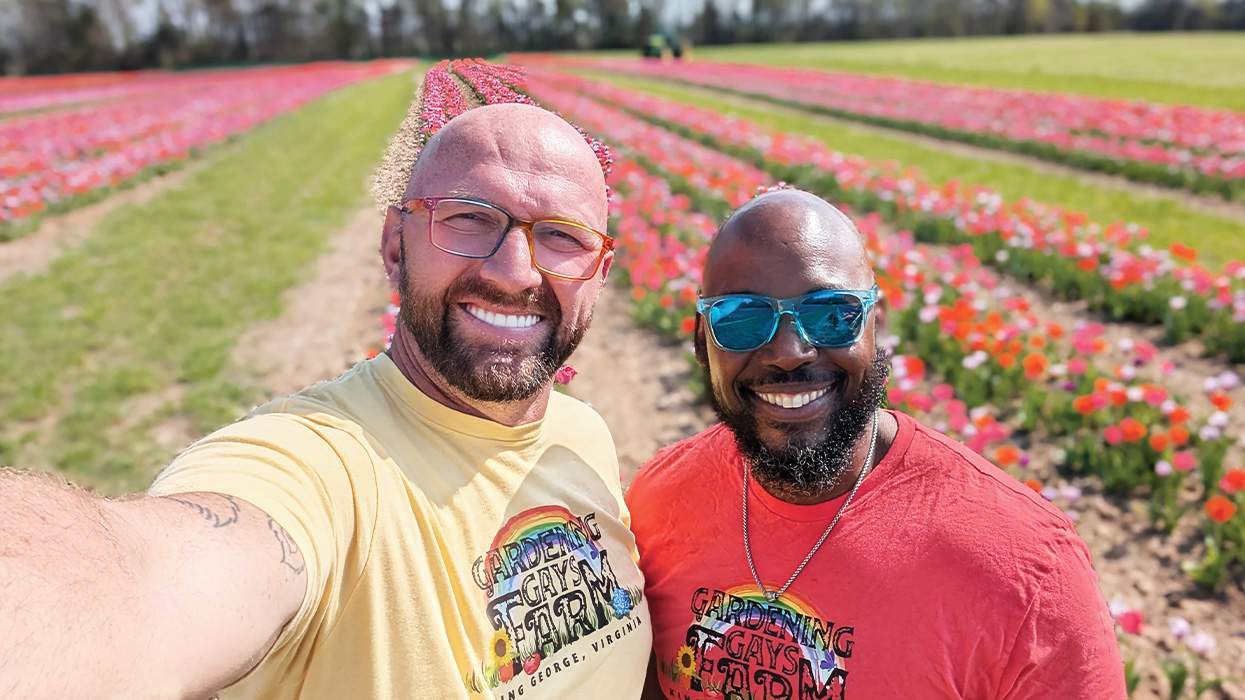
The sign is the first thing you notice. Planted along US-301, a major highway and I-95 bypass that tens of thousands of people travel every year between Florida and New England, it reads in large, unambiguous letters: Gardening Gays Farm. No small print. No apology.
That sign, and everything behind it, is the story of Kevin Graham and Dragan Kurbalija, a married gay couple who left Washington, D.C., traded cocktail parties and nights out for 4 a.m. chicken chores and lambing season, and built something that conservative King George County, Virginia, did not know it was waiting for. They have been voted winners in multiple categories of the "KG Best of the Best" awards two years running, served on the county's Tourism Advisory Committee, received an economic development grant from the county board of supervisors, and become, in the words of the county's community engagement director, "a pinnacle member of our local agricultural sector." Their congressman has entered them into the Congressional Record.
Related: Virginia farm owned by the 'Gardening Gays' was vandalized with medical waste and human feces
They are also unambiguously and unapologetically gay, documenting their farm adventures to thousands of followers across social media, including on their vibrant YouTube farm vlog. In a county that votes Republican by wide margins, that turns out to matter less than the quality of their eggs.
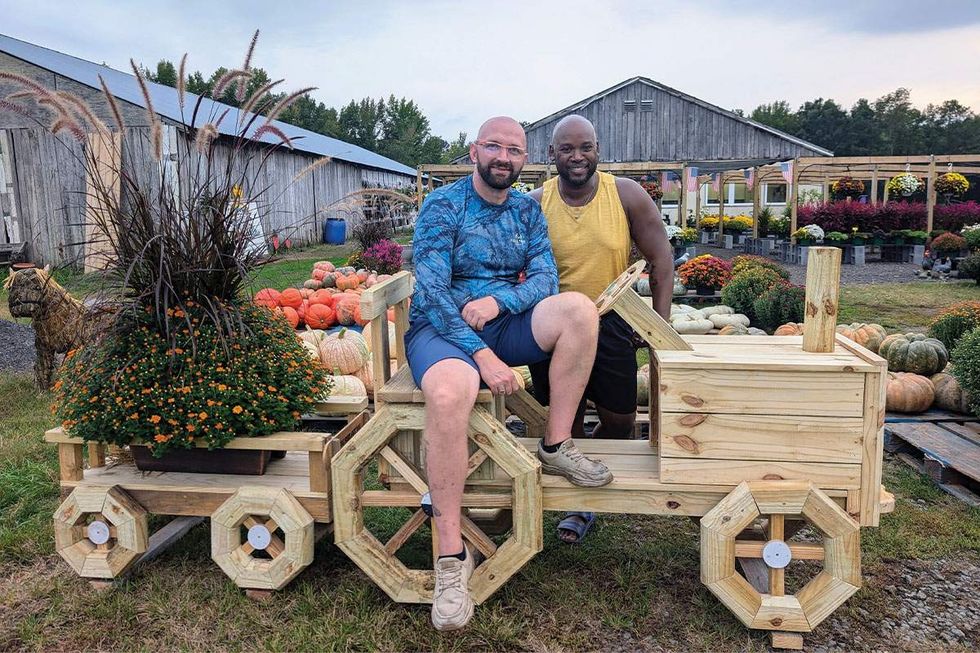 Kurbalija and Graham, aka 'The Gardening Gays,' on their Virginia farm.courtesy Gardening Gays
Kevin grew up the youngest of seven children in rural Florida, watching his parents work themselves to exhaustion. He spent 15 years as a fitness instructor before building a career in government. Dragan grew up in Serbia, the son of a father who leased him as child labor to neighboring farms. "I hated farming," he says without irony, sitting in the couple's living room, a cocktail and charcuterie at the ready. He went on to spend two decades in hospitality, eventually managing restaurants with $10 million accounts. They met online — Adam4Adam, they clarify, the web version, not the app — and married in Woodbridge, Virginia, in 2017.
Leaving the big city
Before the farm, they lived the life their friends envied: D.C. bars where bartenders knew their drink orders before they sat down, brunch parties for 40 people. Then COVID happened. Standing in a Costco watching the meat and egg sections stripped bare, something shifted for Dragan, who had grown up in poverty and recognized scarcity. Kevin had not. "I grew up knowing how to grow food," Dragan says. "I told Kevin, we don't have to worry about what our next meal is." They found a listing in King George County, roughly 60 miles south of D.C. They bought it. They put up the sign.
What neither of them dwells on, at first, is how much they had already learned about living without fear. Dragan spent his first thirty years following the script his parents wrote: marriage to a woman, a daughter now twenty-three and living in Belgrade. He knew he was gay from puberty, but growing up in Yugoslavia in the eighties and nineties, the only visible representation of gay life was drag queens on television. If that wasn't you, there was no door to walk through. He came out at thirty. Kevin's reckoning came more gradually. He grew up, he says, as part of the Ellen DeGeneres generation — old enough to know a world before she came out, and the one that came after. "Post-Ellen, there are examples of a different kind of life," he says. "That changes everything about what you think is possible."
Related: These queer farmers and ranchers are boycotting Tractor Supply and want you to join them
What is King George County like?
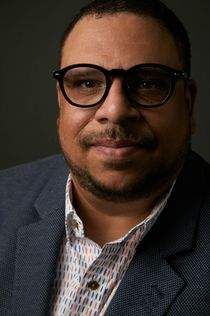
King George County is more complicated than its political makeup suggests. It is home to the Naval Surface Warfare Center Dahlgren Division, which draws highly educated, STEM-focused residents from across the country. Congressman Eugene Vindman, a Democrat who represents the 7th Congressional District and has visited the farm more than once, points to this when asked about the community's embrace of Kevin and Dragan. "King George may be a rural county, but they have a naval research and development base," he tells me. "A good swath of the population is highly educated. I think they appreciate Dragan and Kevin for who they are."
What acceptance looks like here is less about ideology than proximity, usefulness, and familiarity—about who shows up, what they provide, and how they treat their neighbors.
The farm's position on US-301 also makes it a landmark on a route rather than merely a local institution. Travelers bypassing I-95 see the sign going one direction and stop on the way back. Kevin describes caravans of family members where one cousin is thirty minutes ahead of the next and has already called: stop at the gay farm, it's worth it. A woman from Hampton Roads passed the sign, did a double-take — does that say Gay Farm? — looked them up, and promised herself she'd stop next time. She did. She bought everything she could carry.
Being the best farmers possible
What Kevin and Dragan brought to this community was straightforward: exceptional local products — eggs, milk, cheese, pasture-raised chicken, produce — combined with a gift for human connection that made every visit feel less like a transaction and more like stopping by a neighbor's house. They have nearly 60,000 Facebook followers, roughly half of them local. "Fifty percent local," Dragan says. "That's huge."
Related: LGBTQ People of Color Call Rural America Home
Their first year, they did $8,000 in sales. Coming from six-figure salaries, it was, as Dragan puts it, a clarifying experience. They stayed. Year two brought $40,000. The farm expanded: chickens, ducks, guineas, an orchard, and sheep for lamb. They financed all of it themselves, save for a county economic development grant and donated orchard trees. No investors. No outside capital. Cindy Arriaga, who arrived as a customer and stayed to become, as Kevin puts it, family, now runs the store four days a week and is building her own nearby farm with their guidance. "Being here fast-forwarded everything we were going to do by years," she says.
Vindman sees what they've built in terms that resonate beyond the local. "They're supporting local jobs, strengthening supply chains, carrying forward Virginia's agricultural traditions," he tells me. "Those things, whether you're gay or straight, are traditions these communities recognize and appreciate. That's why I think the Gardening Gays have been accepted with open arms."
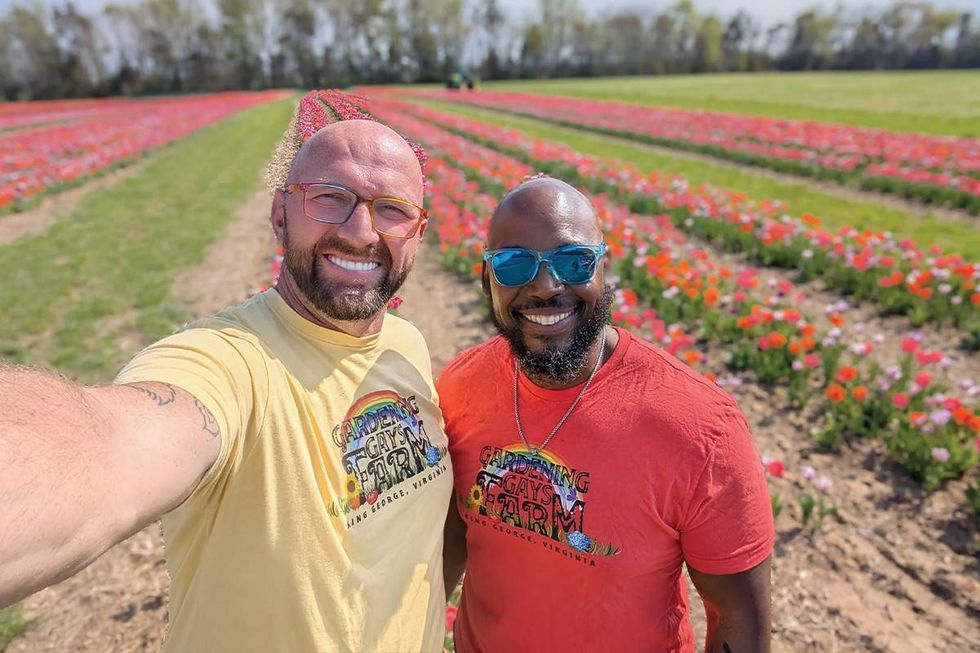 Dragan Kurbalija and Kevin Grahamcourtesy Gardening Gays
Conservative backlash
It would be dishonest to tell this as a simple triumph. The same year King George first voted them "Best of the Best," someone dumped waste near their property, and did it again a week later, this time worse, leaving behind medical waste. When it surfaced on the community Facebook page, the outpouring of support was immediate. People drove out just to show up. Some regulars came in crying. Even a persistent antagonist on that same page, who had made a habit of inserting hostility whenever the farm was mentioned, was ultimately drowned out by neighbors who pushed back collectively and decisively. And then there is the school system. In the early days, Kevin and Dragan built something warm with local teachers organizing classroom visits, pumpkin donations, and a planting day that brought thirty community volunteers to the school.
Being forced to say no
One parent ended it. Months after a classroom visit, she contacted the county sheriff because Kevin and Dragan had worn their Gardening Gays hoodies during the presentation. The sheriff came, sat at their kitchen table, they say, and found nothing. But the damage was done. "The answer is now a hard no, full stop," Kevin says. "It's sad that one person had to ruin it. But so be it." They still donate to schools quietly, from the back end, out of sight. The students won't get, as Kevin puts it, "the dynamic experience they deserve." He says this without visible bitterness, which is somehow the most striking part.
The school board responsible for King George Middle School recently denied students the right to form a Gay-Straight Alliance. Students I spoke with said they felt invisible. Kevin and Dragan notice queer customers at the farm who seem, in Kevin’s description, to be "popping out of their hole just for a minute,” wanting to say they're glad the farm exists, before hurrying back. "Here we are throwing a sign up on the side of the road," Kevin says. "And people are in hiding."
Vindman is clear-eyed about where resistance lives. "You may have some resistance from certain elements, maybe older generations," he says. "But we're in 2026. Progress will not be stopped."
Related: Virginia school board adopts anti-transgender policy and blocks LGBTQ+ club
The importance of visibility
Dragan has a phrase for what the sign has become to people who pass it on US-301: a message of hope. Kevin reaches for something more precise: soft power. The visibility of two ordinary gay men doing something as traditional as farming, doing it beautifully, in a place that surprises people, is its own form of advocacy. Not the kind that involves marches. The kind that involves giving a kid an apple and asking how school is going.
They are not interested in being anyone's symbol. They declined to broadcast their politics. They want to sell eggs and produce to their neighbors without alienating half of them. "I want to grow this business," Dragan says. "I don't need to antagonize half the population." What they want, more than anything, is for the farm to speak for itself. Mostly, it does.
"The labels are less important than who they are as people,” Vindman says. “They've demonstrated they're a dedicated business. They've provided a good product. And they're just good folks."
Before I leave, Dragan insists I feed the lambs. I end up on an upside-down bucket in the barn with a bottle in each hand while two of them push against me with more determination than is reasonable for animals this small. Bella, the German Shepherd, one of five dogs on the property, watches with the patient, with a vaguely supervisory air. By now, it is dark and raining, and you can hear it on the metal roof, a steady percussion.
Out on US-301, the headlights keep moving. Many of them see the sign. A surprising number stop. They find milk, eggs, and cheese, and two men who will talk to them like neighbors, which, it turns out, is what they were looking for.
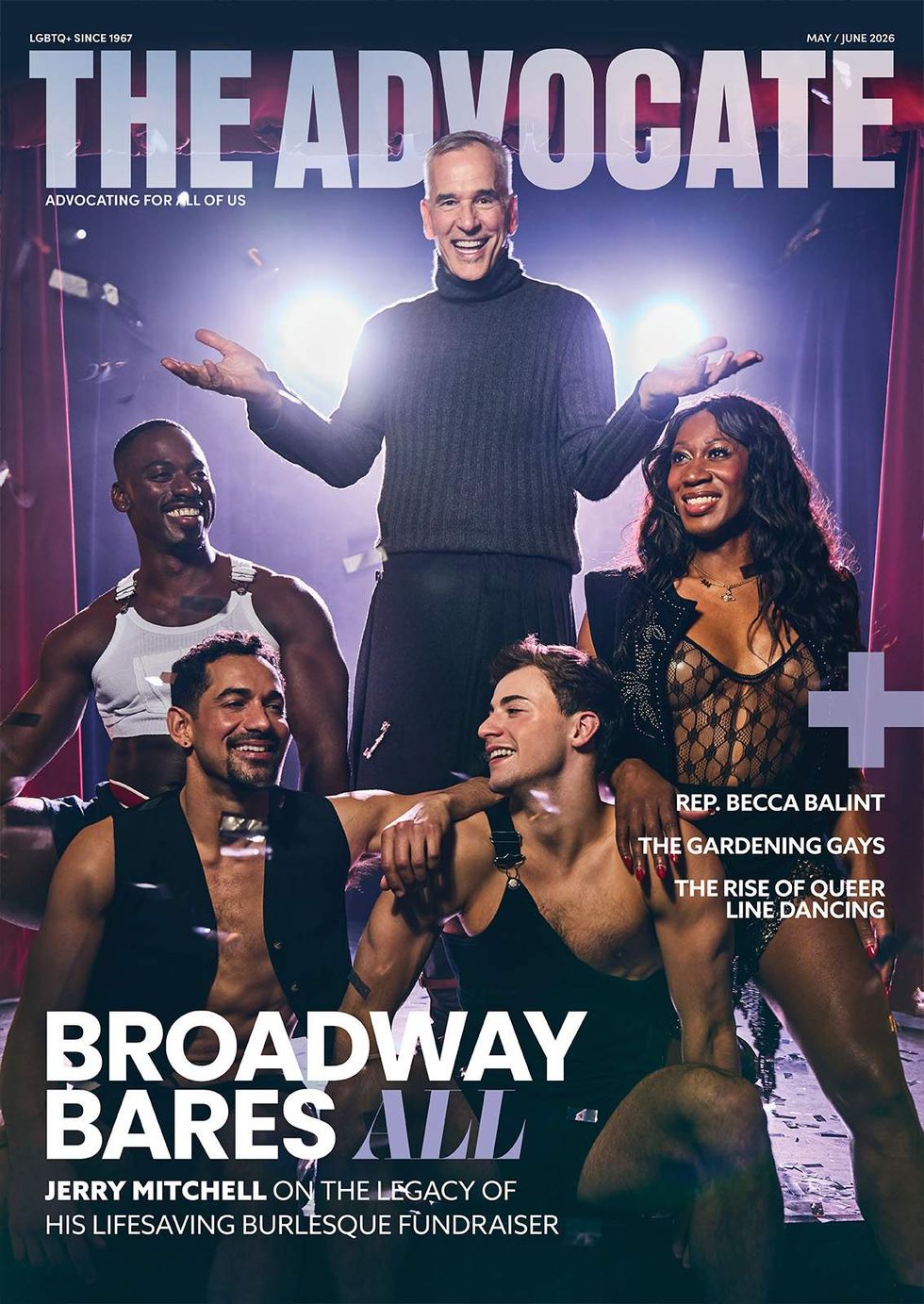
This article is part of The Advocate’s May-June 2026 print issue, which hits newsstands May 26. Support queer media and subscribe — or download the issue through Apple News+, Zinio, Nook, or PressReader.