'%3E%3Cpath d='M16.3574 35.6519H12.9537L15.0491 18.8873L16.3574 35.6519ZM30.4229 54.0093L22.309 0.994385H7.91795L0 54.0093H10.6634L11.5802 46.3855H17.4014L17.9914 54.0093H30.4229Z' fill='%23971B20'/%3E%3Cpath d='M48.2073 41.8813C48.2073 43.4049 47.4892 44.0011 46.1144 44.0011H43.7595V11.0687H46.1144C47.4892 11.0687 48.2073 11.6636 48.2073 13.1885V41.8813ZM59.5273 43.6695V11.3326C59.5273 3.71323 53.5729 0.994385 47.8157 0.994385H31.7213V54.0093H47.8157C53.5729 54.0093 59.5273 51.29 59.5273 43.6695Z' fill='%23971B20'/%3E%3Cpath d='M90.183 0.994385H78.6039L75.0711 30.6157L71.9955 0.994385H59.4346L69.2474 54.0093H80.373L90.183 0.994385Z' fill='%23971B20'/%3E%3Cpath d='M107.063 42.3448C107.063 43.7359 105.951 44.5974 104.643 44.5974C103.269 44.5974 102.157 43.7359 102.157 42.3448V12.658C102.157 11.2676 103.269 10.4058 104.643 10.4058C105.951 10.4058 107.063 11.2676 107.063 12.658V42.3448ZM119.233 43.2723V11.7312C119.233 6.36384 112.952 -3.8147e-06 104.643 -3.8147e-06C96.2667 -3.8147e-06 89.9867 6.36384 89.9867 11.7312V43.2723C89.9867 48.6393 96.2667 55 104.643 55C112.952 55 119.233 48.6393 119.233 43.2723Z' fill='%23971B20'/%3E%3Cpath d='M150.976 43.9349V33.7309H139.069V42.3448C139.069 43.7359 137.957 44.5974 136.582 44.5974C135.076 44.5974 133.964 43.7359 133.964 42.3448V12.658C133.964 11.2676 135.076 10.4058 136.582 10.4058C137.957 10.4058 139.069 11.2676 139.069 12.658V21.2723H150.976V11.0687C150.976 5.70107 145.283 -3.8147e-06 136.582 -3.8147e-06C127.75 -3.8147e-06 121.796 5.70107 121.796 11.0687V43.9349C121.796 49.3022 127.75 55 136.582 55C145.283 55 150.976 49.3022 150.976 43.9349Z' fill='%23971B20'/%3E%3Cpath d='M167.478 35.6519H164.076L166.17 18.8873L167.478 35.6519ZM181.544 54.0093L173.432 0.994385H159.037L151.123 54.0093H161.785L162.704 46.3855H168.523L169.114 54.0093H181.544Z' fill='%23971B20'/%3E%3Cpath d='M205.412 10.4058V0.994385H177.081V10.4058H185.392V54.0093H197.428V10.4058H205.412Z' fill='%23971B20'/%3E%3Cpath d='M230.002 54.0093V43.9349H218.914V31.8746H226.635V21.8028H218.914V10.4058H230.002V0.994385H206.875V54.0093H230.002Z' fill='%23971B20'/%3E%3C/g%3E%3Cdefs%3E%3CclipPath id='clip0_260_7080'%3E%3Crect width='230' height='55' fill='white'/%3E%3C/clipPath%3E%3C/defs%3E%3C/svg%3E)
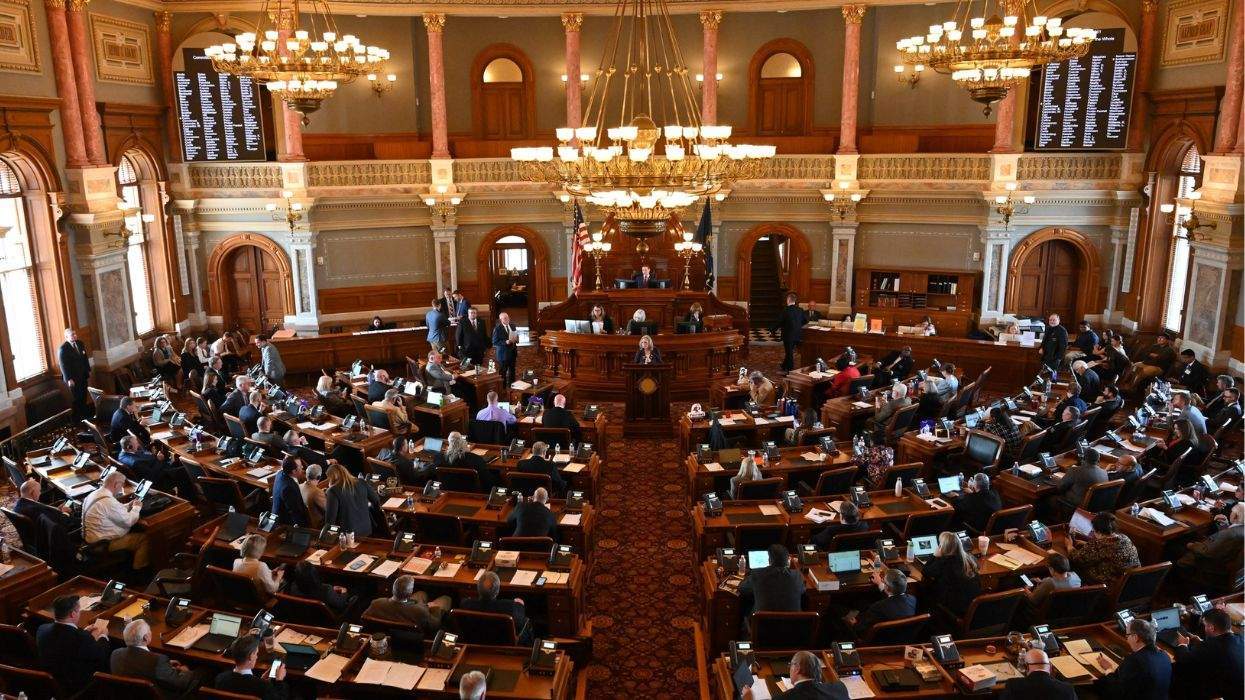

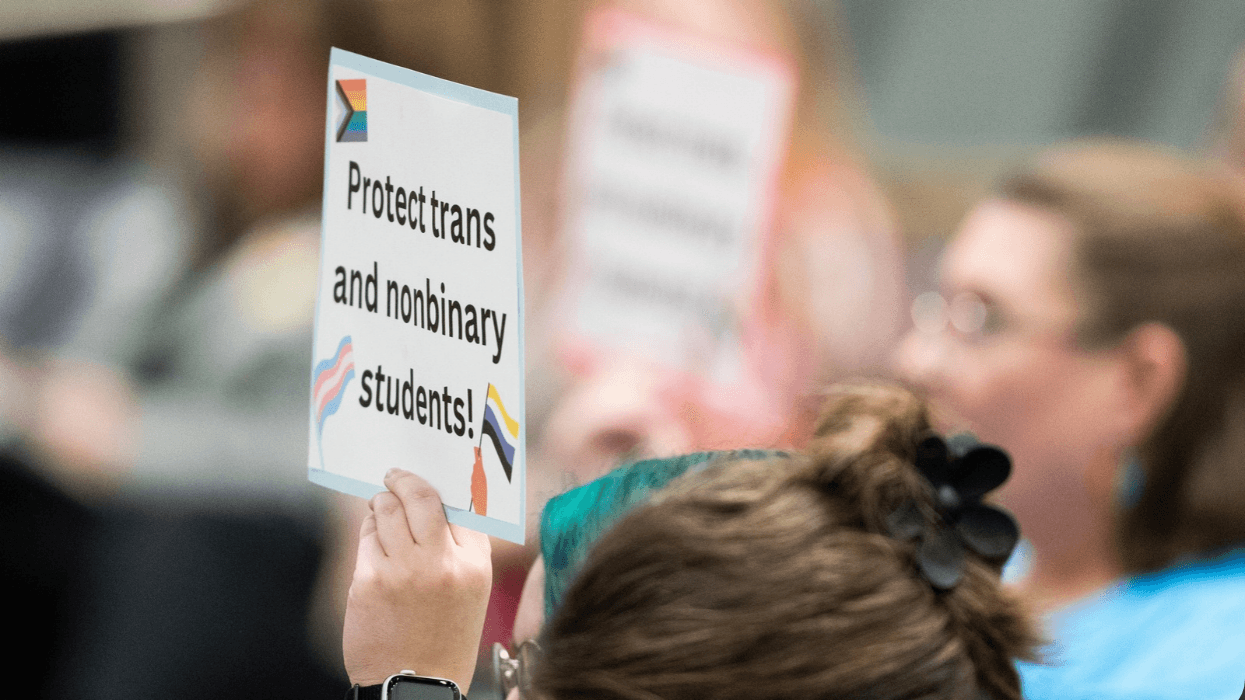
Kansas legislators have overridden Gov. Laura Kelly’s veto of a draconian anti-transgender bathroom bill, so it will become law. It goes into effect as soon as paperwork is filed with the Secretary of State’s office.
Kelly, a Democrat in a heavily Republican state, Friday vetoed Senate Bill 244, passed by lawmakers in January along party lines, Republicans for, Democrats against. But the Republicans have a veto-proof majority, so they were able to override Kelly’s veto, as they have done with several other anti-trans bills. The Kansas Senate took its override vote Tuesday, the House Wednesday. One House Republican, Mark Schreiber, voted against the override, as did all Democrats present, the Kansas Reflector reports.
Related: Kansas Passes Anti-Trans Sports Bill, Overriding Governor's Veto
The legislation requires trans people to restrooms and other single-sex facilities in government buildings according to their sex assigned at birth, not their gender identity. It also requires the state to reissue any driver’s licenses or birth certificates that reflected a trans person’s gender identity, replacing that gender marker with one for the sex assigned at birth. It further bans multi-occupancy gender-neutral restrooms in government buildings.
It imposes a fine on individuals of $1,000 for a second violation of the law and brings a misdemeanor charge for a third violation. It allows those “aggrieved” by the presence of a trans person to sue for damages of $1,000 or actual damages. The government entity is to be fined $25,000 for the first violation and $125,000 for any subsequent violation. The lawsuit provision is not limited to government buildings.
Kelly responded to the override with this statement: “As I said in my veto statement, this is a poorly drafted bill with significant, far-reaching consequences. Not only will this bill keep brothers from visiting sisters’ dorms and husbands from wives’ shared hospital rooms, it will cost Kansas taxpayers millions of dollars to comply with this very vague legislation. It is nothing short of ridiculous that the Legislature is forcing the entire state, every city and town, every school district, every public university to spend taxpayer money on a manufactured problem. Kansans elected them to focus on education, job creation, housing, and grocery costs.”
The legislation is known as a “gut and go” bill because it started out with an altogether different purpose. SB 244 originated as a bill to regulate bail bond companies. A House committee deleted those contents and replaced them with the anti-trans language. The gender marker provisions had a public hearing, but not the bathroom provisions.
“SB 244 is equally bizarre and cruel, allowing for bounty-style lawsuits to be filed by those who believe they’ve shared a bathroom with a transgender person for ‘damages’ of at least $1,000,” says a Human Rights Campaign press release. It will create many problems for public sector workers, the release notes, going against the inclusive workplace policies adopted by cities in Kansas.
HRC President Kelley Robinson issued this statement: “Instead of meeting the needs of their constituents, Kansas lawmakers have prioritized cruelty. As one of their first acts, they forced through this ‘bathroom bounty’ bill under the cover of night and then overrode the governor just days later, denying LGBTQ+ Kansans and their allies an opportunity to even speak in defense of their dignity. Forcing people into the wrong bathrooms, stripping them of accurate IDs, and allowing government-sanctioned harassment doesn’t make anyone safer — it targets transgender Kansans for no reason and will undoubtedly impact many others who are targeted with animus whether or not they are transgender. Meanwhile leaders ignore real challenges facing families. This was sadly politics over people, but we will keep fighting for dignity and freedom for all LGBTQ+ people.”
As the Senate took its vote, Rabbi Moti Rieber, executive director of Kansas Interfaith Action, yelled from the gallery, “First they came for the trans people, and I didn’t speak out because I wasn’t trans,” paraphrasing Pastor Martin Niemöller’s “First They Came” writing about the Holocaust. Rieber shouted “Shame on you” as he was escorted out of the building, the Reflector reports.
During debate, Democratic Sen. Cindy Holscher said Kansans have a 0.00083 percent chance of being attacked by a trans person in a restroom, the publication notes. “You are eight times more likely to get struck by lightning,” she said. “You’re 50 times more likely to die in a car crash, you’re 100 times more likely to be killed by gun violence, and you are 3,500 times more likely to be sexually assaulted by a man.”
Another Democrat, Rep. Heather Meyer, said the bill “paints a bull’s-eye” on trans legislators, such as Rep. Abi Boatman, the only one currently in office, and former Rep. Stephanie Byers, the Reflector reports. “I feel safer in a restroom with those representatives than I do or would with some people here, including women, and I’m not even joking about that,” she said.
Other Democrats said they worried about the economic impact of the legislation, as Kansas’s Wyandotte County will host the World Cup this summer, and that it would endanger trans people whose appearance does not match the gender marker on their driver’s license.
“This bill is gratuitous. This bill is absolutely unnecessary,” Rieber told the Reflector after the Senate vote. “Think about when you take out your driver’s license — at the liquor store, when you’re cashing a check, voting, if a cop pulls you over. You’re outing yourself every time somebody sees your driver’s license. It’s very dangerous for trans people to be outed, and we’re putting them at risk and all for the sake of their idea of the white Christian nationalist idea of what is proper.”
Twenty other states have laws restricting trans people’s access to restrooms in K-12 schools and/or other government buildings, according to HRC. “Nationwide, one in three transgender people already live in states with school bathroom bans, and nearly one in five live where those restrictions extend across public buildings like libraries, courthouses, and universities,” HRC notes.