'%3E%3Cpath d='M16.3574 35.6519H12.9537L15.0491 18.8873L16.3574 35.6519ZM30.4229 54.0093L22.309 0.994385H7.91795L0 54.0093H10.6634L11.5802 46.3855H17.4014L17.9914 54.0093H30.4229Z' fill='%23971B20'/%3E%3Cpath d='M48.2073 41.8813C48.2073 43.4049 47.4892 44.0011 46.1144 44.0011H43.7595V11.0687H46.1144C47.4892 11.0687 48.2073 11.6636 48.2073 13.1885V41.8813ZM59.5273 43.6695V11.3326C59.5273 3.71323 53.5729 0.994385 47.8157 0.994385H31.7213V54.0093H47.8157C53.5729 54.0093 59.5273 51.29 59.5273 43.6695Z' fill='%23971B20'/%3E%3Cpath d='M90.183 0.994385H78.6039L75.0711 30.6157L71.9955 0.994385H59.4346L69.2474 54.0093H80.373L90.183 0.994385Z' fill='%23971B20'/%3E%3Cpath d='M107.063 42.3448C107.063 43.7359 105.951 44.5974 104.643 44.5974C103.269 44.5974 102.157 43.7359 102.157 42.3448V12.658C102.157 11.2676 103.269 10.4058 104.643 10.4058C105.951 10.4058 107.063 11.2676 107.063 12.658V42.3448ZM119.233 43.2723V11.7312C119.233 6.36384 112.952 -3.8147e-06 104.643 -3.8147e-06C96.2667 -3.8147e-06 89.9867 6.36384 89.9867 11.7312V43.2723C89.9867 48.6393 96.2667 55 104.643 55C112.952 55 119.233 48.6393 119.233 43.2723Z' fill='%23971B20'/%3E%3Cpath d='M150.976 43.9349V33.7309H139.069V42.3448C139.069 43.7359 137.957 44.5974 136.582 44.5974C135.076 44.5974 133.964 43.7359 133.964 42.3448V12.658C133.964 11.2676 135.076 10.4058 136.582 10.4058C137.957 10.4058 139.069 11.2676 139.069 12.658V21.2723H150.976V11.0687C150.976 5.70107 145.283 -3.8147e-06 136.582 -3.8147e-06C127.75 -3.8147e-06 121.796 5.70107 121.796 11.0687V43.9349C121.796 49.3022 127.75 55 136.582 55C145.283 55 150.976 49.3022 150.976 43.9349Z' fill='%23971B20'/%3E%3Cpath d='M167.478 35.6519H164.076L166.17 18.8873L167.478 35.6519ZM181.544 54.0093L173.432 0.994385H159.037L151.123 54.0093H161.785L162.704 46.3855H168.523L169.114 54.0093H181.544Z' fill='%23971B20'/%3E%3Cpath d='M205.412 10.4058V0.994385H177.081V10.4058H185.392V54.0093H197.428V10.4058H205.412Z' fill='%23971B20'/%3E%3Cpath d='M230.002 54.0093V43.9349H218.914V31.8746H226.635V21.8028H218.914V10.4058H230.002V0.994385H206.875V54.0093H230.002Z' fill='%23971B20'/%3E%3C/g%3E%3Cdefs%3E%3CclipPath id='clip0_260_7080'%3E%3Crect width='230' height='55' fill='white'/%3E%3C/clipPath%3E%3C/defs%3E%3C/svg%3E)
For Tony Simone, being gay in the New York State Legislature has occasionally carried a strange contradiction.
He represents a district that includes Chelsea and Hell’s Kitchen, neighborhoods inseparable from generations of LGBTQ+ life in New York City. He serves in one of the most Democratic legislatures in the country. And yet, Simone said, being one of relatively few openly LGBTQ+ lawmakers in Albany can still feel solitary.
“It can be isolating and lonely in Albany,” the Democratic assemblymember told The Advocate.
That may be about to change dramatically.
Seven out LGBTQ+ lawmakers currently serve in New York’s 213-member Legislature. Sens. Jabari Brisport, and Erik Bottcher serve in the Senate, while Assemblymembers Deborah Glick, Simone, Harry Bronson, Jessica González-Rojas, and Diana Moreno sit in the Assembly. Bottcher and Moreno joined the Legislature after winning special elections earlier this year; Moreno took office on February 4. Glick, the first out LGBTQ+ person elected to the New York Legislature, is retiring after more than three decades in office.
Then came the June Democratic primaries.
González-Rojas, who already serves in the Assembly, won the Democratic nomination for a state Senate seat. Five other LGBTQ+ candidates — Brian Romero, David Orkin, Christian Celeste Tate, Illapa Sairitupac and David Siffert — won Democratic Assembly primaries. Siffert’s race was not settled until a manual recount gave them a 15-vote victory. They would become New York’s first out nonbinary state legislator.
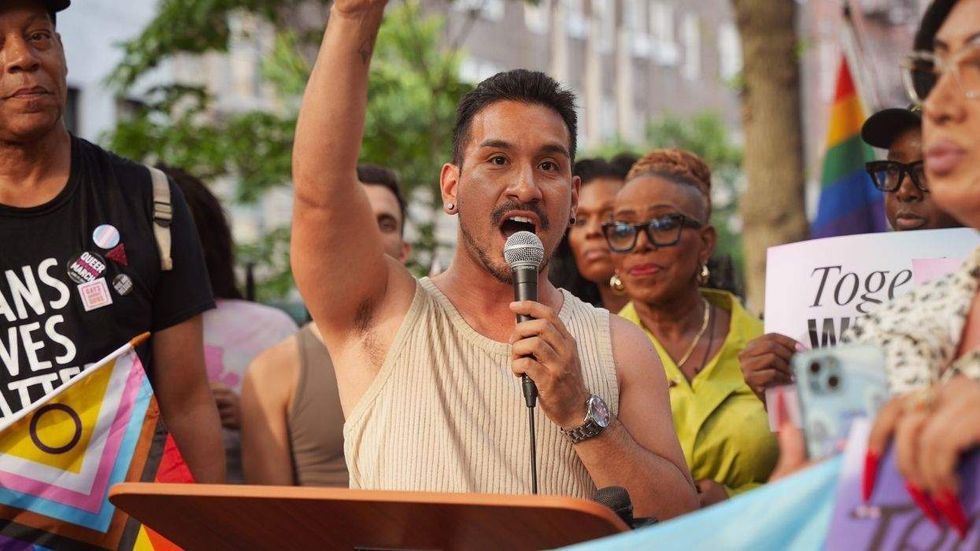 Brian Romero speaks to supporters in New York City.Corey Torpie
They have not yet been elected to those new offices. The general election is on November 3. But they are running in heavily Democratic territory — Romero, for example, has no Republican opponent — making most of their victories in November highly likely. If the expected results hold, the legislature that convenes in January would include 11 LGBTQ+ members: three senators and eight Assembly members, the largest such delegation in New York history.
And some of them want to do something New York, for all of its significance to LGBTQ+ history, has never done. They want to create a formal LGBTQ+ legislative caucus.
Related: Mayor Mamdani appoints trans woman to run first-ever NYC Office of LGBTQIA+ Affairs
From representation to power
The discussions remain preliminary. Current and likely incoming lawmakers would eventually need legislative leaders to recognize the group and provide funding. But Romero, Simone, and others have already begun talking about an organization with staff and common priorities, more akin to the Legislature’s influential Black, Puerto Rican, Hispanic and Asian Legislative Caucus than an informal affinity group.
For the lawmakers involved, the timing is hardly accidental. “We are under attack, but we can’t just be on the defensive,” Simone said. “We have to be on the offense.”
That distinction — defense versus offense — runs through the emerging caucus project.
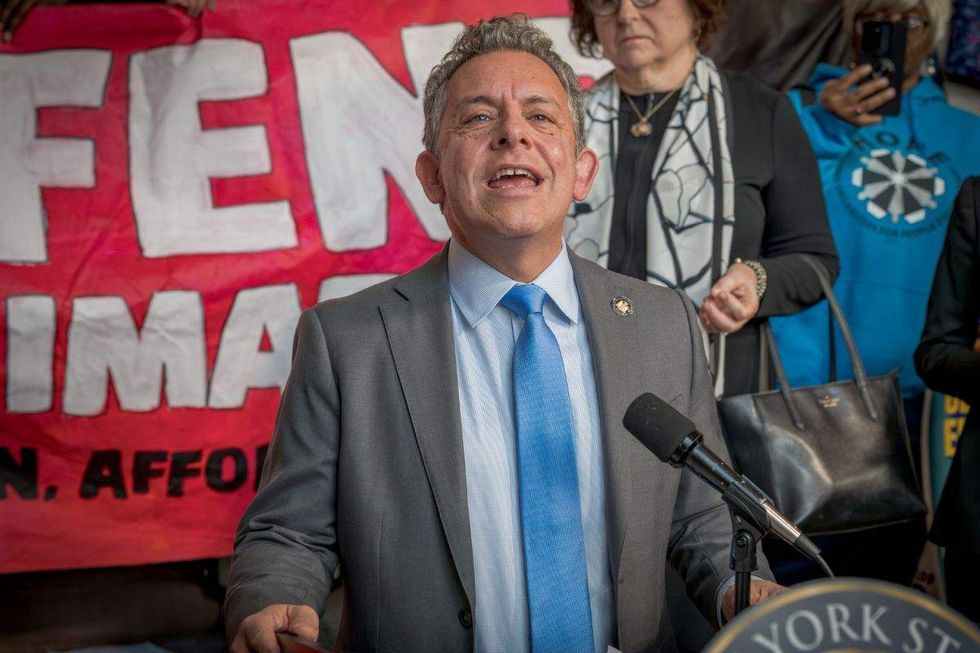 NY Assembly member Tony Simone speaks. Erik McGregor/LightRocket via Getty Images
New York has spent years positioning itself as a refuge for LGBTQ+ people. The state has enacted nondiscrimination protections, transgender health care shield laws, and other safeguards. Gov. Kathy Hochul announced in June that the state’s Lorena Borjas Transgender and Non-Binary Wellness and Equity Fund had grown to more than $16 million. State health officials estimate that more than 1 million adult New Yorkers identify as LGBTQ+.
But having laws on the books is different from building a government capable of protecting people when Washington turns hostile.
Siffert sees that distinction particularly clearly. Their likely district includes Stonewall, where the Trump administration’s treatment of the national monument has itself become part of a larger fight over transgender visibility. Siffert told The Advocate that symbolic attacks cannot be divorced from material ones.
Removing a Pride flag or references to transgender people may appear less consequential than restricting health care, they said, but “those things are extremely interrelated,” because symbolic actions can become tools for policies that cause direct harm.
The next fight is over money
The challenge for an LGBTQ+ caucus would therefore be to move beyond proclamations and Pride Month resolutions and into the less glamorous machinery of government.
Siffert pointed to gender-affirming care as an example. New York can pass protective laws, they said, but “as soon as a budget line item is necessary,” LGBTQ+ priorities begin competing with everything else Albany is asked to fund.
“If you want to make sure that your group gets a fair share of the budget distribution,” Siffert said, “you need to sort of work together.”
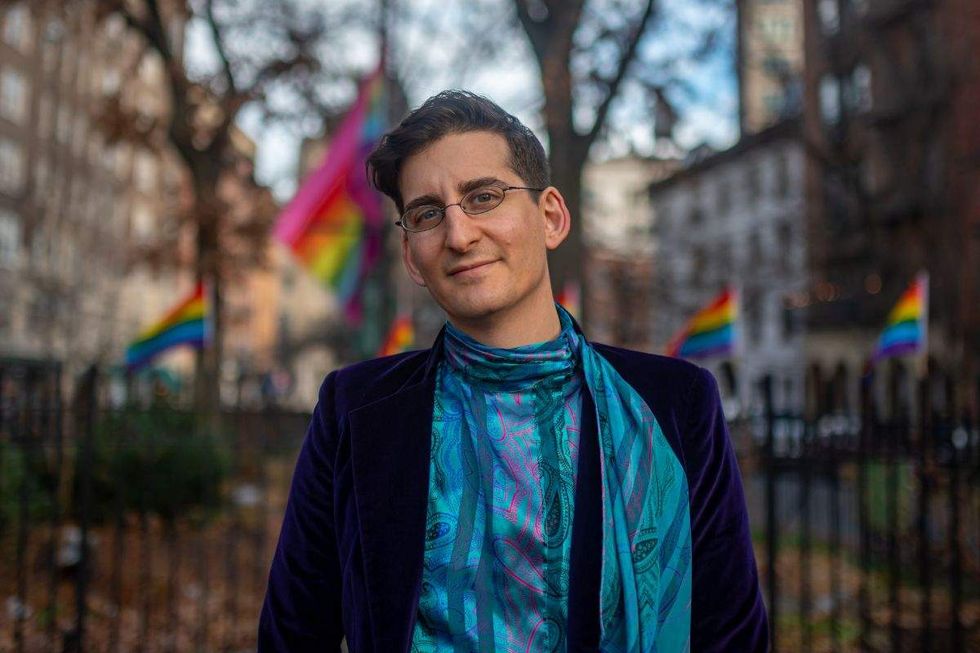 David Siffert would be the first nonbinary member of the New York State Assembly.Courtesy David Siffert
That became painfully concrete this year. Advocates pushed for dedicated state funding to protect access to gender-affirming care as the Trump administration intensified pressure on hospitals and health systems. The money did not make it into the enacted budget.
Simone said he heard from parents in his district whose transgender children suddenly faced canceled medical appointments. “As a party, the Democrats should not run away from anyone we represent,” he said.
Related: Lawmakers seek to end New York’s 40-year bathhouse prohibition
A caucus could pressure Democrats, too
Romero, a former psychotherapist and legislative staffer, worked with LGBTQ+ people, low-income patients, immigrants, and people living with HIV or AIDS before entering government. He describes health care, housing, employment, immigration, and addiction not as separate policy silos but as conditions that frequently converge in queer people’s lives.
New York’s own research provides evidence for that argument. A state Department of Labor study found pervasive employment discrimination against transgender, gender-nonconforming, and nonbinary New Yorkers, with greater disparities among people of color and significant differences between New York City and more rural parts of the state.
Romero wants the state to address employment, HIV-related housing, overdose prevention, and gender-affirming care, among other priorities. But he also sees a caucus serving another function: educating other Democrats.
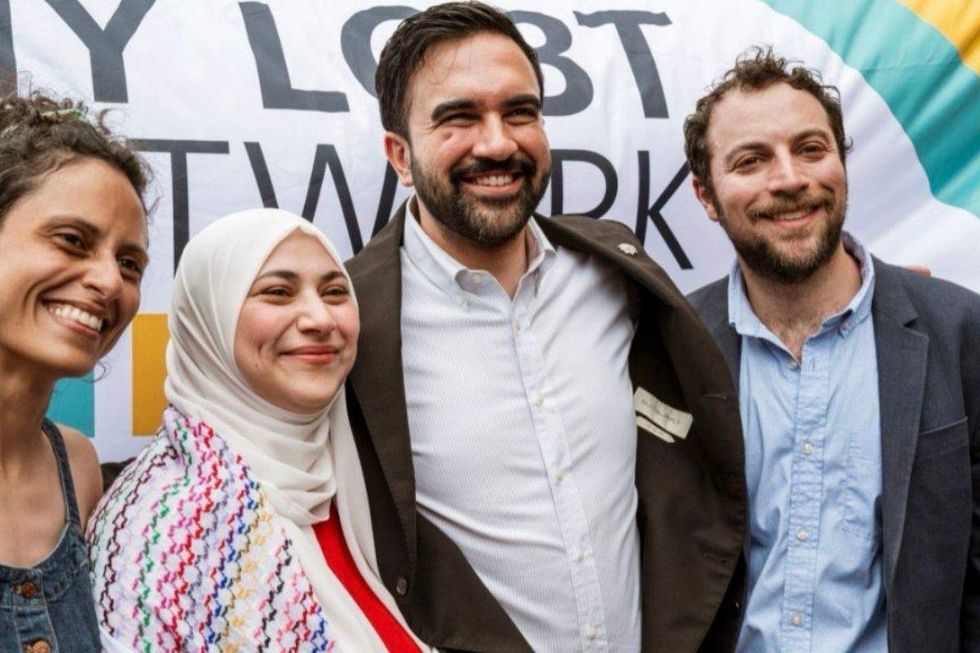 David Orkin (r) with New York City Mayor Zohran Mamdani (center) and others.David Orkin for Queen
He told The Advocate that the organizing effort should include not only LGBTQ+ legislators but allied lawmakers representing queer constituents — including legislators who may have never thought deeply about how seemingly universal questions such as rent, jobs, or Medicaid can fall differently on LGBTQ+ people.
The caucus, Romero said, could help lawmakers “across the state, whether you’re upstate, downstate, Long Island, Hudson Valley,” understand “that all these issues intersect.”
Orkin brings another piece of that intersectional politics. An immigrant workers’ rights attorney likely headed to the Assembly from a working-class, heavily immigrant South Queens district, he has represented people facing wage theft and workplace discrimination.
With the federal government retreating from some LGBTQ+ protections, Orkin said, New York needs to make sure institutions such as the state Division of Human Rights actually have the resources to enforce state law when queer and transgender workers are harassed, discriminated against, or fired.
The larger LGBTQ+ delegation, he said, presents “a unique opportunity” to “work together, and to build power.”
Other states offer a blueprint
Other states demonstrate what that power can look like once it becomes institutional.
California established the nation’s first official caucus of openly LGBTQ+ state legislators in 2002. Its current legislative agenda stretches from education and hate crimes to veterans and data privacy. This year, the caucus made a state-backed gender-affirming care fund its top budget priority; California’s enacted budget ultimately included $26 million to stabilize access to that care amid federal pressure.
Washington’s legislative LGBTQ Caucus regularly meets with advocacy organizations and has helped advance policies including conversion therapy restrictions, an LGBTQ commission, and gender-affirming care protections. Maryland’s LGBTQ+ caucus includes not just LGBTQ+ legislators but dozens of “associate members,” offering a ready-made model for Romero’s vision of bringing allies into a broader coalition.
And in Washington, D.C., the Congressional Equality Caucus shows how LGBTQ+ lawmakers can use an organized bloc even without controlling the chamber. Twelve out LGBTQ+ House members lead the caucus in the 119th Congress. This year, caucus members helped organize 106 members of Congress against Trump administration proposals restricting transgender health care, and Chair Mark Takano credited sustained organizing with helping defeat a House amendment that would have written Trump’s transgender military ban into federal law.
The difference between having a seat and wielding power
The growth in New York is part of a broader transformation in American politics. LGBTQ+ Victory Institute counted 243 LGBTQ+ state legislators nationwide in 2025, more than double the 109 serving in 2017. Yet LGBTQ+ people remain significantly underrepresented in elected government.
Simone believes the additional numbers can give even non-LGBTQ+ Democrats political cover to resist the temptation to retreat when transgender people become politically inconvenient.
A caucus, he said, could give colleagues “more of a reason to have a bigger backbone.”
Siffert offered an even simpler measure of what representation should accomplish. They said they are not terribly concerned if someone in Albany fails to understand being nonbinary, asks questions, or even dislikes them because of their identity.
“At the point when it’s impacting people’s lives on the ground, I start to care,” Siffert said.
“When people’s lack of acceptance or tolerance means that kids can’t get access to health care, at that point, I really do care.”