'%3E%3Cpath d='M16.3574 35.6519H12.9537L15.0491 18.8873L16.3574 35.6519ZM30.4229 54.0093L22.309 0.994385H7.91795L0 54.0093H10.6634L11.5802 46.3855H17.4014L17.9914 54.0093H30.4229Z' fill='%23971B20'/%3E%3Cpath d='M48.2073 41.8813C48.2073 43.4049 47.4892 44.0011 46.1144 44.0011H43.7595V11.0687H46.1144C47.4892 11.0687 48.2073 11.6636 48.2073 13.1885V41.8813ZM59.5273 43.6695V11.3326C59.5273 3.71323 53.5729 0.994385 47.8157 0.994385H31.7213V54.0093H47.8157C53.5729 54.0093 59.5273 51.29 59.5273 43.6695Z' fill='%23971B20'/%3E%3Cpath d='M90.183 0.994385H78.6039L75.0711 30.6157L71.9955 0.994385H59.4346L69.2474 54.0093H80.373L90.183 0.994385Z' fill='%23971B20'/%3E%3Cpath d='M107.063 42.3448C107.063 43.7359 105.951 44.5974 104.643 44.5974C103.269 44.5974 102.157 43.7359 102.157 42.3448V12.658C102.157 11.2676 103.269 10.4058 104.643 10.4058C105.951 10.4058 107.063 11.2676 107.063 12.658V42.3448ZM119.233 43.2723V11.7312C119.233 6.36384 112.952 -3.8147e-06 104.643 -3.8147e-06C96.2667 -3.8147e-06 89.9867 6.36384 89.9867 11.7312V43.2723C89.9867 48.6393 96.2667 55 104.643 55C112.952 55 119.233 48.6393 119.233 43.2723Z' fill='%23971B20'/%3E%3Cpath d='M150.976 43.9349V33.7309H139.069V42.3448C139.069 43.7359 137.957 44.5974 136.582 44.5974C135.076 44.5974 133.964 43.7359 133.964 42.3448V12.658C133.964 11.2676 135.076 10.4058 136.582 10.4058C137.957 10.4058 139.069 11.2676 139.069 12.658V21.2723H150.976V11.0687C150.976 5.70107 145.283 -3.8147e-06 136.582 -3.8147e-06C127.75 -3.8147e-06 121.796 5.70107 121.796 11.0687V43.9349C121.796 49.3022 127.75 55 136.582 55C145.283 55 150.976 49.3022 150.976 43.9349Z' fill='%23971B20'/%3E%3Cpath d='M167.478 35.6519H164.076L166.17 18.8873L167.478 35.6519ZM181.544 54.0093L173.432 0.994385H159.037L151.123 54.0093H161.785L162.704 46.3855H168.523L169.114 54.0093H181.544Z' fill='%23971B20'/%3E%3Cpath d='M205.412 10.4058V0.994385H177.081V10.4058H185.392V54.0093H197.428V10.4058H205.412Z' fill='%23971B20'/%3E%3Cpath d='M230.002 54.0093V43.9349H218.914V31.8746H226.635V21.8028H218.914V10.4058H230.002V0.994385H206.875V54.0093H230.002Z' fill='%23971B20'/%3E%3C/g%3E%3Cdefs%3E%3CclipPath id='clip0_260_7080'%3E%3Crect width='230' height='55' fill='white'/%3E%3C/clipPath%3E%3C/defs%3E%3C/svg%3E)
The first thing Will Wooten did when Fulton County District Attorney Fani Willis told him she was putting him on the Trump criminal investigation was delete himself.
“Immediately, I went and shut down my social media,” he told The Advocate in an interview. “And just waited.”
That instinct to disappear, to protect the work by erasing the self, defined the next several years of his life. Now, three weeks before a Georgia statewide election that could make history, Wooten is done waiting. He is asking Georgia voters to see him fully, for the first time.
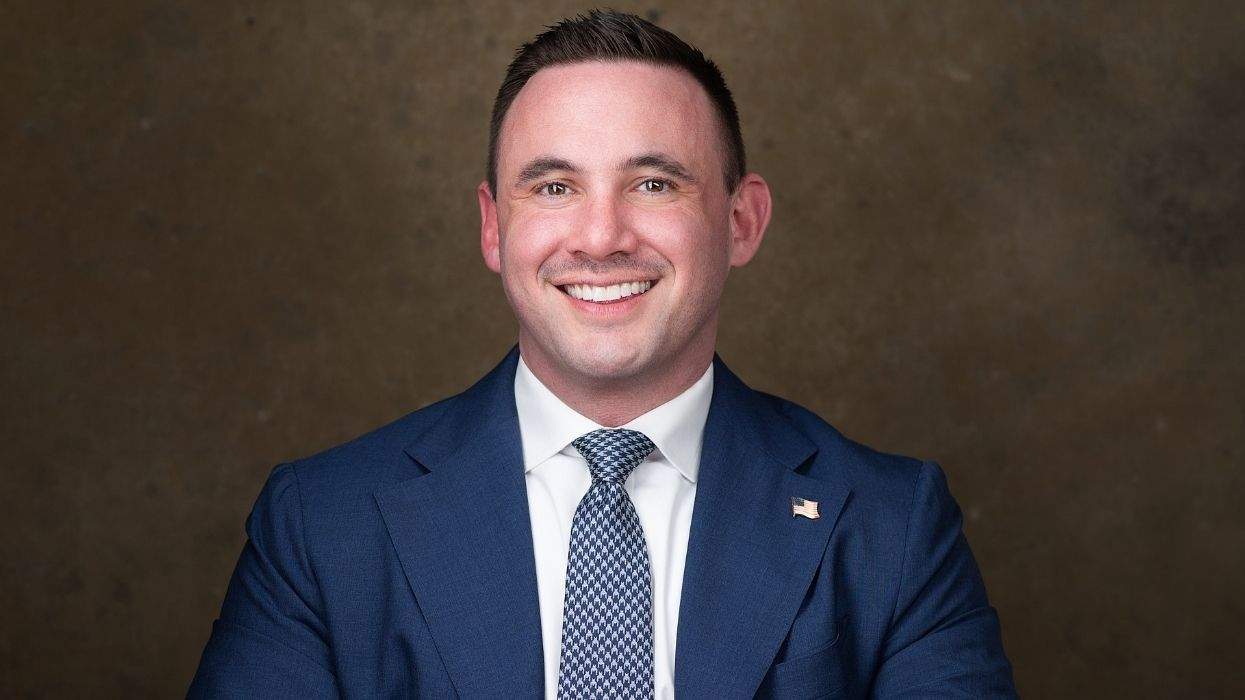
Wooten, 38, is running for the Georgia Court of Appeals on May 19 in a nonpartisan race that could make him the first out LGBTQ+ person elected to statewide office in Georgia and the first out LGBTQ+ appellate judge in the state’s history. He is challenging incumbent Judge E. Trenton Brown III, the judge whose court disqualified Willis and effectively ended the prosecution that Wooten spent years of his life building.
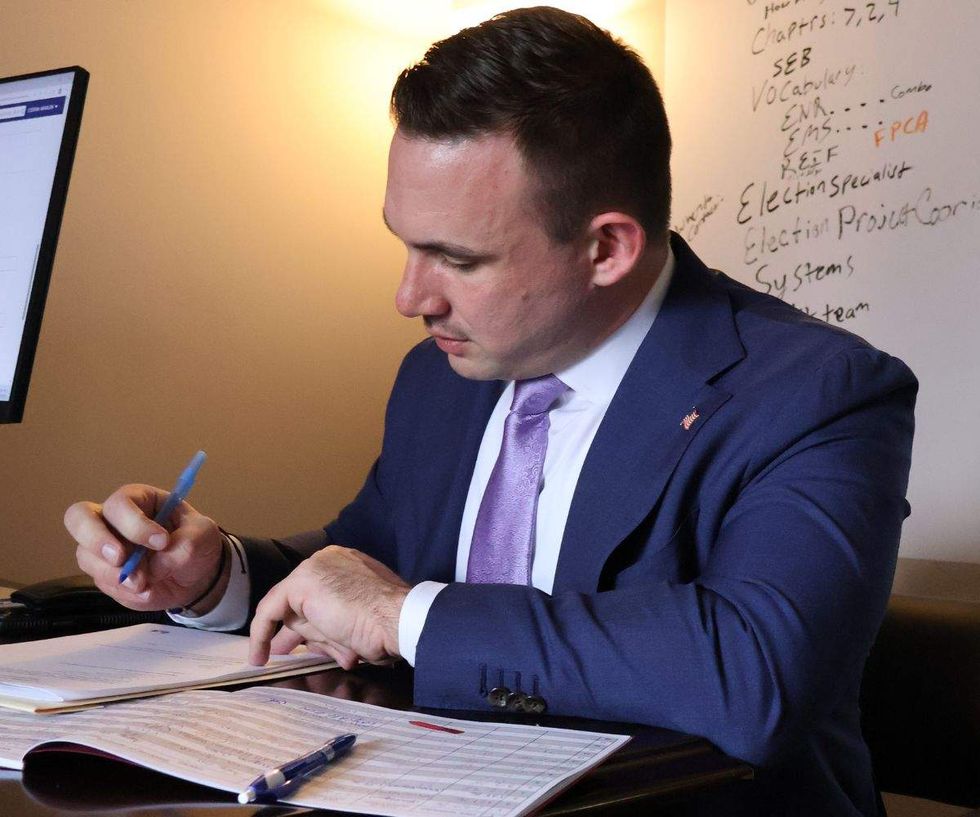 Will Wooten signing the paperwork at the Georgia Secretary of State’s Office to officially file to run for GA Court of Appeals in March 2026.Wooten for Georgia
He cannot attack the ruling directly under judicial ethics rules. "I’ve got to do something,” he said, choosing to run to replace the judge. “People are looking for someone to do something."
January 6th
Wooten’s first day at the Fulton County DA’s office was January 6, 2021. “Of all the days,” he said.
He had been hired as head of the White Collar Crime Unit under Willis, who had been sworn in just days earlier. On January 2nd, Trump had made the now-infamous call asking Georgia Secretary of State Brad Raffensperger to “find” 11,780 votes. Willis announced her investigation almost immediately after. Everyone in Wooten’s circle assumed he’d be on it.
He wasn’t, not yet. He kept his head down, working through pandemic backlogs, handling fraud, theft, and corruption cases, deliberately separate from what the public was watching unfold. Then came Jekyll Island. At the annual Georgia prosecutors’ convention in the summer of 2021, Willis pulled him aside into a conference room.
“She goes, ‘Okay, I’m going to put you on it,’” he recalled. “And I’m like, wait, what?"
The instruction that followed was simple: don’t tell anyone. Watch for a calendar invite. And so he shut down his social media and waited. A few months later, the invite came.
"The first interview I had about anything after, I’m like, wait a minute. I can talk about this?” he told The Advocate, laughing at the strangeness of re-learning to speak. “It was the most bizarre feeling. Being silent for years and years and years.”
The investigation
What followed the calendar invite was not television drama. It was reconstruction.
The team’s first task was to simply understand what had happened: who knew what, who saw what, what was recorded, what was documented. They started, remarkably, by reading books written about the Trump administration.
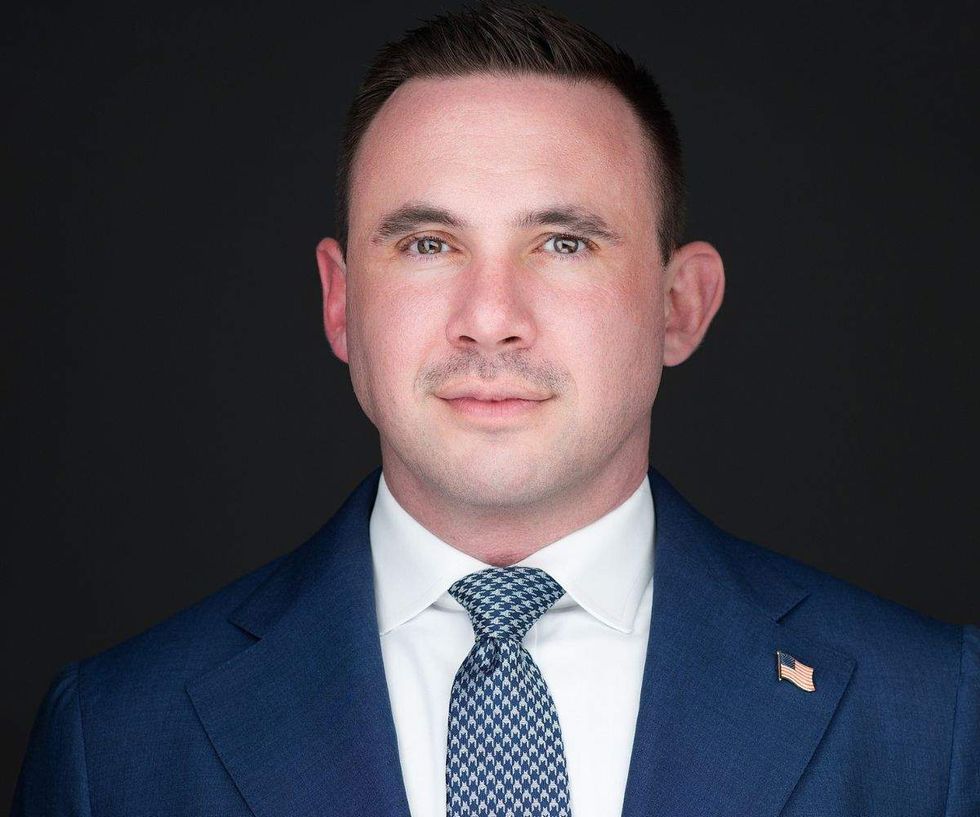 Will Wooten would be the first out gay appeals court judge in Georgia.Robert Mitchel Owenby Photography
"So we could wrap our heads around just kind of the vibe of it all,” Wooten said. He bristles at any suggestion that the investigation was political theater. “We never went into the investigation determined to indict anyone,” he said. “It was always, just like any criminal case, we got to figure out what happened.”
The danger, however, was real.
“There were times when bomb dogs came in and swept the rooms,” he said. “I was fitted for a custom-fitted bulletproof vest that I wore a few times.” There were checks for recording devices. Threat assessments. And for indictment night, a night with a plan so detailed and so serious, a body double was prepared for Willis in case of sniper threats.
“There was a whole plan in place,” he said. And yet, he tried to preserve something like ordinary life. “You go to work, you do your job, you come home, you watch Netflix, and you go to bed."
The reckoning
When the case collapsed, when the court disqualified Willis and years of work evaporated, Wooten went somewhere dark.
“I thought, am I in the right career field?" he said. "Is the system that I believed in, and still believe in so deeply, is it what I thought it was?"
He sat with that for a while. Then something shifted. "It was a short-lived moment," he said. "Because at some point it turned into: I've got to do something."
He had been quietly building toward a run for public office since 2018, when colleagues started telling him he should put his name in for something. He had an Instagram page reserved. A website address. An infrastructure waiting for the right moment. The Trump case had put all of that on hold. Now, post-collapse, the shape of what made sense became clear: challenge the judge who had made it all disappear.
He looked at judicial races in other states, Wisconsin especially, where judges who believed in the rule of law were stepping up and winning. "That inspired me to put my name in the hat," he said.
The Middle Child
Wooten grew up in Columbia, South Carolina, a middle child with an older sister and a younger brother.
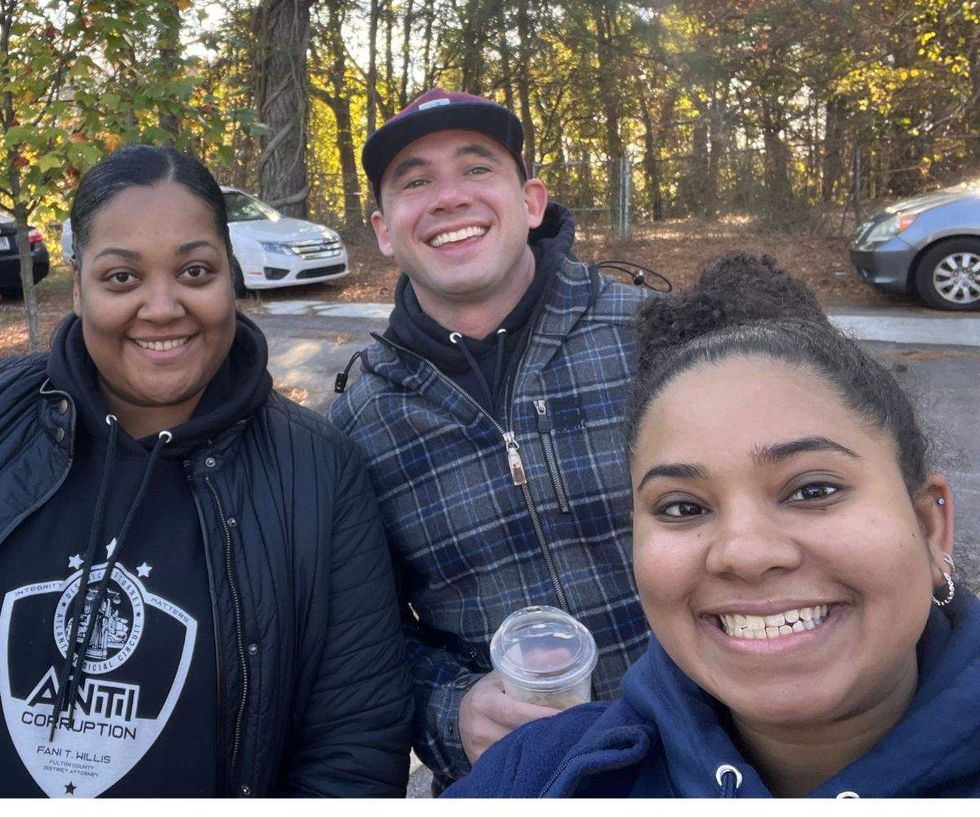 Will Wooten with Fulton County DA’s Office coworkers volunteering at Fulton County DA’s Office holiday coat drive.Wooten for Georgia
"When you're the middle child, and you're the oldest boy," he said, "the girl's not going to get in trouble for anything because she's the girl. And then the baby's not going to get in trouble for anything because he's the baby." He joins, he said, "the chorus of middle children who for all of recorded history have said we got the worst of it."
His father was a lawyer. His uncle, his father's twin, was too. As a kid, he would be quizzed by his dad with bar exam questions.
"Is this hearsay or is this not hearsay?"
Naturally, he rebelled. He went to the University of Miami planning to be a marine biologist, switched to journalism, and spent roughly two and a half years at the Miami Herald. It was 2007, 2008, 2009, the economy was cratering, and newspapers were changing beyond recognition.
"Finally, I gave in to destiny," he said.
Law school didn't click immediately. The first year felt abstract, theoretical. He kept asking himself where the human element was. Then he did an internship with his uncle, a judge, and watched his first criminal cases. One stayed with him: a defendant with two prior drug convictions from his twenties, now in his forties or fifties, facing a mandatory sentence of ten or twenty years.
"I remember that being a wake-up call," he said. "We need people to step up here. Because I did not feel like that was a just outcome, given the facts." He returned to law school and interned at the public defender's office. That's when it clicked.
"Really, what you're doing as a criminal lawyer is you're helping people," he said. "And that's when it really clicked for me. This is the thing I love. This is the thing I care about."
He began his career as a public defender in a rural four-county circuit outside Knoxville, Tennessee. It was a conservative country. He was in the closet at work. "I was afraid that I would be fired," he said.
Ricky Martin and the email
Wooten knew he was gay, even before he understood.
"I always knew something was different," he said. Then came the moment that cracked something open: Ricky Martin going on Oprah in November 2010 and coming out. "I was like, wait a minute. He's gay. He's cool."
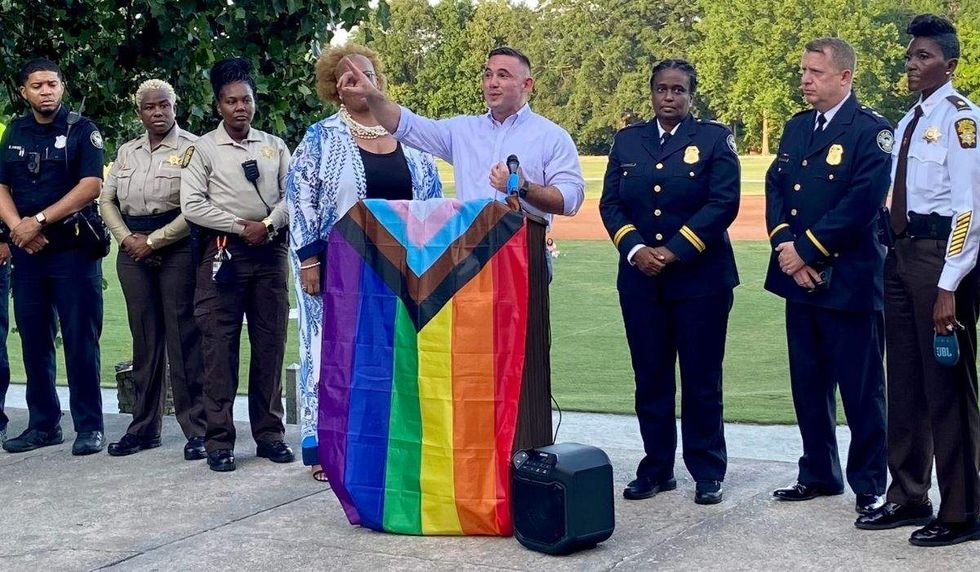 Will Wooten speaking at Fulton County DA’s Office LGBTQ+ Crime Victims Vigil in Piedmont Park, Atlanta, GA, in June 2021. The annual event honors LGBTQ+ crime victims with a focus on trans Black women who were victims of homicidal violence.Wooten for Georgia
Growing up in the closet in the South means convincing yourself there's something wrong with you, he said. Something different. Something less than. Martin's appearance was something else: "a moment of hope, almost. Like, okay, maybe one day I can come out."
And yet, even in college at Miami, he remembers walking out of the student center one afternoon and thinking, "I can never come out." It'll never happen. "How horrible that is to even say now," he said. "But it's the reality that I think many of us experience at some point in our lives."
What finally moved him was falling in love. In law school, he met someone. He wanted his family to know he was okay, that he'd found someone, that he wasn't going to be alone. "Moms know," he said.
He came out at 25, by email. He sent it to his mother, his sister, and his aunt. "All of them responded back like, 'Okay, great. So anyway, are you coming home for Easter?" He laughed. "It was like not a big deal." His mother later told him she had been preparing to say something herself. "She was like, 'I was a couple weeks away from saying something because I didn't want you to live your life in the closet.'"
He is aware, he says, of how fortunate that makes him. He grew up in a capital city with an accepting friend group. But he knows what the other version looks like, too. He lived it in Tennessee.
Self-worth
If elected, Wooten will be more than just a historic first. He will be a daily presence. Lawyers will background him. Law students will study him. Kids somewhere will Google him.
Asked what he would tell his younger self, the man who spent years trying not to be seen paused. "I'm honestly literally going to try not to choke up," he said.
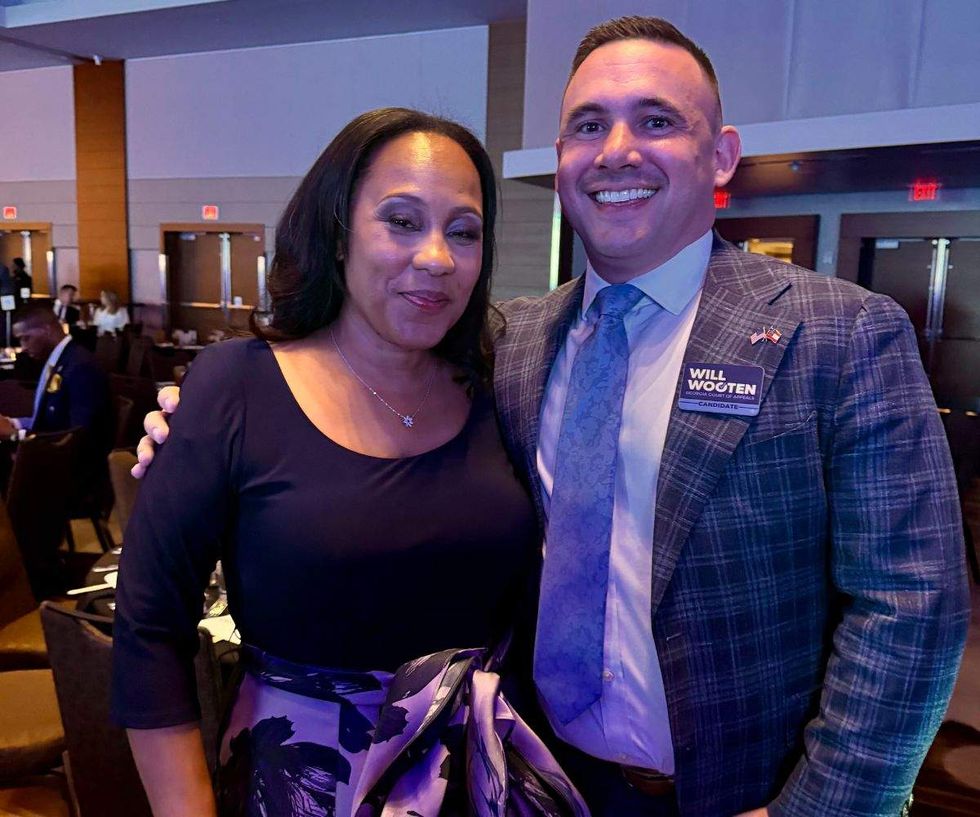 Will Wooten at Democratic Party of Georgia’s Carter Lewis Dinner with Fulton County District Attorney Fani Willis in Atlanta, GA, in April 2026.Wooten for Georgia
"I think it all comes down to finding your self-worth. Being an LGBTQ person, so much of what we grow up with in the closet is this damage to our self-worth, because the world around us is telling us that something's different, and that that difference is bad."
He distinguishes self-esteem from self-worth carefully. Self-worth, he says, is deeper: "truly believing it. Finding that person that is most authentic and being that person and stepping into that person and being proud to step into that person."
He spent years wanting everyone to like him. Wanting to fit in. Wanting to be accepted. "You waste a lot of energy doing that," he said. "And as you start to approach your forties, you realize time is so precious. You don’t have time to waste."
The people who weren’t going to like him were never going to like him anyway, no matter how much energy he spent trying. "Their opinions don’t matter,” he said. “Why let other people’s negativity slow you down?”
The orchids
Off the campaign trail, Wooten is not hard to read.
"Let’s start with Drag Race," he said.
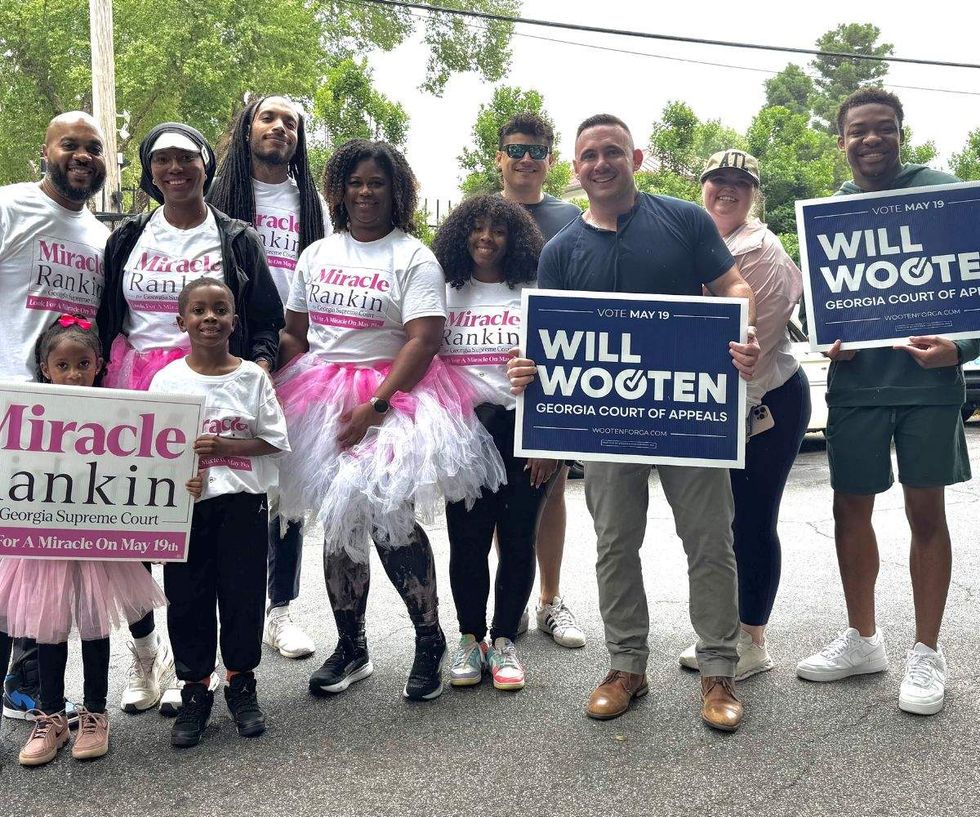 Will Wooten and members of his team campaigning with Georgia Supreme Court candidate Miracle Rankin and members of her team in Inman Park, Atlanta, GA, in April 2026.Wooten for Georgia
He is a devoted RuPaul’s Drag Race super fan, the kind who can tell you who said what in which season and which episode. He has opinions about the new All-Stars format. He loves the outdoors: beaches, rainforests, mountains over cities. His boyfriend is a retired All-Star cheerleader whose team just won the World Championships.
And then there are the orchids. When his campaign team did their pre-launch vetting, checking for anything that might surface, they asked the standard question: any secret Reddit accounts with controversial posts?
"I’m like, I post in the orchid forum on Reddit a lot, if that counts," he said. "Here’s my username, you can look me up. But that’s about as controversial as it gets."
He has roughly 90 orchids. His studio apartment is lined with shelves, grow lights, shade cloth, and rare blooms in front of big industrial windows. Watering day takes a while.
His favorite is the Phalaenopsis schilleriana, “fragrant, with beautiful leaves, a true species rather than a hybrid,” he explained. "A gift from nature," he said. It is, he says, how he escapes. Normally, he can’t shut work down. But with the orchids, something quiets.
"When I’m doing the orchids, I can turn it off," Wooten said.