'%3E%3Cpath d='M16.3574 35.6519H12.9537L15.0491 18.8873L16.3574 35.6519ZM30.4229 54.0093L22.309 0.994385H7.91795L0 54.0093H10.6634L11.5802 46.3855H17.4014L17.9914 54.0093H30.4229Z' fill='%23971B20'/%3E%3Cpath d='M48.2073 41.8813C48.2073 43.4049 47.4892 44.0011 46.1144 44.0011H43.7595V11.0687H46.1144C47.4892 11.0687 48.2073 11.6636 48.2073 13.1885V41.8813ZM59.5273 43.6695V11.3326C59.5273 3.71323 53.5729 0.994385 47.8157 0.994385H31.7213V54.0093H47.8157C53.5729 54.0093 59.5273 51.29 59.5273 43.6695Z' fill='%23971B20'/%3E%3Cpath d='M90.183 0.994385H78.6039L75.0711 30.6157L71.9955 0.994385H59.4346L69.2474 54.0093H80.373L90.183 0.994385Z' fill='%23971B20'/%3E%3Cpath d='M107.063 42.3448C107.063 43.7359 105.951 44.5974 104.643 44.5974C103.269 44.5974 102.157 43.7359 102.157 42.3448V12.658C102.157 11.2676 103.269 10.4058 104.643 10.4058C105.951 10.4058 107.063 11.2676 107.063 12.658V42.3448ZM119.233 43.2723V11.7312C119.233 6.36384 112.952 -3.8147e-06 104.643 -3.8147e-06C96.2667 -3.8147e-06 89.9867 6.36384 89.9867 11.7312V43.2723C89.9867 48.6393 96.2667 55 104.643 55C112.952 55 119.233 48.6393 119.233 43.2723Z' fill='%23971B20'/%3E%3Cpath d='M150.976 43.9349V33.7309H139.069V42.3448C139.069 43.7359 137.957 44.5974 136.582 44.5974C135.076 44.5974 133.964 43.7359 133.964 42.3448V12.658C133.964 11.2676 135.076 10.4058 136.582 10.4058C137.957 10.4058 139.069 11.2676 139.069 12.658V21.2723H150.976V11.0687C150.976 5.70107 145.283 -3.8147e-06 136.582 -3.8147e-06C127.75 -3.8147e-06 121.796 5.70107 121.796 11.0687V43.9349C121.796 49.3022 127.75 55 136.582 55C145.283 55 150.976 49.3022 150.976 43.9349Z' fill='%23971B20'/%3E%3Cpath d='M167.478 35.6519H164.076L166.17 18.8873L167.478 35.6519ZM181.544 54.0093L173.432 0.994385H159.037L151.123 54.0093H161.785L162.704 46.3855H168.523L169.114 54.0093H181.544Z' fill='%23971B20'/%3E%3Cpath d='M205.412 10.4058V0.994385H177.081V10.4058H185.392V54.0093H197.428V10.4058H205.412Z' fill='%23971B20'/%3E%3Cpath d='M230.002 54.0093V43.9349H218.914V31.8746H226.635V21.8028H218.914V10.4058H230.002V0.994385H206.875V54.0093H230.002Z' fill='%23971B20'/%3E%3C/g%3E%3Cdefs%3E%3CclipPath id='clip0_260_7080'%3E%3Crect width='230' height='55' fill='white'/%3E%3C/clipPath%3E%3C/defs%3E%3C/svg%3E)

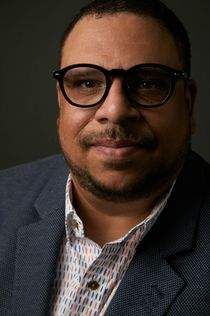
When Bentley Hudgins talks about democracy, they rarely begin with ideology.
They talk about brown water running from neighborhood taps. About losing housing after an apartment complex changed ownership. About sleeping in a 1997 Dodge Dakota pickup truck during a brutal Georgia summer. About being disbelieved by doctors for years before finally receiving treatment that restored their hearing.
And they talk about the exhaustion of watching politicians spend years targeting transgender people while basic problems remain unsolved.
Now, after winning a Democratic primary in one of Georgia’s safest blue legislative districts, Hudgins is positioned to become the first out transgender lawmaker elected in Georgia history and among the first openly trans and nonbinary state legislators in the Deep South.
“It sends a clear message when the strongest Democratic district in the Georgia General Assembly says, ‘We want this person who is a member of these different communities who is also qualified to represent us in the State House,’” Hudgins told The Advocate during an interview days after their primary victory.
The result was decisive.
Hudgins captured roughly 66 percent of the vote in the Democratic primary for Georgia House District 90, defeating Leisa Stafford by more than 32 percent in a district that stretches across heavily Democratic portions of DeKalb County, including neighborhoods east and southeast of Atlanta long associated with progressive activism and civic engagement.
The district is among the safest Democratic seats in the state. Based on recent election performance, political analysts rate it overwhelmingly blue, making Hudgins the heavy favorite heading into the November general election against Republican nominee Samantha Boston.
In practical political terms, many Democrats and LGBTQ+ advocates already speak about Hudgins as an incoming legislator.
That possibility carries symbolic force far beyond Georgia.
At a moment when transgender Americans have become one of the Republican Party’s defining political targets, with state legislatures proposing more than 530 anti-LGBTQ+ bills this year, according to the American Civil Liberties Union, Hudgins’s rise is almost defiantly out of sync with the dominant national narrative. Across conservative legislatures, Republicans have spent years constructing a political ecosystem organized around transgender restriction, banning gender-affirming care for minors, targeting school policies, policing bathrooms and sports participation, and turning trans identity into one of the central organizing obsessions of the modern right.
Georgia has hardly been exempt from that movement. Hudgins noted that organizers spent the most recent legislative session fighting off a wave of anti-LGBTQ+ proposals.
Yet Hudgins insists voters are increasingly exhausted by culture war politics that seem disconnected from everyday life. “All the time they spend with the hysterics and attacking people, they’re not making life better for anybody,” Hudgins said. “Voters are paying attention.”
The campaign they built reflected that calculation.
Rather than running solely as a historic figure, Hudgins anchored the race in intensely local concerns, including water infrastructure, affordability, housing instability, transit access, voting rights, wages, and neighborhood investment. “I wanted to really resonate with the shared experiences that I have with my neighbors,” Hudgins said.
Those experiences were personal.
Hudgins described arriving in Atlanta after being displaced from housing in Macon and eventually sleeping in their truck while continuing to organize. They also spoke openly about living with hearing loss and spending years trying to convince doctors to take their symptoms seriously before finally receiving treatment.
“The thing that I take away from that story is not like, okay, yay, I got to go to a doctor, and they rebuilt my eardrums,” Hudgins said, “but that it took 19 years of my life for someone to actually believe me.”
Hudgins talked about helping organize residents after guns were repeatedly sold and fired near a neighborhood park. They described building a community gun violence tracker, presenting data to county officials, and eventually helping secure investment to rehabilitate neglected public spaces.
“I think people are less concerned about identities or are more concerned about, will you show up and actually do the work or not?” Hudgins said. Hudgins’ political ascent also challenges longstanding assumptions inside national politics about where transgender candidates can win, particularly in the South and in majority Black districts.
“I think that there are some pretty racist assumptions that LGBT people can’t win in majority Black districts,” they said. Instead of minimizing their identity, Hudgins leaned deeper into community engagement and face-to-face organizing. They recalled attending services at a historic Black church during the campaign, where a deacon stumbled carefully through pronouns while publicly praying for their victory.
“What made me realize how special this campaign was,” Hudgins said, “there’s this man that people would assume that we wouldn’t share a connection … but he prayed that I would win and was very kind to me.”
The Human Rights Campaign, where Hudgins previously served as Georgia state director, celebrated the victory.
“We at HRC have been privileged to see Bentley’s continued growth into a political force for good in recent years,” HRC President Kelley Robinson said in a statement after the election. Robinson described Hudgins as “a fighter” whose campaign reflected “service, compassion, and community.”
Even now, after the national attention and the sudden possibility of becoming a political first, they keep returning to the same belief, that democracy only matters if people can actually feel it improving their lives.
Hudgins described plans for district-wide infrastructure audits, neighborhood advisory groups, interfaith outreach teams, and a “bottom-up approach” to governance.
“This AstroTurfed, well-funded campaign to attack LGBT people has by and large proved to be counterproductive,” Hudgins said. “When they’re talking about whether librarians should go to jail for letting a kid read a book with gay penguins in it, they’re not talking about making groceries cheaper, keeping guns away from kids, raising wages, expanding healthcare.”
They added, “I think what it says is that AstroTurf hate smear campaigns by the right just cannot overcome people who love each other in a real community.”