'%3E%3Cpath d='M16.3574 35.6519H12.9537L15.0491 18.8873L16.3574 35.6519ZM30.4229 54.0093L22.309 0.994385H7.91795L0 54.0093H10.6634L11.5802 46.3855H17.4014L17.9914 54.0093H30.4229Z' fill='%23971B20'/%3E%3Cpath d='M48.2073 41.8813C48.2073 43.4049 47.4892 44.0011 46.1144 44.0011H43.7595V11.0687H46.1144C47.4892 11.0687 48.2073 11.6636 48.2073 13.1885V41.8813ZM59.5273 43.6695V11.3326C59.5273 3.71323 53.5729 0.994385 47.8157 0.994385H31.7213V54.0093H47.8157C53.5729 54.0093 59.5273 51.29 59.5273 43.6695Z' fill='%23971B20'/%3E%3Cpath d='M90.183 0.994385H78.6039L75.0711 30.6157L71.9955 0.994385H59.4346L69.2474 54.0093H80.373L90.183 0.994385Z' fill='%23971B20'/%3E%3Cpath d='M107.063 42.3448C107.063 43.7359 105.951 44.5974 104.643 44.5974C103.269 44.5974 102.157 43.7359 102.157 42.3448V12.658C102.157 11.2676 103.269 10.4058 104.643 10.4058C105.951 10.4058 107.063 11.2676 107.063 12.658V42.3448ZM119.233 43.2723V11.7312C119.233 6.36384 112.952 -3.8147e-06 104.643 -3.8147e-06C96.2667 -3.8147e-06 89.9867 6.36384 89.9867 11.7312V43.2723C89.9867 48.6393 96.2667 55 104.643 55C112.952 55 119.233 48.6393 119.233 43.2723Z' fill='%23971B20'/%3E%3Cpath d='M150.976 43.9349V33.7309H139.069V42.3448C139.069 43.7359 137.957 44.5974 136.582 44.5974C135.076 44.5974 133.964 43.7359 133.964 42.3448V12.658C133.964 11.2676 135.076 10.4058 136.582 10.4058C137.957 10.4058 139.069 11.2676 139.069 12.658V21.2723H150.976V11.0687C150.976 5.70107 145.283 -3.8147e-06 136.582 -3.8147e-06C127.75 -3.8147e-06 121.796 5.70107 121.796 11.0687V43.9349C121.796 49.3022 127.75 55 136.582 55C145.283 55 150.976 49.3022 150.976 43.9349Z' fill='%23971B20'/%3E%3Cpath d='M167.478 35.6519H164.076L166.17 18.8873L167.478 35.6519ZM181.544 54.0093L173.432 0.994385H159.037L151.123 54.0093H161.785L162.704 46.3855H168.523L169.114 54.0093H181.544Z' fill='%23971B20'/%3E%3Cpath d='M205.412 10.4058V0.994385H177.081V10.4058H185.392V54.0093H197.428V10.4058H205.412Z' fill='%23971B20'/%3E%3Cpath d='M230.002 54.0093V43.9349H218.914V31.8746H226.635V21.8028H218.914V10.4058H230.002V0.994385H206.875V54.0093H230.002Z' fill='%23971B20'/%3E%3C/g%3E%3Cdefs%3E%3CclipPath id='clip0_260_7080'%3E%3Crect width='230' height='55' fill='white'/%3E%3C/clipPath%3E%3C/defs%3E%3C/svg%3E)


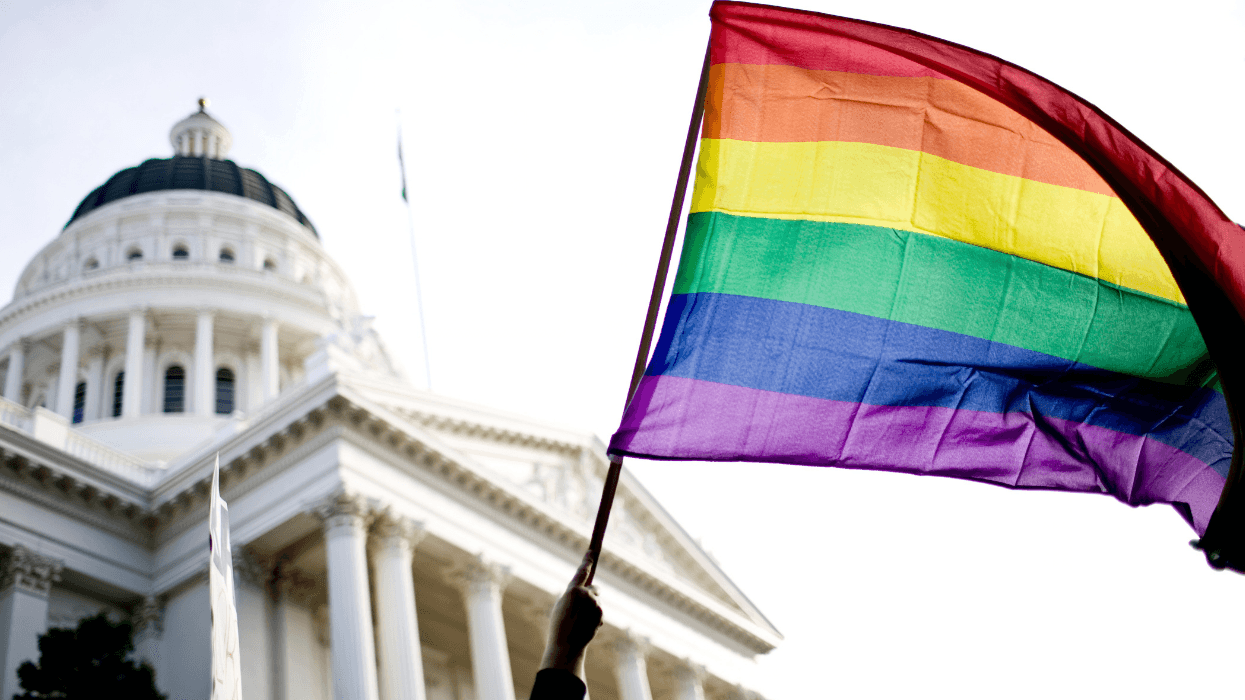
Candidates around the world have been demonizing LGBTQ+ people to win political favor — but the community hasn't taken it lying down.
More than 1.5 billion votes were cast in at least 89 countries during 2024, which has been dubbed the "super election year." In at least 51 of 61 jurisdictions studied (85 percent), candidates used anti-LGBTIQ rhetoric on the campaign trail, a new report from Outright International has found. This included attacking so-called "gender ideology" and "wokism," claiming LGBTQ+ people are "foreign agents," and scapegoating the queer community to deflect from failed policies.
"The findings are a chilling indictment of the state of global democracy," Neela Ghoshal, Senior Director of Law, Policy, and Research at Outright International said in a statement. "Anti-LGBTIQ rhetoric is no longer a fringe issue; it is a central tool in the modern authoritarian playbook. When politicians attack their own citizens to win power, democracy itself is at risk."
In a year where far-right authoritarianism gained traction, "LGBTIQ communities and other marginalized groups were among the first casualties of these anti-democratic attacks," according to the report. The five largest democracies in the world — India, the European Union, the United States, Indonesia, and Brazil — all saw LGBTQ+ candidates or the community at large targeted.
In the United states, Donald Trump's campaign spent over $212 million on attacks ads against trans people. The television advertisements were mostly repeated in battleground states — airing heavily during college sports games — pushing false claims about gender-affirming care and transgender athletes.
However, it wasn't just Republicans who were complicit in demonizing the LGBTQ+ community, as the report notes "post-elections, several members of the Democratic Party in the United States blamed the party’s crushing defeat on the party’s perceived support for trans people’s rights, despite surveys showing that these issues were not a primary concern for voters."
In the United Kingdom, far-right party Reform U.K. promised to ban “transgender ideology” in primary and secondary schools. In Canada, the leader of the Sask party declared 11 days before the election that his “first order of business” would be to ban trans students from using single-sex facilities that do not match their sex at birth, and conservatives in New Brunswick campaigned against the Liberals’ promise to end a policy requiring parental consent for teachers to use students’ chosen names and pronouns.
Despite the attacks against the community, the report noted another trend that arose in 2024 that saw "LGBTIQ people in several countries show up to assert their place in the body politic, counter anti-rights movements, and stand in solidarity with other marginalized groups even when it came at a price."
In Bangladesh, LGBTQ+ people played a pivotal role in the July Revolution, a student-led mass uprising over civil-service quota reforms and crackdowns against protestors, that ousted the long- serving prime minister. In Türkiye, activists continued to hold Pride marches in spite of bans and police violence.
"Queer communities mobilized not just for their own rights, but in solidarity with all marginalized groups — understanding that their fates were intertwined with the health of democracy itself," the report states.