How gay is Superman?  | Arts & Entertainment | Advocate.com

Advocate.com health Channel
 
How gay is Superman?
Read the Advocate cover story that has Warner Bros. nervous about whether the gay appeal of Superman Returns is good for the box office. As featured in the Los Angeles Times and on the Drudge Report.
An Advocate.com exclusive posted June 2, 2006
How gay is Superman?

What I learned from Superman

With Superman Returns headed at us faster than a speeding bullet, Advocate arts and entertainment editor and lifelong comics fan Alonso Duralde looks at superheroes and their appeal to gays and lesbians

My oldest sister was a crappy college student. Don’t get me wrong; she’s one of the smartest people I know. But her university years were spent doing lots and lots of, shall we say, unassigned reading. Lucky for me, she has great taste in junky pop culture, so as a child, I was exposed to some of the best the ’70s had to offer. Namely, comic books.

There was the darkly funny horror series PLOP! which took Grand Guignol and punched it up with gruesome twist endings that Rod Serling and O. Henry would have chuckled over ruefully. And romance comics, featuring girls in miniskirts and white lipstick who longed for the perfect man, despite all obstacles. (Usually he was rich and she was poor or vice versa, or he was getting over the drug addiction he’d picked up in Vietnam and didn’t want to tell her why he always avoided hospitals. You know how these things happen.)

Best of all were the Superman and Batman comics she bought, particularly because, in the early ’70s, DC and Marvel were having price wars. One of DC’s responses was to put out mammoth 100-page comics for just 50 cents. Naturally, you couldn’t fill a book that big with new stuff, so DC would pad the books with stories from the vaults, vintage adventures from the ’40s and ’50s. Those 100-page specials, combined with hardcover Superman and Batman anthologies that featured everything from their origin stories in the ’30s up to their “contemporary” ’70s incarnations, made me fall in love with superheroes. When Christopher Reeve starred in 1978’s Superman, it blew my little kid mind; so, naturally—so what if almost 30 years have passed—I’m really excited about Superman Returns.

But as I look back on my early affection for superheroes, my addiction to comics doesn’t necessarily scan with the rest of my childhood. As with the kid in Todd Haynes’s Dottie Gets Spanked, most of my cultural tastes tended to lean toward the feminine. I was addicted to reruns of I Married Joan and old Ingrid Bergman flicks on the afternoon movie. I was the only boy in my sixth-grade class to read Are You There, God? It’s Me, Margaret. Nothing could make me change the channel faster than an old Rat Patrol or Daktari episode popping up in the middle of my afternoon of TV. So why was I drawn to these heroic tales of adventure and derring-do?


I have three theories:

1. Like most gay kids, superheroes have to keep their “difference” a secret.

Even before I could mentally process that (a) I was gay and (b) I needed to keep that hidden from everyone around me, I could totally relate to the idea of having something about you that sets you apart and must be concealed. There were consequences, after all—whenever a pre–women’s lib Lois Lane would hector Superman about marriage, he would constantly remind her that he could never be married, since criminals would try to hurt or kidnap his wife in order to keep the Man of Steel in check. Of course, why being known as “Superman’s girlfriend, Lois Lane” didn’t make her a constant target of the bad guys was never discussed, but Superman’s efforts to avoid intimacy, much less matrimony, with Ms. Lane probably rang true with a lot of young gay readers back in the Eisenhower era.

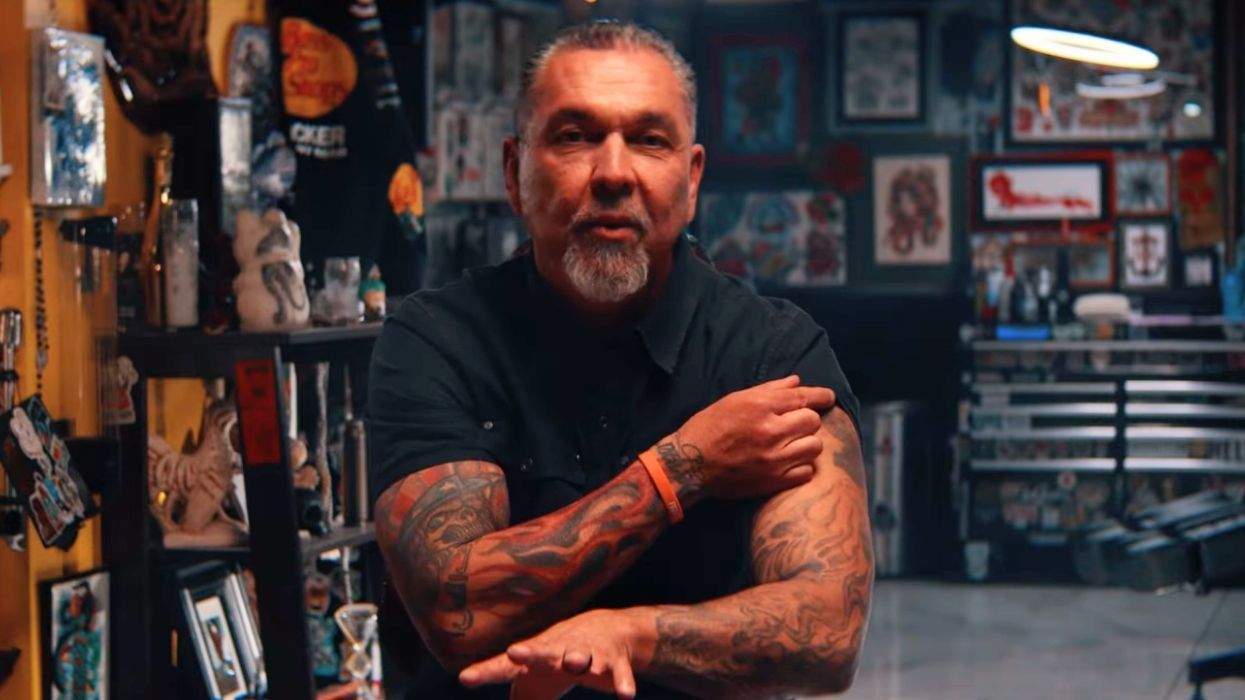
Chris Ohnesorge, drummer and vocalist with the San Francisco–based band the Ex-Boyfriends, discovered comics as a kid through the 1970s Wonder Woman TV show. He’s tangibly devoted to the Amazon princess, with two WW tattoos on his arm and a third on the way. The character’s dual nature—ravishing, heroic Wonder Woman and her mousy alter ego, Diana Prince—continues to resonate. “To me, it was the idea that you could spin around and there would be a flash of light and you’d be this amazing person. Someone that everyone loved,” observes Ohnesorge, 33. “You have this secret identity; you can’t be who you really are, and you only can be that in these certain moments. And even at those times, you still have to maintain all this secrecy; you can’t have a real relationship. It was this idea of escaping your stifling secret life to become someone incredible who people were in awe of.”

As kids with a nascent understanding of our queerness, a lot of us tamped down our own fabulousness—not to keep Lois safe or to stem the Nazi menace, but to watch our backs. Would our families still love us? Would we have friends? Would we be harassed at school? Lots of young people today are coming out of the closet, and more power to them, but growing up in the Carter-Reagan years, I was too terrified of my personal Lex Luthors to be that forthcoming.

It’s interesting to note that as it becomes easier to be out as gay men and lesbians in American society, the secret identity becomes less of an issue. In current DC Comics continuity, Lois knows full well why Clark Kent keeps disappearing whenever there’s trouble. Peter Parker, back in the 1960s, had to keep his Spider-Man identity a secret from poor old Aunt May, lest the shock kill her. But in 2004’s big-screen Spider-Man 2, Aunt May all but lets Peter know that she knows about his wall-crawling activities. Of course, in the X-Men flicks, where “mutant” definitely acts as a metaphor for “gay,” keeping their identities hidden from a cruel and misunderstanding world remains very much par for the course.


2. Comic books = soap operas.

Part of the reason that DC could randomly select old Batman comics for those 100-page editions was that the stories in the old days tended to be selfcontained. Crime wave occurs, Batman and Robin solve the case, bad guy gets punched in the face and put behind bars, the end. With few exceptions, the adventures were all discrete and independent tales.

That all changed in the 1960s when Marvel revolutionized the industry with such landmark titles as The Fantastic Four, The Amazing Spider-Man, and The Incredible Hulk, among others. Stan Lee, Jack Kirby, Steve Ditko, and other artists created a very strict continuity of the sort that had never been seen in the medium before. A weapon that was left behind in issue 2 of one title might surface as a plot point in issue 9 of another. An unfinished conversation could wind up being very important to the story two years later.

In the same way that soap fans are expected to know the names of Erica Kane’s husbands or of Viki Lord’s multiple personalities, Marvel readers were supposed to be ready to have an unresolved Dr. Strange plot thread come up in X-Men or a Reed Richards device from The Fantastic Four later surface at Stark Industries in an Avengers B-story.

For a gay kid who never got into soaps, apart from the occasional Search for Tomorrow episode with our housekeeper, comics were my first window into labyrinthine story lines that involved numerous characters. Marvel editors, particularly Stan Lee, would always throw in an asterisk when characters would say something that referred to an earlier comic—a little box below would say something along the lines of “ *Back in F.F. #33, remember?—Smilin’ Stan,” and I still remember the charge I got the first time that an asterisk referred to an issue I had actually read. And this kind of obsessive upkeep was going on way before the Internet, kids.

“Oh, definitely,” agrees Los Angeles attorney Mark Salzberg. “I always thought the first 25 issues of Alpha Flight were like a really good season of Falcon Crest.

Comic book movies, of course, generally don’t get to have that interconnectedness because they’re already got plenty of story to pack into two hours. And so, alas, nothing that happened in last summer’s Batman Begins will play any part in this summer’s Superman Returns. And while Spider-Man, the Hulk, and Daredevil all encounter each other in the Marvel universe, their movies were all released by separate studios, ensuring that there will be no cross-referencing.


3. Superheroes—let’s face it—are totally hot.

Whether or not you subscribe to psychiatrist Frederic Wertham’s assertion in his controversial 1954 Seduction of the Innocent that Batman and Robin “represent the wish dream of two homosexuals living together,” they sure spent a lot of their off time doing gymnastics in tank tops and little shorts. As opposed to when they patrolled the streets of Gotham City wearing tights and capes.

I always kind of had a thing for the Flash and his bright red, formfitting outfit (that popped out of his ring and expanded to fit him), not to mention his hot redheaded nephew, Kid Flash, who later got promoted after his uncle died. And let’s just say that John Wesley Shipp didn’t disappoint when he played the fast-running Flash on an all too short-lived prime-time TV series.

If you were a little boy in search of idealized masculine imagery—or a little girl starved for images of strong, powerful women—comic books were often where you got your fill. And a lot of those boys grew up and were inspired to make themselves over in their heroes’ image. (Thankfully, not every gay guy at the gym is out to transform himself into the bully who persecuted him during adolescence.)

Take Salzberg, 43, whose recent efforts as a triathlete are at least partially inspired by an undersea hero. “I was 10 years old when I bought my first comic book,” he remembers. “Avengers #117, and the Sub-Mariner was in it, fighting Captain America in the Avengers-Defenders War. The Sub-Mariner has this complete swimmer’s body—as well he should, since he’s the King of Atlantis. I actually remember this panel where he’s standing in the middle of Osaka, Japan, and looking at his body and thinking, Wow, that’s kinda cool. He’s got wide shoulders, slim waist, solid muscle…wears a Speedo. Now I’m thinking that that influenced me to create my body in that image. I was never athletic as a kid; I was completely out of shape. But then the older I got, the more interested in sports I got. In the past 10 years I started running and biking and swimming a lot, and I’m pretty sure I created my body to be just like the Sub-Mariner’s.” Salzberg laughs. “I like wearing a Speedo, I’ll admit that.”

Not for nothing does gay director Bryan Singer have an eye for how to make the Superman suit most flattering to Brandon Routh in Superman Returns. And rubber nipples weren’t the only way that director Joel Schumacher made Batman and Robin look even more homoerotic than usual in the two sequels he directed. The iconography of superheroes definitely pushes a button or two with many gay men.

And with lesbians as well. Susan Hudes, a Brooklyn, N.Y.–based artist and writer who’s currently writing and drawing a graphic novel, says she’s more interested in comics aimed at adults. Nonetheless, she admits, “I loved Wonder Woman because she was gorgeous and powerful.” And even in looking at characters she has discovered as a grown-up comics reader, Hudes, 36, notes that “Elektra Assassin is a completely sexy, strong character.”

Ohnesorge recalls, “I know that by the time I was 11 or 12, whenever Wolverine was shirtless—or naked, because he went crazy and tore off all his clothes in a berserker rage—I remember those panels very well. Like I could draw them from memory. As much as I find him kind of bland, I really like Hugh Jackman as Wolverine—the leather, the muttonchops… Between Wolverine and Magnum, P.I.–era Tom Selleck, I think that’s where my hairy-chested men fetish came from.”

Reader Comments

These comments are reproduced as written by visitors to this Web site. They have not been edited for content, grammar, or spelling. The viewpoints appearing here are those of the writer, and do not necessarily reflect the opinion or views of advocate.com, The Advocate, or its affiliates.

Back to top

Submit a comment for this story:

*Type your comment here (Required, 1000 characters max.):

*Name (Required): 

*Hometown (Required): 

*E-mail address: (Required, but will not be displayed)

Is this comment for publication? 
Yes   No

Daytime phone number: (Required for print publication only and will not be displayed)

Please enter the words you see in the box, in order and separated by a space. Doing so helps prevent automated programs from abusing this service.


If you would like to submit a comment for posting, please fill out the form above. 

All comments submitted via this form are subject to posting or publication. (To send a private letter to an Advocate editor or writer, please use the e-mail button at the top of the page, or use snail mail.) If you would like your comment considered for publication in The Advocate magazine, please include your full name, your city of residence, and a phone number where you can be reached during business hours so that we can confirm your identity. Your e-mail address and telephone number are strictly confidential and will not be shared or used for any purpose other than to contact you about your comment.

Comments that do not concern specific articles in The Advocate or on Advocate.com will not be posted or published. See the Contact page for sending comments for reasons other than responding to Advocate editorial and news stories.

Please note that comments sent by fax or snail mail are unlikely to be posted, although they will be considered for publication along with all letters received via e-mail or via this Web page. Comments that chiefly concern Advocate.com content will be considered for posting only on the Web site. The Advocate reserves the right to edit submitted comments for grammar, spelling, obscenities, or libel; we will, however, do our best to preserve the original comment's style and intent. Comments considered for publication in The Advocate magazine may also be edited for length.

More Exclusives
  • Building Bridges in the Wake of Prop. 8
    In the wake of finger-pointing following California's passing of Prop. 8, television writer and producer Tajamika Paxton suggests the time has come to build a bridge between the LGBT and African-American communities -- to engage in discussion rather than looking for somewhere to place blame.
  • Without Her We're Nothing
    The legendary Sandra Bernhard sits down with The Advocate before the one-night-only revival of her seminal one-woman show Without You I'm Nothing in Los Angeles to discuss Tori Amos, why Prop. 8 is "the best thing that could happen to the gay community," and how she she could possibly love both Rachel Maddow and Rachel Zoe.
  • Carmen Finds Her Spotlight
    It’s not very often that a lowly music critic gets the privilege of witnessing a glowing performance by a major new talent at the beginning of his or her career, but that is certainly what happened to yours truly on the evening of November 15 at the Los Angeles Opera. Viktoria Vizin, an astounding new mezzo-soprano making her L.A. Opera debut as Carmen this season, took my breath away.
  • Connecticut Gets Married
    This weekend, all 50 states participated in protests against the passing of antigay legislation in California, Arizona, Arkansas, and Florida. Gays and lesbians in Connecticut protested too, but they also had reason to celebrate. Last week, same-sex marriages got under way throughout the state.
  • Gay Is the New Black?
    In the wake of California’s passage of Proposition 8, protests are popping up around the country -- and so are comparisons between gays’ and African-Americans’ fights for equality. Is gay the new black? Michael Joseph Gross examines two struggles for civil rights. Plus: Photos from Wednesday night's rally in New York City.
  • The Day in Pictures
    From coast to coast, from gay to straight, from Pink to Mormon moms--a national movement to protest the passing of Prop. 8 in California rises up.
  • Smart Money
    In a time of economic calamity, one voice rises above the panic. Suze Orman is here to help -- she's offered her will and trust kit free to Advocate readers. Click the story for more info.
  • David Hyde Pierce is Gay, Married ... and Marching Against Prop. 8
    As Dr. Niles Crane on the hit sitcom Frasier, David Hyde Pierce had a great deadpan. That also extended to his own life: For years he wouldn’t confirm or deny being gay. Since then he thawed enough to thank his longtime partner, Brian Hargrove, in his 2007 Tony Award acceptance speech. And on Saturday, Pierce was one baseball-capped protester among maybe 20,000 others marching for equality in Los Angeles.
  • Gearing Up
    From Long Beach to Toronto, activists begin to prepare for a weekend of protest -- including the "Raging Grannies" in Palo Alto. See it all come together.
  • Best of Times, Worst of Times
    In the week after Barack Obama’s historic victory, gays and lesbians are pondering another historic, albeit less victorious, moment of their own. Three anti-gay marriage propositions passed -- in Florida, Arizona, and California. In Arkansas gay people were barred from adopting children. Now the real fight begins.
  • Revolution No. 8
    I've been waving a sign on street corners since H8 passed: "Black Queers." Responses have varied -- from honks of support to looks of disapproval from both blacks and whites. A black woman came up to me at a rally and asked me if I didn't think the sign was offensive to black people. I said, "It's who I am, and people should know."
  • You Can Never Go Home Again
    Eight years ago Advocate associate editor Neal Broverman packed up his car and moved from Connecticut to California to find freedom and acceptance. Now that marriage is legal in Connecticut, he's wondering if he ever should have left.
  • Prop. 8 Rally Takes Manhattan
    On the same day that the state of Connecticut began allowing same-sex marriages, thousands of New Yorkers gathered to protest the recent ruling in California taking away those same rights. Over 15,000 people gathered Wednesday night in protest of Proposition 8, the California ballot initiative that overturned a recent court ruling allowing same-sex marriage.
  • Calif. Senators Leno, Migden on Post-Prop. 8 Movement
    Forty-four California state senators and assembly members on Monday signed a friend-of-the-court brief to support lawsuits seeking to overturn Proposition 8, which voters passed last week, banning same-sex marriage. Senator-elect Mark Leno, author of the "only marriage equality bills to reach a governor's desk," and Sen. Carole Migden were among the petitioners.
  • London, 007 Style
    Bond has firmly swashbuckled into the 21st century in the form of hunky Daniel Craig, who is bursting onto screens in the brand-new Quantum of Solace. Although he's better known as a global jet-setter, James’s hometown of London holds many of the keys to his persona -- it's where he dressed, ate, slept, and had his hair done. Here’s your chance to swagger in his footsteps and imagine your travels are on Her Majesty’s Secret Service expense account.
  • Role Model
    Jack Mackenroth of Project Runway season 4 unveiled his new HIV/AIDS education campaign on Monday night at the Gay Men's Health Crisis Fashion Forward benefit in New York City. Called "Living Positive by Design" and sponsored by Merck and Co., the initiative seeks to combat the stigmatization of people living with HIV.
  • Gaga for the Lady
    Lady Gaga cavorts in couture. She only dons platinum wigs that suggest the presence of radioactivity. And she yells for you to dance, all in tribute to her favorite muse -- fame.
  • Terminated: Commercial Closet's Executive Director
    Since early this year, Commercial Closet Association has been in negotiations with GLAAD to dissolve into one advertising media program overseen by the larger nonprofit. But CCA founder Michael Wilke says he was supposed to join GLAAD in this new joint venture. Then on Monday, CCA's board announced the merger -- and Wilke's termination...which Wilke says took him completely by surprise. The board says that's hard to believe and that Wilke was told he'd been terminated November 4.
  • Side of Guac With Your Hate?
    L.A. eatery El Coyote, long known for attracting a heavily LGBT client base, is facing the heat now that bloggers have revealed one of the managers, who is a niece of the original owners, had donated to the pro-Proposition 8 campaign. El Coyote's answer: a free lunch/press conference giving her a forum to explain her decision. But the 70-some people in attendance were none too pleased with what they heard. Is a boycott the answer?