'%3E%3Cpath d='M16.3574 35.6519H12.9537L15.0491 18.8873L16.3574 35.6519ZM30.4229 54.0093L22.309 0.994385H7.91795L0 54.0093H10.6634L11.5802 46.3855H17.4014L17.9914 54.0093H30.4229Z' fill='%23971B20'/%3E%3Cpath d='M48.2073 41.8813C48.2073 43.4049 47.4892 44.0011 46.1144 44.0011H43.7595V11.0687H46.1144C47.4892 11.0687 48.2073 11.6636 48.2073 13.1885V41.8813ZM59.5273 43.6695V11.3326C59.5273 3.71323 53.5729 0.994385 47.8157 0.994385H31.7213V54.0093H47.8157C53.5729 54.0093 59.5273 51.29 59.5273 43.6695Z' fill='%23971B20'/%3E%3Cpath d='M90.183 0.994385H78.6039L75.0711 30.6157L71.9955 0.994385H59.4346L69.2474 54.0093H80.373L90.183 0.994385Z' fill='%23971B20'/%3E%3Cpath d='M107.063 42.3448C107.063 43.7359 105.951 44.5974 104.643 44.5974C103.269 44.5974 102.157 43.7359 102.157 42.3448V12.658C102.157 11.2676 103.269 10.4058 104.643 10.4058C105.951 10.4058 107.063 11.2676 107.063 12.658V42.3448ZM119.233 43.2723V11.7312C119.233 6.36384 112.952 -3.8147e-06 104.643 -3.8147e-06C96.2667 -3.8147e-06 89.9867 6.36384 89.9867 11.7312V43.2723C89.9867 48.6393 96.2667 55 104.643 55C112.952 55 119.233 48.6393 119.233 43.2723Z' fill='%23971B20'/%3E%3Cpath d='M150.976 43.9349V33.7309H139.069V42.3448C139.069 43.7359 137.957 44.5974 136.582 44.5974C135.076 44.5974 133.964 43.7359 133.964 42.3448V12.658C133.964 11.2676 135.076 10.4058 136.582 10.4058C137.957 10.4058 139.069 11.2676 139.069 12.658V21.2723H150.976V11.0687C150.976 5.70107 145.283 -3.8147e-06 136.582 -3.8147e-06C127.75 -3.8147e-06 121.796 5.70107 121.796 11.0687V43.9349C121.796 49.3022 127.75 55 136.582 55C145.283 55 150.976 49.3022 150.976 43.9349Z' fill='%23971B20'/%3E%3Cpath d='M167.478 35.6519H164.076L166.17 18.8873L167.478 35.6519ZM181.544 54.0093L173.432 0.994385H159.037L151.123 54.0093H161.785L162.704 46.3855H168.523L169.114 54.0093H181.544Z' fill='%23971B20'/%3E%3Cpath d='M205.412 10.4058V0.994385H177.081V10.4058H185.392V54.0093H197.428V10.4058H205.412Z' fill='%23971B20'/%3E%3Cpath d='M230.002 54.0093V43.9349H218.914V31.8746H226.635V21.8028H218.914V10.4058H230.002V0.994385H206.875V54.0093H230.002Z' fill='%23971B20'/%3E%3C/g%3E%3Cdefs%3E%3CclipPath id='clip0_260_7080'%3E%3Crect width='230' height='55' fill='white'/%3E%3C/clipPath%3E%3C/defs%3E%3C/svg%3E)


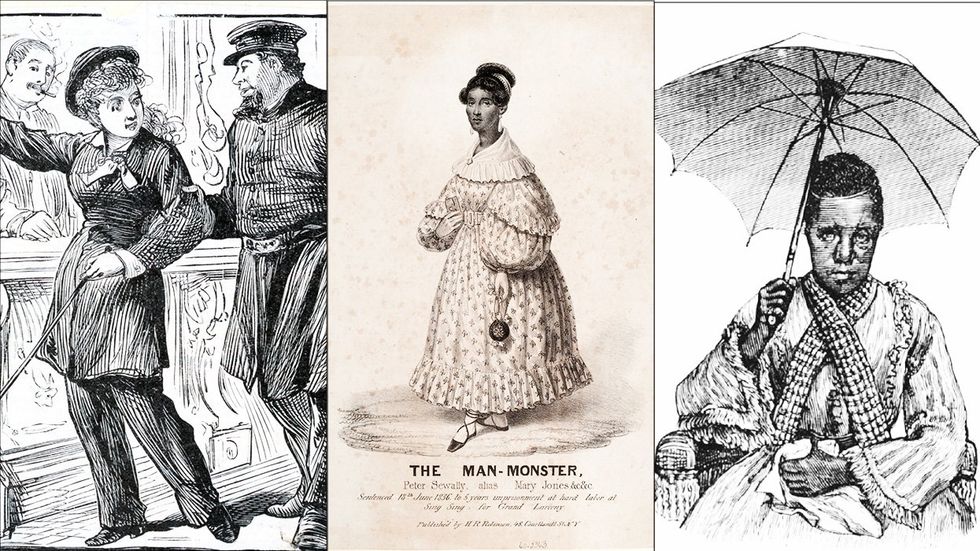
Woman Arrested For Wearing Men Clothing; Mary Jones; Frances Thompson
Bettmann/Getty Images; National Museum of American History; By Unknown author - The Days’ Doings, New York, August 12, 1876, Public Domain
Not so much as a blink and you miss it moment, I admit. From the decorated rooms in The Gilded Age, the Scott family portrays what life was like for affluent Black families in this period. And while Peggy (Denée Benton), Dorothy (Audra McDonald), and Arthur (John Douglas Thompson) enjoy meals and conversation, a quiet but dutiful maid serves them, portrayed by trans actress Sandra Caldwell.
A renowned actress with nearly four decades on stage and screen, Sandra's career highlights include 1989's War of the Worlds, The Cheetah Girls, and a guest appearance on Law & Order: SVU. In the Gilded Age, she portrays Ellen, the Scott family's maid (in 19th-century terms, a maid-of-all-work or servant who performed several duties). Though her lines are few, her expressions say it all: from a raised eyebrow when Marian drops off used shoes at the Scott's house, to clearing her throat and side-eyeing Dr. Kirkland (Jordan Donica) when he arrives to meet with Peggy.
Despite a long entertainment career, it was only within the past decade that she came out publicly. In an interview for CBC, Caldwell discussed how it felt coming out in 2017. "I thought, 'my career is over,'" she said in the interview. "I was more worried about my husband than I was worried about myself…" But it was the opposite, being welcomed in rooms she once thought firmly closed their doors to Black trans women, continuing to perform and featured in Netflix's powerful documentary, Disclosure.
Though Caldwell doesn't represent a trans figure from that time—or, at least, one we currently know of—to deny the existence of trans individuals known and unknown to us is like preferring to watch a household plant wither away than to give it water. By learning more about our trans forebears in previous centuries, we can help nurture present conversations about trans lives, rights, and dignity today.
The earliest examples of trans existence can be traced back to the galli of Ancient Rome, devoted priests of the goddess Cybele. Assigned male at birth, initiates would occasionally castrate themselves and dress exclusively in female garb, living in an ambiguous space within ancient Roman regards of male and female norms. Although we don't always have individual names from the distant past, recent figures have come to light.
The Chevalier d'Eon
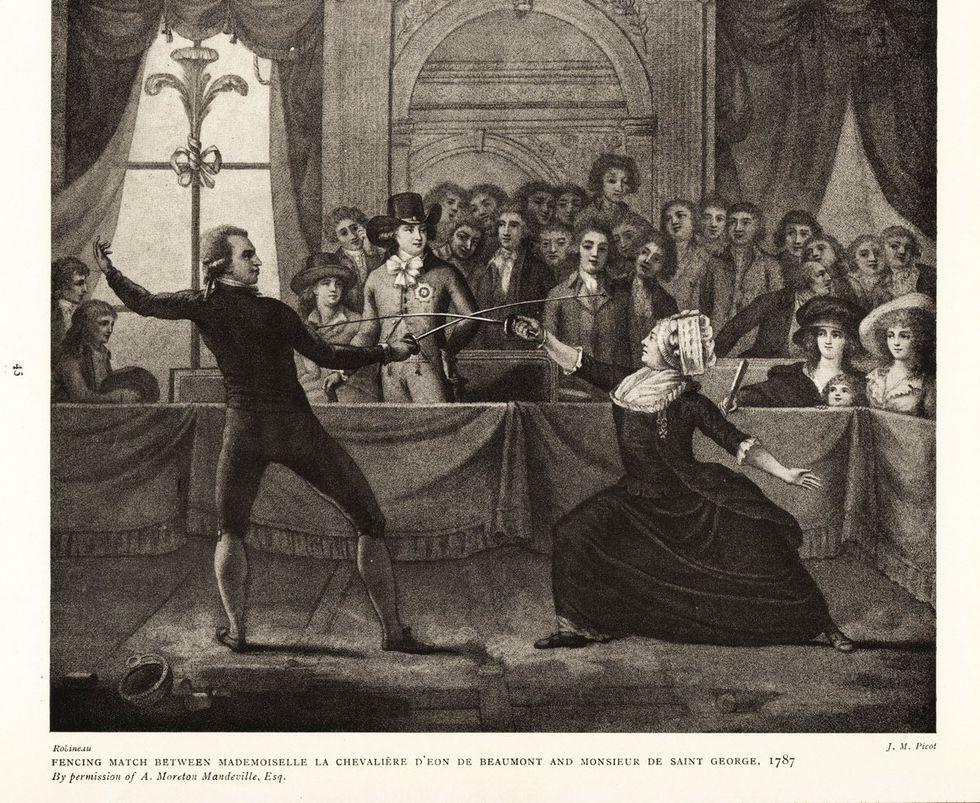
Fencing match between Mademoiselle la Chevaliere d’Eon de Beaumont and Monsieur de Saint George, at Carlton House, 1787.
Florilegius/Universal Images Group via Getty Images
The Chevalier d'Eon was a French fencer, diplomat, soldier, and spy in the mid-1700s. According to History.com, d'Eon fought in the Seven Years' War as Captain of Dragoons. As a member of the Secret du Roi or King's Secret, the French monarch's spy network, d'Eon was sent under the guise of a French diplomat to Russia, where she passed along secret letters between France's King Louis XV and Russia's Empress Elizabeth. After helping to secure peace in Europe, d'Eon was later posted to the French embassy in London. It was during this time that rumors speculated about her identity, becoming a "matter of national interest" according to the British Museum, which holds in its collection several prints published during and after the chevalier's lifetime.
It was only after the succession of the new French king, Louis XVI (as well as not-so-subtle threats to publish letters during her work in the spy network), that d'Eon was able to procure not only a pension but an official document declaring her legally female.
Mary Jones
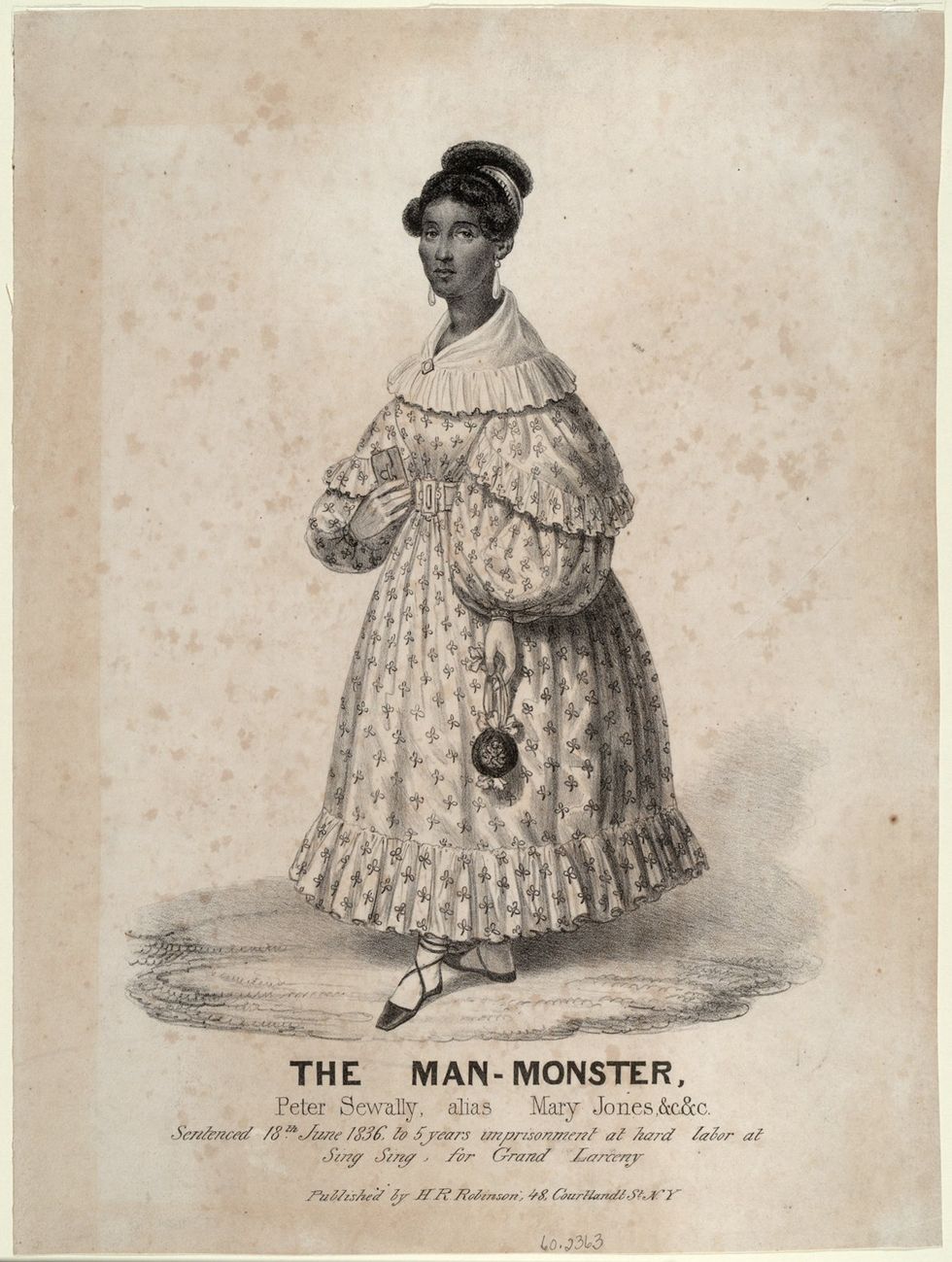
Mary Jones
National Museum of American History
In 1836, Mary Jones, a Black sex worker, was arrested in Lower Manhattan on charges of grand larceny. After discovering more stolen wallets in her home, police decided to conduct a physical examination of her. Later sent to trial, what was supposed to focus on her history of thievery became a testimony on Mary's gender identity, according to a blog post from NYC's Department of Records & Information Services. Her story, like so many others, became sensationalized in the papers. A popular lithograph published at this time features "The Man-Monster," meant to shock those when press outlets reprinted the images. But they nonetheless show an elegantly dressed Black woman in fashionable clothes of the time.
Trans filmmaker Tourmaline produced a short, 2019's Salacia and 2022's Mary of Ill Fame, exploring how Jones navigating the racial and gender complexities of 19th century New York City. "It felt so powerful to bring to life the story of Mary Jones and 1800s New York," she told The Advocate, reflecting on Jones's deposition where she talked about navigating 19th century life with others. "I think it’s important on a personal level to remember we have always been here navigating challenging times, and figuring out who we are with the help of our friends."
Charley Parkhurst
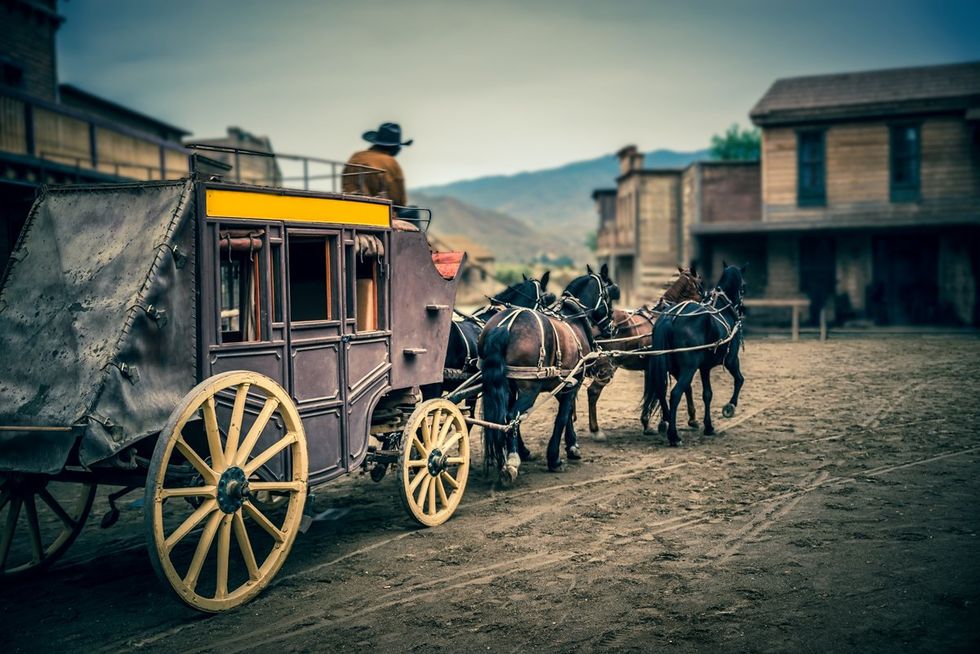
The great American stagecoach, Charley Parkhurst, helped define ideas of masculinity and popular imaginations of the Wild West.
Shutterstock
Charley Parkhurst is the earliest known trans man in America. Nicknamed "One-Eyed Charley," Parkhurst was a stagecoach driver who worked and lived in the West. The "cigar-smoking, tobacco-chewing whip" worked primarily in parts of California and adjacent states, not only transporting individuals from one point to another but also criminals as well, according to an article from the California Department of Corrections and Rehabilitation. Charley also "waged a splendid war upon the outlaws" of the West, according to a 1901 article written in Munsey's Magazine, detailing his encounters.
As one attempted robber tried to stop his coach, Parkhurst raised his horse whip and lashed the bandit. "One of his eyes was entirely destroyed," the article went on, "but they saved the other so that he could see well enough to pick jute during his term in prison." Parkhurst's adventures captured the imagination of the Wild West and, equally, popularized ideals of American masculinity.
Frances Thompson
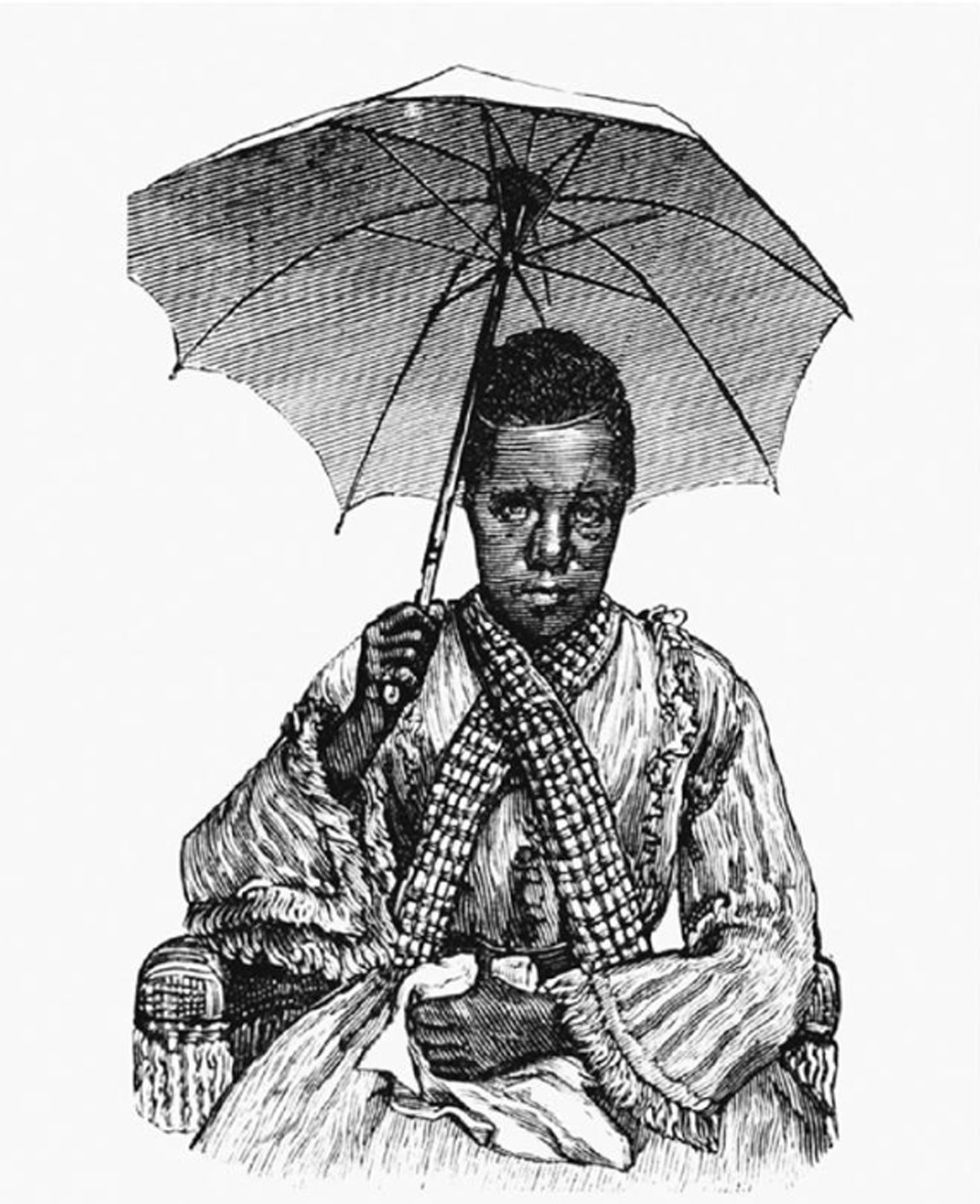
Frances Thompson
By Unknown author - The Days’ Doings, New York, August 12, 1876, Public Domain
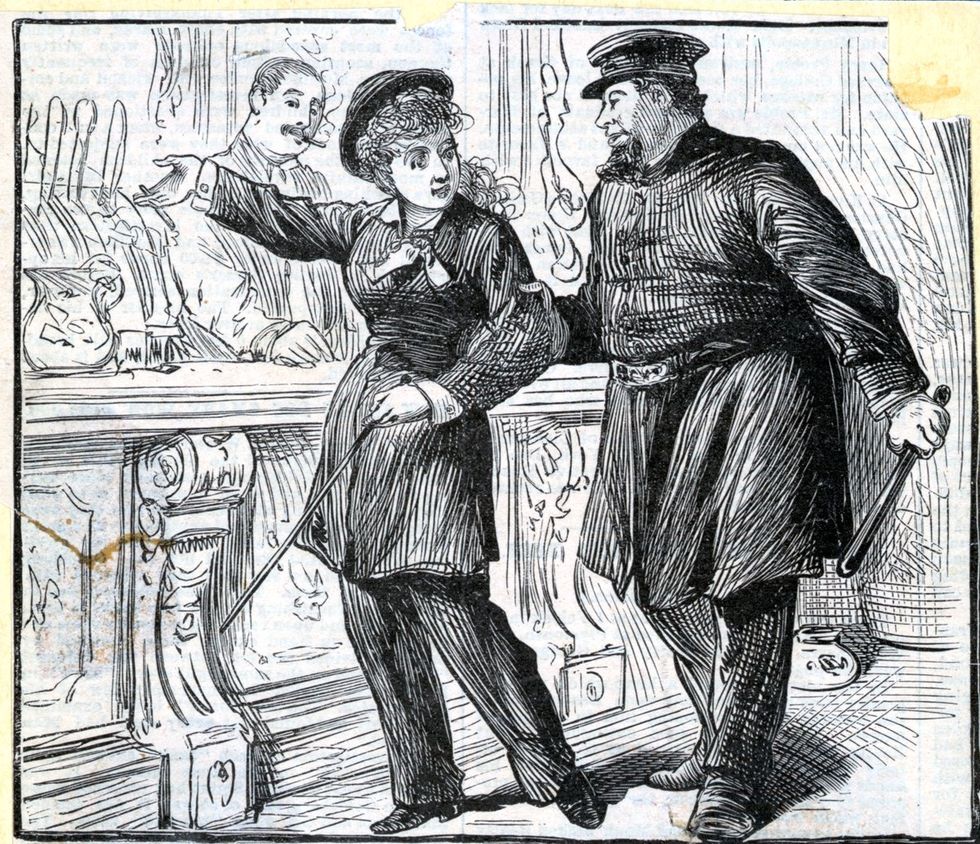
Years before Parkhurst's death, the 1866 Memphis Massacre occurred, a horrific event after local police started a fight with Black federal soldiers. The Civil War had ended the year before, and major Confederate cities were under Union occupation. Over three days in early May 1866, according to CNN, white mobs destroyed a small but thriving Black community in the town, with homes and businesses destroyed and 40+ people killed. Additionally, a Congressional report noted incidents of sexual assault.
Frances Thompson, one of the victims, appeared before a congressional committee to detail her experiences as a survivor. Though later discovered she was trans, Thompson's testimony not only marked the first trans woman to appear before Congress, but her words were part of several testimonies that influenced the passage of the 14th Amendment's guarantee of equal protection under the law.
Murray H. Hall
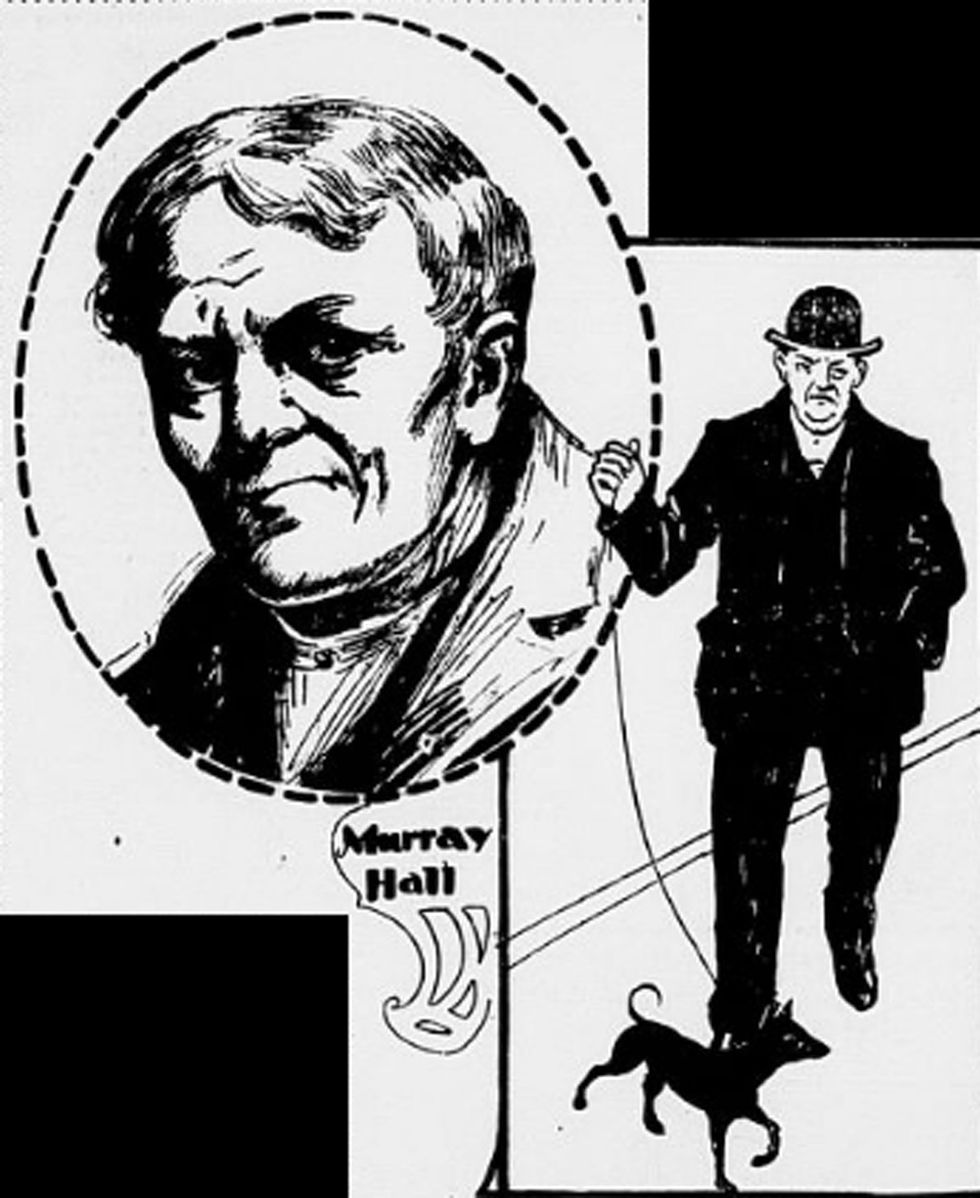
Depictions of Hall in The Evening World, January 18, 1901, night edition
By Anonymous
One of the greatest politicos of his time, Murray Hamilton Hall, was part of Tammany Hall. This political organization dominated American politics and played a vital role as a Democratic political machine before and during the Gilded Age in New York City and statewide. An immigrant from Scotland, Hall arrived in America in 1870. He later realized his own American dream: first opening up an employment office for domestics to work in some of New York City's grandest homes; became a bail bondsman, with an office not far from the Jefferson Market police court; and joined the Tammanies to influence late-19th-century American politics. He spent "his nights at various saloons around the city," according to Smithsonian, "played poker and guzzling whiskey and plotting against Republicans, wisps of cigar smoke fogging his face." I'm sure he would've fit right in at Haymarket.
Hall died in 1901 at his residence at 457 Sixth Avenue in Greenwich Village, marked by the NYC LGBT Historic Sites Project, one of many trans and queer individuals who found refuge in the Lower Manhattan neighborhood.
"Cross-dressing" laws severely impacted trans and queer bodies.
Bettmann/Getty Images
The lives of these notable figures are among the many that history continues to uncover. Many trans individuals lived stealthily, choosing not to disclose their gender identity publicly, only to be discovered either after an arrest or even death. "Cross-dressing" laws of the 19th century impacted many trans and queer bodies of the time, and these laws were used well into the following century.
After Thompson's arrest and physical examination, her story became sensationalized locally and nationally; conservative outlets used the discovery to undermine her congressional testimony. Sadly, society back then did not look kindly on Black trans women, and she was humiliated publicly and forced to work in an all-male chain gang in Memphis. Thompson died not long after.
MAGNUS HIRSCHFELD
Abraham Pisarek/ullstein bild via Getty Image
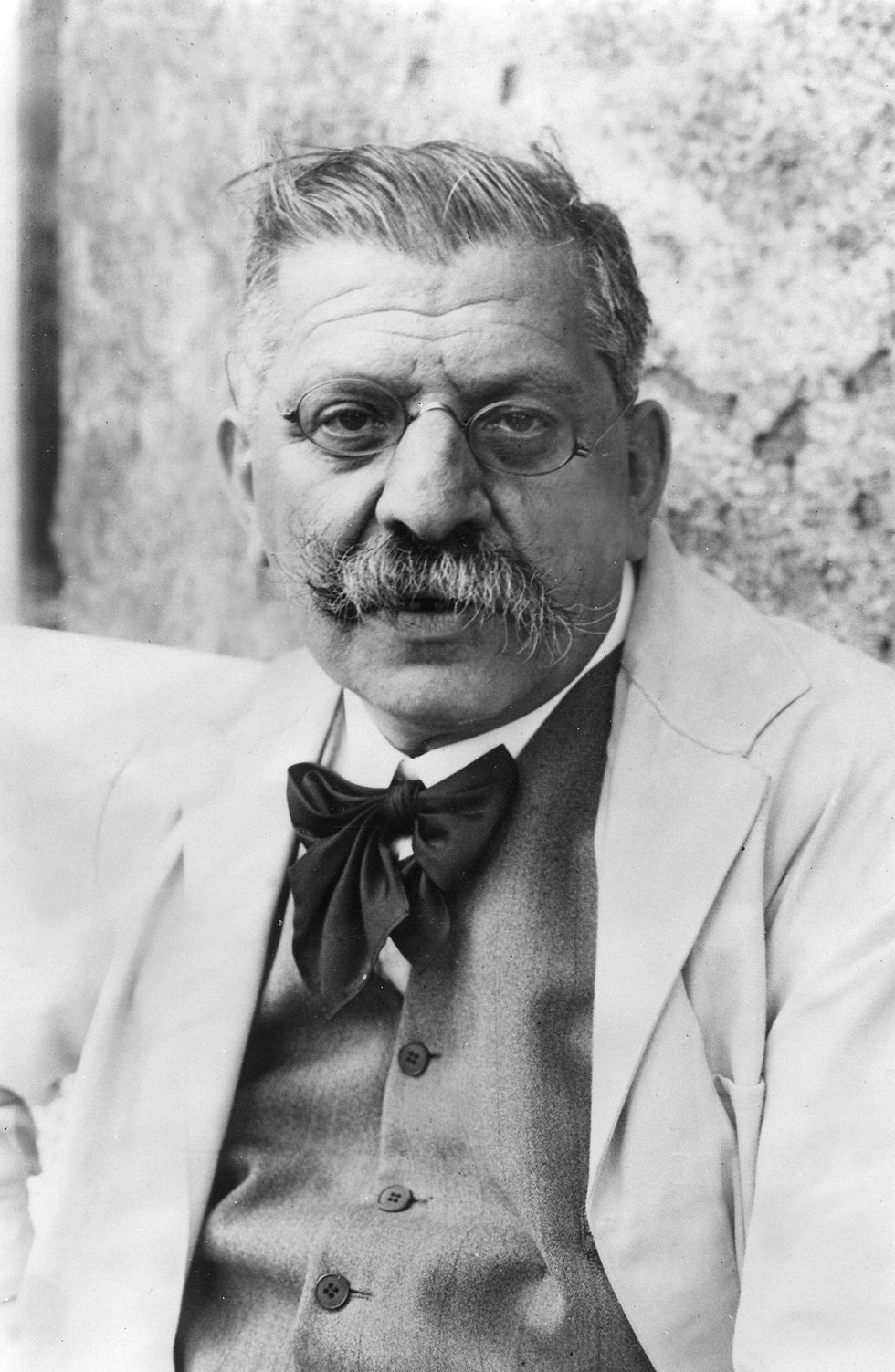
Following Hall's death, the revelations of being assigned female at birth became a national scandal, but also drew interest in pioneering psychologist Henry Havelock Ellis. Ellis later worked with Magnus Hirschfeld to understand transgender psychology, which has shaped discourse and language around trans identities and existence we use today.
It goes to show that, while terminology is relatively new, trans folks have been living, loving, and surviving for much of human history, contrary to some popular belief, weaving our stories in the great tapestry of human history.