'%3E%3Cpath d='M16.3574 35.6519H12.9537L15.0491 18.8873L16.3574 35.6519ZM30.4229 54.0093L22.309 0.994385H7.91795L0 54.0093H10.6634L11.5802 46.3855H17.4014L17.9914 54.0093H30.4229Z' fill='%23971B20'/%3E%3Cpath d='M48.2073 41.8813C48.2073 43.4049 47.4892 44.0011 46.1144 44.0011H43.7595V11.0687H46.1144C47.4892 11.0687 48.2073 11.6636 48.2073 13.1885V41.8813ZM59.5273 43.6695V11.3326C59.5273 3.71323 53.5729 0.994385 47.8157 0.994385H31.7213V54.0093H47.8157C53.5729 54.0093 59.5273 51.29 59.5273 43.6695Z' fill='%23971B20'/%3E%3Cpath d='M90.183 0.994385H78.6039L75.0711 30.6157L71.9955 0.994385H59.4346L69.2474 54.0093H80.373L90.183 0.994385Z' fill='%23971B20'/%3E%3Cpath d='M107.063 42.3448C107.063 43.7359 105.951 44.5974 104.643 44.5974C103.269 44.5974 102.157 43.7359 102.157 42.3448V12.658C102.157 11.2676 103.269 10.4058 104.643 10.4058C105.951 10.4058 107.063 11.2676 107.063 12.658V42.3448ZM119.233 43.2723V11.7312C119.233 6.36384 112.952 -3.8147e-06 104.643 -3.8147e-06C96.2667 -3.8147e-06 89.9867 6.36384 89.9867 11.7312V43.2723C89.9867 48.6393 96.2667 55 104.643 55C112.952 55 119.233 48.6393 119.233 43.2723Z' fill='%23971B20'/%3E%3Cpath d='M150.976 43.9349V33.7309H139.069V42.3448C139.069 43.7359 137.957 44.5974 136.582 44.5974C135.076 44.5974 133.964 43.7359 133.964 42.3448V12.658C133.964 11.2676 135.076 10.4058 136.582 10.4058C137.957 10.4058 139.069 11.2676 139.069 12.658V21.2723H150.976V11.0687C150.976 5.70107 145.283 -3.8147e-06 136.582 -3.8147e-06C127.75 -3.8147e-06 121.796 5.70107 121.796 11.0687V43.9349C121.796 49.3022 127.75 55 136.582 55C145.283 55 150.976 49.3022 150.976 43.9349Z' fill='%23971B20'/%3E%3Cpath d='M167.478 35.6519H164.076L166.17 18.8873L167.478 35.6519ZM181.544 54.0093L173.432 0.994385H159.037L151.123 54.0093H161.785L162.704 46.3855H168.523L169.114 54.0093H181.544Z' fill='%23971B20'/%3E%3Cpath d='M205.412 10.4058V0.994385H177.081V10.4058H185.392V54.0093H197.428V10.4058H205.412Z' fill='%23971B20'/%3E%3Cpath d='M230.002 54.0093V43.9349H218.914V31.8746H226.635V21.8028H218.914V10.4058H230.002V0.994385H206.875V54.0093H230.002Z' fill='%23971B20'/%3E%3C/g%3E%3Cdefs%3E%3CclipPath id='clip0_260_7080'%3E%3Crect width='230' height='55' fill='white'/%3E%3C/clipPath%3E%3C/defs%3E%3C/svg%3E)
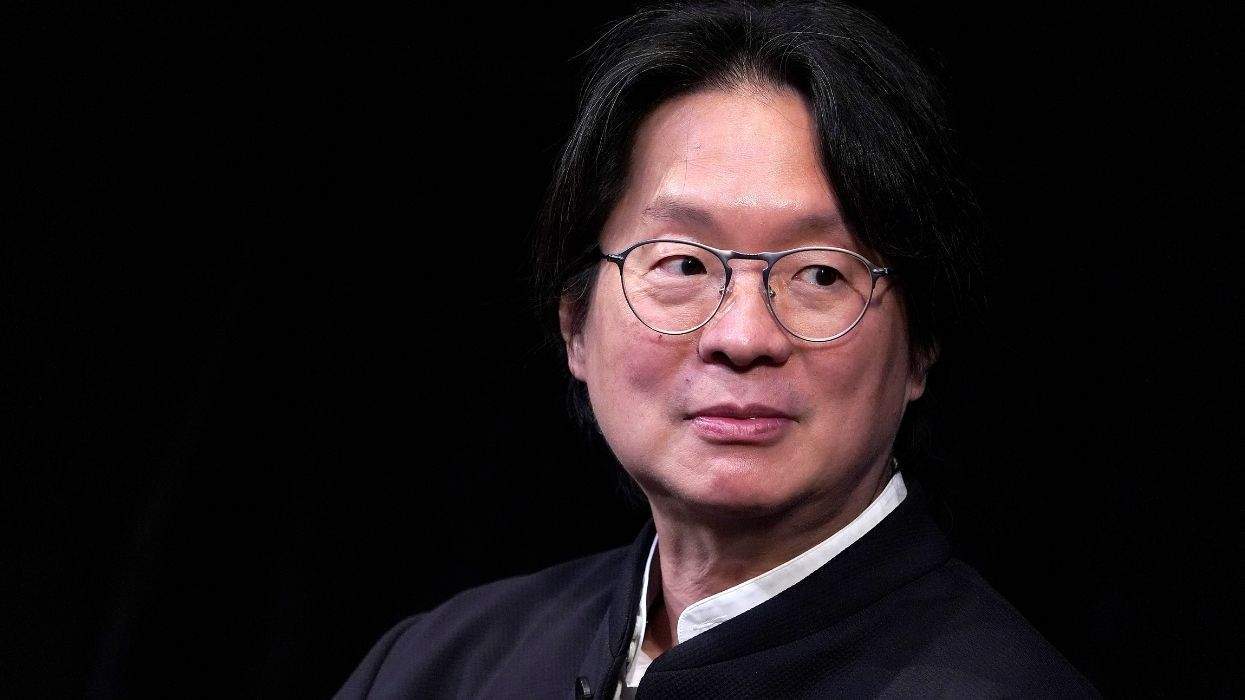
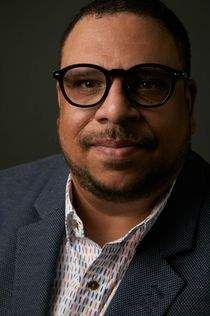
Recently released Justice Department records show that Dr. Jess Ting, a plastic and reconstructive surgeon who later rose to prominence in transgender medicine, maintained extensive contact with convicted sex offender Jeffrey Epstein years before Ting became a national figure in gender-affirming care.
On Monday, Ting explained his ties to Epstein in response to questions from The Advocate.
Keep up with the latest in LGBTQ+ news and politics. Sign up for The Advocate's email newsletter.
The records, released Friday under the Epstein Files Transparency Act, include hundreds of emails documenting a yearslong relationship between Ting and Epstein that encompassed travel to Epstein’s private island, visits to his homes, coordination of medical care through Epstein’s staff, and direct outreach seeking Epstein’s support for research and for a new transgender surgery program at Mount Sinai Medical Center in New York City.
Ting, who in 2016 became the surgical director of Mount Sinai’s Center for Transgender Medicine and Surgery, responded in writing to The Advocate, saying his interactions with Epstein were limited.
“I came to know Jeffrey Epstein in my professional capacity as a general plastic surgeon about 10+ years ago,” Ting wrote. He said the initial interaction involved providing wound care and scar healing recommendations to a professional model who had been injured in a car accident and referred to him following treatment at a trauma center. “I remember reading news reports about his being charged with sex crimes, but I don’t recall if that was before or after I treated any of the patients referred by his office,” Ting added.
The documents do not allege wrongdoing by Ting, nor do they call into question the legitimacy or medical necessity of gender-affirming care, which is supported by all major U.S. medical organizations.
Related: Jeffrey Epstein’s brother says the ‘Bubba’ mentioned in Trump oral sex email is not Bill Clinton
Scope of the document release
The emails reviewed by The Advocate show regular, direct contact between Ting and Epstein over multiple years, including after Epstein’s criminal conviction and before his 2019 arrest on federal sex trafficking charges. Epstein died by suicide in federal custody later that year. The emails surfaced as part of the federal release of Epstein-related materials, which has made millions of pages of emails and other records searchable through a public Justice Department archive.
Searches of the database using variations of Ting’s name return hundreds of results across multiple datasets. As of Monday, a search for “Jess Ting” produced more than 460 results, while broader searches using “Dr. Ting” returned more than 930 entries, according to the DOJ site. Many of those records appear to be duplicates, reflecting forwarded emails, reply chains, and messages in which Ting was copied.
Related: Wall Street Journal reports Trump once sent Jeffrey Epstein a 'bawdy' birthday letter
Related: DOJ releases 3 million pages of Epstein files, taking in 180,000 images and 2,000 videos
Even accounting for duplication, the archive includes emails sent directly by Ting from his Mount Sinai email address, messages in which he was copied, and correspondence among Epstein’s assistants referencing him by name. The correspondence documents sustained contact that continued years after Epstein’s 2008 guilty plea in Florida on charges related to soliciting a minor for prostitution.
Island visits and personal access
In March 2013, Epstein’s staff coordinated travel for Ting and his family to Epstein’s private island in the U.S. Virgin Islands. In a March 18, 2013, email, Epstein’s assistant Lesley Groff wrote that “Dr. Ting and family (the party consists of Dr. Ting and his friend Michelle and her 3 kids (8, 8, 5) and two nannies) will visit your island this Friday March 22,” adding that “Dr. Ting is thrilled and thanks you so much.”
The invitation itself was extended several days earlier. In a March 14, 2013, message, an assistant wrote to Ting: “Hello Dr. Ting. Jeffrey would like you to enjoy a day on his island during your vacation! We can have you and your family picked up from St. John on whatever day is convenient for you, brought to Jeffrey’s island to play with his ‘toys’ and have some lunch.”
Related: Donald Trump's niece says 'that’s definitely his signature' on Jeffrey Epstein's card
The same email specified that Epstein’s island managers and staff would coordinate logistics directly with Ting. Subsequent messages show staff arranging airport pickup, transportation to St. John, and continued contact.
Ting told The Advocate that the “toys” mentioned in the email were “jet skis [and] sailboats.”
After the island trip, Epstein’s staff repeatedly invited Ting to Epstein’s Manhattan residence. In a March 25, 2013, email, an assistant wrote, “I hope you had a nice visit to Jeffrey’s island last Friday. Jeffrey is asking if you could come see him at his home,” proposing multiple dates after Ting completed surgeries. Later exchanges show staff and Ting negotiating late-night visit times, including one message asking whether Ting could come at “10 pm instead.”
Ting acknowledged the island visit in his response to The Advocate, writing that it occurred while he was vacationing nearby. Yes, once," Ting said. "I was vacationing in St. John with my then-girlfriend, and he invited me to his island. He wasn’t there at the time, and the only people who were there at the time were his staff.” Ting denied ever having sexual contact with anyone associated with Epstein.
Medical care and referrals
Across multiple email chains spanning several years, Epstein’s assistants repeatedly contacted Ting to arrange medical consultations and minor surgical procedures for Epstein himself and for women described in the correspondence as Epstein’s “friends.” The emails show Epstein’s staff acting as intermediaries — relaying availability, negotiating timing, and coordinating logistics — while Ting often adjusted his schedule to accommodate requests.
The emails also show Ting asking whether he could bring his children with him to Epstein’s Manhattan residence for a meeting. In a May 3, 2013, email, Ting wrote that he needed to pick up his children earlier than expected and asked whether Epstein was available at 4 p.m. or, if not, “does he mind if I bring my 3 young kids with me when I come? They could sit and wait in the foyer.”
Epstein’s assistant responded that Epstein had approved the arrangement, writing, “Jeffrey says it is just fine to bring the kiddos!” according to the email exchange.
In some cases, Ting offered to fit brief procedures into already packed days. In a February 2015 exchange, Ting asked whether a woman could arrive before 10 a.m., noting, “I have run to surgery at 10:30, and we are closed Monday,” before staff discussed whether there was time for a “small 20 min procedure” that day. In another exchange, Ting told an assistant that although he was officially on vacation, “for Mr. Epstein, anything is possible,” adding that he might be able to see a patient while briefly back in New York.
Several emails describe procedures in informal terms. In one 2010 message, an Epstein associate wrote that Ting had “just did 2 of the girls amazing,” referring to cosmetic work. The correspondence does not identify the women involved, specify their ages, or allege wrongdoing.
Other messages document requests for very brief cosmetic interventions, including a December 2014 email asking whether Ting could see a woman “for 5 minutes to fix a hole in her nose from a nose ring.” The emails also show Ting coordinating directly with Mount Sinai staff to schedule procedures, including a cyst removal arranged through his surgical coordinator in 2016.
Ting told The Advocate that he recalled treating “just a few female associates referred by Jeffrey Epstein,” adding, “They all were adults. There were no concerns about consent.”
Funding and breast cancer research
The emails also document Epstein’s role as a donor to medical research in which Ting was involved, separate from Ting’s later work in transgender medicine.
In a May 14, 2016, email, Ting told Epstein that “the research you supported with a $50,000 grant has borne fruit,” referring to breast cancer research, and noted that a paper summarizing the results had been submitted for publication. The research was later described in a Mount Sinai announcement archived in the files that detailed a study examining how the tumor microenvironment influences breast cancer metastasis following surgery, funded by the Jeffrey Epstein VI Foundation.
In the same email, Ting informed Epstein that he had been named surgical director of a new transgender surgery program at Mount Sinai Health System, describing it as “the first full-spectrum academic program in the US focused on transgender surgery and care.”
Ting then asked whether Epstein would be interested in supporting a documentary about the new center. “I hope you can be a part of it,” he wrote.
Epstein forwarded the message to Eva Dubin, founder of the Dubin Breast Center, who replied that it would be “better to support the Dubin Breast Center.”
The correspondence shows that Ting continued to update Epstein about his professional work in subsequent years. In a July 2017 email, Ting told Epstein that he had “given up plastic surgery and [has] jumped into the world of transgender surgery,” calling the work “the most gratifying, worthwhile, and fascinating thing I’ve ever done.”
In that message, Ting shared a rough trailer for a documentary about Mount Sinai’s transgender surgery program, encouraging Epstein to watch it and framing the work as innovative and historically significant.
Ting directed The Advocate to the documentary Born to Be’s website, noting that it shows how the surgical program began and that the film was nominated for two Emmys.
Media coordination
The emails also document discussions about how Ting handled media inquiries about Epstein.
On January 23, 2015, a reporter from Reuters contacted Ting as part of a story examining Epstein’s philanthropy, seeking confirmation of Epstein’s support for medical research and asking Ting to describe the nature of that support and his professional interactions with Epstein.
Ting forwarded the inquiry to Epstein’s assistant, writing, “See below. Would Jeffrey like me to respond to this?”
An initial exchange reflected uncertainty about whether Epstein would want Ting to respond. The following day, Groff wrote that Epstein had approved a response. Ting then said he would ask the reporter to submit written questions and proposed forwarding them to Epstein first, writing that he would send them “so Mr. Epstein can vet my responses.”
The documents do not show whether Reuters ultimately received a response or whether Epstein reviewed or edited any reply.
Mount Sinai response
The Advocate sent Mount Sinai Health System a detailed request for comment outlining the scope of the documents under review and asking how the institution oversaw donor relationships and research funding involving Ting during the period covered by the emails.
In the request, The Advocate asked whether Mount Sinai was aware of or reviewed Epstein’s involvement in research funding connected to Ting’s work; what disclosure or ethics review policies governed outside donors at the time; whether Epstein had any involvement, direct or indirect, in projects related to the creation of Mount Sinai’s transgender surgery program; and what institutional safeguards were in place to oversee such relationships.
In response, a Mount Sinai spokesperson said only, “We’ve encouraged Dr. Ting to respond to your questions,” and did not address the substance of the questions submitted. Mount Sinai did not explain whether the institution had reviewed the emails released in the Justice Department’s latest disclosure.
In 2019, following Epstein’s arrest on federal sex trafficking charges, Mount Sinai issued a public statement acknowledging that it had accepted donations connected to Epstein prior to that time and announcing that it would no longer accept funding tied to him. The health system said it had conducted an internal review of Epstein-linked gifts and would direct remaining funds associated with Epstein to support organizations assisting survivors.
That 2019 statement did not reference Ting by name and did not address the emails involving Ting that were released as part of the Justice Department’s recent disclosure.
Patient reactions and Ting’s response
Two transgender patients who said they had been treated by Ting told The Advocate that they were shocked to learn of his past connection to Epstein through the newly released documents. Speaking on the condition of anonymity to share private medical information, they said the revelations left them feeling unsettled, given the degree of trust required in gender-affirming medical care.
Responding to those concerns, Ting emphasized his approach to medicine and his later career choices.
“I have taken care of thousands of patients over the years, from all walks of life, from actual prisoners at Riker’s Island to captains of industry and A-list movie stars,” he said. “When I am referred a patient, I don’t pass judgment on the patient’s personal life, or on the background of the person referring that patient. I focus only on the patient and how I can help them.”
Ting said he practiced general plastic surgery and breast reconstruction, including post-mastectomy care for breast cancer patients, until 2016, when Mount Sinai launched what he described as the first surgical program to provide gender-affirming surgery in New York State.
“Starting this program is the professional accomplishment of which I am most proud,” Ting wrote. “I felt it was a duty and privilege to provide life-saving care to what was then, and still is today, a marginalized and underserved community.” He noted that at the time he gave up his other plastic surgery practice, “which was then among the most successful plastic surgery practices in NY.”
Ting added that despite threats and harassment, he remains committed to the work.
“Since creating this program in gender affirming surgery, I have been the subject of death threats, bomb threats, stalkers, and protestors. Despite that all, I remain committed to devoting my career to providing care to trans and nonbinary patients,” he said.
If you are a transgender patient of Dr. Jess Ting and want to talk about it, please contact senior national reporter Christopher Wiggins at christopher.wiggins@equalpride.com