'%3E%3Cpath d='M16.3574 35.6519H12.9537L15.0491 18.8873L16.3574 35.6519ZM30.4229 54.0093L22.309 0.994385H7.91795L0 54.0093H10.6634L11.5802 46.3855H17.4014L17.9914 54.0093H30.4229Z' fill='%23971B20'/%3E%3Cpath d='M48.2073 41.8813C48.2073 43.4049 47.4892 44.0011 46.1144 44.0011H43.7595V11.0687H46.1144C47.4892 11.0687 48.2073 11.6636 48.2073 13.1885V41.8813ZM59.5273 43.6695V11.3326C59.5273 3.71323 53.5729 0.994385 47.8157 0.994385H31.7213V54.0093H47.8157C53.5729 54.0093 59.5273 51.29 59.5273 43.6695Z' fill='%23971B20'/%3E%3Cpath d='M90.183 0.994385H78.6039L75.0711 30.6157L71.9955 0.994385H59.4346L69.2474 54.0093H80.373L90.183 0.994385Z' fill='%23971B20'/%3E%3Cpath d='M107.063 42.3448C107.063 43.7359 105.951 44.5974 104.643 44.5974C103.269 44.5974 102.157 43.7359 102.157 42.3448V12.658C102.157 11.2676 103.269 10.4058 104.643 10.4058C105.951 10.4058 107.063 11.2676 107.063 12.658V42.3448ZM119.233 43.2723V11.7312C119.233 6.36384 112.952 -3.8147e-06 104.643 -3.8147e-06C96.2667 -3.8147e-06 89.9867 6.36384 89.9867 11.7312V43.2723C89.9867 48.6393 96.2667 55 104.643 55C112.952 55 119.233 48.6393 119.233 43.2723Z' fill='%23971B20'/%3E%3Cpath d='M150.976 43.9349V33.7309H139.069V42.3448C139.069 43.7359 137.957 44.5974 136.582 44.5974C135.076 44.5974 133.964 43.7359 133.964 42.3448V12.658C133.964 11.2676 135.076 10.4058 136.582 10.4058C137.957 10.4058 139.069 11.2676 139.069 12.658V21.2723H150.976V11.0687C150.976 5.70107 145.283 -3.8147e-06 136.582 -3.8147e-06C127.75 -3.8147e-06 121.796 5.70107 121.796 11.0687V43.9349C121.796 49.3022 127.75 55 136.582 55C145.283 55 150.976 49.3022 150.976 43.9349Z' fill='%23971B20'/%3E%3Cpath d='M167.478 35.6519H164.076L166.17 18.8873L167.478 35.6519ZM181.544 54.0093L173.432 0.994385H159.037L151.123 54.0093H161.785L162.704 46.3855H168.523L169.114 54.0093H181.544Z' fill='%23971B20'/%3E%3Cpath d='M205.412 10.4058V0.994385H177.081V10.4058H185.392V54.0093H197.428V10.4058H205.412Z' fill='%23971B20'/%3E%3Cpath d='M230.002 54.0093V43.9349H218.914V31.8746H226.635V21.8028H218.914V10.4058H230.002V0.994385H206.875V54.0093H230.002Z' fill='%23971B20'/%3E%3C/g%3E%3Cdefs%3E%3CclipPath id='clip0_260_7080'%3E%3Crect width='230' height='55' fill='white'/%3E%3C/clipPath%3E%3C/defs%3E%3C/svg%3E)

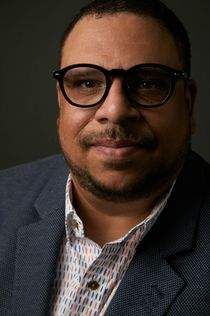
“I work with a lot of people whose dream it is to argue at the Supreme Court,” Chase Strangio says early in the new documentary Heightened Scrutiny. “And it is just not my dream. It isn’t. Maybe in some ways, my nightmare.”
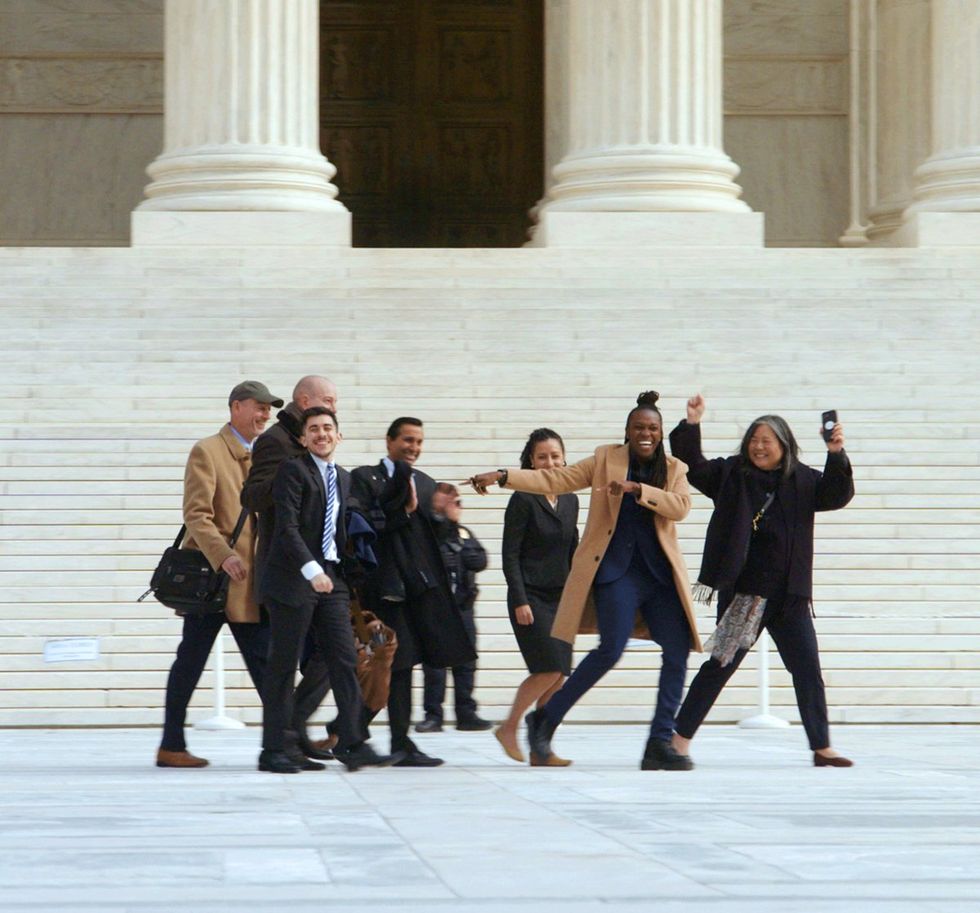
Yet, in December 2024, Strangio, a transgender civil rights lawyer at the American Civil Liberties Union, stepped to the lectern of the U.S. Supreme Court to argue the most consequential case of his career.
Keep up with the latest in LGBTQ+ news and politics. Sign up for The Advocate's email newsletter.
The court had granted review in United States v. Skrmetti, the Biden administration’s challenge to Tennessee’s law banning gender-affirming care for minors. What followed was not a dream fulfilled, but a duty assumed and a deeply personal act of resistance carried out on the nation’s most impersonal stage.
The moment was historic. Strangio became the first out transgender person to argue before the court. But Heightened Scrutiny, directed by Sam Feder and released this summer, makes clear that the argument was never about firsts. It was about fighting for the last remaining space of protection in a country increasingly committed to erasing trans lives from law, medicine, and public imagination.
The attorney has been training for years to be the advocate he is now. “I’ve spent the last 13 years learning to become a litigator with, I think, the best constitutional and civil rights litigators in the country,” he said. “It felt like such an unbelievable gift to have that mentorship.”
Strangio played key roles in Obergefell v. Hodges and Bostock v. Clayton County, but had never argued before the Supreme Court himself. “There was a strong desire to have a trans person argue the [Bostock] case,” he recalled. “I personally was not thinking that I would be that trans person, but I saw the need for that. I really did.”
That sense of responsibility deepened as anti-trans legislation exploded nationwide. “I started to really push myself to argue cases in the lower courts, because of how important it was to have a trans person there as a disruption of what was happening.”
When Skrmetti reached the Supreme Court, Strangio had already argued the case in lower courts. “I could cede this argument to a Supreme Court advocate expert, or I could push myself and say, this is a moment for the community to see itself,” he said. “Even though I think in my mind I just diminished the idea of the significance of being a trans person there, when it came down to it, many trans lawyers told me that when they heard me start speaking in the court, they started to cry.
He hasn’t seen he film on the big screen, only on his laptop. “I have a very hard time with seeing myself on screen, having that experience over and over of being a figure that there are narratives about, and then I'm trying to relate to those narratives," he said.
Related: 'Heightened Scrutiny' is a somber reminder of why we fight for trans rights
Heightened Scrutiny premiered to acclaim at Sundance and is now opening to broader audiences. The film begins its theatrical run in New York City at DCTV on Friday and in Los Angeles at the Laemmle NoHo 7 on July 26, where it will be followed by a Q&A with the filmmakers that evening.
 Heightened ScrutinyCourtesy Fourth Act Film
A courtroom and a country
Feder did not set out to make a courtroom drama. When they began the project in early 2024, the film was envisioned as a media critique, exploring how journalism shapes public opinion and how those narratives ultimately influence law.
“I was researching how and when journalism started pivoting away from even a semblance of support to skepticism and harm,” Feder told The Advocate. “I interviewed dozens of reporters. The goal was to show how bad coverage builds bad law.”
Then, in July 2024, everything changed. The Supreme Court granted certiorari in Skrmetti. The ACLU named Strangio lead counsel. The film’s center shifted.
Related: Supreme Court trans care case will feature the first out transgender lawyer at the court
“It wasn’t until then that [Chase] knew he was going to be arguing this,” Feder said. “So that was a real pivot at that point, but it was a perfect fit because everything that the journalists were talking about… completely related to this case coming to fruition.”
Feder’s central argument is that media coverage, especially from centrist or liberal “paper of record” institutions like the New York Times, has laid the foundation for legal attacks on trans people.
“This isn’t just bad coverage,” Feder said. “It’s malpractice. Studies debunked years ago are being cited as fact. Major publications ignore corrections or give equal weight to bigotry. And all of it gets cited by judges.”
Strangio has spent much of his career warning about this phenomenon. “I’ve seen how headlines become briefs,” he told The Advocate. “How quote-unquote legitimate coverage creates a record of doubt. And that record becomes the justification for these laws.”
Strangio said part of the danger in today’s media climate is the false assumption that we’re living in a normal political moment. “We are not in a normal time,” he said, adding that Justice Ketanji Brown Jackson may be “the only justice who’s very aware of that and is calling it out.” He criticized the pretense of neutrality in mainstream journalism, especially in the selection and framing of stories about trans people. “The suggestion that people are just doing objective journalism is itself in the service of eclipsing the ideology behind it,” he said.
Strangio argued that so-called objectivity is selectively applied, excluding trans journalists for being “ideologically positioned,” while treating “white, rich, straight, cis men” as default neutral voices. “What I would like people to do is to really question, well, why did we select this story and are we providing the full context?” he said. Coverage of gender-affirming care, he noted, often omits the fact that the population affected is “tiny, tiny, tiny,” while critiques leveraged against trans care would apply to many other forms of treatment that don’t receive the same scrutiny.
“We are misinforming our readers both based on volume and entry point to this coverage,” he warned. “In a time when you have hundreds of millions of dollars being waged to demonize a group of people... media coverage under the auspices of neutrality legitimizing that demonization, we have a serious, serious problem.”
 Heightened ScrutinyCourtesy Fourth Act Film
In a 2024 joint analysis by GLAAD and Media Matters, two-thirds of Times articles about transgender people failed to quote even one trans source. Legal briefs filed in support of criminalizing gender-affirming care now regularly cite Times stories as evidence. “What’s new and dangerous,” Strangio says in the film, “is not just that bad journalism exists. It’s that it’s being laundered into law.”
As GLAAD has documented, The New York Times has ignored repeated calls from over 100 LGBTQ+ organizations to meet with transgender leaders, correct factual errors, and stop platforming anti-trans disinformation under the guise of neutrality. Instead, the paper has doubled down, publishing and promoting narratives that erase trans voices while fueling courtroom arguments designed to erase trans rights, according to GLAAD.
“I just wanted to connect the dots for people in an obvious way between the coverage and the law,” Feder explained. “And also to show that this is not isolated to just trans people. This happens in the media to all marginalized people.”
The film weaves together audio of the high court’s oral arguments and scenes from Strangio’s life.
Since video recording is prohibited at the Supreme Court, the film brings viewers into a different federal courtroom. In a striking sequence, Heightened Scrutiny shows Strangio arguing before the Ninth Circuit in a related case, a moment captured with rare video access.
“We knew we wouldn’t be able to film inside SCOTUS,” Feder said, “so we wanted the viewers to have a sense of the courtroom and Chase being in a courtroom.” After repeated follow-ups, they received a surprise green light. “It turned out that the person in charge was a trans woman… and she was like, ‘Whatever you want, I’m here for it.’”
At the Supreme Court in December, Strangio and his team argued that Tennessee’s Senate Bill 1 violated the Equal Protection and Due Process Clauses of the Constitution. The law banned puberty blockers, hormone therapy, and gender-affirming surgeries for trans youth, while permitting comparable treatments for cisgender minors. By singling out care needed only by trans youth, the law explicitly discriminated on the basis of sex and gender identity.
Related: BREAKING: Supreme Court rules states can ban gender-affirming care for youth in U.S. v. Skrmetti
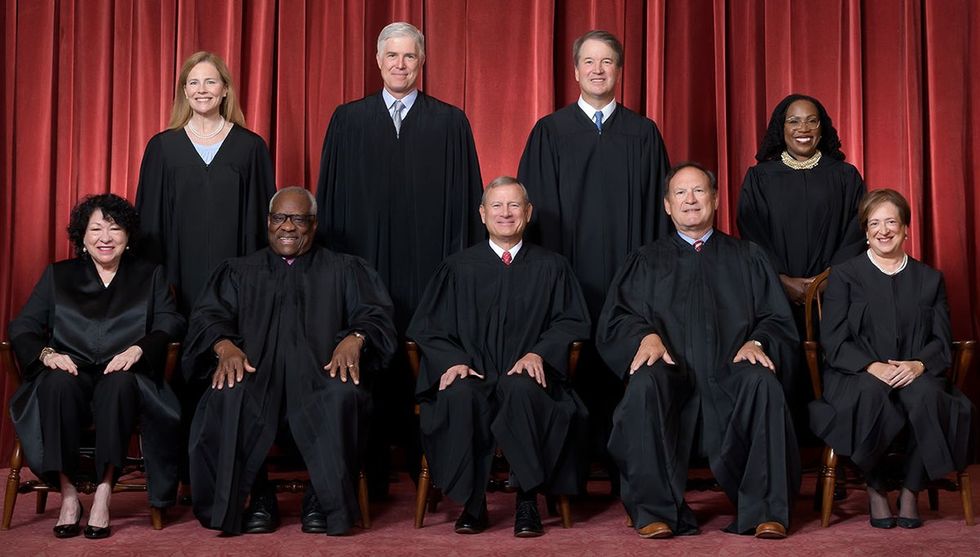
It was not, by clinical or constitutional standards, a close call. But on June 18, 2025, the Supreme Court ruled 6–3 to uphold Tennessee’s law, applying only the lowest level of constitutional review—rational basis. Writing for the majority, Chief Justice John Roberts declared that SB1 regulated procedures, not identities, and therefore passed muster.
“The Equal Protection Clause does not resolve these disagreements,” Roberts wrote.
In a scathing dissent, Justice Sonia Sotomayor accused the majority of abandoning its role as constitutional backstop. Joined by Justices Elena Kagan and Ketanji Brown Jackson, she wrote: “By refusing to apply heightened scrutiny, the majority renders transgender Americans doubly vulnerable to state-sanctioned discrimination.” The ruling, she warned, did “irrevocable damage” to Equal Protection jurisprudence.
Strangio called the decision devastating but not surprising. “I think that this is a court, as we’ve seen, especially this term, that is very invested in maintaining the status quo of power, and consolidation of power, and that is something that I think you can look to Justice Jackson’s decision,” Strangio said. “And when it comes to the outcome of Skrmetti, it is in line with that. It maintains the ability of states to ban this medical care. And so in that sense, it is a disappointing material and legal doctrinal outcome. And still, it is far narrower than it might have been doctrinally.”
The stakes and the legacy
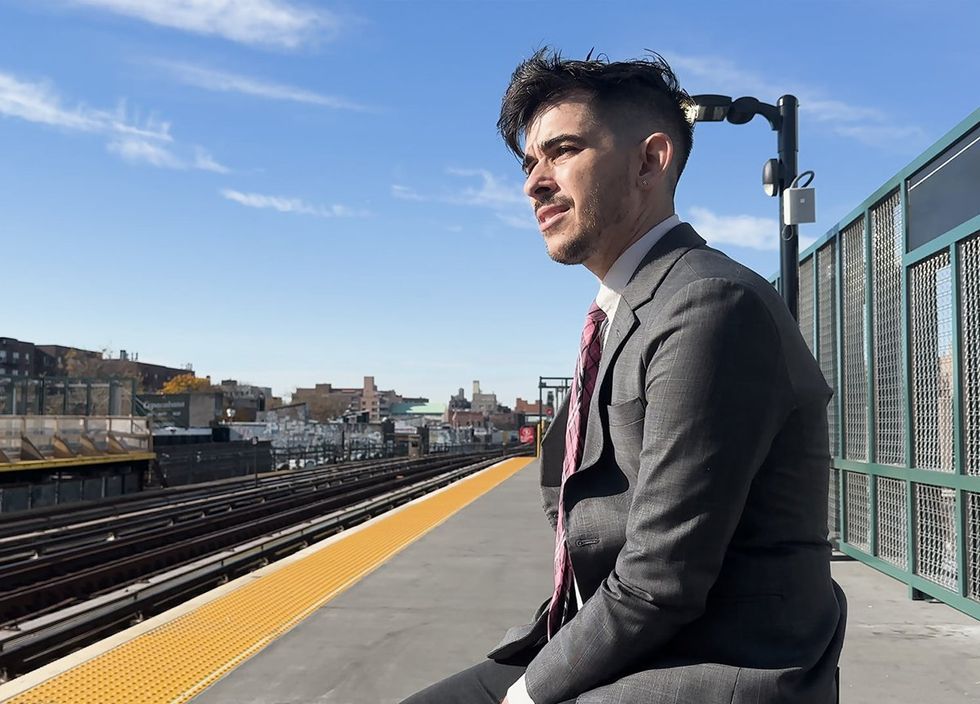
The film follows Strangio through courtroom prep, private reflection, and moments of emotional vulnerability. In one of its most moving scenes, shot shortly after the 2024 election, he breaks down. The reality sinks in: Donald Trump has won a second term.
“This was a massive, massive outpouring of support for Trump,” he says. “Even in the face of everything we know about him.”
 Heightened ScrutinyCourtesy Fourth Act Film
Gathering himself, he continues speaking to the camera. “I had moments of like, I can’t do this again,” he admits. “But then I wake up this morning and I think, fuck it. We fight.”
His voice cracks again. “I feel like that might look really a lot more scary. I haven’t really fully comprehended all of those things,” he says, adding, “For now, the best I can do for the entire community, I believe, is to do the best job I can to try to secure this last constitutional stop on these government attacks on our community.”
Heightened Scrutiny is not about a legal loss. It’s about what it costs to keep fighting. It’s about choosing visibility when the world is organized around your erasure. It’s about trans kids and grieving parents, frightened attorneys and righteous rage, and the hope that survival can still be its form of victory.
“I want trans viewers to feel like they’re the most important people in the room for at least 90 minutes,” Feder said. “I want them to know we tried. We didn’t leave them out to dry.”
Related: SCOTUS trans care ruling opens harmful loophole to take access from all trans people, says Leah Litman
Strangio is clear-eyed about what the ruling means and what it enables. Legal scholar and former Supreme Court clerk Leah Litman called Skrmetti a gateway decision, one that legitimizes discrimination through semantic gymnastics. In her view, the court’s conservative majority has become “a willing participant in a partisan project targeting transgender people,” abandoning precedent and legal consistency for what she calls “legal-ish” reasoning dressed in constitutional garb. “They’re not even engaging with counterarguments or with the factual record in any serious way,” Litman told The Advocate in June.
 Formal portrait of United States Supreme Court JusticesFred Schilling/Collection of the Supreme Court of the United States
Barrett’s concurrence went further than the majority opinion, rejecting the very idea that transgender people could qualify as a suspect or quasi-suspect class under the Constitution. “That’s just inviting states to do more harm,” Litman said, warning that the ruling could pave the way for bans on adult care as well.
“I agree with Leah that one of the analytical fears here, one of the doctrinal fears, is that their reasoning is not so cleanly cabined to minors,” Strangio said.
Related: Meet the transgender lawyer leading a bold fight to show Supreme Court justices that trans lives matter
He noted that the court’s reasoning in Skrmetti could just as easily justify restrictions on adult care, even though the ruling emphasized minors. While no state has enacted a total ban on gender-affirming care for adults, litigation is ongoing over Medicaid and state funding exclusions, which could test those limits. “I think trans people are rightly concerned, and they should be,” Strangio said. “I think a lot of people should be concerned.”