'%3E%3Cpath d='M16.3574 35.6519H12.9537L15.0491 18.8873L16.3574 35.6519ZM30.4229 54.0093L22.309 0.994385H7.91795L0 54.0093H10.6634L11.5802 46.3855H17.4014L17.9914 54.0093H30.4229Z' fill='%23971B20'/%3E%3Cpath d='M48.2073 41.8813C48.2073 43.4049 47.4892 44.0011 46.1144 44.0011H43.7595V11.0687H46.1144C47.4892 11.0687 48.2073 11.6636 48.2073 13.1885V41.8813ZM59.5273 43.6695V11.3326C59.5273 3.71323 53.5729 0.994385 47.8157 0.994385H31.7213V54.0093H47.8157C53.5729 54.0093 59.5273 51.29 59.5273 43.6695Z' fill='%23971B20'/%3E%3Cpath d='M90.183 0.994385H78.6039L75.0711 30.6157L71.9955 0.994385H59.4346L69.2474 54.0093H80.373L90.183 0.994385Z' fill='%23971B20'/%3E%3Cpath d='M107.063 42.3448C107.063 43.7359 105.951 44.5974 104.643 44.5974C103.269 44.5974 102.157 43.7359 102.157 42.3448V12.658C102.157 11.2676 103.269 10.4058 104.643 10.4058C105.951 10.4058 107.063 11.2676 107.063 12.658V42.3448ZM119.233 43.2723V11.7312C119.233 6.36384 112.952 -3.8147e-06 104.643 -3.8147e-06C96.2667 -3.8147e-06 89.9867 6.36384 89.9867 11.7312V43.2723C89.9867 48.6393 96.2667 55 104.643 55C112.952 55 119.233 48.6393 119.233 43.2723Z' fill='%23971B20'/%3E%3Cpath d='M150.976 43.9349V33.7309H139.069V42.3448C139.069 43.7359 137.957 44.5974 136.582 44.5974C135.076 44.5974 133.964 43.7359 133.964 42.3448V12.658C133.964 11.2676 135.076 10.4058 136.582 10.4058C137.957 10.4058 139.069 11.2676 139.069 12.658V21.2723H150.976V11.0687C150.976 5.70107 145.283 -3.8147e-06 136.582 -3.8147e-06C127.75 -3.8147e-06 121.796 5.70107 121.796 11.0687V43.9349C121.796 49.3022 127.75 55 136.582 55C145.283 55 150.976 49.3022 150.976 43.9349Z' fill='%23971B20'/%3E%3Cpath d='M167.478 35.6519H164.076L166.17 18.8873L167.478 35.6519ZM181.544 54.0093L173.432 0.994385H159.037L151.123 54.0093H161.785L162.704 46.3855H168.523L169.114 54.0093H181.544Z' fill='%23971B20'/%3E%3Cpath d='M205.412 10.4058V0.994385H177.081V10.4058H185.392V54.0093H197.428V10.4058H205.412Z' fill='%23971B20'/%3E%3Cpath d='M230.002 54.0093V43.9349H218.914V31.8746H226.635V21.8028H218.914V10.4058H230.002V0.994385H206.875V54.0093H230.002Z' fill='%23971B20'/%3E%3C/g%3E%3Cdefs%3E%3CclipPath id='clip0_260_7080'%3E%3Crect width='230' height='55' fill='white'/%3E%3C/clipPath%3E%3C/defs%3E%3C/svg%3E)
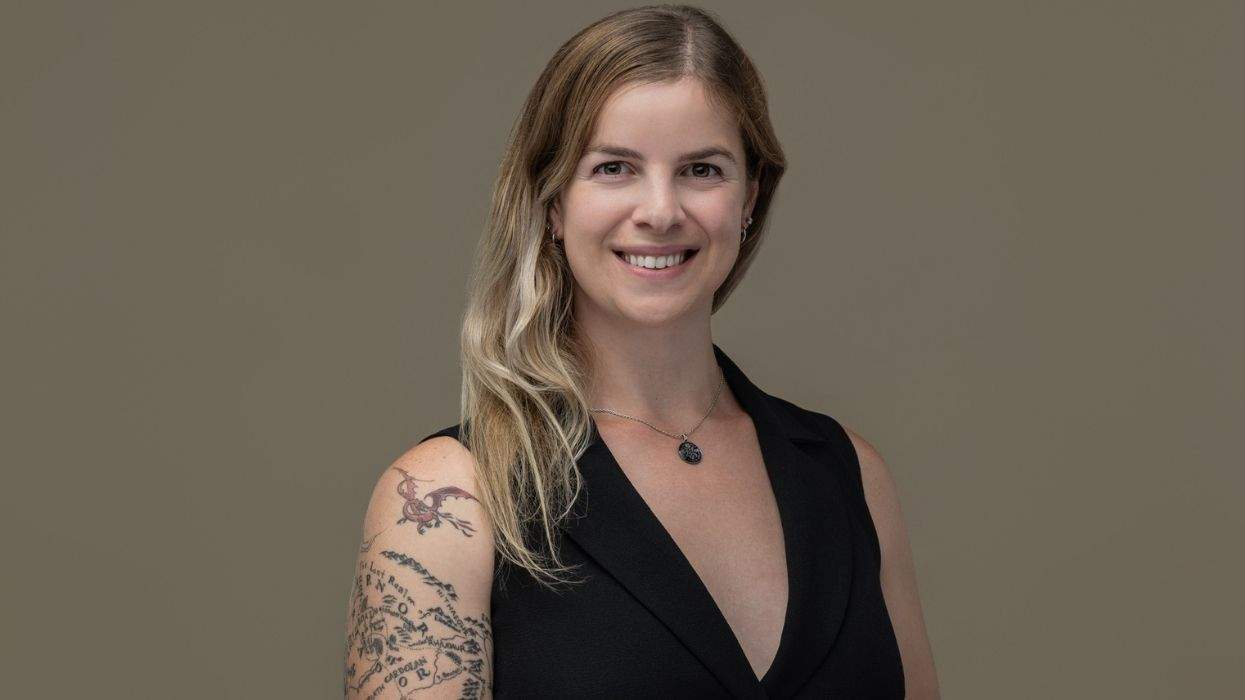
A transgender veteran who was forced out of the military refuses to step into the shadows. Instead, she is mustering her anger and her skills to affect change through political engagement.
Keep up with the latest in LGBTQ+ news and politics. Sign up for The Advocate's email newsletter.
On May 9, Sabrina Bruce walked out to her car expecting to reenlist.
She had just completed months of advanced cyber training in Colorado, returned to her unit, and been back on the job for nine days. Reenlistment was not a career gamble but a continuation — the next step in a military life she had spent nearly a decade building inside the U.S. Air Force and later the U.S. Space Force.
Related: Why is the Army recommending training for this transgender officer that the Pentagon plans to oust?
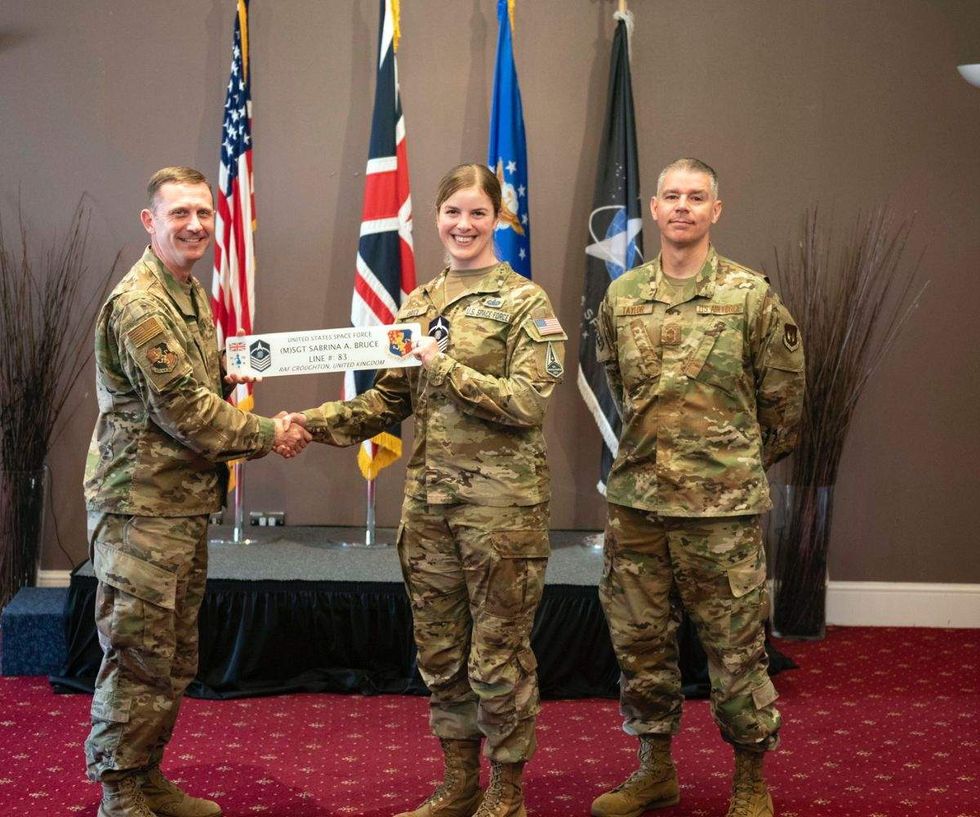 Courtesy Sabrina Bruce
Instead, sitting in her car, Bruce learned that the U.S. Supreme Court had cleared the way for the Trump administration to move forward with a policy announced in late January 2025, barring transgender people from military service. President Donald Trump had demanded the ban. Defense Secretary Pete Hegseth was implementing it. Bruce’s career was effectively over.
“That was really the moment that I got crushed,” she told The Advocate in an interview.
She eventually took what the Pentagon termed “voluntary separation,” which meant she would leave without being subject to a medical investigation that would result in her departure.
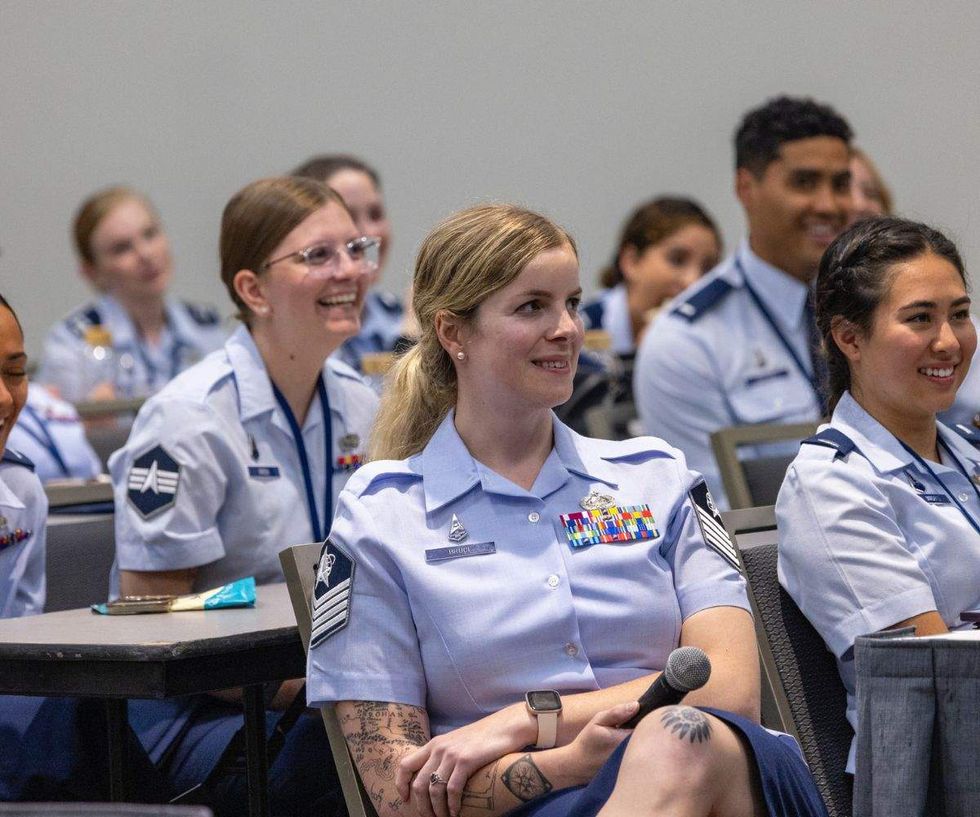 Courtesy Sabrina Bruce
For months, Bruce had believed the institution she served would not erase people who had already proven themselves. “I’d been serving for eight years,” Bruce said. “And there was nothing in my records that meant that I should have been kicked out.”
She had lived through the first Trump-era transgender military ban and trusted that the Department of Defense would again draw a line between changing future accession standards and expelling service members who were already trained, deployed, and decorated.
She was wrong.
Bruce enlisted at 22, leaving behind a small town in South Carolina and a life that felt increasingly untenable. College had not worked. She was grappling with gender dysphoria she did not yet have language for. The military was not an act of abstraction or ideology but a last option — a way out.
Related: Meet the transgender Space Force rocket scientist who’s unimpressed by Libs of TikTok’s attacks
What she found instead was belonging, she says.
Supervisors took her seriously. Coworkers invested in her future. For the first time, someone asked her to lunch and wanted to talk about her career. The military became the place where she was finally seen.
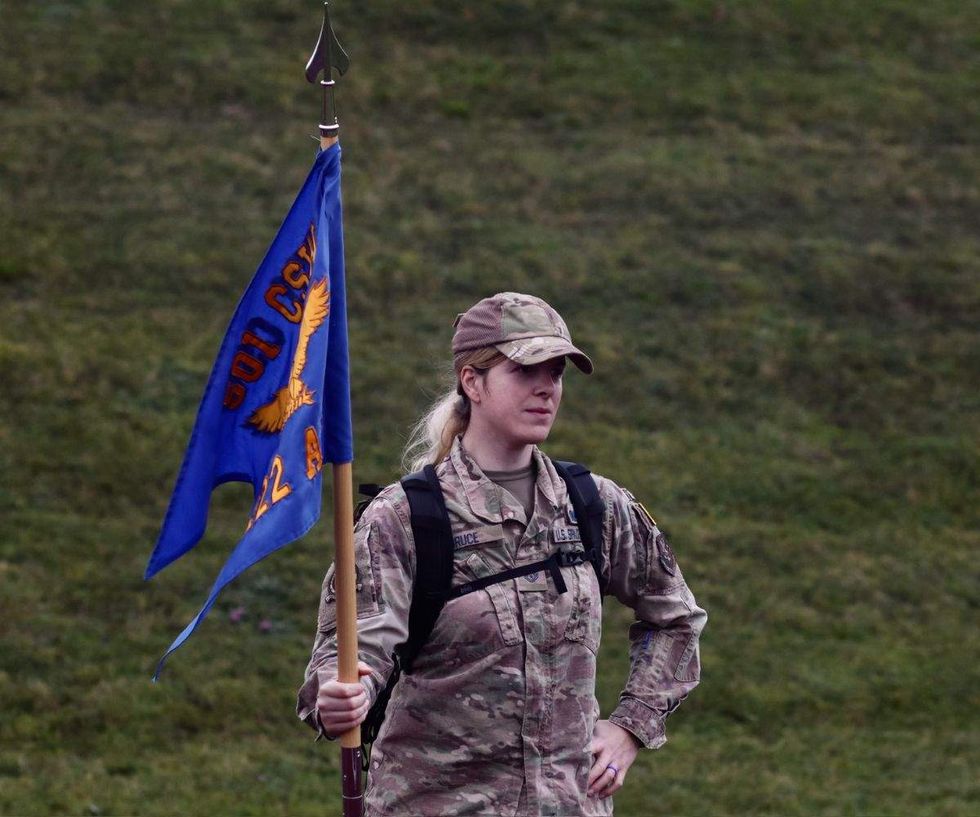 Courtesy Sabrina Bruce
“It was like I was a plant that was finally moved to the windowsill that was just perfect,” Bruce said. “And I started to blossom.”
That sense of stability made something else possible: self-recognition. In 2016, while deployed to Africa, Bruce confronted her identity amid isolation and despair. She described moments when suicide felt close. Accepting that she was transgender ended the exhaustion.
“I was just too tired to keep fighting internally,” she said.
Bruce began transitioning in 2017, as the first Trump administration moved to restrict transgender military service. Her career did not stall. It accelerated. Over five years, she was promoted three times, from senior airman to master sergeant, a rapid rise in enlisted ranks that reflected sustained confidence in her leadership and performance.
“Each time, people had looked at my records, looked at my performance and said, ‘This is the person that we want,’” she said.
In practice, her gender identity had been irrelevant to her work.
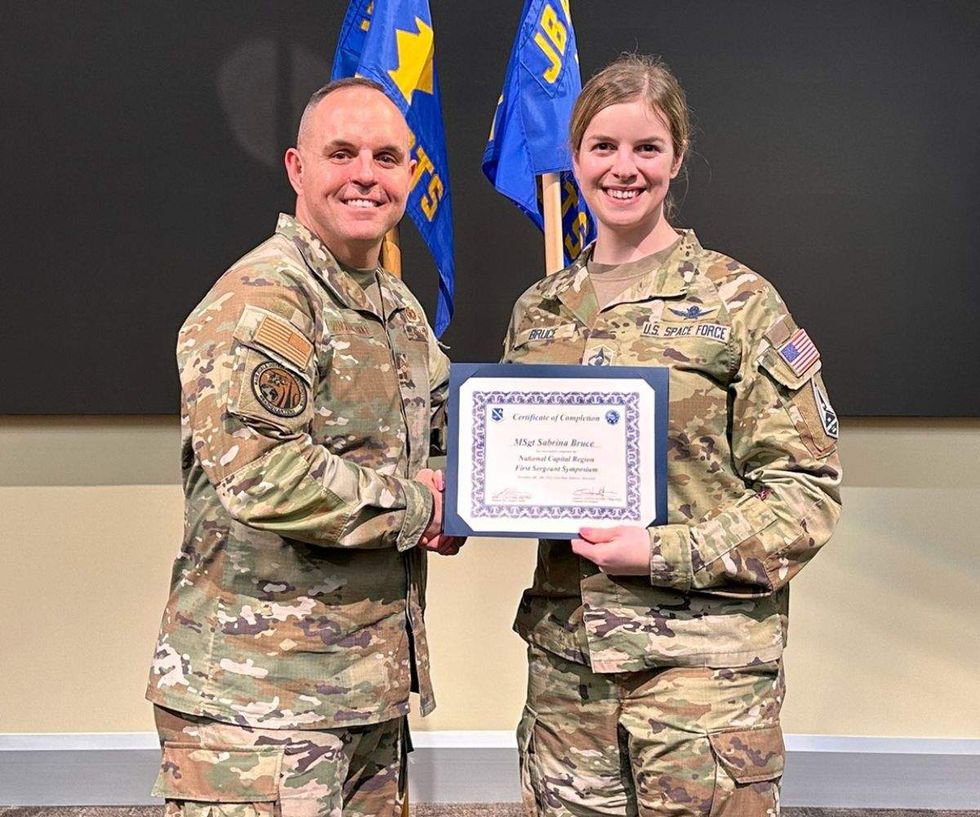 Courtesy Sabrina Bruce
That reality collided with the rhetoric used to justify the new ban. Trump’s executive order framed transgender service members as lacking integrity and honor. Hegseth mocked trans people in uniform.
“No more dudes in dresses. We’re done with that shit,” Hegseth had said during a speech to troops.
Related: Meet the transgender Army lieutenant who is challenging Donald Trump's military ban
“Why is the president bullying me?” Bruce asked. “Even after his inauguration, I was ready to lay my life down if that’s what I had to do.”
Bruce understands military service as a contract — one that runs both ways.
“I’m willing to lay my life down for you,” she said. “And I expect you to stand up for me and take care of me and honor my commitment to you.”
Instead, she was placed on administrative leave and forced to weigh whether fighting her separation would put her spouse at risk. Her spouse, a British national and law student, immigrated to the United States in 2022 and holds a green card. As immigration enforcement intensified under Trump, Bruce worried that visibility itself could become dangerous.
“Should I withdraw my name from the case?” she asked, referring to Talbott v. USA, a lawsuit in Washington, D.C., challenging the ban, in which she is a plaintiff. “Should I not talk to journalists like you and have my name published because that makes them a target?”
The calculus shifted decisively when Bruce learned that contesting her separation could cost her spouse the GI Bill benefits she had transferred to them.
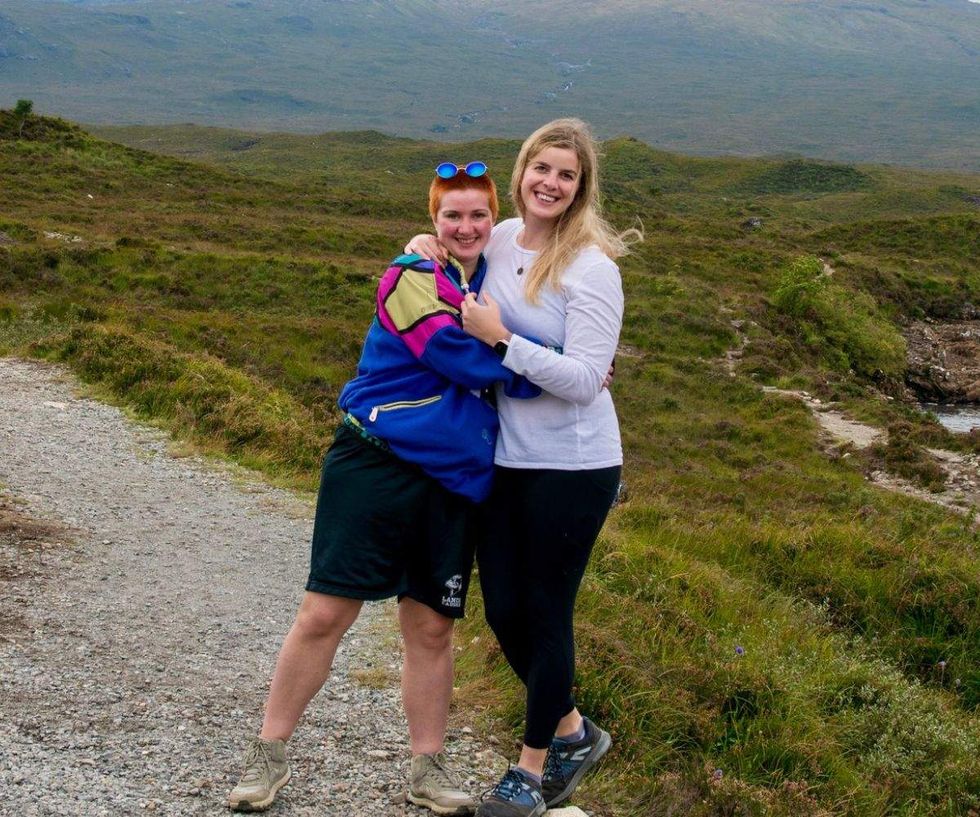 Courtesy Sabrina Bruce
“I was willing to go down with the ship,” she said. “But I didn’t want my spouse to go down with it as well.”
What followed was not just unemployment but dislocation. For months, Bruce struggled with the loss of purpose that had structured her adult life. “I didn’t feel like I had a reason to wake up in the morning anymore,” she said.
Purpose returned through politics. It wasn’t ambition, but obligation.
Bruce said that the shift toward politics was shaped in part by Virginia state Sen. Danica Roem, the nation’s first out transgender state legislator, whom she described as a personal hero. During a Victory Institute training in Los Angeles last fall, Bruce had a one-on-one conversation with Roem that changed her trajectory.
“I don’t want to sound like a fangirl, but Danica Roem has always been one of my heroes,” Bruce said.
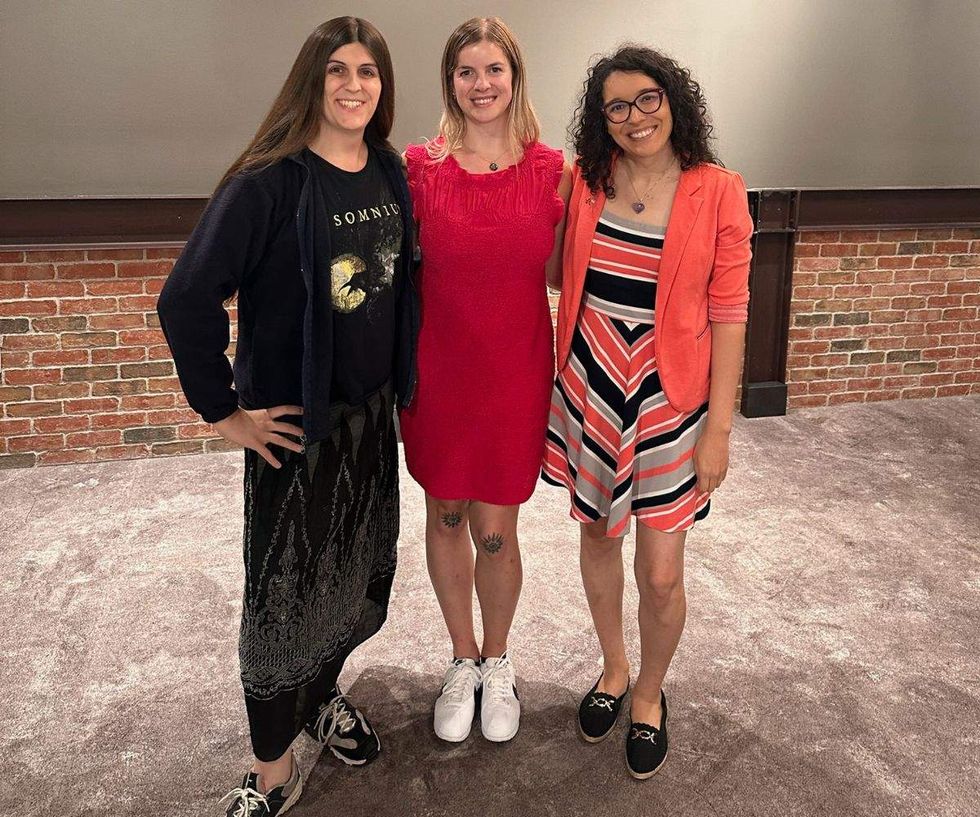 Virginia State Sen. Danica Roem (left) and Sabrina Bruce (center).Courtesy Sabrina Bruce
Bruce is now the campaign manager for Bree Fram, a retired Space Force colonel who was also forced out of military service under the Trump transgender ban and is now running for Congress as a Democrat in Northern Virginia. The campaign draws directly from their shared experience: careers cut short, service questioned, duty unfinished.
At the same time, Bruce is running for a seat on the Herndon Town Council, seeking local office in the Virginia community where she lives.
“If you’re not there standing on the forefront in whatever way you can,” Bruce said, “then you’re not doing your part.”
When Bruce told Roem about helping manage Fram’s campaign, Roem asked a simple question, Bruce said.
“She was like, ‘Well, what about you?’” Bruce recalled.
Roem urged her to consider running herself, telling her there was no reason she couldn’t do both, and then, Bruce said, pulled out her phone and called the former mayor of Herndon to make an introduction.
“It was kind of like, once again, somebody seeing me, and fully seeing who I am, and seeing the potential,” Bruce said
Through it all, she has not abandoned her belief in the country she served.
“I still believe every day that we’re the greatest country that has ever existed,” she said. “And I don’t think that one year changes that.”
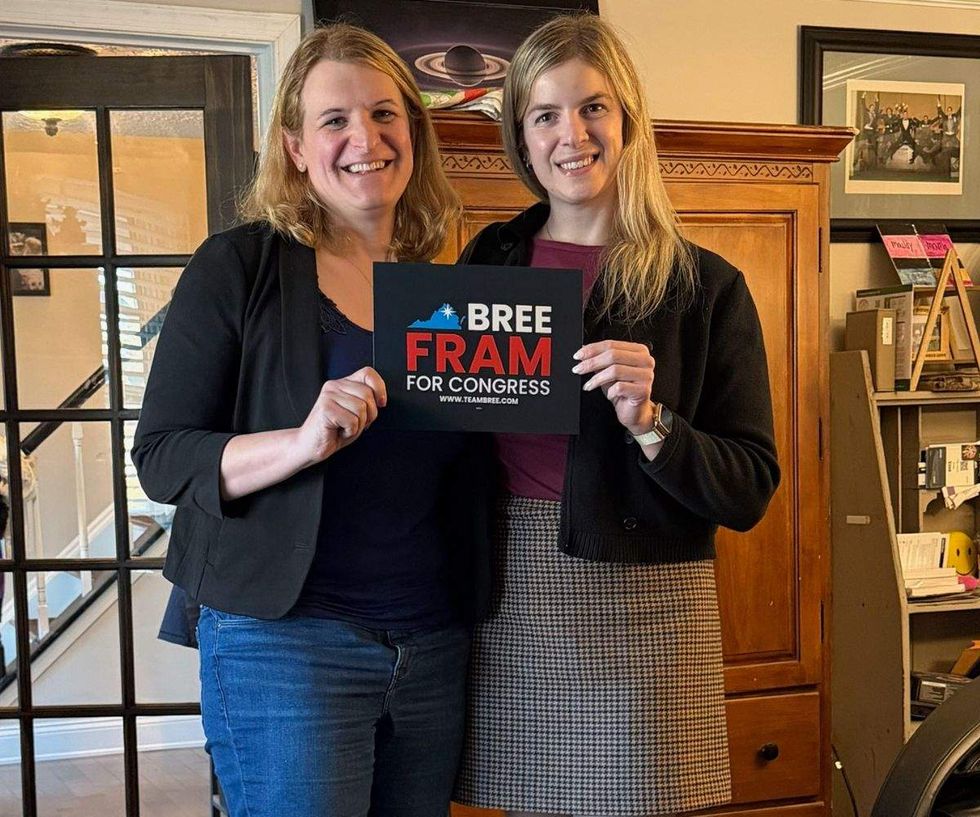 Retired Space Force Col. Bree Fram, who is running for Congress in Virginia, and Sabrina Bruce, her campaign manager.Courtesy Sabrina Bruce
What has changed is who is permitted to belong. She said one thing she wants to work on to benefit the residents of her community is installing dedicated cycling and pedestrian paths. She said the idea came to her after seeing a cyclist struck by a car while she was driving home from work one day. Bruce sprang into action to help and rendered first aid.
“It didn’t matter to the person on the bicycle that I was trans when I went and got her out of traffic,” Bruce said, recalling an incident in Herndon. “She was a person who needed help, and I was a person willing to help.”
That, she said, is what service has always meant.