'%3E%3Cpath d='M16.3574 35.6519H12.9537L15.0491 18.8873L16.3574 35.6519ZM30.4229 54.0093L22.309 0.994385H7.91795L0 54.0093H10.6634L11.5802 46.3855H17.4014L17.9914 54.0093H30.4229Z' fill='%23971B20'/%3E%3Cpath d='M48.2073 41.8813C48.2073 43.4049 47.4892 44.0011 46.1144 44.0011H43.7595V11.0687H46.1144C47.4892 11.0687 48.2073 11.6636 48.2073 13.1885V41.8813ZM59.5273 43.6695V11.3326C59.5273 3.71323 53.5729 0.994385 47.8157 0.994385H31.7213V54.0093H47.8157C53.5729 54.0093 59.5273 51.29 59.5273 43.6695Z' fill='%23971B20'/%3E%3Cpath d='M90.183 0.994385H78.6039L75.0711 30.6157L71.9955 0.994385H59.4346L69.2474 54.0093H80.373L90.183 0.994385Z' fill='%23971B20'/%3E%3Cpath d='M107.063 42.3448C107.063 43.7359 105.951 44.5974 104.643 44.5974C103.269 44.5974 102.157 43.7359 102.157 42.3448V12.658C102.157 11.2676 103.269 10.4058 104.643 10.4058C105.951 10.4058 107.063 11.2676 107.063 12.658V42.3448ZM119.233 43.2723V11.7312C119.233 6.36384 112.952 -3.8147e-06 104.643 -3.8147e-06C96.2667 -3.8147e-06 89.9867 6.36384 89.9867 11.7312V43.2723C89.9867 48.6393 96.2667 55 104.643 55C112.952 55 119.233 48.6393 119.233 43.2723Z' fill='%23971B20'/%3E%3Cpath d='M150.976 43.9349V33.7309H139.069V42.3448C139.069 43.7359 137.957 44.5974 136.582 44.5974C135.076 44.5974 133.964 43.7359 133.964 42.3448V12.658C133.964 11.2676 135.076 10.4058 136.582 10.4058C137.957 10.4058 139.069 11.2676 139.069 12.658V21.2723H150.976V11.0687C150.976 5.70107 145.283 -3.8147e-06 136.582 -3.8147e-06C127.75 -3.8147e-06 121.796 5.70107 121.796 11.0687V43.9349C121.796 49.3022 127.75 55 136.582 55C145.283 55 150.976 49.3022 150.976 43.9349Z' fill='%23971B20'/%3E%3Cpath d='M167.478 35.6519H164.076L166.17 18.8873L167.478 35.6519ZM181.544 54.0093L173.432 0.994385H159.037L151.123 54.0093H161.785L162.704 46.3855H168.523L169.114 54.0093H181.544Z' fill='%23971B20'/%3E%3Cpath d='M205.412 10.4058V0.994385H177.081V10.4058H185.392V54.0093H197.428V10.4058H205.412Z' fill='%23971B20'/%3E%3Cpath d='M230.002 54.0093V43.9349H218.914V31.8746H226.635V21.8028H218.914V10.4058H230.002V0.994385H206.875V54.0093H230.002Z' fill='%23971B20'/%3E%3C/g%3E%3Cdefs%3E%3CclipPath id='clip0_260_7080'%3E%3Crect width='230' height='55' fill='white'/%3E%3C/clipPath%3E%3C/defs%3E%3C/svg%3E)

A Florida mom and small business owner says her rights were violated when Miami Beach police officers showed up unannounced at her home to question her about a Facebook comment criticizing city leadership. She believes the encounter crossed a constitutional line and reflects a broader effort to police political expression.
Keep up with the latest in LGBTQ+ news and politics. Sign up for The Advocate's email newsletter.
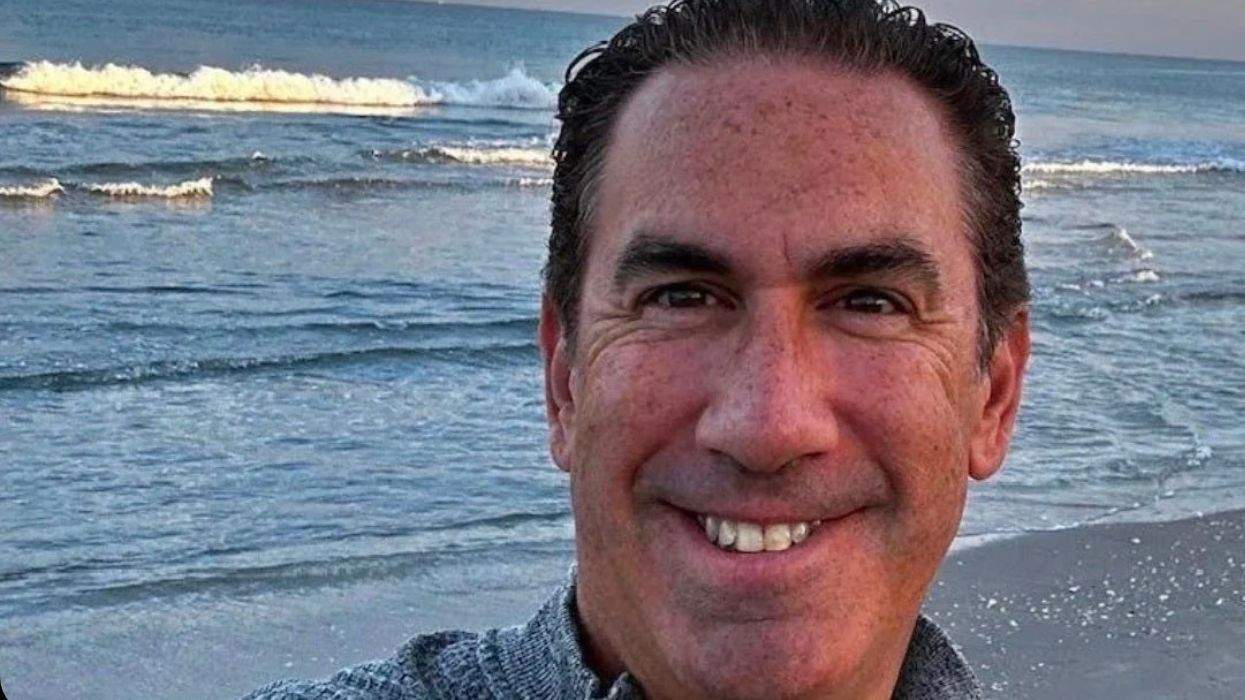
Raquel Pacheco, a 51-year-old immigrant, mother, military veteran, and owner of a translation company, recorded a video of two Miami Beach police officers coming to her door on January 12 and telling her they were there to investigate a post they said could “incite somebody to do something.”
Related: Florida Republican threatens legal action after Miami Beach Pride denies him space in parade (
Video of the encounter, which Pacheco later posted online, shows officers repeatedly asking her to confirm whether a Facebook account and comment were hers, while assuring her she was not under arrest.
“We’re not 100 percent it’s you,” one officer says in the video. “We got to see you first.”
Pacheco immediately invoked her rights. “I refuse to answer questions without my lawyer present,” she said.
At one point, an officer sought to minimize the encounter, telling her, “You’re not going to jail. We’re just here to have a conversation,“ to which Pacheco responded, “ This is America, right? This is freedom of speech.”
The officers then read the Facebook comment aloud and explained why it concerned them. Their stated rationale was not that Pacheco herself posed a threat, but that others might react to her words.
Related: Texas follows Florida's lead in demanding end to rainbow crosswalks and street art
“The concerning part, not concerning for the person who’s posting it,” one officer told her, “is when we’re just trying to prevent somebody else getting agitated or agreeing with the statement.”
The officer went on to say that language in the post “can probably incite somebody to do something radical,” even while acknowledging he was “not saying it’s true or not.” He advised Pacheco that she should consider refraining from posting similar statements because they “could get something instigated.” The officers left without issuing any warnings, citations, or charges.
According to screenshots and video reviewed by The Advocate, the Facebook comment criticized Miami Beach Mayor Steven Meiner’s record and rhetoric, accusing him of hypocrisy on inclusivity and LGBTQ+ issues. In the comment, Pacheco wrote that the mayor “consistently calls for the death of all Palestinians,” criticized efforts to shut down a theater over a film, accused him of refusing “to stand up for the LGBTQ community in any way,” and said he “even leaves the room when they vote on related matters,” before ending with a sarcastic message that residents were “all welcome here,” followed by clown emojis.
Related: Winter Party Festival 2025 returns to Miami Beach, championing LGBTQ+ joy & resistance
In a Wednesday interview with The Advocate, Pacheco described herself as an activist and said the visit left her shaken, but undeterred.
“They said they were concerned that my statement could incite violence or cause somebody to do something,” she said. “But what really stood out to me was that they said people might agree with it. Since when is agreement grounds for police intervention?”
The Miami Herald initially reported that the police visit stemmed from a directive originating in the mayor’s office. Pacheco said she and others filed public records requests seeking that communication. Days later, city officials issued a public statement disputing that account.
In a statement posted to social media, Miami Beach Police Chief Wayne A. Jones said he personally ordered the visit, citing national and international concerns about antisemitic violence and threats against political figures.
“Given the real, ongoing national and international concerns surrounding antisemitic attacks and recent rhetoric that has led to violence against political figures, I directed two of my detectives to initiate a brief, voluntary conversation regarding certain inflammatory, potentially inciteful false remarks made by a resident,” Jones said.
“I had serious concerns that her remarks could trigger physical action by others,” he added, while stressing that the interaction was handled “professionally and without incident.”
Jones also said, “At no time did the Mayor or any other official direct me to take action,” and emphasized that the police department “is committed to safeguarding residents and visitors while also respecting constitutional rights.”
City Manager Eric T. Carpenter, in the same statement, said he supported the department’s actions, while distancing himself from them.
“Although I was not involved in the decision, I fully support the police efforts to proactively address concerns about any potential threat to the community that could emerge as a result of these false incendiary statements,” Carpenter said.
The case comes amid broader warnings from civil liberties and human rights organizations that the United States is experiencing an erosion of democratic norms, including the use of law enforcement to respond to political speech, in a rise of authoritarianism since President Donald Trump took office a second time last year.
“We are there,” Pacheco said. “How much longer are we going to wait before we pull the fire alarm?”
Civil liberties advocates sharply disagreed with the Miami Beach government’s actions.
In a January 16 letter to the Miami Beach Police Department, the Foundation for Individual Rights and Expression, a nonpartisan nonprofit organization that defends free speech nationwide, said the officers’ visit represented “an egregious abuse of power” and a clear violation of the First Amendment.
“Law enforcement officers making a surprise appearance on an individual’s doorstep to convey official disapproval of her protected expression chills the exercise of First Amendment rights,” the group wrote.
FIRE said the officers’ own words showed they were not investigating a crime, but instead attempting to pressure Pacheco to stop engaging in protected political speech out of concern that others might react to or agree with it.
“That is not a lawful basis for police intervention,” the group wrote, noting that political speech enjoys the highest level of constitutional protection, even when it is “vehement, caustic, and sometimes unpleasantly sharp.”
The organization rejected the city’s suggestion that Pacheco’s comments could fall outside First Amendment protection, writing that her post did not call for violence, did not constitute a true threat, and did not meet the legal standard for incitement, which requires advocacy of imminent unlawful action.
Related: Florida Republican threatens legal action after Miami Beach Pride denies him space in parade
Beyond the legal concerns, FIRE warned that such police visits risk deterring others from speaking out.
“A person of ordinary firmness,” the group wrote, “would likely self-censor based on a reasonable belief that continuing to post similar content would invite further law enforcement scrutiny.”
Pacheco said the city’s explanation does not resolve her concerns, particularly given the officers’ explicit focus on the possibility that others might agree with her speech.
“There’s absolutely no harm,” she said. “This is what free speech is supposed to be, to get people thinking and debating. If the police can show up because someone might agree with you, then none of us are safe to speak.”
The Advocate contacted Mayor Steven Meiner’s office and the Miami Beach Police Department seeking comment. Neither responded.
A longtime critic of city leadership who has run for office three times, Pacheco said she believes the police visit was retaliation for her outspoken criticism of city policies, including policing, homelessness enforcement, and LGBTQ+ visibility.
“I’m a huge ally of the LGBTQ community,” she said. “Every time I run for office, I’ve been endorsed by every LGBTQ organization.”
Pacheco’s criticism includes broader cultural battles over LGBTQ+ visibility in public spaces, including rainbow crosswalks installed by local governments as symbols of inclusion. In Florida and elsewhere, these installations have become flashpoints in political debates.
In October 2025, Florida officials removed a rainbow-colored crosswalk on Miami Beach’s Ocean Drive, originally installed to celebrate the LGBTQ+ community’s contributions and history, after the city lost an appeal against a statewide order mandating the removal of all street art seen as “political ideologies.”
Pacheco, who served in the Connecticut Army National Guard from 1993 to 1999, said the experience echoed the repression she fled as a child after being born in war-torn Angola and growing up in post-dictatorship Portugal.
“Free speech died at my door on Monday afternoon at 2 p.m.,” she said. “That’s what it felt like.”