'%3E%3Cpath d='M16.3574 35.6519H12.9537L15.0491 18.8873L16.3574 35.6519ZM30.4229 54.0093L22.309 0.994385H7.91795L0 54.0093H10.6634L11.5802 46.3855H17.4014L17.9914 54.0093H30.4229Z' fill='%23971B20'/%3E%3Cpath d='M48.2073 41.8813C48.2073 43.4049 47.4892 44.0011 46.1144 44.0011H43.7595V11.0687H46.1144C47.4892 11.0687 48.2073 11.6636 48.2073 13.1885V41.8813ZM59.5273 43.6695V11.3326C59.5273 3.71323 53.5729 0.994385 47.8157 0.994385H31.7213V54.0093H47.8157C53.5729 54.0093 59.5273 51.29 59.5273 43.6695Z' fill='%23971B20'/%3E%3Cpath d='M90.183 0.994385H78.6039L75.0711 30.6157L71.9955 0.994385H59.4346L69.2474 54.0093H80.373L90.183 0.994385Z' fill='%23971B20'/%3E%3Cpath d='M107.063 42.3448C107.063 43.7359 105.951 44.5974 104.643 44.5974C103.269 44.5974 102.157 43.7359 102.157 42.3448V12.658C102.157 11.2676 103.269 10.4058 104.643 10.4058C105.951 10.4058 107.063 11.2676 107.063 12.658V42.3448ZM119.233 43.2723V11.7312C119.233 6.36384 112.952 -3.8147e-06 104.643 -3.8147e-06C96.2667 -3.8147e-06 89.9867 6.36384 89.9867 11.7312V43.2723C89.9867 48.6393 96.2667 55 104.643 55C112.952 55 119.233 48.6393 119.233 43.2723Z' fill='%23971B20'/%3E%3Cpath d='M150.976 43.9349V33.7309H139.069V42.3448C139.069 43.7359 137.957 44.5974 136.582 44.5974C135.076 44.5974 133.964 43.7359 133.964 42.3448V12.658C133.964 11.2676 135.076 10.4058 136.582 10.4058C137.957 10.4058 139.069 11.2676 139.069 12.658V21.2723H150.976V11.0687C150.976 5.70107 145.283 -3.8147e-06 136.582 -3.8147e-06C127.75 -3.8147e-06 121.796 5.70107 121.796 11.0687V43.9349C121.796 49.3022 127.75 55 136.582 55C145.283 55 150.976 49.3022 150.976 43.9349Z' fill='%23971B20'/%3E%3Cpath d='M167.478 35.6519H164.076L166.17 18.8873L167.478 35.6519ZM181.544 54.0093L173.432 0.994385H159.037L151.123 54.0093H161.785L162.704 46.3855H168.523L169.114 54.0093H181.544Z' fill='%23971B20'/%3E%3Cpath d='M205.412 10.4058V0.994385H177.081V10.4058H185.392V54.0093H197.428V10.4058H205.412Z' fill='%23971B20'/%3E%3Cpath d='M230.002 54.0093V43.9349H218.914V31.8746H226.635V21.8028H218.914V10.4058H230.002V0.994385H206.875V54.0093H230.002Z' fill='%23971B20'/%3E%3C/g%3E%3Cdefs%3E%3CclipPath id='clip0_260_7080'%3E%3Crect width='230' height='55' fill='white'/%3E%3C/clipPath%3E%3C/defs%3E%3C/svg%3E)

A year into President Donald Trump’s second term, Amnesty International and a coalition of U.S. and international rights groups are warning that the United States is exhibiting clear signs of democratic backsliding, marked by the erosion of civil liberties, weakened rule of law, and the normalization of coercive state power.
Keep up with the latest in LGBTQ+ news and politics. Sign up for The Advocate's email newsletter.
The warning comes with the Monday release of Amnesty’s 46-page report, Ringing the Alarm Bells: Rising Authoritarian Practices and Erosion of Human Rights in the United States, and a recent press conference convened to assess the administration’s first year back in office. Together, the report and briefing argue that executive actions and administrative measures have pushed the country onto a dangerous trajectory, consistent with the authoritarian patterns Amnesty has documented globally for decades.
Related: Trump tries to smear Renee Good and her wife for ICE killing
Related: Who was Renee Nicole Good? Remembering the Minneapolis poet and mother killed by ICE
Those concerns have been sharpened by the January 7 killing of Renee Nicole Good, a queer 37-year-old Minneapolis mother and U.S. citizen who was fatally shot during a federal immigration enforcement operation.
Transgender people targeted early in Trump’s second term
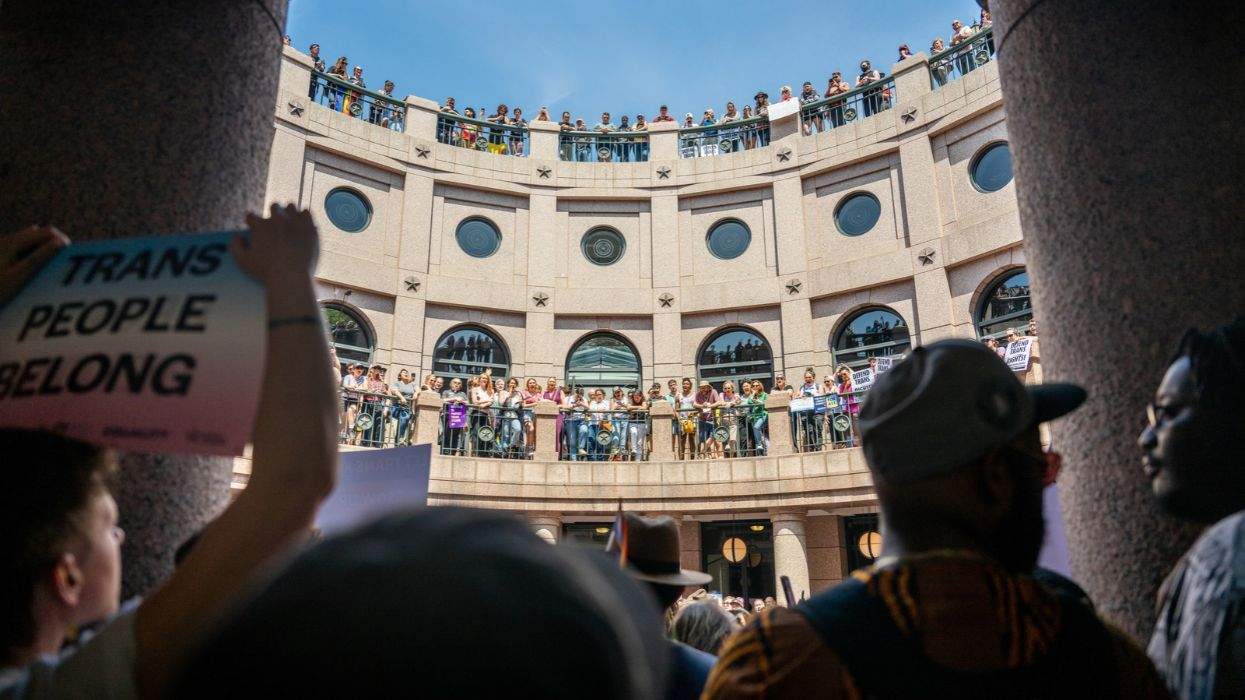
Human rights leaders said the administration’s authoritarian trajectory has extended well beyond immigration enforcement to include the early and deliberate targeting of transgender people, an approach they described as both symbolic and strategic.
Jessica Stern, co-founder and co-president of the Alliance for Diplomacy and Justice, said attacks on transgender people have not been incidental but central to the administration’s political strategy from the outset. Stern previously served as the Special Envoy to Advance the Human Rights of LGBTQI+ Persons under President Joe Biden.
Related: LGBTQ+ groups tell ICE to 'leave Minnesota' after killing Renee Nicole Good
Related: Distraught woman says ICE killed her wife in video after deadly Minneapolis shooting
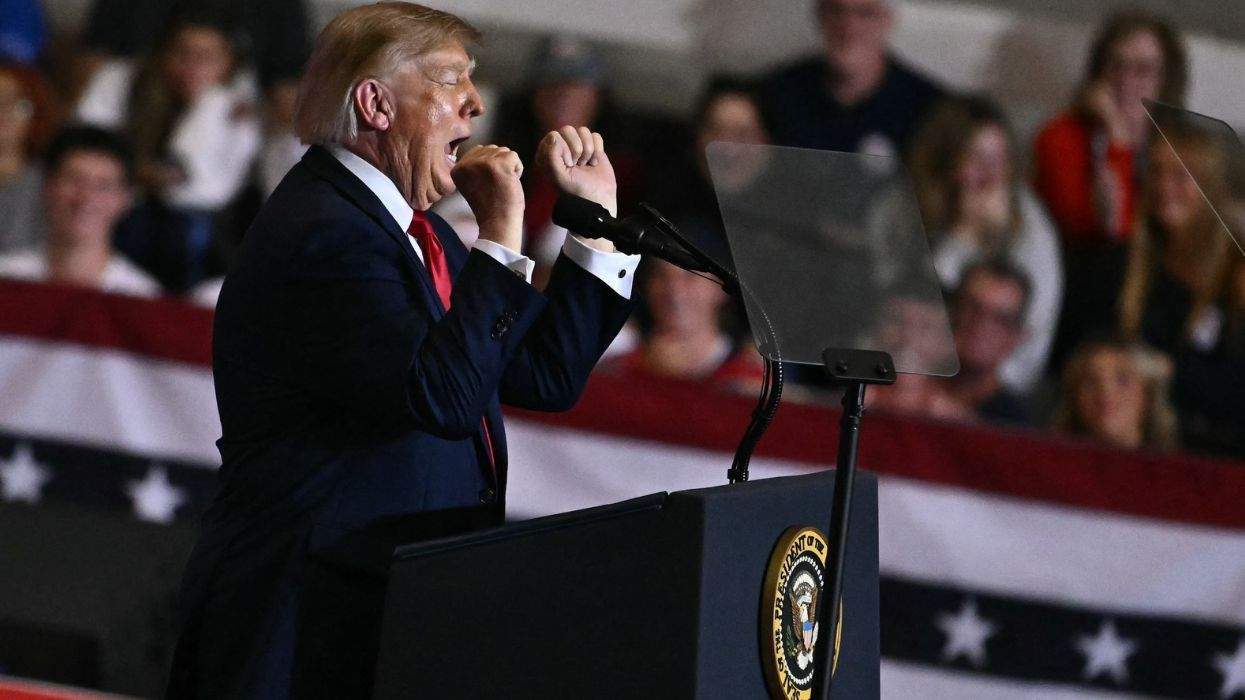
“The weaponization of trans people’s lives has been baked into the very fabric of his political identity,” Stern said, pointing to Trump’s campaign spending aimed at stoking fear around transgender rights and his decision to sign an executive order targeting what his administration calls “gender ideology” on his first day back in office.
Trump issued an executive order on his first day back in office establishing that the U.S. government does not recognize transgender or nonbinary identities, and instead recognizes people only by their sex assigned at birth.
Stern said that timing mattered. In authoritarian systems, governments often begin by singling out a small, stigmatized population to test public tolerance for rights rollbacks and to normalize the idea that certain people can be excluded from legal and social protections.
By focusing so heavily on transgender people, particularly trans youth, service members, and those seeking medical care, the administration sent what Stern described as a broader signal: that communities already vulnerable to discrimination could be treated as political adversaries rather than rights-bearing individuals, even as institutions designed to protect civil rights are weakened or dismantled.
Amnesty: U.S. mirrors global patterns of democratic backsliding
Amanda Klasing, an Amnesty International USA official who moderated the briefing, said the scope and speed of the administration’s actions set Trump’s second term apart.
“We can say categorically that President Trump’s second term has been a human rights disaster at home and abroad,” Klasing said, citing executive actions that have shrunk civic space and undermined legal safeguards.
Related: Andry Hernández Romero explains how he survived CECOT after the U.S. government disappeared him
Related: CECOT survivor Andry Hernández Romero, gay Venezuelan makeup artist, and his lawyer named to Out100
Amnesty’s report documents attacks on press freedom, punishment of protest and dissent, intimidation of journalists and lawyers, coercion of universities and civil society, erosion of due process, and the increasing militarization of domestic law enforcement.
The organization warned that the United States now fits a familiar global pattern: governments consolidate power, discredit critics, punish protests, and weaken courts and oversight bodies until accountability becomes difficult to restore.
Immigration enforcement and civil liberties under strain
Immigration enforcement has emerged as a central proving ground for the tactics Amnesty warns are reshaping U.S. civil liberties.
At the press conference, Nicole Widdersheim, deputy Washington director at Human Rights Watch, described the expansion of third-country deportations and aggressive enforcement actions as among the administration’s most severe abuses.
“In 2025, the United States is conducting enforced disappearances,” Widdersheim said, citing the transfer of migrants to detention facilities abroad despite documented risks of torture.
Andry Hernandez Romero, a gay Venezuelan asylum seeker who worked as a makeup artist and hair stylist, was sent along with more than 200 other men to CECOT, a torture prison in El Salvador, because the Trump administration declared him to be a member of a gang. Romero has no criminal record and denies being part of any gang. He was eventually freed from confinement and described physical and sexual abuse in an interview with The Advocate last fall.
Related: Andry Hernández Romero on surviving CECOT: 'They told us we would die there'
Related: Inside the movement that freed gay makeup artist Andry Hernández Romero from a hellhole
Uzra Zeya, president and CEO of Human Rights First, said the immigration crackdown has driven record detention levels and deaths in custody while spilling into broader assaults on constitutional protections.
“The authoritarian playbook that I spent decades fighting overseas has come home to our shores,” Zeya said.
Good’s killing has intensified scrutiny of those tactics. She was fatally shot by ICE agent Jonathan Ross during a federal enforcement operation in Minneapolis. Federal officials described the shooting as self-defense, while witnesses, family members, and civil rights advocates have disputed that account and called for greater transparency and accountability. Video of the shooting, from several angles, calls into question the government’s assertions that Good targeted the agent. Protests following her death have linked the incident to concerns about the militarization of immigration enforcement and its spillover into routine civilian life.
“We have seen where this road leads when dissent is punished, oversight is dismantled, and people can be disappeared or expelled beyond the reach of the law,” Amnesty wrote in its report. “But we also know something else: the slide is not inevitable. There is still time to stop it.”