'%3E%3Cpath d='M16.3574 35.6519H12.9537L15.0491 18.8873L16.3574 35.6519ZM30.4229 54.0093L22.309 0.994385H7.91795L0 54.0093H10.6634L11.5802 46.3855H17.4014L17.9914 54.0093H30.4229Z' fill='%23971B20'/%3E%3Cpath d='M48.2073 41.8813C48.2073 43.4049 47.4892 44.0011 46.1144 44.0011H43.7595V11.0687H46.1144C47.4892 11.0687 48.2073 11.6636 48.2073 13.1885V41.8813ZM59.5273 43.6695V11.3326C59.5273 3.71323 53.5729 0.994385 47.8157 0.994385H31.7213V54.0093H47.8157C53.5729 54.0093 59.5273 51.29 59.5273 43.6695Z' fill='%23971B20'/%3E%3Cpath d='M90.183 0.994385H78.6039L75.0711 30.6157L71.9955 0.994385H59.4346L69.2474 54.0093H80.373L90.183 0.994385Z' fill='%23971B20'/%3E%3Cpath d='M107.063 42.3448C107.063 43.7359 105.951 44.5974 104.643 44.5974C103.269 44.5974 102.157 43.7359 102.157 42.3448V12.658C102.157 11.2676 103.269 10.4058 104.643 10.4058C105.951 10.4058 107.063 11.2676 107.063 12.658V42.3448ZM119.233 43.2723V11.7312C119.233 6.36384 112.952 -3.8147e-06 104.643 -3.8147e-06C96.2667 -3.8147e-06 89.9867 6.36384 89.9867 11.7312V43.2723C89.9867 48.6393 96.2667 55 104.643 55C112.952 55 119.233 48.6393 119.233 43.2723Z' fill='%23971B20'/%3E%3Cpath d='M150.976 43.9349V33.7309H139.069V42.3448C139.069 43.7359 137.957 44.5974 136.582 44.5974C135.076 44.5974 133.964 43.7359 133.964 42.3448V12.658C133.964 11.2676 135.076 10.4058 136.582 10.4058C137.957 10.4058 139.069 11.2676 139.069 12.658V21.2723H150.976V11.0687C150.976 5.70107 145.283 -3.8147e-06 136.582 -3.8147e-06C127.75 -3.8147e-06 121.796 5.70107 121.796 11.0687V43.9349C121.796 49.3022 127.75 55 136.582 55C145.283 55 150.976 49.3022 150.976 43.9349Z' fill='%23971B20'/%3E%3Cpath d='M167.478 35.6519H164.076L166.17 18.8873L167.478 35.6519ZM181.544 54.0093L173.432 0.994385H159.037L151.123 54.0093H161.785L162.704 46.3855H168.523L169.114 54.0093H181.544Z' fill='%23971B20'/%3E%3Cpath d='M205.412 10.4058V0.994385H177.081V10.4058H185.392V54.0093H197.428V10.4058H205.412Z' fill='%23971B20'/%3E%3Cpath d='M230.002 54.0093V43.9349H218.914V31.8746H226.635V21.8028H218.914V10.4058H230.002V0.994385H206.875V54.0093H230.002Z' fill='%23971B20'/%3E%3C/g%3E%3Cdefs%3E%3CclipPath id='clip0_260_7080'%3E%3Crect width='230' height='55' fill='white'/%3E%3C/clipPath%3E%3C/defs%3E%3C/svg%3E)
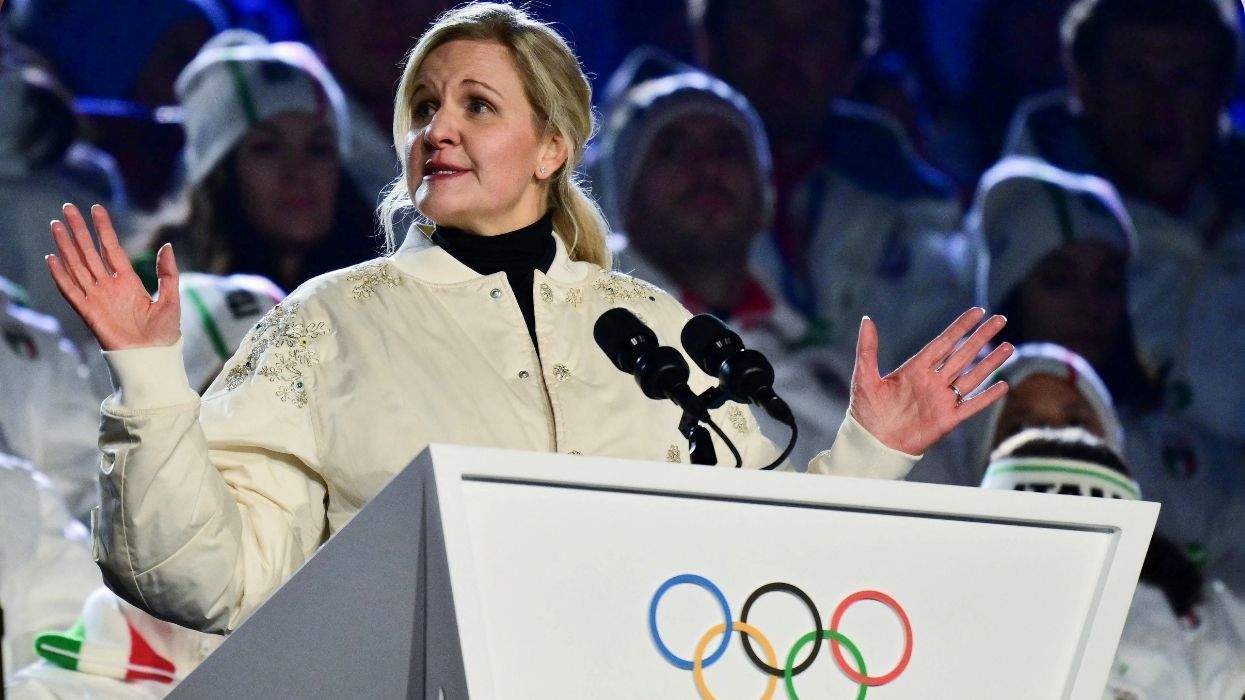

The International Olympic Committee has approved a new policy restricting participation in women’s events to athletes deemed “biological females,” a decision set to take effect at the 2028 Summer Olympics in Los Angeles and expected to exclude transgender women while expanding scrutiny of athletes’ bodies.
Keep up with the latest in LGBTQ+ news and politics. Sign up for The Advocate's email newsletter.
“Eligibility for any female category event at the Olympic Games or any other IOC event, including individual and team sports, is now limited to biological females,” the IOC said in announcing the rule.
The policy establishes a new eligibility standard based on a one-time genetic screening for the SRY gene, which is typically associated with male sex development. Athletes who test negative would be cleared to compete in women’s events, while those who test positive would be barred, with limited exceptions for some athletes with specific intersex variations.
“Athletes who screen negative for the SRY gene permanently satisfy this policy’s eligibility criteria for competition in the female category,” an announcement from the IOC reads. “Unless there is reason to believe that a negative reading is in error, this will be a once-in-a-lifetime test.”
Related: NBC apologizes for misgendering trailblazing trans Olympian Elis Lundholm
Related: Trump moves to ban international transgender athletes from 2028 Olympic Games
The move follows mounting political pressure in the United States as Los Angeles prepares to host the 2028 Games. President Donald Trump said earlier this year that transgender athletes could be denied visas to enter the country for competition and signed an executive order aimed at barring transgender women from participating in women’s sports domestically.
Advocacy groups quickly condemned the decision, warning that the policy extends beyond transgender athletes and could subject all women competitors to invasive scrutiny.
interACT, which advocates for intersex youth, said the policy “discriminates against transgender and intersex athletes through mandated sex testing that invades the privacy and dignity of all women athletes.” The group added that while the IOC carved out narrow exceptions for some intersex athletes with specific variations, many others would still be excluded.
“This is a devastating day for women athletes, who deserve to play the sport they love free from invasive sex testing, discrimination, and public scrutiny,” said Erika Lorshbough. They added that requiring athletes to undergo genetic screening forces women to surrender “personal medical and genetic information” to prove they are “woman enough” to compete. “Any policy that intends to discriminate against transgender athletes also harms intersex women, especially those with chromosomal and hormonal variations.”
Related: Trump bans trans women athletes from 'extraordinary ability’ visas
Related: No, trans women don't have inherent advantage over cis women in sports: new study
The IOC has not previously imposed an outright ban on transgender athletes across all sports, instead allowing international federations to set their own eligibility rules. In recent years, several sports, including track and field, cycling, and swimming, have adopted restrictions barring transgender women who experienced male puberty from competing in women’s categories.
At the Tokyo Olympics in 2021, weightlifter Laurel Hubbard became the first out transgender woman to compete at the Games, a milestone that drew global attention and debate.
The new policy could also intensify scrutiny of cisgender women athletes. During the 2024 Olympics, Algerian boxing gold medalist Imane Khelif faced widespread speculation about her gender, fueled in part by a disputed decision from the International Boxing Association to disqualify her from a prior competition based on undisclosed testing. The governing body did not publicly release the results, and critics said the episode illustrated how sex verification policies can be used to police women’s bodies more broadly.
Under the IOC’s new framework, athletes would generally undergo the SRY screening once, with results considered permanent unless there is reason to believe an error occurred. The policy includes limited exceptions for some athletes with differences of sex development, including those with Complete Androgen Insensitivity Syndrome, but maintains that competitors who test positive for the SRY gene are not eligible for women’s events.
The rule is not retroactive and will not affect medals or records from previous Olympic Games.