'%3E%3Cpath d='M16.3574 35.6519H12.9537L15.0491 18.8873L16.3574 35.6519ZM30.4229 54.0093L22.309 0.994385H7.91795L0 54.0093H10.6634L11.5802 46.3855H17.4014L17.9914 54.0093H30.4229Z' fill='%23971B20'/%3E%3Cpath d='M48.2073 41.8813C48.2073 43.4049 47.4892 44.0011 46.1144 44.0011H43.7595V11.0687H46.1144C47.4892 11.0687 48.2073 11.6636 48.2073 13.1885V41.8813ZM59.5273 43.6695V11.3326C59.5273 3.71323 53.5729 0.994385 47.8157 0.994385H31.7213V54.0093H47.8157C53.5729 54.0093 59.5273 51.29 59.5273 43.6695Z' fill='%23971B20'/%3E%3Cpath d='M90.183 0.994385H78.6039L75.0711 30.6157L71.9955 0.994385H59.4346L69.2474 54.0093H80.373L90.183 0.994385Z' fill='%23971B20'/%3E%3Cpath d='M107.063 42.3448C107.063 43.7359 105.951 44.5974 104.643 44.5974C103.269 44.5974 102.157 43.7359 102.157 42.3448V12.658C102.157 11.2676 103.269 10.4058 104.643 10.4058C105.951 10.4058 107.063 11.2676 107.063 12.658V42.3448ZM119.233 43.2723V11.7312C119.233 6.36384 112.952 -3.8147e-06 104.643 -3.8147e-06C96.2667 -3.8147e-06 89.9867 6.36384 89.9867 11.7312V43.2723C89.9867 48.6393 96.2667 55 104.643 55C112.952 55 119.233 48.6393 119.233 43.2723Z' fill='%23971B20'/%3E%3Cpath d='M150.976 43.9349V33.7309H139.069V42.3448C139.069 43.7359 137.957 44.5974 136.582 44.5974C135.076 44.5974 133.964 43.7359 133.964 42.3448V12.658C133.964 11.2676 135.076 10.4058 136.582 10.4058C137.957 10.4058 139.069 11.2676 139.069 12.658V21.2723H150.976V11.0687C150.976 5.70107 145.283 -3.8147e-06 136.582 -3.8147e-06C127.75 -3.8147e-06 121.796 5.70107 121.796 11.0687V43.9349C121.796 49.3022 127.75 55 136.582 55C145.283 55 150.976 49.3022 150.976 43.9349Z' fill='%23971B20'/%3E%3Cpath d='M167.478 35.6519H164.076L166.17 18.8873L167.478 35.6519ZM181.544 54.0093L173.432 0.994385H159.037L151.123 54.0093H161.785L162.704 46.3855H168.523L169.114 54.0093H181.544Z' fill='%23971B20'/%3E%3Cpath d='M205.412 10.4058V0.994385H177.081V10.4058H185.392V54.0093H197.428V10.4058H205.412Z' fill='%23971B20'/%3E%3Cpath d='M230.002 54.0093V43.9349H218.914V31.8746H226.635V21.8028H218.914V10.4058H230.002V0.994385H206.875V54.0093H230.002Z' fill='%23971B20'/%3E%3C/g%3E%3Cdefs%3E%3CclipPath id='clip0_260_7080'%3E%3Crect width='230' height='55' fill='white'/%3E%3C/clipPath%3E%3C/defs%3E%3C/svg%3E)
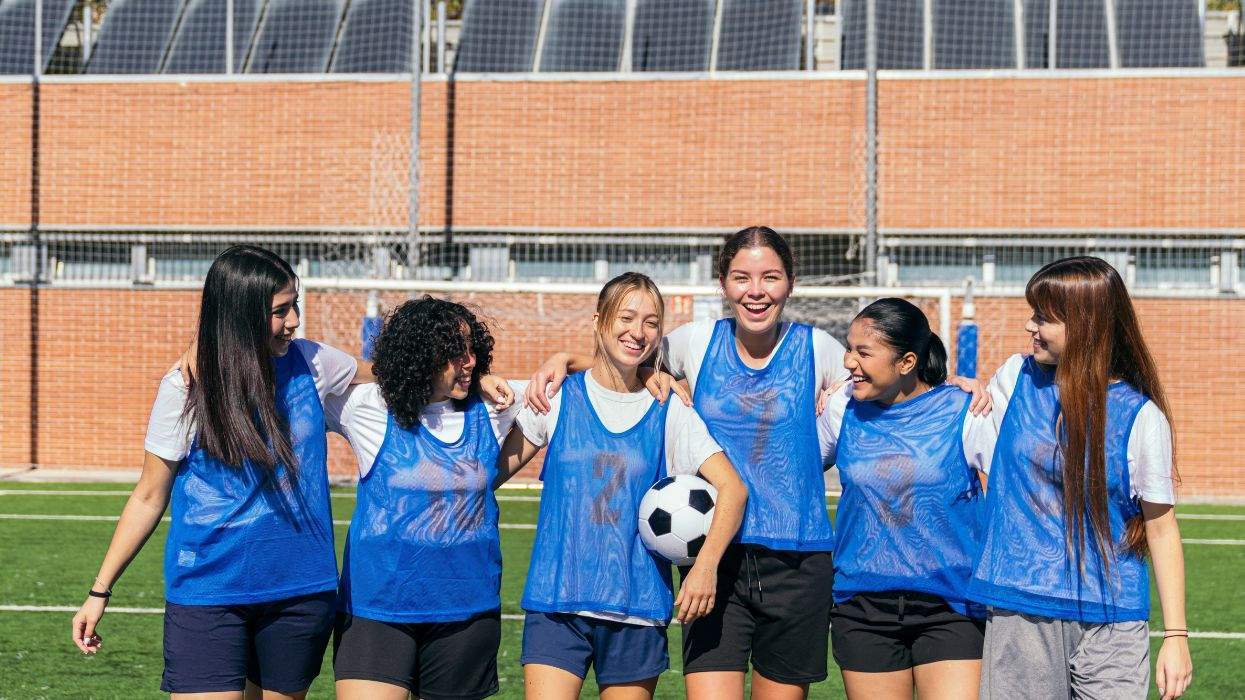

Transgender women athletes do not have an inherent advantage over cisgender competitors, according to a new study.
That’s what advocates of trans inclusion have been saying for years, while anti-trans forces have been saying the opposite. Now a report in the British Journal of Sports Medicine, which its authors call “the most comprehensive synthesis to date,” counters the idea of inherent advantage.
The authors, all based at academic and medical institutions in Brazil, looked at 52 studies with 6,485 participants, including 2,943 trans women, 2,309 trans men, 568 cis women, and 665 cis men, ranging in age from 14 to 41. Forty-five of the studies focused on adults, seven on adolescents. Since the authors were reviewing existing studies and not doing new research, their report is what’s known as a meta-analysis.
While current evidence is low and varies in quality, it “does not support theories of inherent athletic advantages for transgender women over cisgender,” the authors wrote.
“Empirical evidence challenges initial concerns that transgender women would dominate women’s sports, largely due to the physiological effects of testosterone suppression therapy,” they noted. “In fact, transgender women remain under-represented in elite athletics, highlighting the lack of dominance by transgender athletes in practice.”
Related: What does the science say about transgender women in sports?
Trans women had higher absolute lean body mass than cis women, the authors found, but there were “no significant differences in physical fitness metrics,” such as upper-body strength, lower-body strength, and maximum oxygen consumption after the trans women underwent one to three years of gender-affirming hormone therapy. Because of differences in the studies, the researchers could not establish “direct correlations between muscle mass and functional strength.”
“in fact, the absence of strength disparities between transgender women and cisgender women found in the current review was consistent and contradicts narratives framing male puberty as conferring irreversible athletic advantages despite [gender-affirming hormone therapy],” they remarked.
They emphasized the need for more research. “Few studies controlled for training history, diet, baseline fitness, physical activity and body composition or previous hormone therapy, potentially hindering the isolated effects of [gender-affirming hormone therapy], since high-dose oestrogen may alter both fat and muscle mass estimates,” they wrote.
Also, studies have focused on “physiological outcomes, with little consideration of the social, psychological and cultural factors that also shape sport performance (eg, stigmatisation, discrimination, access to opportunities, self-concept, self-esteem),” the authors pointed out. Trans people face stigma and discrimination, often leading to negative mental health effects, but “the impact of these sociocultural factors on athletic engagement and achievement remains insufficiently addressed in the available studies and, consequently, in this review,” they continued.
“Finally, there is very little literature involving transgender athletes of any age, across all sport settings and at any competitive level,” they wrote. Therefore, future studies must prioritise transgender athletes, assess sport-specific performance metrics and evaluate long-term (eg, >5 years) physiological and psychological changes, controlling for puberty suppression whenever possible.”
But, they added, “the current data do not justify blanket bans.” Just the same, 27 states have laws barring trans girls and women from competing under their gender identity, and two have regulations to this effect. Donald Trump has threatened to withhold federal funding from schools and states with trans-inclusive policies, and some, like the University of Pennsylvania, have given in to his demands. The U.S. Supreme Court recently heard arguments challenging trans bans in Idaho and West Virginia, and the conservative majority appeared likely to uphold those bans. The U.S. Olympic Committee has barred trans women from competing in women's sports.
Related: The trans athletes at the center of Supreme Court cases don’t fit conservative stereotypes
Related: 7 takeaways from Supreme Court arguments about bans on trans women and girls in sports
However, the study “refutes the logic behind blanket bans on transgender women in sports,” coauthor Bruno Gualano, a physician and researcher at the University of São Paulo in Brazil, told Spanish newspaper El País. “Most of these policies are based on the assumption that transgender women retain inherent physical advantages and would therefore dominate women’s competitions. The data does not support this idea.”
“Good scientific evidence doesn’t dictate values, but it could guide how we apply them,” Gualano he added. “That’s the role this article aims to play. … We believe the debate should be guided by values fundamental to sport itself, such as fairness, inclusion, and human dignity, rather than sweeping bans.”