'%3E%3Cpath d='M16.3574 35.6519H12.9537L15.0491 18.8873L16.3574 35.6519ZM30.4229 54.0093L22.309 0.994385H7.91795L0 54.0093H10.6634L11.5802 46.3855H17.4014L17.9914 54.0093H30.4229Z' fill='%23971B20'/%3E%3Cpath d='M48.2073 41.8813C48.2073 43.4049 47.4892 44.0011 46.1144 44.0011H43.7595V11.0687H46.1144C47.4892 11.0687 48.2073 11.6636 48.2073 13.1885V41.8813ZM59.5273 43.6695V11.3326C59.5273 3.71323 53.5729 0.994385 47.8157 0.994385H31.7213V54.0093H47.8157C53.5729 54.0093 59.5273 51.29 59.5273 43.6695Z' fill='%23971B20'/%3E%3Cpath d='M90.183 0.994385H78.6039L75.0711 30.6157L71.9955 0.994385H59.4346L69.2474 54.0093H80.373L90.183 0.994385Z' fill='%23971B20'/%3E%3Cpath d='M107.063 42.3448C107.063 43.7359 105.951 44.5974 104.643 44.5974C103.269 44.5974 102.157 43.7359 102.157 42.3448V12.658C102.157 11.2676 103.269 10.4058 104.643 10.4058C105.951 10.4058 107.063 11.2676 107.063 12.658V42.3448ZM119.233 43.2723V11.7312C119.233 6.36384 112.952 -3.8147e-06 104.643 -3.8147e-06C96.2667 -3.8147e-06 89.9867 6.36384 89.9867 11.7312V43.2723C89.9867 48.6393 96.2667 55 104.643 55C112.952 55 119.233 48.6393 119.233 43.2723Z' fill='%23971B20'/%3E%3Cpath d='M150.976 43.9349V33.7309H139.069V42.3448C139.069 43.7359 137.957 44.5974 136.582 44.5974C135.076 44.5974 133.964 43.7359 133.964 42.3448V12.658C133.964 11.2676 135.076 10.4058 136.582 10.4058C137.957 10.4058 139.069 11.2676 139.069 12.658V21.2723H150.976V11.0687C150.976 5.70107 145.283 -3.8147e-06 136.582 -3.8147e-06C127.75 -3.8147e-06 121.796 5.70107 121.796 11.0687V43.9349C121.796 49.3022 127.75 55 136.582 55C145.283 55 150.976 49.3022 150.976 43.9349Z' fill='%23971B20'/%3E%3Cpath d='M167.478 35.6519H164.076L166.17 18.8873L167.478 35.6519ZM181.544 54.0093L173.432 0.994385H159.037L151.123 54.0093H161.785L162.704 46.3855H168.523L169.114 54.0093H181.544Z' fill='%23971B20'/%3E%3Cpath d='M205.412 10.4058V0.994385H177.081V10.4058H185.392V54.0093H197.428V10.4058H205.412Z' fill='%23971B20'/%3E%3Cpath d='M230.002 54.0093V43.9349H218.914V31.8746H226.635V21.8028H218.914V10.4058H230.002V0.994385H206.875V54.0093H230.002Z' fill='%23971B20'/%3E%3C/g%3E%3Cdefs%3E%3CclipPath id='clip0_260_7080'%3E%3Crect width='230' height='55' fill='white'/%3E%3C/clipPath%3E%3C/defs%3E%3C/svg%3E)
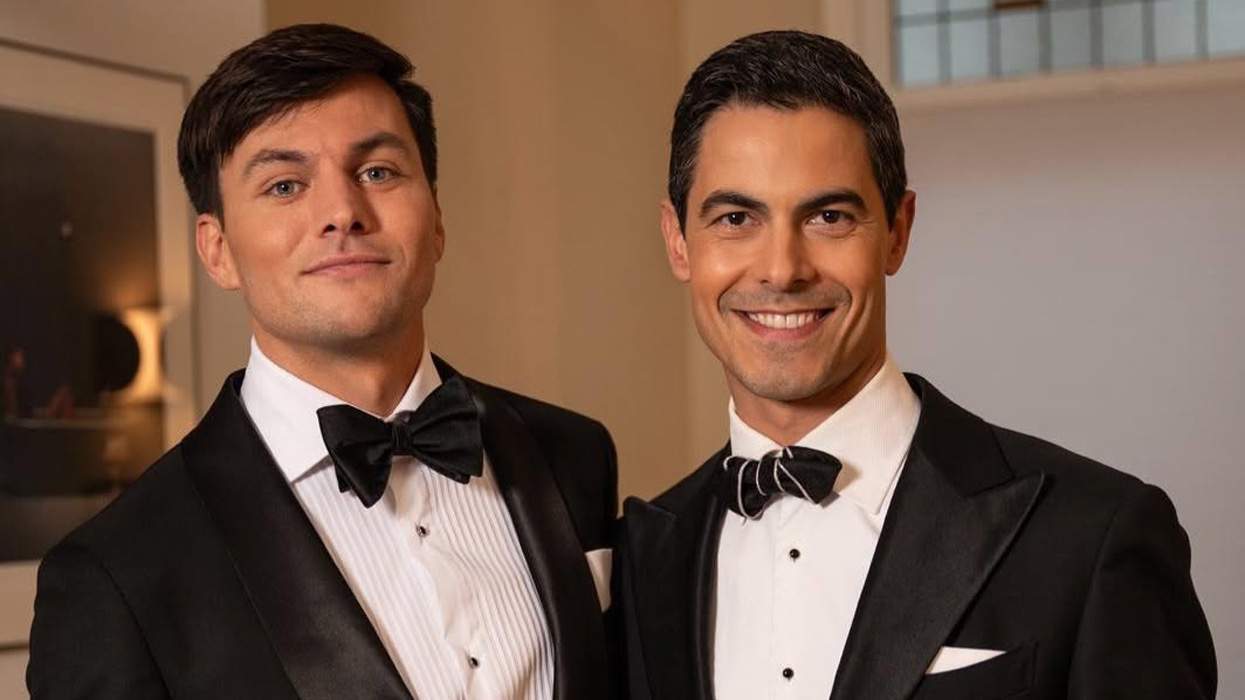
The first thing you notice about First Lieutenant Brian Femminella is that he looks exactly like the kind of soldier the Army has long celebrated. Square jaw. Close-cropped hair. Solid, muscular physique. The posture of someone accustomed to carrying weight over long distances and standing motionless during inspection. In photographs from the 82nd Airborne Division, the patch sits cleanly on his shoulder, and the silver wings on his chest mark him as a paratrooper, someone who has stepped out of military aircraft into open sky.
Femminella is also gay.
Keep up with the latest in LGBTQ+ news and politics. Sign up for The Advocate's email newsletter.
In another era, Femminella’s sexuality alone might have ended his career. But Femminella, 26, an Army intelligence officer who has been in uniform since 2017 and previously led soldiers in the 82nd Airborne Division, came of age after the repeal of “don’t ask, don’t tell,” during a period when many believed the question of whether LGBTQ+ Americans could serve had been settled.
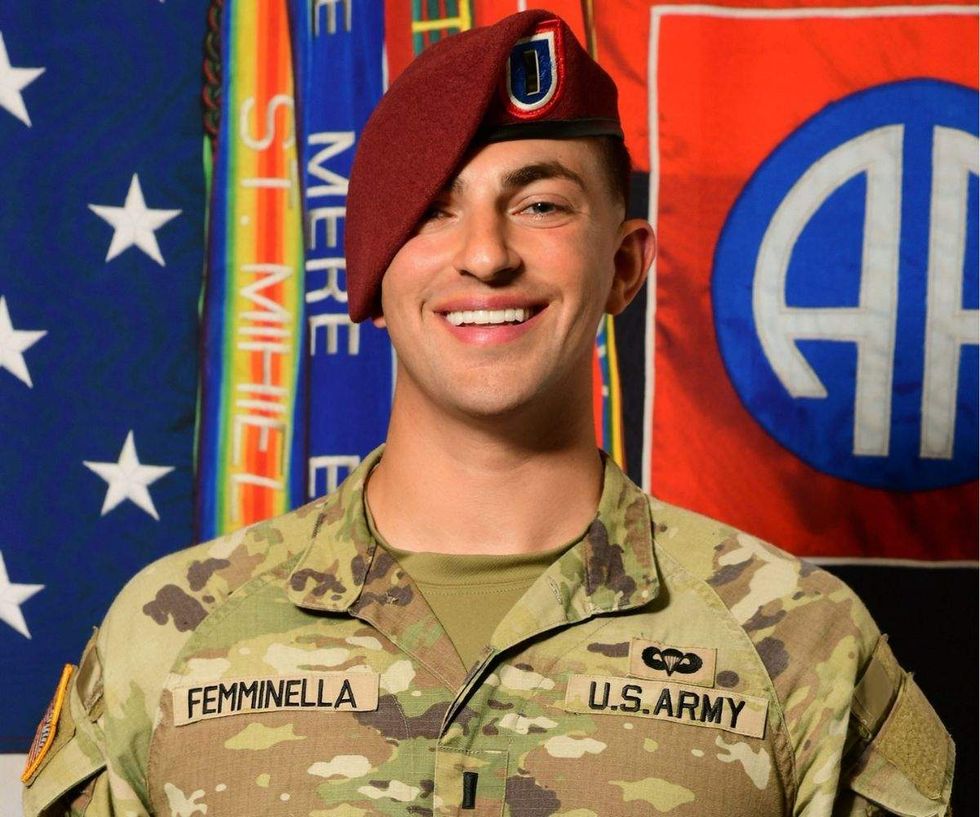 Brian FemminellaBrian Femminella
Related: D.C. federal judge signals urgency as trans service members push for Trump military ban trial
Related: Why is the Army recommending training for this transgender officer that the Pentagon plans to oust?
Today, he is stationed at Fort Bragg in North Carolina, renamed to Fort Liberty from 2023 to 2025, before President Donald Trump brought back the names of Confederate figures after whom the posts had been named, one of the largest military installations in the world.
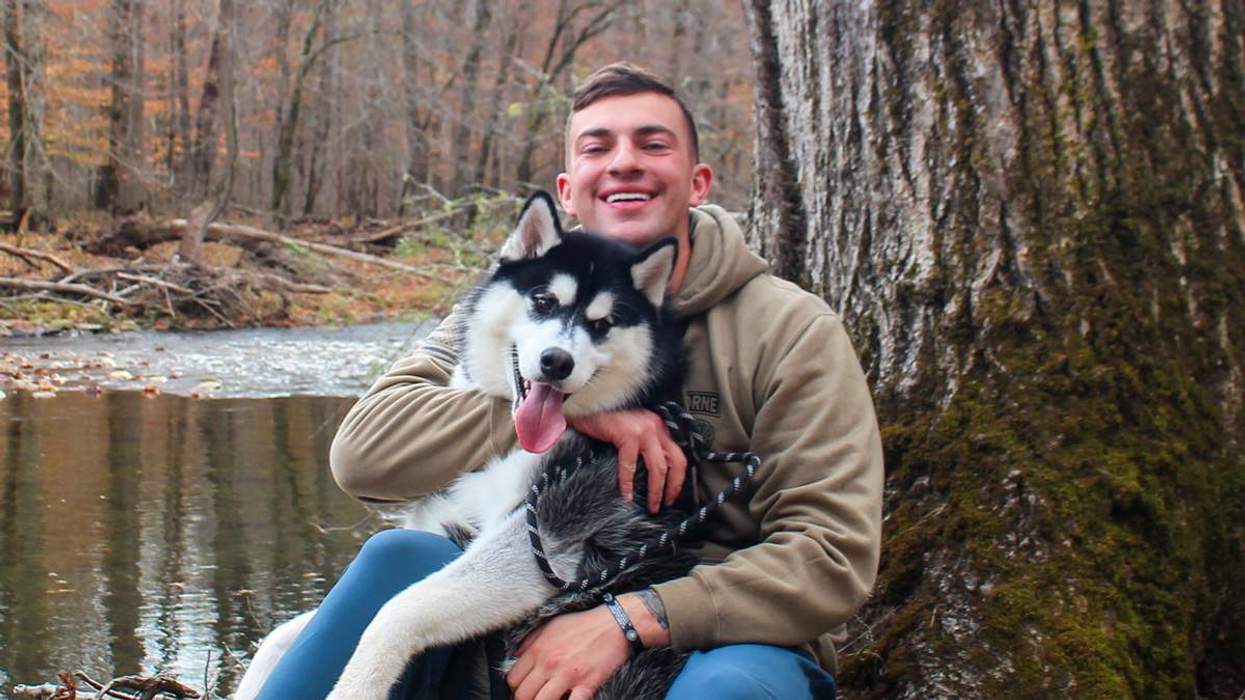
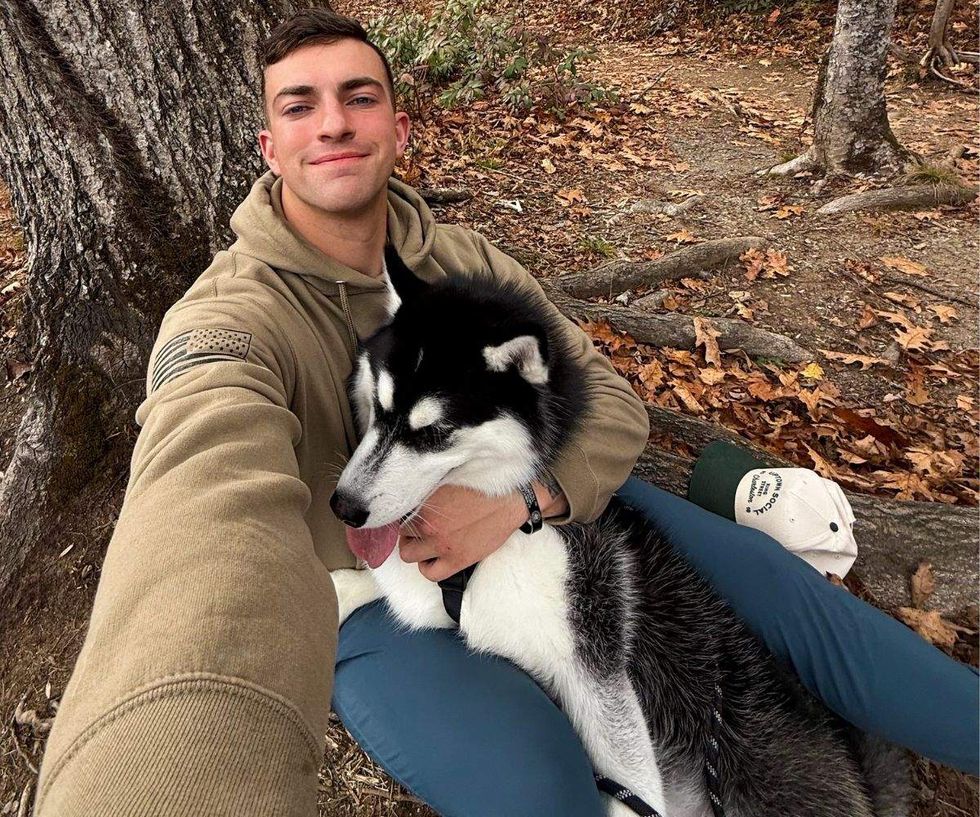 Brian Femminella with 1-year-old Toshi, his husky.Brian Femminella
The sprawling base, home to more than 52,000 service members, serves as headquarters for the Army’s airborne forces and functions as a city unto itself within the military. There, Femminella shares his life with a young husky named Toshi, a one-year-old whirlwind of energy whose occasional interruptions during interviews are a reminder that even airborne officers return home to ordinary lives.
Now, he is less certain about the future he once assumed he would have there.
Across Washington, the U.S. military has become a front line in a widening cultural fight led inside the Pentagon by Defense Secretary Pete Hegseth, a former Fox News host who has made dismantling what he calls “woke ideology” a defining goal of his tenure.
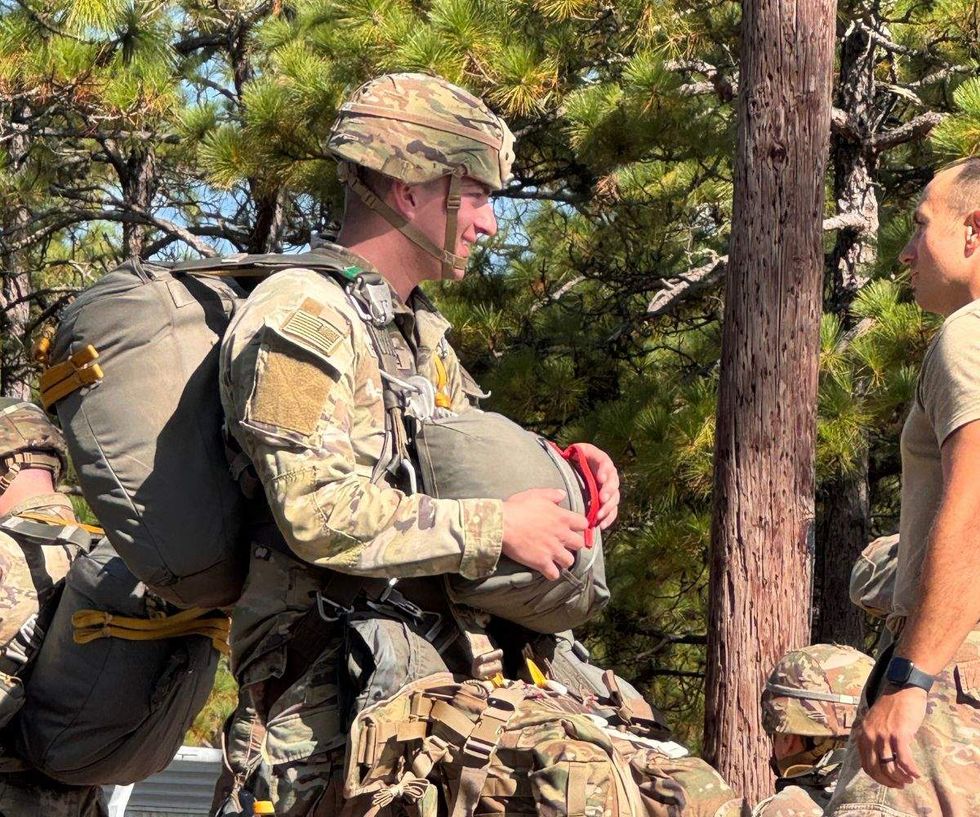 Brian Femminella preparing for paratrooper training.Brian Femminella
Hegseth has vowed to purge diversity, equity, and inclusion initiatives from the armed forces and has repeatedly argued that the military’s long-standing phrase “our diversity is our strength” reflects a misguided political agenda rather than battlefield readiness. In a Virginia speech last October, delivered to all U.S. armed forces leaders at Quantico and later ordered shown across the entire military, he denounced diversity programs and promised a return to what he called a singular focus on warfighting.
For many LGBTQ+ service members, the message landed as a warning.
For Femminella, the rhetoric feels oddly disconnected from the life he actually knows in uniform.
“I think a lot of times people think that queer people and LGBTQ+ service members serve in opposition to the institution,” he said. “But we serve in devotion to it.” It is the sentence he says he would most want to deliver directly to Hegseth, if the defense secretary ever sat across from him.
“Sir,” Femminella said, imagining the moment, “we don’t serve in opposition to you. We serve the institution that you lead, and we do it with devotion, pride, and humility.”
Related: Meet the transgender Army lieutenant who is challenging Donald Trump's military ban
What troubles him most, he said, is watching what has happened to transgender service members, people he considers friends and colleagues, as policies and political rhetoric have shifted. “We’ve seen a lot of our trans friends and our other friends just completely get their service eviscerated,” he said, describing the wave of restrictions and uncertainty that has followed Trump’s second ban on trans people’s military service ordered shortly after he took office in January 2025.
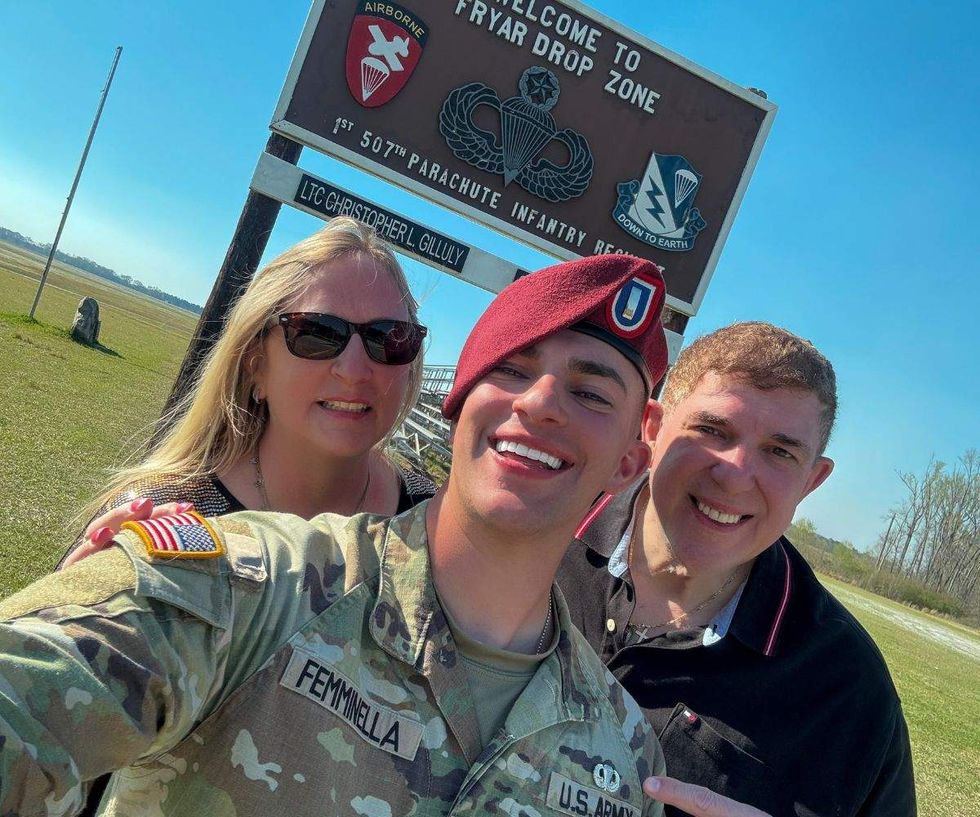 Brian Femminella with loved ones as he trains for his military career.Brian Femminella
For Femminella, the issue is not ideological but personal: many of the troops affected are people he has trained with, deployed alongside, or watched build careers in the same units. They joined, he said, for the same reason he did, to serve the country and the institution of the military itself.
A soldier who stayed visible
Femminella’s experience does not resemble the caricature sometimes invoked in political debates about diversity in the military.
He nearly maxed the Army’s physical fitness test, missing a perfect score by just 20 points, he said. He attended the University of Southern California and later pursued graduate studies at the London School of Economics. He commanded soldiers early in his career and was awarded the Meritorious Service Medal for his work.
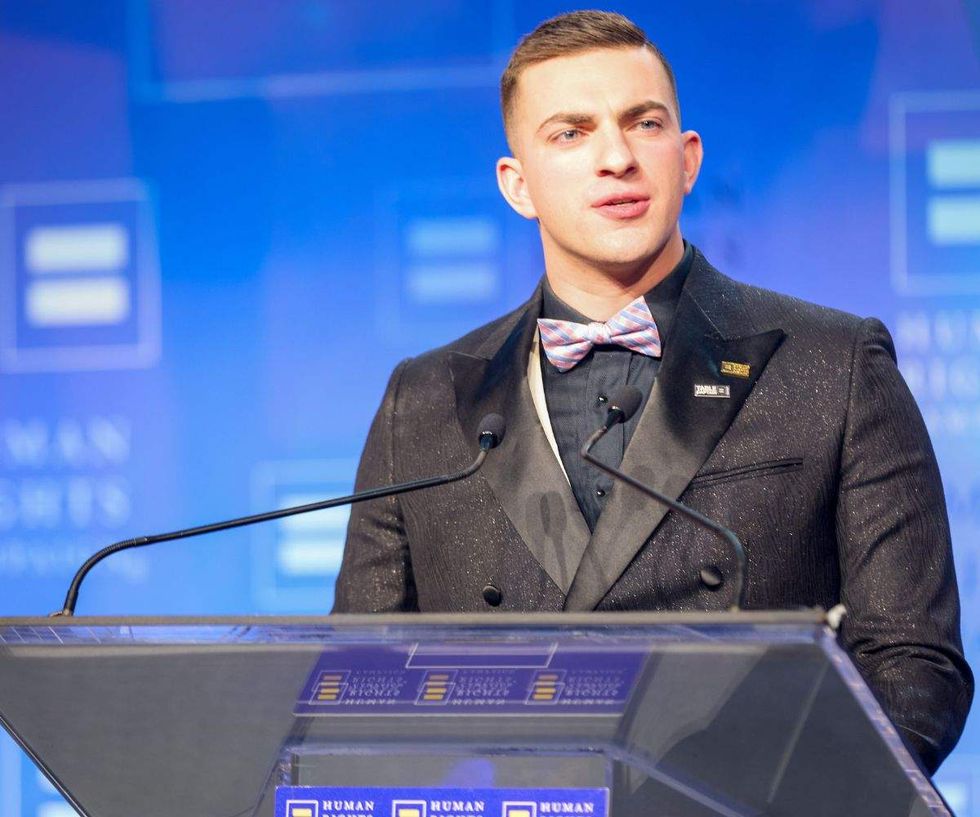 Brian Femminella speaks at a Human Rights Campaign event.Courtesy Brian Femminella
He is expected to be promoted to captain this year. Yet the quality that makes him unusual inside today’s military is not his résumé.
It is that he has chosen to remain visible.
Femminella serves on the Human Rights Campaign’s Board of Governors and frequently speaks publicly about LGBTQ+ service members. He has written a children’s book about queer identity and maintains social media accounts where younger troops sometimes reach out privately for advice.
Related: Democrats push for commission investigating anti-LGBTQ+ military policies
Visibility, he knows, carries risk.
“Yes, I’m nervous. Yes, I get anxiety,” he said. “My family worries all the time.” But silence, he believes, carries a cost of its own. “The number of people I used to know who were openly queer senior leaders in the military,” he said. “They’re not on social media anymore. They’re terrified.”
Merit as armor
For many LGBTQ+ troops, Femminella said, there is an unwritten rule: be exceptional.
“If you are not the best, then they’re going to say it’s because you’re gay,” he said. “But if you are the best, it’s because of your merit.” That pressure can produce a particular kind of soldier.
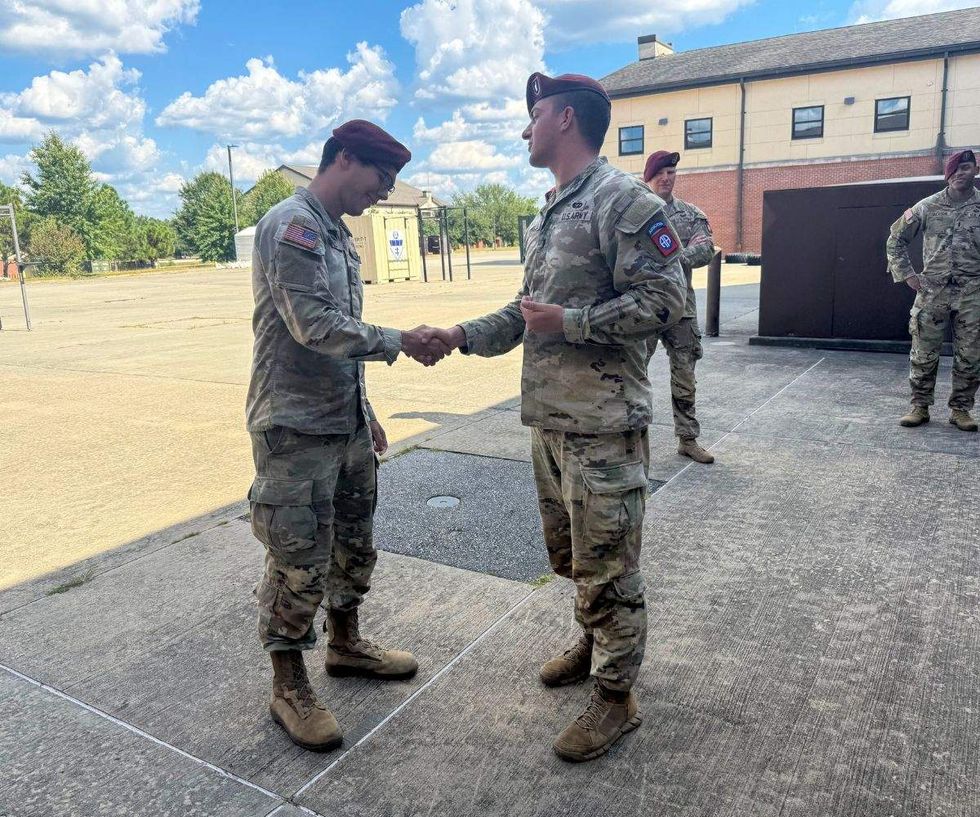 Brian FemminellaBrian Femminella
“I haven’t really met a gay soldier who’s not motivated,” he said. But he does not want to be known primarily as a gay officer. “I want people to know that I was held for my service and my merit,” he said. But representation matters in quieter ways.
During his time in command, he said junior troops occasionally approached him to say that seeing an out leader had changed how they imagined their own futures in the military. “People have reenlisted because of that,” he said. “People have chosen to stay in the military because they see people like me.”
Femminella’s career has also taken him beyond the United States. Earlier in his service, he worked at NATO headquarters in Europe, where he was involved in counterintelligence and multinational coordination among allied militaries. The experience, he said, gave him a broader perspective on how American military policy reverberates beyond U.S. borders.
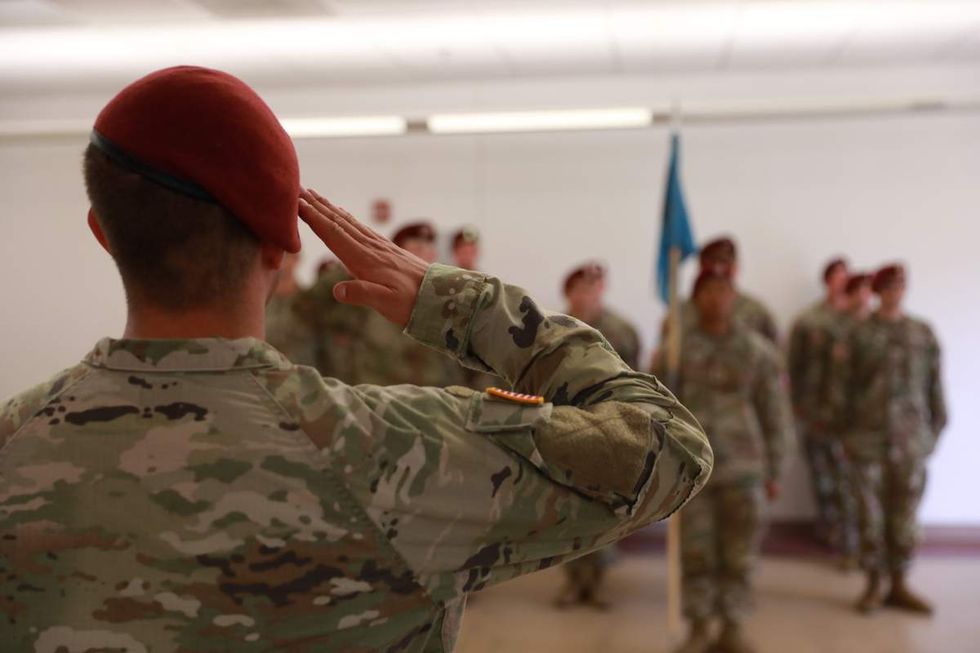 Lt. Brian Femminella salutes a group of soldiersBrian Femminella
Working alongside officers from allied countries, he saw both the tensions and the solidarity that shape the alliance. European partners, he said, closely watch the political debates unfolding in Washington, including those around LGBTQ+ service members. For Femminella, the experience reinforced how the American armed forces function not just as a national institution but as a cornerstone of a broader democratic alliance.
The bracelet on his wrist
At one point in the conversation, Femminella glanced down at his wrist.
There, beneath the cuff of his sleeve, contrasted by several tattoos, sat a narrow metal bracelet. Like many service members, he wears it in memory of someone who never made it home. He got choked up when asked about what it represents.
Related: Pete Hegseth flip-flops on women & LGBTQ+ service members amid bruising confirmation battle
Related: 7 romantic gay military movies to watch after 'Boots' & where to stream them
Femminella’s bracelet commemorates a friend he knew during his time as an ROTC cadet at the University of Southern California, someone whose example reminded him that authenticity and service need not be in conflict, Femminella explained.
The bracelet is a small object, a strip of engraved metal no wider than a finger.
But in military culture, it carries weight. It is not jewelry. It is a promise that the person whose name is engraved there will not be forgotten.
What he would tell the defense secretary
If Femminella could sit across from Hegseth, the man who has turned the Pentagon into a front line in America’s culture wars, he says he would not argue politics. He would ask the secretary to look at the evidence showing that LGBTQ+ troops work just as hard as their straight and cisgender siblings in arms.
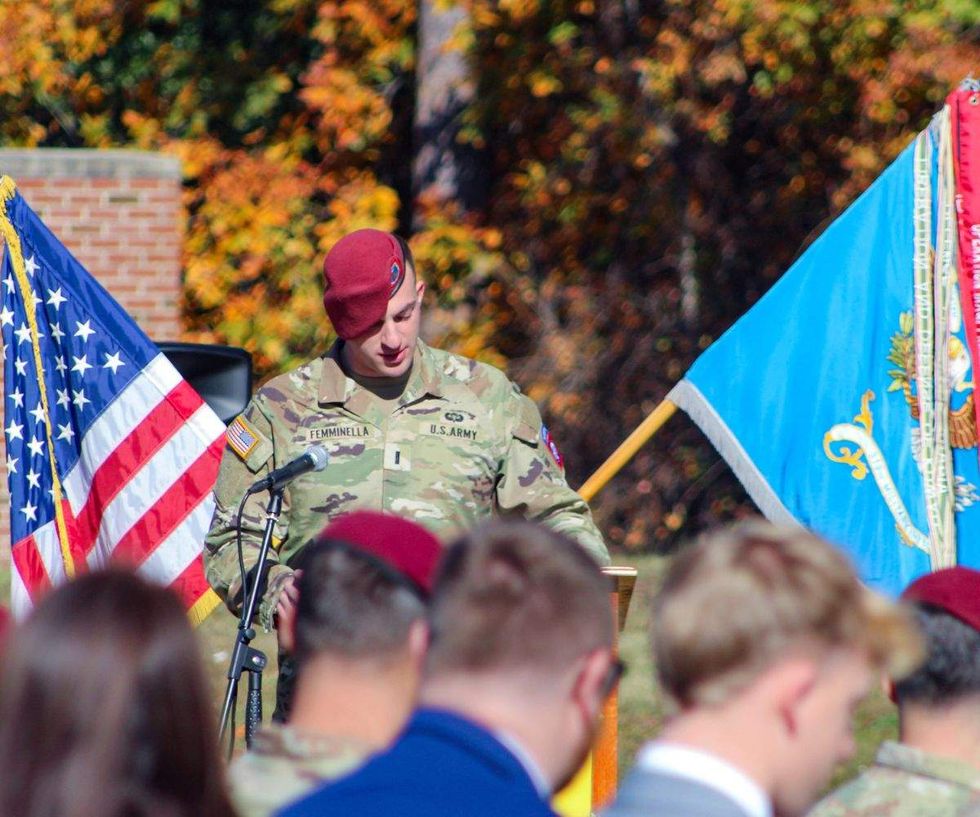 Brian FemminellaBrian Femminella
“Please look at the service records of all of us who are LGBTQ in the military,” he said. “If there are instances where we violated the rules of the military, we should not serve.”
But he suspects that is not what those records show. Many LGBTQ+ service members, he said, came to the military after growing up in places where they were already outsiders, in families, schools, or communities that rejected them. “My high school has a wall for veterans and active service members,” he said. “And I’m not on it to this day.” That experience often produces determination. “We’ve been ostracized before,” he said. “We’ve been alienated before.”
Which is why, when critics claim LGBTQ+ troops weaken the military, Femminella hears something closer to a misunderstanding. “We’re going to work in the same uniform as you,” he said. “With the same American flag patch on as you.”
And if the defense secretary were listening, the message he would deliver is simple. “Put me in, sir,” he said.