'%3E%3Cpath d='M16.3574 35.6519H12.9537L15.0491 18.8873L16.3574 35.6519ZM30.4229 54.0093L22.309 0.994385H7.91795L0 54.0093H10.6634L11.5802 46.3855H17.4014L17.9914 54.0093H30.4229Z' fill='%23971B20'/%3E%3Cpath d='M48.2073 41.8813C48.2073 43.4049 47.4892 44.0011 46.1144 44.0011H43.7595V11.0687H46.1144C47.4892 11.0687 48.2073 11.6636 48.2073 13.1885V41.8813ZM59.5273 43.6695V11.3326C59.5273 3.71323 53.5729 0.994385 47.8157 0.994385H31.7213V54.0093H47.8157C53.5729 54.0093 59.5273 51.29 59.5273 43.6695Z' fill='%23971B20'/%3E%3Cpath d='M90.183 0.994385H78.6039L75.0711 30.6157L71.9955 0.994385H59.4346L69.2474 54.0093H80.373L90.183 0.994385Z' fill='%23971B20'/%3E%3Cpath d='M107.063 42.3448C107.063 43.7359 105.951 44.5974 104.643 44.5974C103.269 44.5974 102.157 43.7359 102.157 42.3448V12.658C102.157 11.2676 103.269 10.4058 104.643 10.4058C105.951 10.4058 107.063 11.2676 107.063 12.658V42.3448ZM119.233 43.2723V11.7312C119.233 6.36384 112.952 -3.8147e-06 104.643 -3.8147e-06C96.2667 -3.8147e-06 89.9867 6.36384 89.9867 11.7312V43.2723C89.9867 48.6393 96.2667 55 104.643 55C112.952 55 119.233 48.6393 119.233 43.2723Z' fill='%23971B20'/%3E%3Cpath d='M150.976 43.9349V33.7309H139.069V42.3448C139.069 43.7359 137.957 44.5974 136.582 44.5974C135.076 44.5974 133.964 43.7359 133.964 42.3448V12.658C133.964 11.2676 135.076 10.4058 136.582 10.4058C137.957 10.4058 139.069 11.2676 139.069 12.658V21.2723H150.976V11.0687C150.976 5.70107 145.283 -3.8147e-06 136.582 -3.8147e-06C127.75 -3.8147e-06 121.796 5.70107 121.796 11.0687V43.9349C121.796 49.3022 127.75 55 136.582 55C145.283 55 150.976 49.3022 150.976 43.9349Z' fill='%23971B20'/%3E%3Cpath d='M167.478 35.6519H164.076L166.17 18.8873L167.478 35.6519ZM181.544 54.0093L173.432 0.994385H159.037L151.123 54.0093H161.785L162.704 46.3855H168.523L169.114 54.0093H181.544Z' fill='%23971B20'/%3E%3Cpath d='M205.412 10.4058V0.994385H177.081V10.4058H185.392V54.0093H197.428V10.4058H205.412Z' fill='%23971B20'/%3E%3Cpath d='M230.002 54.0093V43.9349H218.914V31.8746H226.635V21.8028H218.914V10.4058H230.002V0.994385H206.875V54.0093H230.002Z' fill='%23971B20'/%3E%3C/g%3E%3Cdefs%3E%3CclipPath id='clip0_260_7080'%3E%3Crect width='230' height='55' fill='white'/%3E%3C/clipPath%3E%3C/defs%3E%3C/svg%3E)
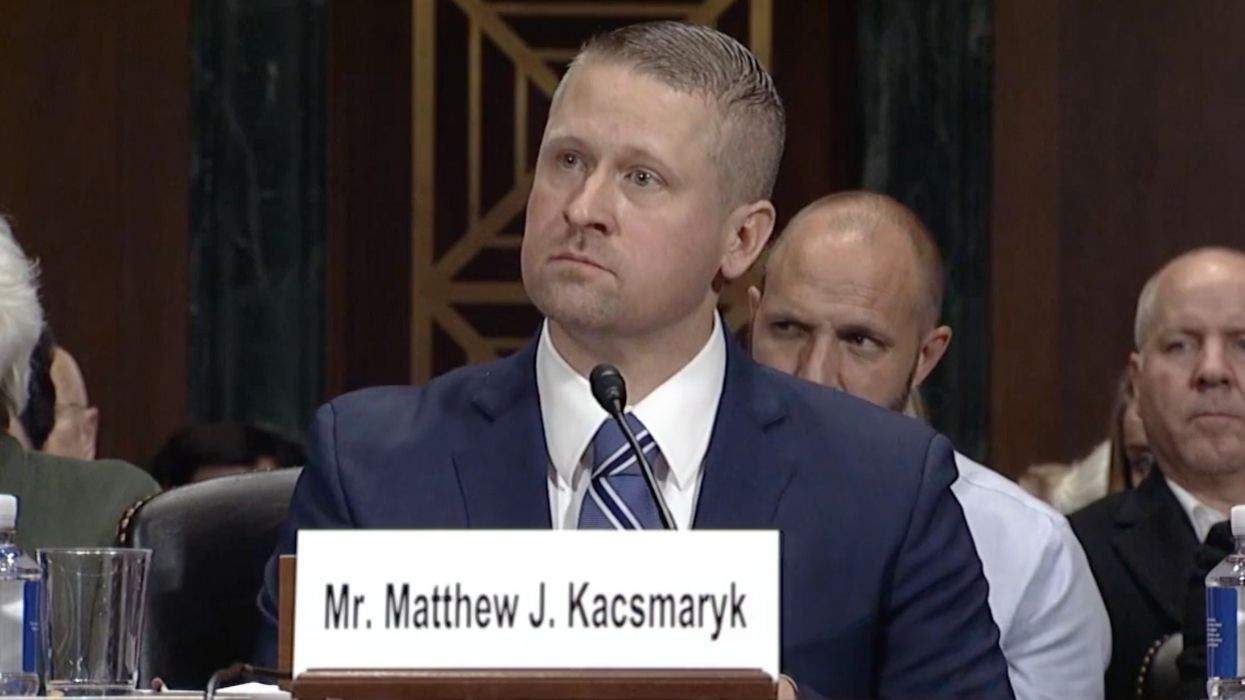
From a courthouse in Texas, a familiar figure in America’s culture wars delivered another ruling with significant consequences, this time by embracing a comparison that LGBTQ+ advocates say is both false and deeply offensive.
Keep up with the latest in LGBTQ+ news and politics. Sign up for The Advocate's email newsletter.
U.S. District Judge Matthew J. Kacsmaryk, a Trump appointee with a long record of rulings limiting LGBTQ+ protections, upheld West Texas A&M University’s decision to block a student-organized drag show on Friday. In doing so, he endorsed language likening drag performances to blackface and described drag not as expression, but as something inherently degrading.
Related: West Texas A&M University's drag show ban blocked by appeals court
The decision denies relief to Spectrum WT, an LGBTQ+ student organization that sought to hold a drag performance in Legacy Hall, an indoor venue in the university’s student center. Kacsmaryk ruled that the university could lawfully bar the show, concluding it did not qualify as protected speech and conflicted with the school’s stated mission.
Much of the ruling rests on the words of West Texas A&M President Walter Wendler, which Kacsmaryk adopted throughout his 46-page opinion. In a March 2023 email to the campus community, Wendler wrote that drag “does not preserve a single thread of human dignity,” describing it as a performance that “exaggerat[es] aspects of womanhood (sexuality, femininity, gender)” and “stereotype[s] women in cartoon-like extremes for the amusement of others.”
Related: Supreme Court refuses to lift ban on Texas university drag show, sparking free speech concerns
Wendler went further, drawing a direct comparison to racist caricature. “I would not support ‘blackface’ performances on our campus, even if told the performance is a form of free speech or intended as humor,” he wrote. “It is wrong. … A harmless drag show? Not possible.” While acknowledging that fundraising for LGBTQ+ suicide prevention was worthwhile, he urged students to “skip the show and send the dough” instead.
Kacsmaryk accepted that framing in his ruling, repeatedly portraying the proposed drag show as provocative and sexualized rather than expressive. He described the event as “transgressive” and centered on shock value, concluding that drag, at least as presented in this case, does not communicate a clear message that audiences would understand as speech.
That conclusion was reinforced by testimony from Spectrum’s current president, who told the court, “We are not trying to convey a specific message.” Kacsmaryk treated that statement as decisive, rejecting the group’s argument that drag inherently challenges gender norms or conveys social commentary.
The judge also focused heavily on past off-campus performances by invited entertainers, including shows involving simulated sex acts, partial nudity, and audience interaction. He cited those performances to argue that Spectrum could not guarantee the absence of sexual content or minors at future events, even though the students said they had instructed performers to avoid lewd conduct.
The venue itself was central to the decision. Kacsmaryk found that Legacy Hall is not an open forum but a space the university can control. He accepted Wendler’s testimony that the school would also bar blackface or white supremacist events from the same venue, comparisons the judge treated as proof that the drag ban was reasonable and not discriminatory.
Blackface, while offensive, is also protected by the First Amendment as a form of free speech.
LGBTQ+ advocates sharply disagreed. Texas drag performers condemned the ruling as an attack on queer art and expression.
“This court decision is incredibly disappointing and frustrating,” Texas drag performer Brigitte Bandit told The Advocate. “Queer Texans and queer art deserve to be protected, respected, and celebrated! Drag artistry encompasses much more than the idea of trying to look like a woman, and there is no one way to look like a woman, which is what is suggested by the judge comparing drag to blackface. Both women and drag artists express themselves in many ways, and it is not up to the courts to decide how anyone should be able to do so.”
Bandit also pointed to what they described as a glaring contradiction in the ruling’s logic. “I also find it interesting that they will compare drag to blackface in their attempts to ban it, but don’t try to ban blackface,” they said. “Ultimately, this ruling is a blatant infringement on our constitutional right to free speech and expression. This is yet another example of those in power using the LGBTQ community as a scapegoat for real issues. But no matter what happens in the courts or legislature, queer Texans exist and will continue make space for and celebrate each other.”
Related: Texas A&M's drag ban blocked by federal court as judge cites free 'speech rights'
In a statement to The Advocate, a GLAAD spokesperson countered the judge’s characterization of the performance art. “Drag is a centuries-old art form performed by cultures around the world and enjoyed by global mainstream audiences of all ages,” the spokesperson said. “It emerged from performers from marginalized communities poking fun at power structures, including those that attempt to enforce strict gender expression. Claims comparing it to dehumanizing performances designed to uphold racial supremacy are as inaccurate as they are offensive.”
“Court after court has ruled that drag is protected speech under the First Amendment,” the statement continued. “It should be available on any college campus where free speech is respected and where entertaining social commentary encourages critical thinking and helps unite people of all backgrounds.”
Human Rights Campaign Senior Director of Legal Policy Cathryn Oakley also criticized the judge’s ruling. "Since his appointment nearly a decade ago, Judge Kacsmaryk has often stepped beyond reasonable interpretation of the law and wielded it as a cudgel against people — LGBTQ+ people, people who are pregnant & need access to medication abortion, and immigrants," she said in a statement to The Advocate. “He’s a frequent target for extreme-right lawyers who want a friendly courtroom to strip away civil rights.”
Oakley added, “He has chosen to, once again, distort the facts by characterizing drag performances as something they are not. Drag is free expression. Drag is art. And we will always raise our voice to say so."
The ruling lands amid ongoing legal whiplash over drag bans. Last year, in August, a divided panel of the U.S. Court of Appeals for the Fifth Circuit blocked Wendler’s drag ban, finding that Spectrum was likely to succeed on its free speech claims. That decision was later vacated for rehearing by the full court, leaving the issue unsettled and allowing Kacsmaryk to move forward.
The case also fits squarely within Kacsmaryk’s broader record. From his single-judge division in Amarillo, he has issued a series of decisions narrowing civil rights protections and limiting federal authority. He became nationally known after attempting to revoke Food and Drug Administration approval of the abortion pill mifepristone and later ruled that federal workplace protections could not be used to block certain forms of discrimination against LGBTQ+ employees, undercutting the U.S. Supreme Court’s Bostock v. Clayton County decision.
Kacsmaryk noted that Spectrum is still free to hold drag performances outdoors or off campus.