'%3E%3Cpath d='M16.3574 35.6519H12.9537L15.0491 18.8873L16.3574 35.6519ZM30.4229 54.0093L22.309 0.994385H7.91795L0 54.0093H10.6634L11.5802 46.3855H17.4014L17.9914 54.0093H30.4229Z' fill='%23971B20'/%3E%3Cpath d='M48.2073 41.8813C48.2073 43.4049 47.4892 44.0011 46.1144 44.0011H43.7595V11.0687H46.1144C47.4892 11.0687 48.2073 11.6636 48.2073 13.1885V41.8813ZM59.5273 43.6695V11.3326C59.5273 3.71323 53.5729 0.994385 47.8157 0.994385H31.7213V54.0093H47.8157C53.5729 54.0093 59.5273 51.29 59.5273 43.6695Z' fill='%23971B20'/%3E%3Cpath d='M90.183 0.994385H78.6039L75.0711 30.6157L71.9955 0.994385H59.4346L69.2474 54.0093H80.373L90.183 0.994385Z' fill='%23971B20'/%3E%3Cpath d='M107.063 42.3448C107.063 43.7359 105.951 44.5974 104.643 44.5974C103.269 44.5974 102.157 43.7359 102.157 42.3448V12.658C102.157 11.2676 103.269 10.4058 104.643 10.4058C105.951 10.4058 107.063 11.2676 107.063 12.658V42.3448ZM119.233 43.2723V11.7312C119.233 6.36384 112.952 -3.8147e-06 104.643 -3.8147e-06C96.2667 -3.8147e-06 89.9867 6.36384 89.9867 11.7312V43.2723C89.9867 48.6393 96.2667 55 104.643 55C112.952 55 119.233 48.6393 119.233 43.2723Z' fill='%23971B20'/%3E%3Cpath d='M150.976 43.9349V33.7309H139.069V42.3448C139.069 43.7359 137.957 44.5974 136.582 44.5974C135.076 44.5974 133.964 43.7359 133.964 42.3448V12.658C133.964 11.2676 135.076 10.4058 136.582 10.4058C137.957 10.4058 139.069 11.2676 139.069 12.658V21.2723H150.976V11.0687C150.976 5.70107 145.283 -3.8147e-06 136.582 -3.8147e-06C127.75 -3.8147e-06 121.796 5.70107 121.796 11.0687V43.9349C121.796 49.3022 127.75 55 136.582 55C145.283 55 150.976 49.3022 150.976 43.9349Z' fill='%23971B20'/%3E%3Cpath d='M167.478 35.6519H164.076L166.17 18.8873L167.478 35.6519ZM181.544 54.0093L173.432 0.994385H159.037L151.123 54.0093H161.785L162.704 46.3855H168.523L169.114 54.0093H181.544Z' fill='%23971B20'/%3E%3Cpath d='M205.412 10.4058V0.994385H177.081V10.4058H185.392V54.0093H197.428V10.4058H205.412Z' fill='%23971B20'/%3E%3Cpath d='M230.002 54.0093V43.9349H218.914V31.8746H226.635V21.8028H218.914V10.4058H230.002V0.994385H206.875V54.0093H230.002Z' fill='%23971B20'/%3E%3C/g%3E%3Cdefs%3E%3CclipPath id='clip0_260_7080'%3E%3Crect width='230' height='55' fill='white'/%3E%3C/clipPath%3E%3C/defs%3E%3C/svg%3E)

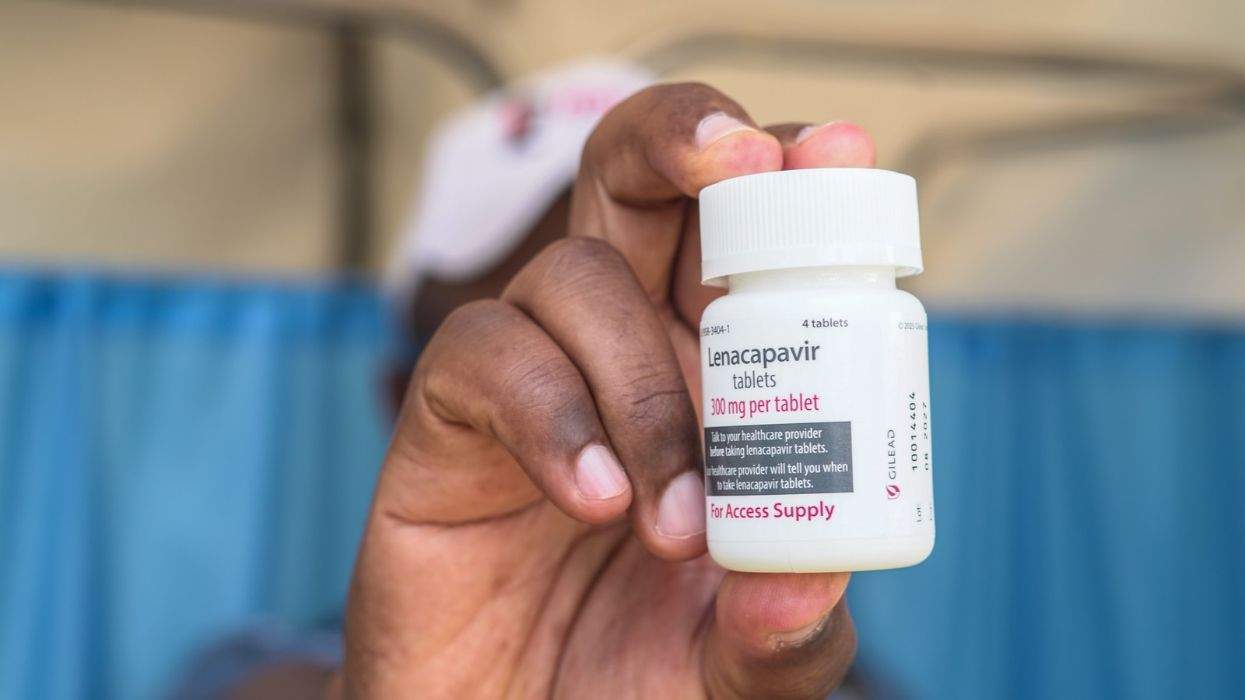
As Congress nears a January deadline to pass a continuing resolution and avert a government shutdown, critical health programs hang in the balance. The now-expired Affordable Care Act subsidies and proposed cuts to the Ryan White HIV/AIDS program could undermine access to lifesaving services and medications, including Lenacapavir, a breakthrough drug offering new hope in the fight against HIV.
Nearly 40 million people worldwide, and more than one million people in the United States, are living with HIV, with more than 30,000 Americans newly infected each year.
A drug like Lenacapavir has the potential to change that trajectory, preventing the global spread of HIV and saving millions of lives.
Lenacapavir is not new. The antiretroviral drug was first approved in 2022 for treating people living with HIV who were highly resistant to other treatments. Subsequent clinical trials demonstrated it was also highly effective (99.9%) in preventing HIV infection, and, in June, the Food and Drug Administration approved its use as a pre-exposure prophylaxis, or PrEP. Unlike other PrEP options, which require oral pills that can be difficult to take consistently, Lenacapavir offers protection through just two injections a year. This simple regimen promises long-lasting, highly effective protection against HIV.
We are encouraged by the strong support of Lenacapavir by numerous federal agencies. In fact, Dr. Jay Bhattacharya, Director of the National Institutes of Health, has made it a priority for funding. The administration is also working with Lenacapavir’s developer, Gilead Sciences, and other key partners to ensure the medication reaches countries most impacted by the disease.
All of this tremendous progress could be lost, though, if we do not confront the critical gaps in U.S. healthcare, from affordability and access to the logistics of drug delivery. Failing to fully utilize this drug wastes the resources invested in its creation and costs us far more in the long run through preventable illness and death from new HIV infections.
Among the many barriers to delivering Lenacapavir to as many people as possible, cost tops the list. Despite requiring only two injections a year, a full course of Lenacapavir currently costs about $28,000 per year, and insurance coverage is currently spotty at best. CVS Caremark, one of the nation’s largest pharmacy benefit managers, doesn’t carry the drug, citing its price among other concerns.
Recently, there have been strong efforts to negotiate lower prices for drugs, such as anticoagulants, rheumatologic and weight loss drugs like GLP-1s. Given the lifesaving potential of Lenacapavir, continued efforts to advocate for price reductions and ensure broad insurance coverage are important. Encouragingly, Gilead is providing the drug at cost for U.S. distribution to select African countries and licensing it to six pharmaceutical manufacturers to produce low-cost generics. Experts estimate that these generics could be made for just $41-$94 per person annually, which could transform global access. Making this a reality in the United States could also increase utilization.
In addition, if people lose the health care safety nets they rely on, they will not be able to access the medication. Programs like the Affordable Care Act, Medicaid, and the Ryan White HIV/AIDS program, all of which are facing substantial cuts, are lifelines that deliver proven, evidence-based HIV treatment and prevention to those most at-risk, many of whom are often underinsured or uninsured. At this critical juncture in the fight to end the epidemic, dismantling these programs and restricting access to prevention drugs would have substantial health and cost implications.
Finally, we need to deal with systems issues to get the drugs to the right people. Currently, Lenacapavir injections must be administered in clinical settings by nurses or other qualified healthcare providers. Our work through the DC Center for AIDS Research, along with lessons learned from the COVID pandemic, underscores the need to reach vulnerable and at-risk populations where they are. For example, mobile health units could bring Lenacapavir directly to underserved neighborhoods or rural communities. Equally important, we could train community health workers or local pharmacists to safely administer Lenacapavir.
While the obstacles we face may be significant, Lenacapavir represents a monumental breakthrough in the fight against HIV/AIDS, one we can not afford to squander. The urgency to develop a robust and equitable strategy to expand access to this drug and curb the spread of HIV has never been clearer.
Dr. Kelly Gebo is the Michael and Lori Milken Dean of the Milken Institute School of Public Health at the George Washington University. Dr. Amanda Castel is a Professor in the Department of Epidemiology at GW. Both Dr. Castel and Dr. Gebo’s research focuses primarily on HIV and related infectious disease.
Opinions is dedicated to featuring a wide range of inspiring personal stories and impactful opinions from the LGBTQ+ community and its allies. Visit Advocate.com/submit to learn more about submission guidelines. Views expressed in Opinions are those of the guest writers, columnists, and editors, and do not directly represent the views of The Advocate or our parent company, equalpride.