'%3E%3Cpath d='M16.3574 35.6519H12.9537L15.0491 18.8873L16.3574 35.6519ZM30.4229 54.0093L22.309 0.994385H7.91795L0 54.0093H10.6634L11.5802 46.3855H17.4014L17.9914 54.0093H30.4229Z' fill='%23971B20'/%3E%3Cpath d='M48.2073 41.8813C48.2073 43.4049 47.4892 44.0011 46.1144 44.0011H43.7595V11.0687H46.1144C47.4892 11.0687 48.2073 11.6636 48.2073 13.1885V41.8813ZM59.5273 43.6695V11.3326C59.5273 3.71323 53.5729 0.994385 47.8157 0.994385H31.7213V54.0093H47.8157C53.5729 54.0093 59.5273 51.29 59.5273 43.6695Z' fill='%23971B20'/%3E%3Cpath d='M90.183 0.994385H78.6039L75.0711 30.6157L71.9955 0.994385H59.4346L69.2474 54.0093H80.373L90.183 0.994385Z' fill='%23971B20'/%3E%3Cpath d='M107.063 42.3448C107.063 43.7359 105.951 44.5974 104.643 44.5974C103.269 44.5974 102.157 43.7359 102.157 42.3448V12.658C102.157 11.2676 103.269 10.4058 104.643 10.4058C105.951 10.4058 107.063 11.2676 107.063 12.658V42.3448ZM119.233 43.2723V11.7312C119.233 6.36384 112.952 -3.8147e-06 104.643 -3.8147e-06C96.2667 -3.8147e-06 89.9867 6.36384 89.9867 11.7312V43.2723C89.9867 48.6393 96.2667 55 104.643 55C112.952 55 119.233 48.6393 119.233 43.2723Z' fill='%23971B20'/%3E%3Cpath d='M150.976 43.9349V33.7309H139.069V42.3448C139.069 43.7359 137.957 44.5974 136.582 44.5974C135.076 44.5974 133.964 43.7359 133.964 42.3448V12.658C133.964 11.2676 135.076 10.4058 136.582 10.4058C137.957 10.4058 139.069 11.2676 139.069 12.658V21.2723H150.976V11.0687C150.976 5.70107 145.283 -3.8147e-06 136.582 -3.8147e-06C127.75 -3.8147e-06 121.796 5.70107 121.796 11.0687V43.9349C121.796 49.3022 127.75 55 136.582 55C145.283 55 150.976 49.3022 150.976 43.9349Z' fill='%23971B20'/%3E%3Cpath d='M167.478 35.6519H164.076L166.17 18.8873L167.478 35.6519ZM181.544 54.0093L173.432 0.994385H159.037L151.123 54.0093H161.785L162.704 46.3855H168.523L169.114 54.0093H181.544Z' fill='%23971B20'/%3E%3Cpath d='M205.412 10.4058V0.994385H177.081V10.4058H185.392V54.0093H197.428V10.4058H205.412Z' fill='%23971B20'/%3E%3Cpath d='M230.002 54.0093V43.9349H218.914V31.8746H226.635V21.8028H218.914V10.4058H230.002V0.994385H206.875V54.0093H230.002Z' fill='%23971B20'/%3E%3C/g%3E%3Cdefs%3E%3CclipPath id='clip0_260_7080'%3E%3Crect width='230' height='55' fill='white'/%3E%3C/clipPath%3E%3C/defs%3E%3C/svg%3E)
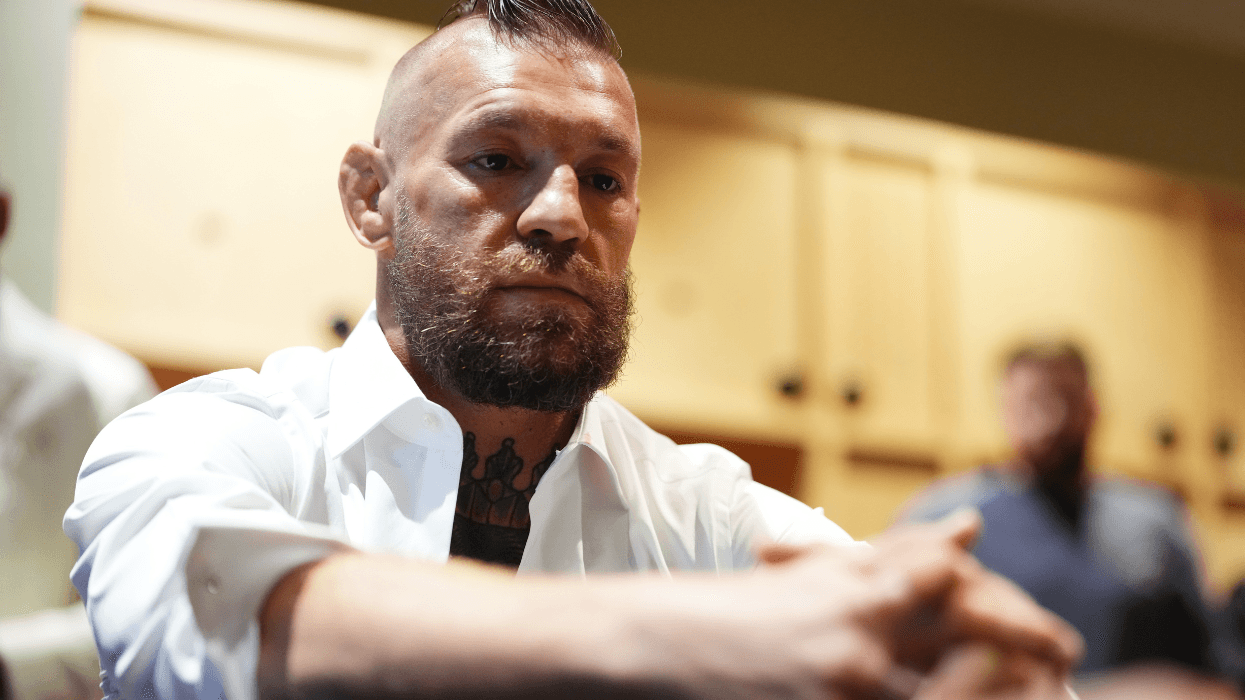

Conor McGregor is a Christian now. Let’s all breathe a sigh of relief. The mixed-martial artist and former UFC champion joins Russell Brand, Harvey Weinstein, Bill Cosby, R. Kelly, Danny Masterson and others who have looked to rehabilitate their images through religious epiphany after accusations of sexual assault. These suspiciously timed spiritual awakenings always seem to take place during their trials, upon sentencing, after a verdict, or during imprisonment to faith-wash these men as former fallen angels ready for forgiveness and hopeful to get back into the public’s good favor by way of prayer and proselytizing. Religious groups always seems more than willing to welcome in men accused or convicted of sexual assault — especially if they have a huge megaphone they are willing to use.
McGregor's latest reinvention comes after losses in both the courtroom and the ring. Having twice failed to overturn the Irish civil verdict that found him liable for sexually assaulting Nikita Hand and returning to the UFC only to lose in spectacular fashion, he has reached for perhaps the oldest celebrity rehabilitation strategy of all: finding God. With his reputation permanently tethered to the case, he has emerged not with contrition but with scripture. And of course, because he’s the victim here, when asked about the verdict ahead of his UFC return, McGregor insisted he was innocent, declaring that "lying lips are an abomination to the Lord," and cast himself as a man whose truth would eventually be revealed by some godly fashion. Rather than acknowledging the woman a court believed, McGregor reframed himself as a persecuted believer whose suffering is merely another test of faith.
Image rehabilitation is never a solo act. Men like McGregor need friends in high places willing to act as accomplices. While Jimmy Fallon transforms a man found liable for sexual assault into just another charming celebrity promoting a comeback fight, Christian outlets rush to publish glowing profiles about McGregor's newfound devotion, marveling at his church attendance, his prayers, and his recitation of the Nicene Creed while showing remarkably little curiosity about the woman a court believed over him. If you're famous enough, macho enough, bring in enough eyeballs, and come loaded with corporate sponsorships, there will always be someone willing to help launder your reputation through faith, no matter how newfound or cynical.
McGregor's homophobia is a mere consolation prize, which makes the entire spectacle even more tedious and predictable. This is a man who reaches for antigay slurs anytime he feels backed into a corner. This will never be a problem for the growing chorus eager to celebrate his Christian rebirth. For the better part of a decade, we've been told that drag queens, transgender kids, and LGBTQ+ people represent some existential moral threat to the family, the church, and civilization itself while celebrity men engaged in violence against women keep discovering Jesus to standing ovations. Homophobia is an enhancing feature for the predatory grifter set.
And then there's Russell Brand, another graduate of the Christian Celebrity Reputation Rehabilitation Center. Riding high on the testimony circuit, Brand has checked baptism off the list and the Bible verses awkwardly flow during televised interviews — Bible in hand, no less. So how long until he discovers homophobia? If recent history is any guide, it's practically the next square on the bingo card. Brand publicly embraced Christianity in 2024 just as allegations of rape and sexual assault engulfed his career, and while awaiting trial, he somehow found time to confess to having sex with a 16-year-old when he was 30, defending himself by pointing out that it was legal in the United Kingdom. First comes the scandal, followed by the salvation story. Then comes the Christian media tour and, if we're blessed enough, the familiar moral split screen where the women become Jezebels and the men are recast as persecuted Christians.
McGregor, Brand, and the ever-growing list of men welcomed into religious institutions are no saints. But the more troubling story isn't simply that these men discover religion. It's that so many churches, ministries, and Christian media outlets seem eager to become the gateway through which they reenter public life with their reputations newly polished and their moral authority seemingly restored. To what end? At a moment when pastors, politicians, and pundits warn endlessly about the crisis facing young men and boys, are these really the role models the modern church wants them to emulate? McGregor was found liable by an Irish civil jury for sexually assaulting Nikita Hand, a verdict upheld after failed appeals. He has also faced additional allegations of sexual assault, allegations of violent behavior toward women, and a long public record of aggression that extends well beyond those claims, including an incident during a promotional skit that sent the performer inside the Miami Heat mascot to the emergency room. Yet instead of asking whether this is the kind of man who should be elevated as a public witness for Christ, too many seem content to celebrate his testimony and call it redemption.
Not only are certain faith institutions comfortable with this problematic pattern in men, but the institutions themselves are the problem. Repeatedly, institutions that claim to stand for morality, family values, and the protection of the vulnerable somehow find endless patience for powerful men accused or found liable for sexual violence while offering comparatively little public concern for the victims left in their wake.
The church is one of the last places where powerful men can still recast themselves as both victims and moral authorities. Institutions are the company they keep and the people they choose to elevate. If the church is willing to celebrate these men before they've demonstrated real accountability, then their past can't have been all that disqualifying after all. With the help of the church, they become evangelicals, and their scandals become recruitment tools. Their fame becomes evidence that God can transform anyone, and the church eagerly packages that story for public consumption because celebrity converts attract headlines, viewers, donors, and new believers. And when young boys watch churches bless these men as examples of God's transformative power, they're witnessing the unholy condoning of violence against women and sexual abuse.
Josh Ackley is a political strategist and the frontman of the queerpunk band The Dead Betties. @momdarkness
Opinion is dedicated to featuring a wide range of inspiring personal stories and impactful opinions from the LGBTQ+ community and its allies. Visit Advocate.com/submit to learn more about submission guidelines. We welcome your thoughts and feedback on any of our stories. Email us at voices@equalpride.com. Views expressed in Voices stories are those of the guest writers, columnists, and editors, and do not directly represent the views of The Advocate or our parent company, equalpride.