'%3E%3Cpath d='M16.3574 35.6519H12.9537L15.0491 18.8873L16.3574 35.6519ZM30.4229 54.0093L22.309 0.994385H7.91795L0 54.0093H10.6634L11.5802 46.3855H17.4014L17.9914 54.0093H30.4229Z' fill='%23971B20'/%3E%3Cpath d='M48.2073 41.8813C48.2073 43.4049 47.4892 44.0011 46.1144 44.0011H43.7595V11.0687H46.1144C47.4892 11.0687 48.2073 11.6636 48.2073 13.1885V41.8813ZM59.5273 43.6695V11.3326C59.5273 3.71323 53.5729 0.994385 47.8157 0.994385H31.7213V54.0093H47.8157C53.5729 54.0093 59.5273 51.29 59.5273 43.6695Z' fill='%23971B20'/%3E%3Cpath d='M90.183 0.994385H78.6039L75.0711 30.6157L71.9955 0.994385H59.4346L69.2474 54.0093H80.373L90.183 0.994385Z' fill='%23971B20'/%3E%3Cpath d='M107.063 42.3448C107.063 43.7359 105.951 44.5974 104.643 44.5974C103.269 44.5974 102.157 43.7359 102.157 42.3448V12.658C102.157 11.2676 103.269 10.4058 104.643 10.4058C105.951 10.4058 107.063 11.2676 107.063 12.658V42.3448ZM119.233 43.2723V11.7312C119.233 6.36384 112.952 -3.8147e-06 104.643 -3.8147e-06C96.2667 -3.8147e-06 89.9867 6.36384 89.9867 11.7312V43.2723C89.9867 48.6393 96.2667 55 104.643 55C112.952 55 119.233 48.6393 119.233 43.2723Z' fill='%23971B20'/%3E%3Cpath d='M150.976 43.9349V33.7309H139.069V42.3448C139.069 43.7359 137.957 44.5974 136.582 44.5974C135.076 44.5974 133.964 43.7359 133.964 42.3448V12.658C133.964 11.2676 135.076 10.4058 136.582 10.4058C137.957 10.4058 139.069 11.2676 139.069 12.658V21.2723H150.976V11.0687C150.976 5.70107 145.283 -3.8147e-06 136.582 -3.8147e-06C127.75 -3.8147e-06 121.796 5.70107 121.796 11.0687V43.9349C121.796 49.3022 127.75 55 136.582 55C145.283 55 150.976 49.3022 150.976 43.9349Z' fill='%23971B20'/%3E%3Cpath d='M167.478 35.6519H164.076L166.17 18.8873L167.478 35.6519ZM181.544 54.0093L173.432 0.994385H159.037L151.123 54.0093H161.785L162.704 46.3855H168.523L169.114 54.0093H181.544Z' fill='%23971B20'/%3E%3Cpath d='M205.412 10.4058V0.994385H177.081V10.4058H185.392V54.0093H197.428V10.4058H205.412Z' fill='%23971B20'/%3E%3Cpath d='M230.002 54.0093V43.9349H218.914V31.8746H226.635V21.8028H218.914V10.4058H230.002V0.994385H206.875V54.0093H230.002Z' fill='%23971B20'/%3E%3C/g%3E%3Cdefs%3E%3CclipPath id='clip0_260_7080'%3E%3Crect width='230' height='55' fill='white'/%3E%3C/clipPath%3E%3C/defs%3E%3C/svg%3E)
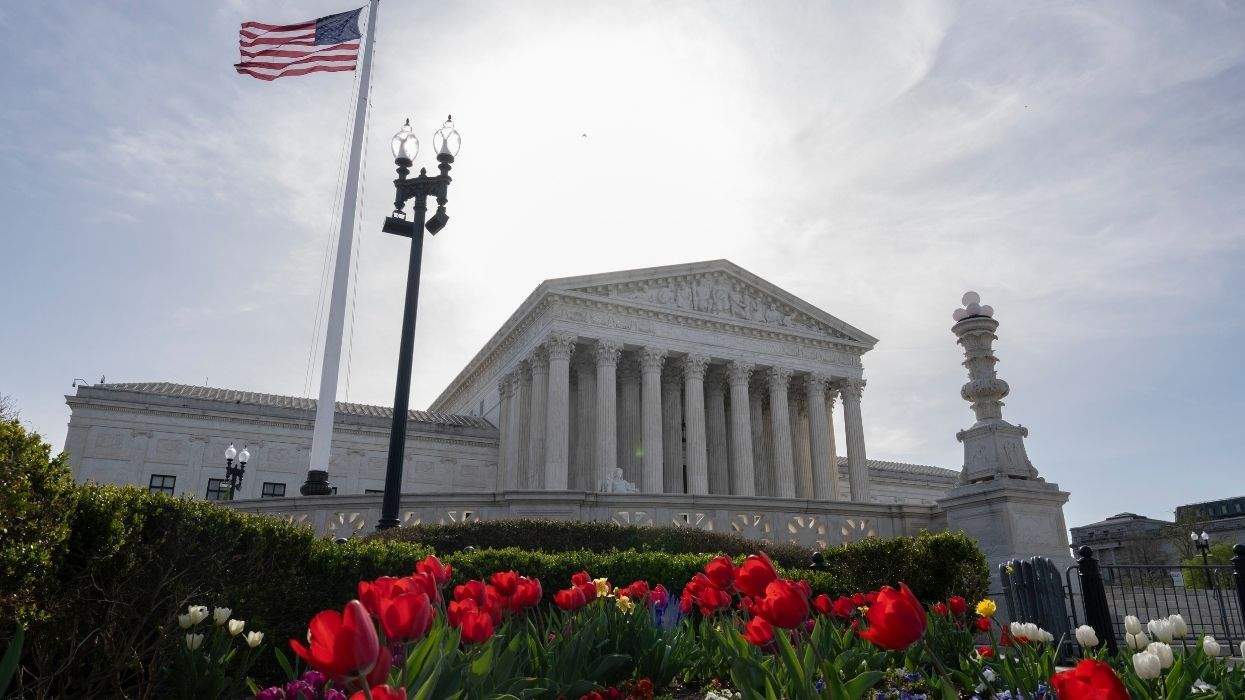

The Supreme Court’s ruling against Colorado’s ban on conversion therapy for minors is being framed as a victory for free speech. It is not. It is a victory for a practice that has spent decades disguising coercion and psychological harm as treatment. It is also a decision about children.
Keep up with the latest in LGBTQ+ news and politics. Sign up for The Advocate's email newsletter.
About the moment in life when identity is still forming, when curiosity and self-discovery are not signs of disorder but part of becoming a person. And about what happens when that process is interrupted by adults who decide that what is emerging must be corrected.
Conversion therapy is bad. It is not misunderstood or merely controversial. It is a discredited practice rooted in the belief that people like me are broken, disordered, or sinful, and that with enough pressure, prayer, counseling, or discipline, they can be made acceptable.
We know what it does. Research has repeatedly linked conversion practices to depression, post-traumatic stress disorder, and suicidality. A Stanford Medicine-led study found that people exposed to these practices experienced significantly worse mental health outcomes, with some of the greatest harm among those subjected to efforts targeting both sexual orientation and gender identity. The Williams Institute has reported sharply elevated rates of suicidal ideation and attempts among those who have undergone conversion therapy. A 2023 study of transgender youth found that exposure significantly increased the likelihood of attempting suicide and running away from home.
This is not a debate within medicine. Major professional organizations, including the American Psychological Association and the American Academy of Child and Adolescent Psychiatry, have rejected these practices outright. Not because they are controversial, but because they are ineffective and harmful.
By treating conversion therapy as protected speech rather than a regulated professional practice, the Court collapses a critical distinction between belief and treatment. Therapy is not a free-floating exchange of ideas. It is a licensed, regulated intervention, one that the state has a clear responsibility to oversee when minors are involved. The fact that it is delivered through conversation does not exempt it from standards of care. It makes the absence of those standards more dangerous.
For a child, that message lands at a specific moment. Not in abstraction, but in the middle of becoming. It turns curiosity into fear, self-recognition into something suspect, and identity into a problem to be managed before it has even had the chance to fully form.
Many of the arguments used to defend conversion therapy are rooted in religious belief. The therapist at the center of this case framed her work as helping patients live in alignment with their faith. That framing is not incidental.
But the United States was not founded as a religious state. It was deliberately structured to prevent the government from enforcing religious doctrine. Thomas Jefferson described a “wall of separation between church and state” as a safeguard for freedom. James Madison warned that government entanglement with religion leads to coercion and inequality. The Virginia Statute for Religious Freedom made clear that civil rights must not depend on adherence to any belief system.
That framework has allowed a pluralistic society to function. It protects the right to believe. It also protects the right not to be subjected to someone else’s beliefs through the force of law. And when that intervention is imposed by the people a child depends on most, it does not read as guidance. It reads as theocracy.
For parents who believe this is an act of love, it is worth saying plainly what the research and lived experience both make clear. I have known people who were sent to conversion therapy as teenagers. Many of them no longer speak to their families. Not because they stopped caring, but because they were told, in the most vulnerable years of their lives, that who they were was unacceptable. That message reshapes a relationship permanently.
And for some, the outcome is even more final. Studies have consistently found higher rates of suicidal ideation and suicide attempts among those subjected to conversion practices. That is not an abstract risk. It is a predictable consequence of telling a child that their identity is something to be corrected or erased.
Parents may intend to guide, to protect, to anchor their children in their beliefs. But what children hear is something much simpler and much more devastating: you are not loved as you are. And when that message is repeated in a clinical setting, backed by authority, it does not draw families closer. It drives them apart, sometimes for a lifetime.
I am a gay man in my forties. I have a full, stable, and deeply grounded life. I am married. I have a strong relationship with my family. I work, create, and contribute to society. My life is not defined by struggle. It is defined by continuity, connection, freedom, and the ability to move through the world as myself.
None of that would have been possible if I had been forced into conversion therapy as a child.
That kind of intervention does not produce healthier, more stable adults. It fractures identity at the point where it is still forming. It replaces trust with fear, and connection with performance. Even in the best case, it comes at the cost of authenticity. In many cases, it comes at the cost of family.
It does not simply misunderstand queer and trans people. It misunderstands the role of the state. The government is not obligated to remain neutral between evidence-based care and ideologically motivated harm. It is supposed to protect children from the latter.
There is nothing neutral about forcing a child to sit in a room where an adult with credentials tells them that their identity must be denied and substituted for something entirely unnatural to them. There is nothing therapeutic about turning stigma into a treatment model. And there is nothing constitutional about pretending the First Amendment requires the state to step aside while that harm is packaged as care.
Conversion therapy is bad because it is built on the premise that some children deserve less freedom inside their own lives than others. A secular society is supposed to protect children from that premise, not elevate it.
Josh Ackley is a political strategist and the frontman of the queerpunk band The Dead Betties. Follow at @momdarkness and listen to music on Spotify.
Opinion is dedicated to featuring a wide range of inspiring personal stories and impactful opinions from the LGBTQ+ community and its allies. Visit Advocate.com/submit to learn more about submission guidelines. We welcome your thoughts and feedback on any of our stories. Email us at voices@equalpride.com. Views expressed in Voices stories are those of the guest writers, columnists, and editors, and do not directly represent the views of The Advocate or our parent company, equalpride.