'%3E%3Cpath d='M16.3574 35.6519H12.9537L15.0491 18.8873L16.3574 35.6519ZM30.4229 54.0093L22.309 0.994385H7.91795L0 54.0093H10.6634L11.5802 46.3855H17.4014L17.9914 54.0093H30.4229Z' fill='%23971B20'/%3E%3Cpath d='M48.2073 41.8813C48.2073 43.4049 47.4892 44.0011 46.1144 44.0011H43.7595V11.0687H46.1144C47.4892 11.0687 48.2073 11.6636 48.2073 13.1885V41.8813ZM59.5273 43.6695V11.3326C59.5273 3.71323 53.5729 0.994385 47.8157 0.994385H31.7213V54.0093H47.8157C53.5729 54.0093 59.5273 51.29 59.5273 43.6695Z' fill='%23971B20'/%3E%3Cpath d='M90.183 0.994385H78.6039L75.0711 30.6157L71.9955 0.994385H59.4346L69.2474 54.0093H80.373L90.183 0.994385Z' fill='%23971B20'/%3E%3Cpath d='M107.063 42.3448C107.063 43.7359 105.951 44.5974 104.643 44.5974C103.269 44.5974 102.157 43.7359 102.157 42.3448V12.658C102.157 11.2676 103.269 10.4058 104.643 10.4058C105.951 10.4058 107.063 11.2676 107.063 12.658V42.3448ZM119.233 43.2723V11.7312C119.233 6.36384 112.952 -3.8147e-06 104.643 -3.8147e-06C96.2667 -3.8147e-06 89.9867 6.36384 89.9867 11.7312V43.2723C89.9867 48.6393 96.2667 55 104.643 55C112.952 55 119.233 48.6393 119.233 43.2723Z' fill='%23971B20'/%3E%3Cpath d='M150.976 43.9349V33.7309H139.069V42.3448C139.069 43.7359 137.957 44.5974 136.582 44.5974C135.076 44.5974 133.964 43.7359 133.964 42.3448V12.658C133.964 11.2676 135.076 10.4058 136.582 10.4058C137.957 10.4058 139.069 11.2676 139.069 12.658V21.2723H150.976V11.0687C150.976 5.70107 145.283 -3.8147e-06 136.582 -3.8147e-06C127.75 -3.8147e-06 121.796 5.70107 121.796 11.0687V43.9349C121.796 49.3022 127.75 55 136.582 55C145.283 55 150.976 49.3022 150.976 43.9349Z' fill='%23971B20'/%3E%3Cpath d='M167.478 35.6519H164.076L166.17 18.8873L167.478 35.6519ZM181.544 54.0093L173.432 0.994385H159.037L151.123 54.0093H161.785L162.704 46.3855H168.523L169.114 54.0093H181.544Z' fill='%23971B20'/%3E%3Cpath d='M205.412 10.4058V0.994385H177.081V10.4058H185.392V54.0093H197.428V10.4058H205.412Z' fill='%23971B20'/%3E%3Cpath d='M230.002 54.0093V43.9349H218.914V31.8746H226.635V21.8028H218.914V10.4058H230.002V0.994385H206.875V54.0093H230.002Z' fill='%23971B20'/%3E%3C/g%3E%3Cdefs%3E%3CclipPath id='clip0_260_7080'%3E%3Crect width='230' height='55' fill='white'/%3E%3C/clipPath%3E%3C/defs%3E%3C/svg%3E)
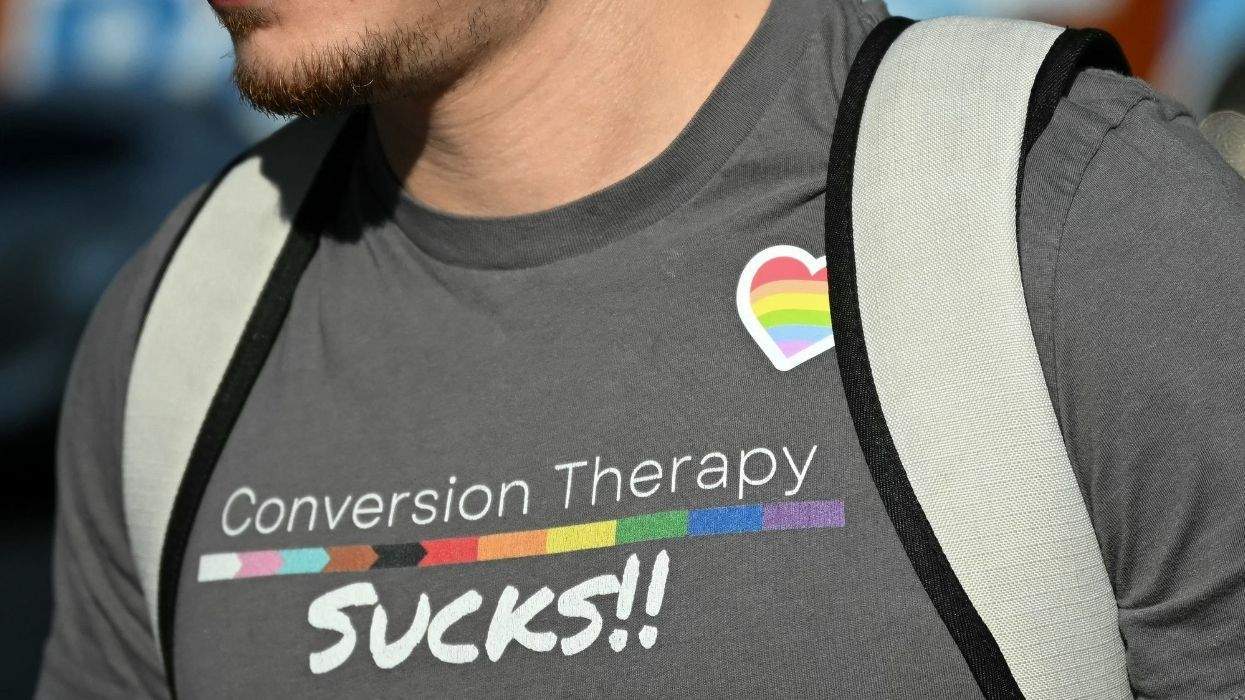
The U.S. Supreme Court on Tuesday, on Transgender Day of Visibility, struck down Colorado’s ban on so-called “conversion therapy” for minors. The decision elevates abstract free-speech doctrine over a growing body of medical evidence and leaves LGBTQ+ youth more exposed to a practice doctors have long described as harmful. The Court ruled 8–1, with a broad majority, including two liberal justices, joining the opinion striking down the law, and Justice Ketanji Brown Jackson dissenting.
Keep up with the latest in LGBTQ+ news and politics. Sign up for The Advocate's email newsletter.
In Chiles v. Salazar, the Court held that because conversion therapy often takes the form of talk therapy, Colorado’s law amounts to a content-based restriction on speech and cannot survive First Amendment scrutiny. Writing for the majority, the Court emphasized that the law “targets speech based on its communicative content,” rejecting the state’s argument that it was regulating professional conduct rather than expression. The Court further found the law was not “viewpoint neutral,” because it barred therapists from encouraging a change in sexual orientation or gender identity while allowing speech that affirms a patient’s identity or transition.
In dissent, Jackson warned that the Court’s reasoning undermines states’ long-standing authority to regulate medical practice and protect vulnerable patients, particularly minors. She wrote that the Court’s opinion “misreads our precedents” and is “unprincipled and unworkable,” cautioning that it could weaken states’ ability to regulate the medical profession to protect public health.
Jackson argued that any limits on speech in this context must be understood as part of the states’ authority to set standards of care, particularly when lawmakers seek to prevent harm, including suicidality, among vulnerable patients.
The ruling is a stark setback for states that have tried to draw a bright line between legitimate care and practices rooted in discredited ideas about sexuality and gender.
“The Supreme Court’s decision to treat the dangerous practice of conversion therapy as constitutionally protected speech is a tragic step backward for our country that will put young lives at risk,” Trevor Project CEO Jaymes Black said in a statement. Black added that LGBTQ+ youth subjected to conversion therapy are “more than twice as likely to attempt suicide compared to their peers,” underscoring the stakes of the ruling.
The Human Rights Campaign issued a similarly forceful response. “Today’s reckless decision means more American kids will suffer,” President Kelley Robinson said, calling conversion therapy “pseudoscience, not real therapy” that “harms families, traumatizes children, and robs people of their faith communities.” The organization warned the ruling could undermine protections in 23 states and Washington, D.C., where similar laws are in place.
Related: Almost 200 members of Congress call on the Supreme Court to uphold bans on conversion therapy
Colorado argued that conversion therapy is not merely an expression but a form of clinical intervention — one associated, major medical groups say, with depression, anxiety, and increased suicide risk. The Court was unpersuaded and concluded that the Constitution does not allow the government to decide which messages may be delivered in a therapist’s office. The majority opinion warned that allowing such regulation would give states “broad power to restrict speech it disfavors” within licensed professions, a move it said would have sweeping implications beyond this case.
Related: Wisconsin Supreme Court ruling reinstates conversion therapy ban
Related: How the Supreme Court’s conversion therapy case could reshape LGBTQ+ protections across America
A February research brief from The Trevor Project found that LGBTQ+ young people with recent exposure to the damaging and discredited practice reported the highest rates of suicidal ideation and attempts: 61 percent said they had seriously considered suicide in the past year, and 35 percent reported attempting it, far higher than among peers whose exposure was further in the past. Overall, one in 20 LGBTQ+ young people reported having been subjected to conversion therapy, with higher exposure among transgender and nonbinary youth, the Trevor Project found.
Advocates also emphasized that every major medical and mental health association in the United States has condemned conversion therapy, and that such practices have been linked to depression, anxiety, substance use, and suicide, particularly among minors.
“The Court’s decision today is painful, but it does not change the facts: conversion therapy is dangerous, it is malpractice, and survivors still have the ability to seek justice for the harms caused by these practices," Black said. "To LGBTQ+ young people everywhere, please know this: Regardless of today’s decision, or any other headlines you read, you belong. You are worthy, you are loved, and there is nothing wrong with being who you are."
This story is developing.