'%3E%3Cpath d='M16.3574 35.6519H12.9537L15.0491 18.8873L16.3574 35.6519ZM30.4229 54.0093L22.309 0.994385H7.91795L0 54.0093H10.6634L11.5802 46.3855H17.4014L17.9914 54.0093H30.4229Z' fill='%23971B20'/%3E%3Cpath d='M48.2073 41.8813C48.2073 43.4049 47.4892 44.0011 46.1144 44.0011H43.7595V11.0687H46.1144C47.4892 11.0687 48.2073 11.6636 48.2073 13.1885V41.8813ZM59.5273 43.6695V11.3326C59.5273 3.71323 53.5729 0.994385 47.8157 0.994385H31.7213V54.0093H47.8157C53.5729 54.0093 59.5273 51.29 59.5273 43.6695Z' fill='%23971B20'/%3E%3Cpath d='M90.183 0.994385H78.6039L75.0711 30.6157L71.9955 0.994385H59.4346L69.2474 54.0093H80.373L90.183 0.994385Z' fill='%23971B20'/%3E%3Cpath d='M107.063 42.3448C107.063 43.7359 105.951 44.5974 104.643 44.5974C103.269 44.5974 102.157 43.7359 102.157 42.3448V12.658C102.157 11.2676 103.269 10.4058 104.643 10.4058C105.951 10.4058 107.063 11.2676 107.063 12.658V42.3448ZM119.233 43.2723V11.7312C119.233 6.36384 112.952 -3.8147e-06 104.643 -3.8147e-06C96.2667 -3.8147e-06 89.9867 6.36384 89.9867 11.7312V43.2723C89.9867 48.6393 96.2667 55 104.643 55C112.952 55 119.233 48.6393 119.233 43.2723Z' fill='%23971B20'/%3E%3Cpath d='M150.976 43.9349V33.7309H139.069V42.3448C139.069 43.7359 137.957 44.5974 136.582 44.5974C135.076 44.5974 133.964 43.7359 133.964 42.3448V12.658C133.964 11.2676 135.076 10.4058 136.582 10.4058C137.957 10.4058 139.069 11.2676 139.069 12.658V21.2723H150.976V11.0687C150.976 5.70107 145.283 -3.8147e-06 136.582 -3.8147e-06C127.75 -3.8147e-06 121.796 5.70107 121.796 11.0687V43.9349C121.796 49.3022 127.75 55 136.582 55C145.283 55 150.976 49.3022 150.976 43.9349Z' fill='%23971B20'/%3E%3Cpath d='M167.478 35.6519H164.076L166.17 18.8873L167.478 35.6519ZM181.544 54.0093L173.432 0.994385H159.037L151.123 54.0093H161.785L162.704 46.3855H168.523L169.114 54.0093H181.544Z' fill='%23971B20'/%3E%3Cpath d='M205.412 10.4058V0.994385H177.081V10.4058H185.392V54.0093H197.428V10.4058H205.412Z' fill='%23971B20'/%3E%3Cpath d='M230.002 54.0093V43.9349H218.914V31.8746H226.635V21.8028H218.914V10.4058H230.002V0.994385H206.875V54.0093H230.002Z' fill='%23971B20'/%3E%3C/g%3E%3Cdefs%3E%3CclipPath id='clip0_260_7080'%3E%3Crect width='230' height='55' fill='white'/%3E%3C/clipPath%3E%3C/defs%3E%3C/svg%3E)
On a rehearsal night in 1981, a group of singers in Washington, D.C., gathered to do something that sounds simple now, but was anything but simple then — they stood together and sang, publicly and proudly, as gay men.
Some of their names could appear in a concert program. Some could not. Being associated publicly with a gay organization in the nation’s capital carried real risk. In a time when being known as queer could cost someone a job, a family, a home, or a future, they came together anyway.
Five days after the Gay Men’s Chorus of Washington, DC (GMCW) was founded on June 28, 1981, the first public reports of what would become the AIDS crisis appeared in the press. What began as a chorus quickly became something larger: a community, a refuge, a record of survival, and a place where queer people could insist on being heard when the world chose fear, silence, or abandonment.
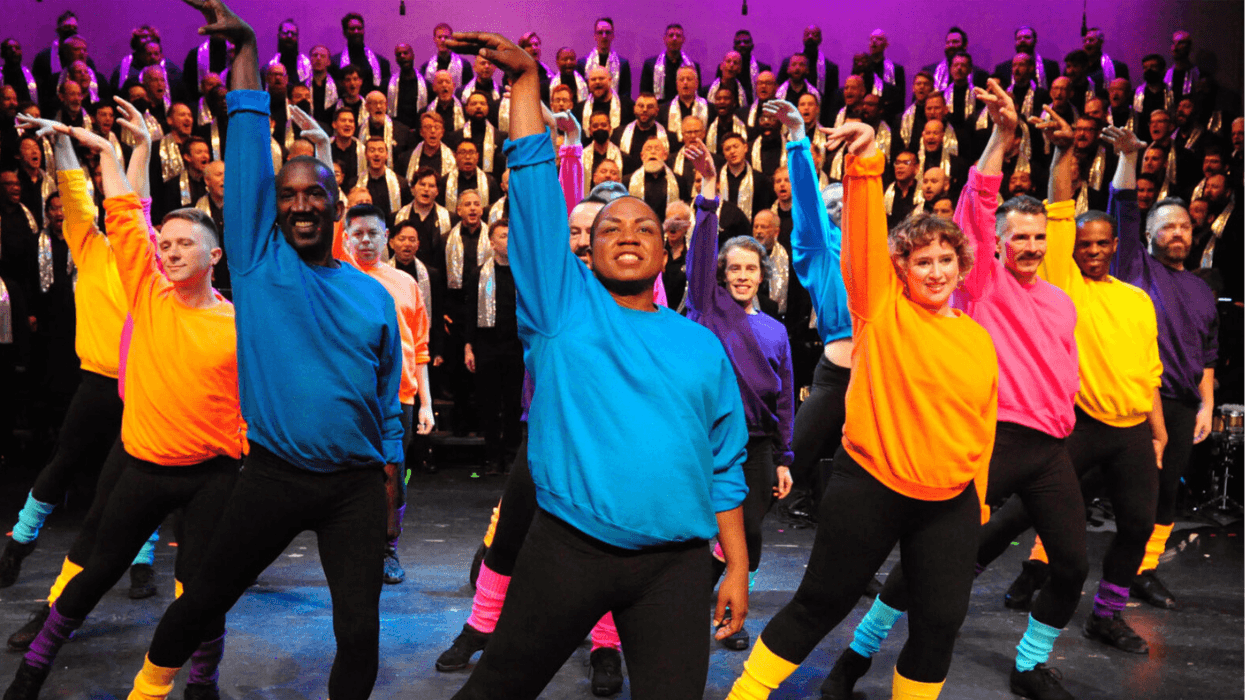
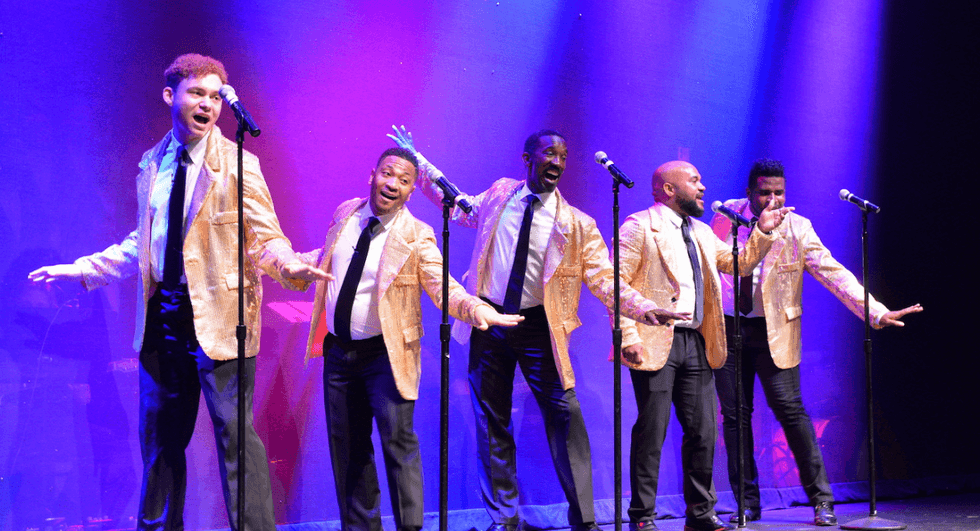 Performers from the Gay Men’s Chorus of Washington, DC sing and dance on stageGMCW
45 years later, a different rehearsal room tells a connected story. Young singers in GMCW’s GenOUT Youth Chorus stand before thousands of people with adult members of GMCW behind them, literally and symbolically, showing them through presence alone that queer adulthood is possible. That joy can last, that community can hold, that a hostile political moment is not the whole story.
In conversations with GMCW Chorus member and historical chair Chuck Willett, GenOUT alum and GMCW Chorus member Anjali Murthy, and Nashville Major Minors Artistic Director Matthew Pyles, they reinforced the idea that LGBTQIA+ choruses give queer people of different generations a place to find one another, learn from one another, and help one another imagine a future.
After the 2024 election, more than 50 adult GMCW Chorus members attended a GenOUT Youth Chorus rehearsal. For the first hour, they did not rehearse; they listened. Young singers spoke about fear, uncertainty, and the helplessness of being affected by political decisions that many of them were too young to vote on. Adult singers shared how earlier generations had endured hostile administrations, public health crises, discrimination, loss, and fear, not by pretending those forces were harmless, but by refusing to face them alone.
That is what intergenerational queer connection offers. It does not promise that everything will be easy. It offers evidence that survival has precedents.
For many LGBTQIA+ youth, especially transgender and nonbinary young people, that evidence can be life-changing. The broader national conversation often turns their lives into debate topics, campaign slogans, or policy targets. But inside a queer chorus, a young person can meet adults who have lived through change, who are still becoming themselves, who are happy, visible, flawed, resilient, creative, and present.
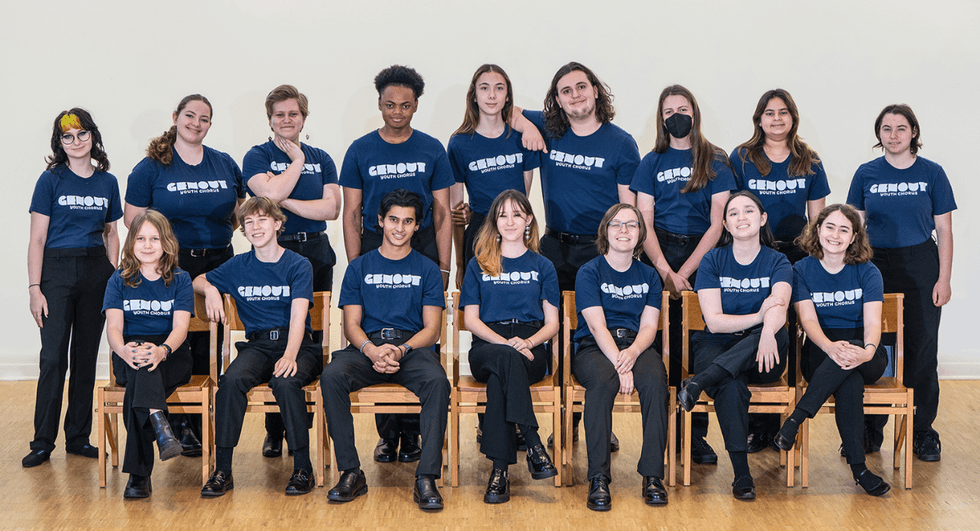 Members of GMCW’s GenOUT Youth Chorus pose together.GMCW
In recent years, GMCW has become home not only to gay men but to trans singers, nonbinary singers, women, and straight allies. That evolution does not erase the Chorus’s founding identity; it extends its founding promise.
That promise is also taking new forms. For Trans Day of Visibility, GMCW singers helped create Swan Street Voices, a salon-style performance named in honor of William Dorsey Swann, the formerly enslaved Washingtonian widely recognized as one of the first known drag queens in American history. The program featured trans and nonbinary performers, a trans conductor, poetry, music, and visual art. Trans communities are not monolithic. They contain many voices, many stories, and many stages of becoming.
This work is not limited to Washington, D.C. LGBTQIA+ youth choruses are growing because the need is growing. In Tennessee, where LGBTQIA+ people have been repeatedly targeted by state politics, the Nashville Major Minors create a space where young people can sing, build friendships, be supported by queer and allied adults, and explore identity without having to constantly defend themselves. Adult volunteers help musically and emotionally, while also healing parts of themselves by providing the support they may not have had when they were young.
Anjali’s story illustrates that continuum. After singing with GenOUT for four years, he stayed local for college and joined GMCW as an adult member. As a youth singer, he helped create a mentorship program connecting GenOUT members with GMCW singers. As an alum, he returned to speak and sing at Youth Invasion, living proof that youth programming does not end when singers age out. It continues through leadership, service, memory, and return.
For 45 years, GMCW has shown what can happen when queer people build institutions sturdy enough to hold joy and grief at once. As attacks on LGBTQIA+ youth intensify across the country, especially attacks on trans and nonbinary young people, we need to fund and protect the places where they are not reduced to politics.
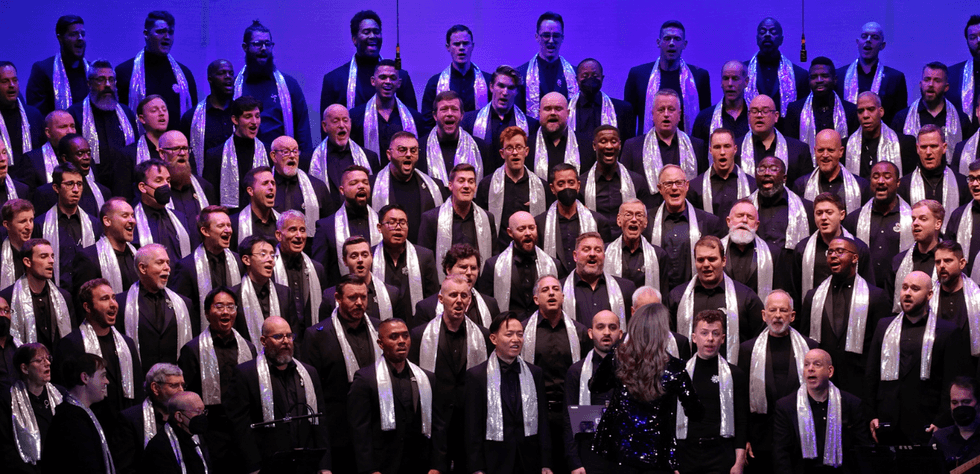 Members of the Gay Men’s Chorus of Washington, DC perform during a GMCW concertGMCW
To learn more about the Gay Men’s Chorus of Washington, DC and GenOUT Youth Chorus, visit GMCW.org.
Opinion is dedicated to featuring a wide range of inspiring personal stories and impactful opinions from the LGBTQ+ community and its allies. Visit Advocate.com/submit to learn more about submission guidelines. We welcome your thoughts and feedback on any of our stories. Email us at voices@equalpride.com. Views expressed in Voices stories are those of the guest writers, columnists, and editors, and do not directly represent the views of The Advocate or our parent company, equalpride.