'%3E%3Cpath d='M16.3574 35.6519H12.9537L15.0491 18.8873L16.3574 35.6519ZM30.4229 54.0093L22.309 0.994385H7.91795L0 54.0093H10.6634L11.5802 46.3855H17.4014L17.9914 54.0093H30.4229Z' fill='%23971B20'/%3E%3Cpath d='M48.2073 41.8813C48.2073 43.4049 47.4892 44.0011 46.1144 44.0011H43.7595V11.0687H46.1144C47.4892 11.0687 48.2073 11.6636 48.2073 13.1885V41.8813ZM59.5273 43.6695V11.3326C59.5273 3.71323 53.5729 0.994385 47.8157 0.994385H31.7213V54.0093H47.8157C53.5729 54.0093 59.5273 51.29 59.5273 43.6695Z' fill='%23971B20'/%3E%3Cpath d='M90.183 0.994385H78.6039L75.0711 30.6157L71.9955 0.994385H59.4346L69.2474 54.0093H80.373L90.183 0.994385Z' fill='%23971B20'/%3E%3Cpath d='M107.063 42.3448C107.063 43.7359 105.951 44.5974 104.643 44.5974C103.269 44.5974 102.157 43.7359 102.157 42.3448V12.658C102.157 11.2676 103.269 10.4058 104.643 10.4058C105.951 10.4058 107.063 11.2676 107.063 12.658V42.3448ZM119.233 43.2723V11.7312C119.233 6.36384 112.952 -3.8147e-06 104.643 -3.8147e-06C96.2667 -3.8147e-06 89.9867 6.36384 89.9867 11.7312V43.2723C89.9867 48.6393 96.2667 55 104.643 55C112.952 55 119.233 48.6393 119.233 43.2723Z' fill='%23971B20'/%3E%3Cpath d='M150.976 43.9349V33.7309H139.069V42.3448C139.069 43.7359 137.957 44.5974 136.582 44.5974C135.076 44.5974 133.964 43.7359 133.964 42.3448V12.658C133.964 11.2676 135.076 10.4058 136.582 10.4058C137.957 10.4058 139.069 11.2676 139.069 12.658V21.2723H150.976V11.0687C150.976 5.70107 145.283 -3.8147e-06 136.582 -3.8147e-06C127.75 -3.8147e-06 121.796 5.70107 121.796 11.0687V43.9349C121.796 49.3022 127.75 55 136.582 55C145.283 55 150.976 49.3022 150.976 43.9349Z' fill='%23971B20'/%3E%3Cpath d='M167.478 35.6519H164.076L166.17 18.8873L167.478 35.6519ZM181.544 54.0093L173.432 0.994385H159.037L151.123 54.0093H161.785L162.704 46.3855H168.523L169.114 54.0093H181.544Z' fill='%23971B20'/%3E%3Cpath d='M205.412 10.4058V0.994385H177.081V10.4058H185.392V54.0093H197.428V10.4058H205.412Z' fill='%23971B20'/%3E%3Cpath d='M230.002 54.0093V43.9349H218.914V31.8746H226.635V21.8028H218.914V10.4058H230.002V0.994385H206.875V54.0093H230.002Z' fill='%23971B20'/%3E%3C/g%3E%3Cdefs%3E%3CclipPath id='clip0_260_7080'%3E%3Crect width='230' height='55' fill='white'/%3E%3C/clipPath%3E%3C/defs%3E%3C/svg%3E)
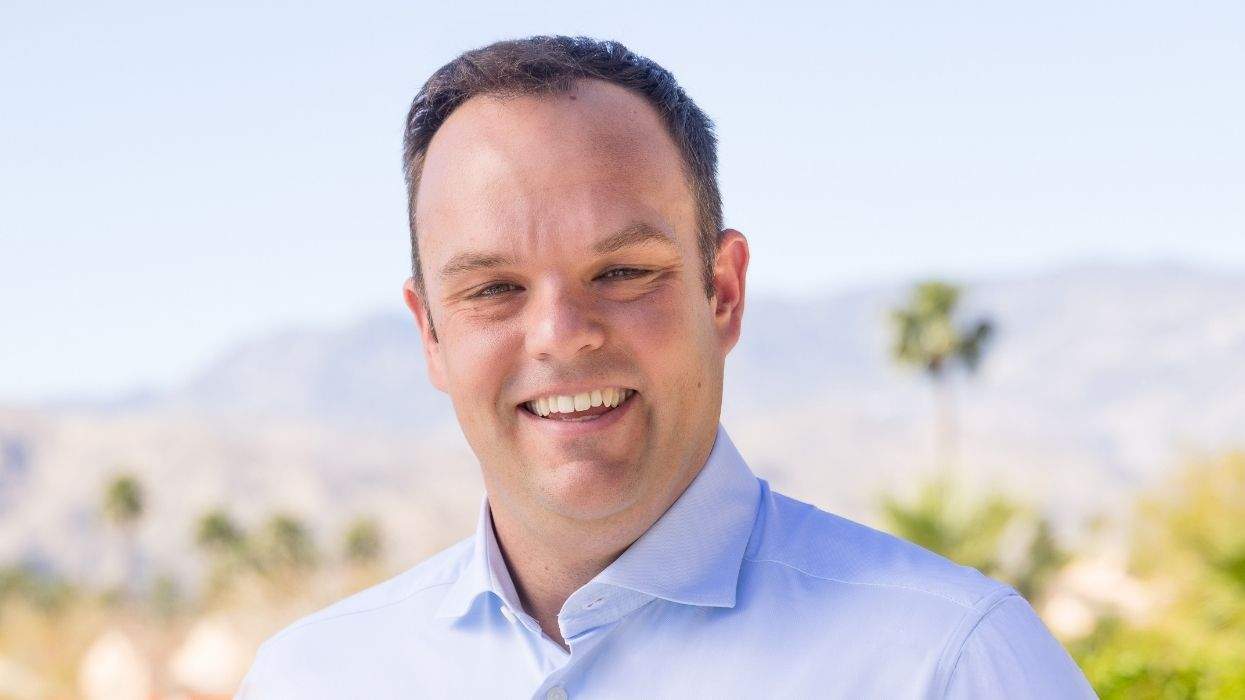
A Southern California congressional primary is quickly becoming a test of a question Democrats can’t seem to settle: whether LGBTQ+ identity is still seen as a political liability or whether the party is misreading what voters actually care about.
Keep up with the latest in LGBTQ+ news and politics. Sign up for The Advocate's email newsletter.
In California’s 48th Congressional District, a newly competitive seat stretching from Palm Springs into Riverside and San Diego counties, Democrats are not just battling for a nomination. They are navigating one of the most crowded and ideologically diverse primaries in the country, with more than a dozen candidates, including high-profile contenders like Ammar Campa-Najjar and San Diego City Councilmember Marni von Wilpert, as well as a wide field of local officials, business leaders, and first-time candidates.
A recent controversy began with a campaign memo tied to Democrat Ammar Campa-Najjar that critics said suggested LGBTQ+ candidates might struggle to build a winning coalition beyond Palm Springs, one of the country’s most prominent queer enclaves. His campaign denied that the memo was referring to LGBTQ+ identities.
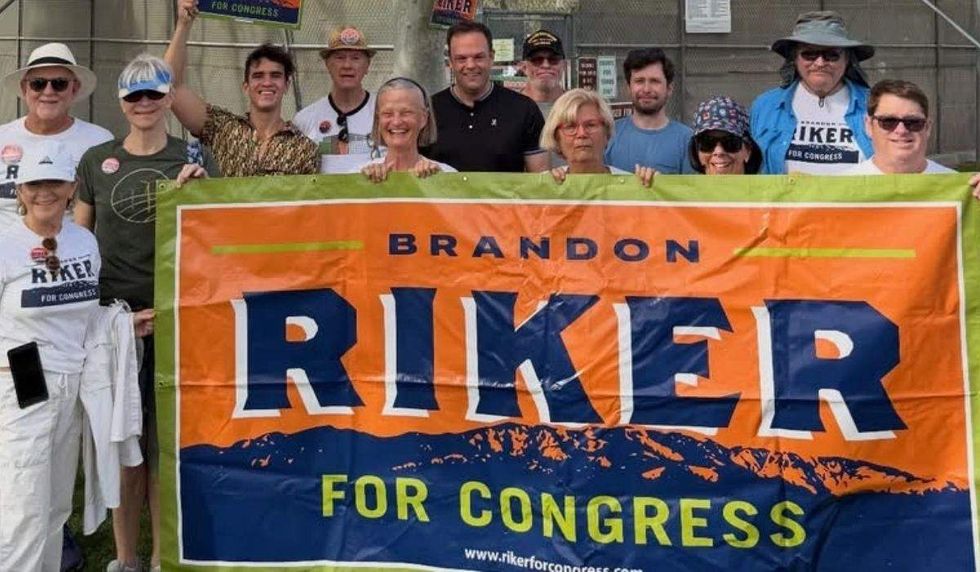 Brandon Riker (center) with volunteers supporting his campaign for Congress.Courtesy Riker for Congress
Related: Darrell Issa’s retirement opens Palm Springs–area House race for queer Democrats
Brandon Riker, one of several out Democrats in the race, has chosen not to engage the memo on its own terms. Instead, he is rejecting the premise beneath it.
“I don’t think there are people who are going to support me or not support me because I’m openly gay,” he said in an interview with The Advocate.
What voters ask him about, he said, is far more immediate: the cost of groceries, the price of gas, whether they can afford to stay where they live.
A different diagnosis
Riker’s argument is a rebuke, not just to one campaign, but to a broader strain of Democratic anxiety.
After the 2024 election cycle, some strategists and donors urged candidates to recalibrate their messaging on transgender rights, suggesting the issue had become politically risky. Riker rejects that logic outright. “We didn’t talk too much about trans rights,” he said. “We didn’t talk enough about the economy.”
Related: This bisexual San Diego City Council member is fighting to replace Darrell Issa in Congress
In Riker’s telling, Democrats did not lose because they defended marginalized people; they lost because too many voters no longer believe the party can materially improve their lives.
“If we can’t solve and win on the economy, then we’re not going to be able to protect LGBTQ rights, women’s rights, or protect democracy,” he said.
Identity, without apology
Riker is not running away from identity politics so much as deprioritizing it in his pitch to voters. He speaks openly about being gay. He touts support from LGBTQ leaders. He calls gender-affirming care “medically necessary” and condemns efforts to restrict it.
“I will always stand with the trans community,” he said.
But he resists the idea, implicit in the memo controversy, that identity itself determines electability.
“I fundamentally believe any of us could win this district in a general election if we have the right message,” he said.
The economist’s campaign
Where Riker does want to distinguish himself is in policy, specifically the economy.
“I’d be the only trained economist in the House of Representatives,” he said.
Riker holds a bachelor’s degree in economics from Washington College, where he graduated Phi Beta Kappa, and a master’s degree from the London School of Economics and Political Science. He has also worked in investment and business strategy roles.
He has built his campaign around what he calls a “second New Deal,” a set of proposals to restructure how wealth is taxed and distributed. He has called for eliminating the cap on payroll taxes that fund Social Security, so higher earners continue paying into the system beyond the current threshold. At the same time, he wants to make the first $50,000 of income tax-free, a change he says would put roughly $3,000 back into workers’ pockets annually, “not at tax time, but in every paycheck.”
He also focuses on capital gains, which he argues are taxed too lightly relative to wages. “We have to tax capital gains the way that wealth is really generated in this country,” he said, calling for rates on gains above $1 million, excluding primary homes, to align more closely with income taxes.
“It’s really not an affordability crisis, it’s an economic crisis in the way the system is working,” he said.
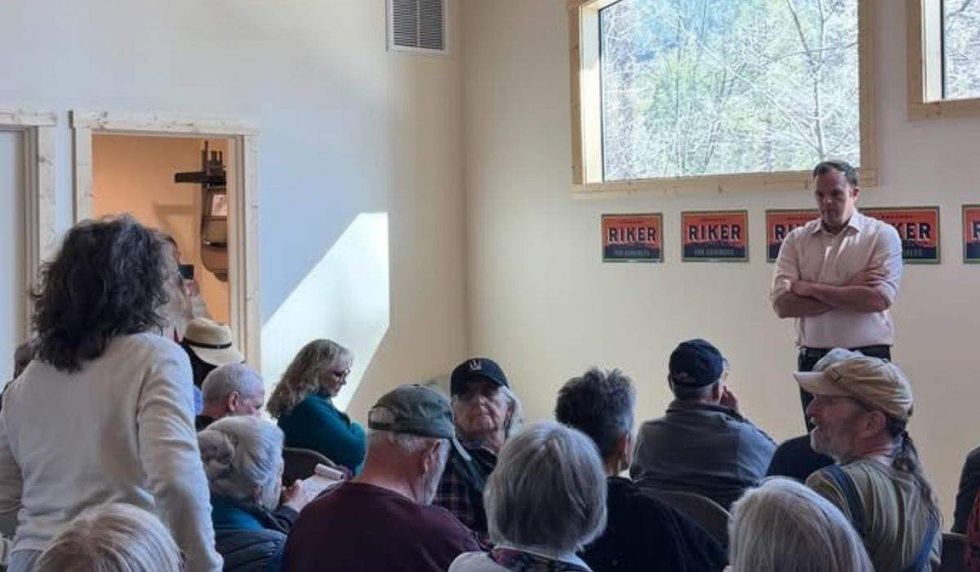 Brandon Riker listenst to a town hall participant's concerns as he runs for the Democratic nomination for Congress in his California district.Courtesy Riker for Congress
He describes the current moment not as an affordability crisis but as a “structural economic crisis” that has eroded trust in institutions and fueled political volatility. “What has happened is both parties have failed the working people in this country,” he said.
That failure, he argues, is what drives the oscillation between administrations and the growing appeal of more extreme political solutions.
“If we can’t solve and win on the economy,” he said, “then we’re not going to be able to protect LGBTQ+ rights, women’s rights, or protect democracy.”