'%3E%3Cpath d='M16.3574 35.6519H12.9537L15.0491 18.8873L16.3574 35.6519ZM30.4229 54.0093L22.309 0.994385H7.91795L0 54.0093H10.6634L11.5802 46.3855H17.4014L17.9914 54.0093H30.4229Z' fill='%23971B20'/%3E%3Cpath d='M48.2073 41.8813C48.2073 43.4049 47.4892 44.0011 46.1144 44.0011H43.7595V11.0687H46.1144C47.4892 11.0687 48.2073 11.6636 48.2073 13.1885V41.8813ZM59.5273 43.6695V11.3326C59.5273 3.71323 53.5729 0.994385 47.8157 0.994385H31.7213V54.0093H47.8157C53.5729 54.0093 59.5273 51.29 59.5273 43.6695Z' fill='%23971B20'/%3E%3Cpath d='M90.183 0.994385H78.6039L75.0711 30.6157L71.9955 0.994385H59.4346L69.2474 54.0093H80.373L90.183 0.994385Z' fill='%23971B20'/%3E%3Cpath d='M107.063 42.3448C107.063 43.7359 105.951 44.5974 104.643 44.5974C103.269 44.5974 102.157 43.7359 102.157 42.3448V12.658C102.157 11.2676 103.269 10.4058 104.643 10.4058C105.951 10.4058 107.063 11.2676 107.063 12.658V42.3448ZM119.233 43.2723V11.7312C119.233 6.36384 112.952 -3.8147e-06 104.643 -3.8147e-06C96.2667 -3.8147e-06 89.9867 6.36384 89.9867 11.7312V43.2723C89.9867 48.6393 96.2667 55 104.643 55C112.952 55 119.233 48.6393 119.233 43.2723Z' fill='%23971B20'/%3E%3Cpath d='M150.976 43.9349V33.7309H139.069V42.3448C139.069 43.7359 137.957 44.5974 136.582 44.5974C135.076 44.5974 133.964 43.7359 133.964 42.3448V12.658C133.964 11.2676 135.076 10.4058 136.582 10.4058C137.957 10.4058 139.069 11.2676 139.069 12.658V21.2723H150.976V11.0687C150.976 5.70107 145.283 -3.8147e-06 136.582 -3.8147e-06C127.75 -3.8147e-06 121.796 5.70107 121.796 11.0687V43.9349C121.796 49.3022 127.75 55 136.582 55C145.283 55 150.976 49.3022 150.976 43.9349Z' fill='%23971B20'/%3E%3Cpath d='M167.478 35.6519H164.076L166.17 18.8873L167.478 35.6519ZM181.544 54.0093L173.432 0.994385H159.037L151.123 54.0093H161.785L162.704 46.3855H168.523L169.114 54.0093H181.544Z' fill='%23971B20'/%3E%3Cpath d='M205.412 10.4058V0.994385H177.081V10.4058H185.392V54.0093H197.428V10.4058H205.412Z' fill='%23971B20'/%3E%3Cpath d='M230.002 54.0093V43.9349H218.914V31.8746H226.635V21.8028H218.914V10.4058H230.002V0.994385H206.875V54.0093H230.002Z' fill='%23971B20'/%3E%3C/g%3E%3Cdefs%3E%3CclipPath id='clip0_260_7080'%3E%3Crect width='230' height='55' fill='white'/%3E%3C/clipPath%3E%3C/defs%3E%3C/svg%3E)
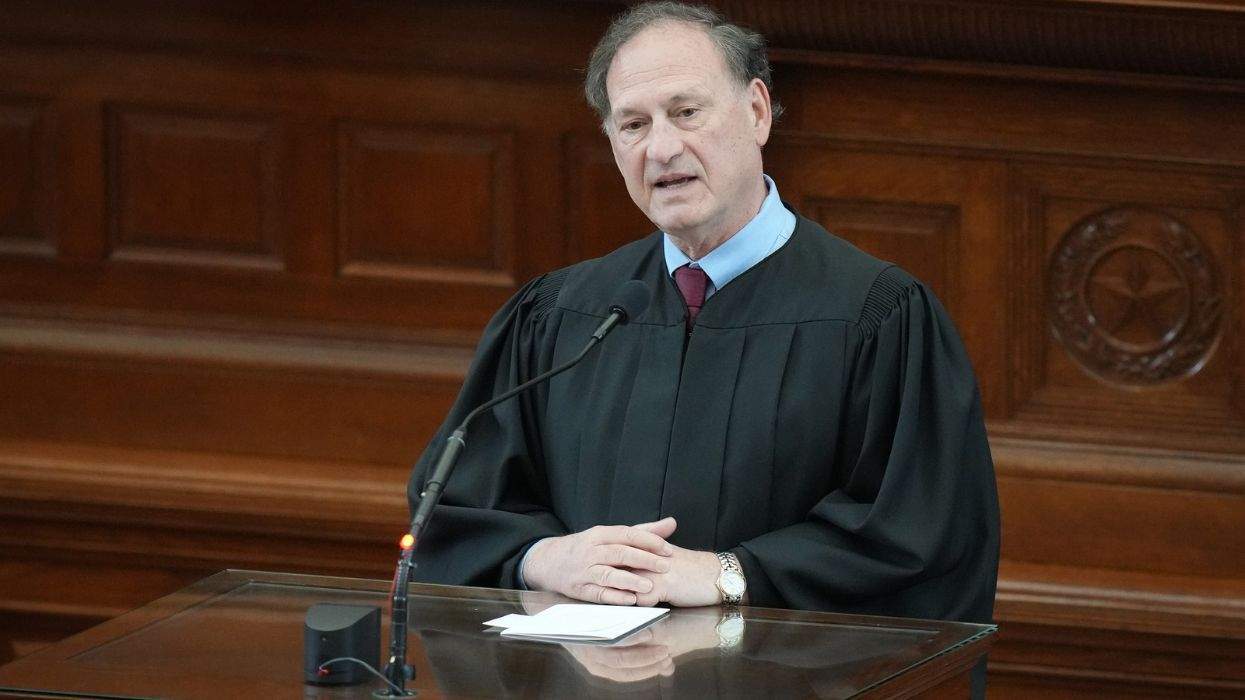

Conservative Supreme Court Justice Samuel Alito says the ruling legalizing marriage equality nationwide marked “perhaps the decisive point” in America’s turn “against religious liberty.”
In his new book So Ordered, Alito focuses on Obergefell v. Hodges. The 5-4 decision was a landmark in civil rights, establishing a constitutional right for same-sex couples to marry nationwide. But Alito, who dissented from the 2015 ruling, portrays it as a turning point against religious freedom.
Related: Samuel Alito 'not suggesting' marriage equality should be overturned
The book collects 19 speeches Alito delivered to groups across the country, including his reflections on Obergefell’s legacy. In those remarks, he suggested that treating religious opposition to same-sex marriage as bigotry could push believers out of public life. ABC News published excerpts from the collection.
“I expressed my worry that equating the expression of certain views with bigotry — or, if you like, with dignitary harm — would drive believers out of public life,” Alito said in a 2018 address to a Catholic group.
Four years later, he suggested his fears had materialized. “Quite suddenly, religious liberty has become controversial,” Alito told the Magnificat Foundation in 2022.
Despite the Supreme Court’s increasingly conservative makeup, Obergefell remains intact. In November 2025, the court declined to hear an appeal from former Kentucky county clerk Kim Davis, who refused to issue marriage licenses to same-sex couples after the 2015 ruling. Her attorneys had asked the justices to use her case to overturn Obergefell. The court rejected the appeal.
In 2022, then-President Joe Biden signed a law providing federal recognition of valid same-sex marriages and requiring states to recognize those performed legally in other states. The Respect for Marriage Act offers protections if Obergefell is overturned, but it would not require every state to continue issuing marriage licenses to same-sex couples.
The legislation followed the Supreme Court’s Dobbs decision overturning Roe v. Wade, which had protected abortion rights for nearly 50 years. That reversal heightened concerns about the future of other constitutional protections, including marriage equality.
Alito points to disputes involving LGBTQ+ rights as evidence that “support for religious liberty has cratered.” He cites cases involving businesses seeking religious exemptions from requirements governing services for same-sex couples or employee health coverage, including those that refuse to provide wedding services to gay couples or seek to limit health care for employees based on religious beliefs.
Alito told CBS News he had considered retirement but decided to remain on the court.