'%3E%3Cpath d='M16.3574 35.6519H12.9537L15.0491 18.8873L16.3574 35.6519ZM30.4229 54.0093L22.309 0.994385H7.91795L0 54.0093H10.6634L11.5802 46.3855H17.4014L17.9914 54.0093H30.4229Z' fill='%23971B20'/%3E%3Cpath d='M48.2073 41.8813C48.2073 43.4049 47.4892 44.0011 46.1144 44.0011H43.7595V11.0687H46.1144C47.4892 11.0687 48.2073 11.6636 48.2073 13.1885V41.8813ZM59.5273 43.6695V11.3326C59.5273 3.71323 53.5729 0.994385 47.8157 0.994385H31.7213V54.0093H47.8157C53.5729 54.0093 59.5273 51.29 59.5273 43.6695Z' fill='%23971B20'/%3E%3Cpath d='M90.183 0.994385H78.6039L75.0711 30.6157L71.9955 0.994385H59.4346L69.2474 54.0093H80.373L90.183 0.994385Z' fill='%23971B20'/%3E%3Cpath d='M107.063 42.3448C107.063 43.7359 105.951 44.5974 104.643 44.5974C103.269 44.5974 102.157 43.7359 102.157 42.3448V12.658C102.157 11.2676 103.269 10.4058 104.643 10.4058C105.951 10.4058 107.063 11.2676 107.063 12.658V42.3448ZM119.233 43.2723V11.7312C119.233 6.36384 112.952 -3.8147e-06 104.643 -3.8147e-06C96.2667 -3.8147e-06 89.9867 6.36384 89.9867 11.7312V43.2723C89.9867 48.6393 96.2667 55 104.643 55C112.952 55 119.233 48.6393 119.233 43.2723Z' fill='%23971B20'/%3E%3Cpath d='M150.976 43.9349V33.7309H139.069V42.3448C139.069 43.7359 137.957 44.5974 136.582 44.5974C135.076 44.5974 133.964 43.7359 133.964 42.3448V12.658C133.964 11.2676 135.076 10.4058 136.582 10.4058C137.957 10.4058 139.069 11.2676 139.069 12.658V21.2723H150.976V11.0687C150.976 5.70107 145.283 -3.8147e-06 136.582 -3.8147e-06C127.75 -3.8147e-06 121.796 5.70107 121.796 11.0687V43.9349C121.796 49.3022 127.75 55 136.582 55C145.283 55 150.976 49.3022 150.976 43.9349Z' fill='%23971B20'/%3E%3Cpath d='M167.478 35.6519H164.076L166.17 18.8873L167.478 35.6519ZM181.544 54.0093L173.432 0.994385H159.037L151.123 54.0093H161.785L162.704 46.3855H168.523L169.114 54.0093H181.544Z' fill='%23971B20'/%3E%3Cpath d='M205.412 10.4058V0.994385H177.081V10.4058H185.392V54.0093H197.428V10.4058H205.412Z' fill='%23971B20'/%3E%3Cpath d='M230.002 54.0093V43.9349H218.914V31.8746H226.635V21.8028H218.914V10.4058H230.002V0.994385H206.875V54.0093H230.002Z' fill='%23971B20'/%3E%3C/g%3E%3Cdefs%3E%3CclipPath id='clip0_260_7080'%3E%3Crect width='230' height='55' fill='white'/%3E%3C/clipPath%3E%3C/defs%3E%3C/svg%3E)

The latest: Lonely Lindsey Graham died tethered to the man who humiliated him
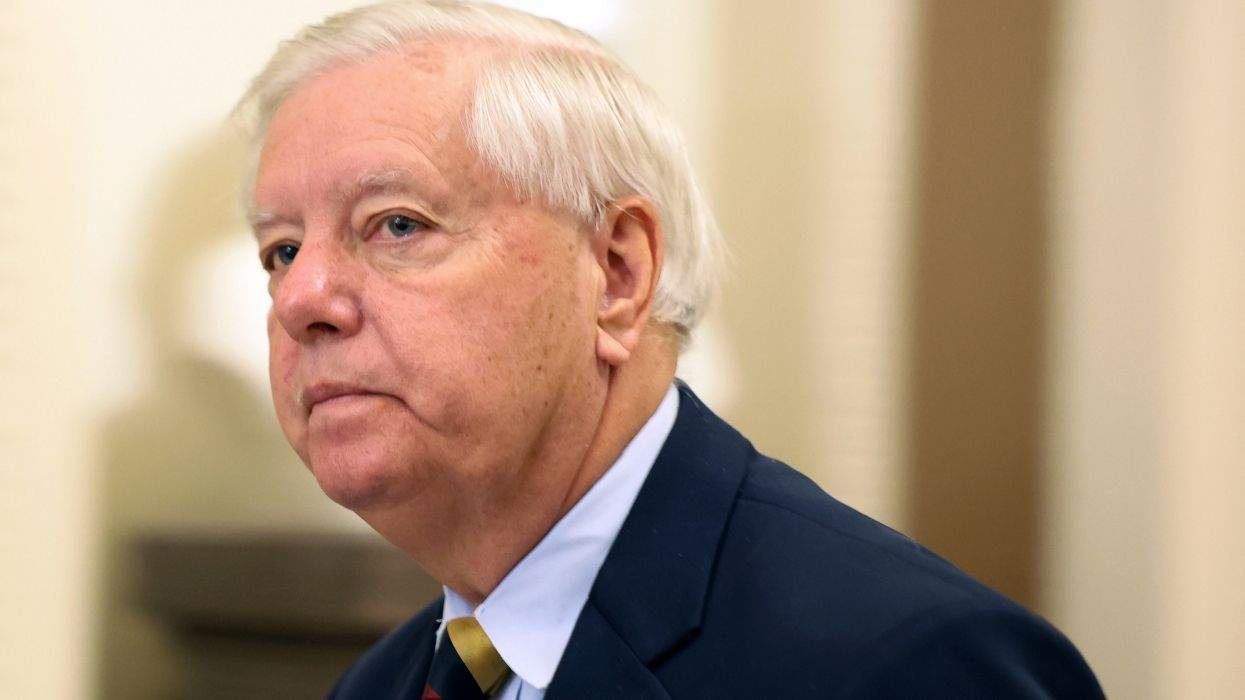
As questions swirl around Washington about the health status of Kentucky U.S. Sen. Mitch McConnell, who has been hospitalized for weeks after emergency responders went to his house for a patient in cardiac arrest, the political world woke up Sunday morning to news of another high-profile lawmaker’s death. U.S. Sen. Lindsey Graham of South Carolina, a foreign policy hawk who evolved from one of Donald Trump’s fiercest Republican critics into one of the president’s most dependable congressional allies, died Saturday evening after what his office described as a “brief and sudden illness.” He was 71.
Graham’s office announced his death in a statement posted late Saturday and did not disclose the nature of the illness. His family asked for prayers and privacy, the Associated Press reports.
President Donald Trump responded at 3:21 a.m. Sunday in a post on Truth Social.
“Senator Lindsey Graham, one of the greatest people and Senators I have ever known, is dead!” Trump wrote. “He was always working, and was a true American Patriot. Lindsey will be greatly missed!!! DETAILS AND ARRANGEMENTS TO FOLLOW. So sad!”
Graham had met with Ukrainian President Volodymyr Zelenskyy in Kyiv on Friday, one day before his death, as he continued his yearslong campaign for strong U.S. support of Ukraine and additional pressure on Russia. His advocacy for an assertive American role abroad made him one of the Senate’s most recognizable foreign policy voices, even as it sometimes placed him at odds with the more isolationist elements of Trump’s movement.
"I am shocked to learn of the sudden passing of Senator Lindsey Graham. My thoughts and prayers are with his family, friends and loved ones," New York Rep. Hakeem Jeffries, the Democratic House leader, said in a statement.
For LGBTQ+ Americans, Graham leaves behind three decades of opposition to many of the community’s most significant civil rights advances.
Related: Laura Loomer, in wild court testimony, says Trump staff told her Lindsey Graham is gay
A long record opposing LGBTQ+ equality
Graham voted for the Defense of Marriage Act as a member of the House in 1996. The legislation defined marriage for federal purposes as the union of one man and one woman and allowed states to decline to recognize same-sex marriages performed elsewhere.
He later supported a proposed constitutional amendment defining marriage as between one man and one woman. In statements supporting the amendment, Graham argued that judges should not be permitted to change the definition of marriage.
In 2010, Graham voted against the legislation that repealed “Don’t Ask, Don’t Tell,” the policy that forced lesbian, gay, and bisexual service members to conceal their sexual orientation to remain in the military. The repeal measure passed the Senate 65-31.
Graham also voted against the Employment Non-Discrimination Act in 2013. The bill would have prohibited workplace discrimination based on sexual orientation or gender identity. It passed the Senate with bipartisan support, 64-32, but was not taken up by the Republican-controlled House.
When the Supreme Court established nationwide marriage equality in its 2015 ruling in Obergefell v. Hodges, Graham said he would abide by the decision while making clear that he opposed it.
“I am a proud defender of traditional marriage,” Graham said, adding that he believed states should have been allowed to determine their own marriage laws. He nevertheless said he would respect the court’s ruling.
Graham also said that Kim Davis, the Kentucky county clerk who refused to issue marriage licenses to same-sex couples after the ruling, should comply with the law or leave office. His position distinguished between accepting a binding court ruling and supporting the right the court had recognized.
In 2022, Graham voted against the Respect for Marriage Act, which repealed the Defense of Marriage Act and required federal and interstate recognition of legally performed same-sex and interracial marriages. The bill passed the Senate 61-36 with support from 12 Republicans. Graham was among those voting no.
LGBTQ+ advocacy organizations including GLAAD have repeatedly criticized Graham’s record, including his opposition to marriage equality and federal nondiscrimination protections.
Related: What’s with Lindsey Graham’s inappropriate fixation on Trump’s amorous ballroom?
Graham consistently denied being gay
Graham’s political record unfolded alongside years of speculation about his sexual orientation, often expressed through homophobic jokes, insinuations, and attacks.
Graham, who never married and had no children, consistently denied that he was gay. His unmarried status was not evidence of his sexual orientation.
In 2018, after comedian Chelsea Handler posted a crude insinuation about him, Graham responded directly. “To the extent that it matters, I’m not gay,” he said, criticizing Handler’s comments as unhelpful to the country.
The speculation intensified in June 2020 after gay adult film performer Sean Harding posted allegations involving an unnamed Republican senator. Social media users seized on allegations that male sex workers refer to their client as "Lady G," and claimed that the senator was Graham, and the nicknames “Lady G” and “Lady Graham” began trending.
The Washington Post described what followed as a combination of political commentary, speculation and trolling. The allegations that Graham had hired male escorts were never substantiated by documentary evidence or independently confirmed by a credible news investigation.
In 2025, far-right activist Laura Loomer testified in a deposition that members of Trump’s staff had told her Graham was gay. Her account was secondhand, and she offered no independent evidence substantiating the assertion.
The rumors became a persistent feature of Graham’s public image, particularly among critics who suggested that a gay politician opposing LGBTQ+ rights would represent political hypocrisy. But Graham’s sexual orientation was never publicly established.
Whatever the truth of his private life, Graham repeatedly used his public power to oppose rights and protections sought by LGBTQ+ Americans.
From McCain ally to Trump loyalist
Born July 9, 1955, in Central, South Carolina, Graham grew up in the business his parents operated, which included a restaurant, bar, and pool hall. Both parents died while Graham was in his early 20s, and he helped care for his younger sister, Darline Graham Nordone.
Graham earned undergraduate and law degrees from the University of South Carolina. He joined the Air Force as a military lawyer and continued to serve in the South Carolina Air National Guard and Air Force Reserve, eventually retiring as a colonel.
Graham was elected to the House in 1994 and took office in January 1995. He gained national attention as one of the House managers who presented the impeachment case against President Bill Clinton in the Senate.
He won election to the Senate in 2002, succeeding Strom Thurmond, and took office in January 2003. He served for more than 23 years.
For much of his early Senate career, Graham was closely associated with Arizona Sen. John McCain. The two promoted an interventionist foreign policy and occasionally joined bipartisan negotiations, most notably the 2013 effort to overhaul the country’s immigration system. The measure passed the Senate but did not receive a vote in the House.
Graham mounted a brief campaign for the 2016 Republican presidential nomination. During the primary, he called Trump a “kook” and a “race-baiting, xenophobic, religious bigot.” Trump retaliated by reading Graham’s personal cellphone number aloud during a campaign event.
After Trump won the presidency, Graham underwent one of Washington’s most conspicuous political transformations. He became a golfing companion, an informal adviser, and a vigorous defender of the president.
As chair of the Senate Judiciary Committee from 2019 to 2021, Graham helped advance Trump’s judicial nominees, including Amy Coney Barrett’s nomination to the Supreme Court. He defended Trump during both impeachment trials.
Graham briefly appeared to break with Trump after the January 6, 2021, attack on the U.S. Capitol.
“Count me out. Enough is enough,” Graham said on the Senate floor.
The separation did not last. Graham returned to Trump’s side and remained one of his most visible congressional allies through Trump’s second administration.
A fifth-term campaign cut short
At the time of his death, Graham chaired the Senate Budget Committee and was campaigning for a fifth term. He had won South Carolina’s Republican primary in June and was scheduled to face Democratic nominee Annie Andrews in November.
Republicans held a 53-47 Senate majority before Graham’s death. Under South Carolina law, Republican Gov. Henry McMaster will appoint a temporary successor, who is expected to serve through January.