'%3E%3Cpath d='M16.3574 35.6519H12.9537L15.0491 18.8873L16.3574 35.6519ZM30.4229 54.0093L22.309 0.994385H7.91795L0 54.0093H10.6634L11.5802 46.3855H17.4014L17.9914 54.0093H30.4229Z' fill='%23971B20'/%3E%3Cpath d='M48.2073 41.8813C48.2073 43.4049 47.4892 44.0011 46.1144 44.0011H43.7595V11.0687H46.1144C47.4892 11.0687 48.2073 11.6636 48.2073 13.1885V41.8813ZM59.5273 43.6695V11.3326C59.5273 3.71323 53.5729 0.994385 47.8157 0.994385H31.7213V54.0093H47.8157C53.5729 54.0093 59.5273 51.29 59.5273 43.6695Z' fill='%23971B20'/%3E%3Cpath d='M90.183 0.994385H78.6039L75.0711 30.6157L71.9955 0.994385H59.4346L69.2474 54.0093H80.373L90.183 0.994385Z' fill='%23971B20'/%3E%3Cpath d='M107.063 42.3448C107.063 43.7359 105.951 44.5974 104.643 44.5974C103.269 44.5974 102.157 43.7359 102.157 42.3448V12.658C102.157 11.2676 103.269 10.4058 104.643 10.4058C105.951 10.4058 107.063 11.2676 107.063 12.658V42.3448ZM119.233 43.2723V11.7312C119.233 6.36384 112.952 -3.8147e-06 104.643 -3.8147e-06C96.2667 -3.8147e-06 89.9867 6.36384 89.9867 11.7312V43.2723C89.9867 48.6393 96.2667 55 104.643 55C112.952 55 119.233 48.6393 119.233 43.2723Z' fill='%23971B20'/%3E%3Cpath d='M150.976 43.9349V33.7309H139.069V42.3448C139.069 43.7359 137.957 44.5974 136.582 44.5974C135.076 44.5974 133.964 43.7359 133.964 42.3448V12.658C133.964 11.2676 135.076 10.4058 136.582 10.4058C137.957 10.4058 139.069 11.2676 139.069 12.658V21.2723H150.976V11.0687C150.976 5.70107 145.283 -3.8147e-06 136.582 -3.8147e-06C127.75 -3.8147e-06 121.796 5.70107 121.796 11.0687V43.9349C121.796 49.3022 127.75 55 136.582 55C145.283 55 150.976 49.3022 150.976 43.9349Z' fill='%23971B20'/%3E%3Cpath d='M167.478 35.6519H164.076L166.17 18.8873L167.478 35.6519ZM181.544 54.0093L173.432 0.994385H159.037L151.123 54.0093H161.785L162.704 46.3855H168.523L169.114 54.0093H181.544Z' fill='%23971B20'/%3E%3Cpath d='M205.412 10.4058V0.994385H177.081V10.4058H185.392V54.0093H197.428V10.4058H205.412Z' fill='%23971B20'/%3E%3Cpath d='M230.002 54.0093V43.9349H218.914V31.8746H226.635V21.8028H218.914V10.4058H230.002V0.994385H206.875V54.0093H230.002Z' fill='%23971B20'/%3E%3C/g%3E%3Cdefs%3E%3CclipPath id='clip0_260_7080'%3E%3Crect width='230' height='55' fill='white'/%3E%3C/clipPath%3E%3C/defs%3E%3C/svg%3E)
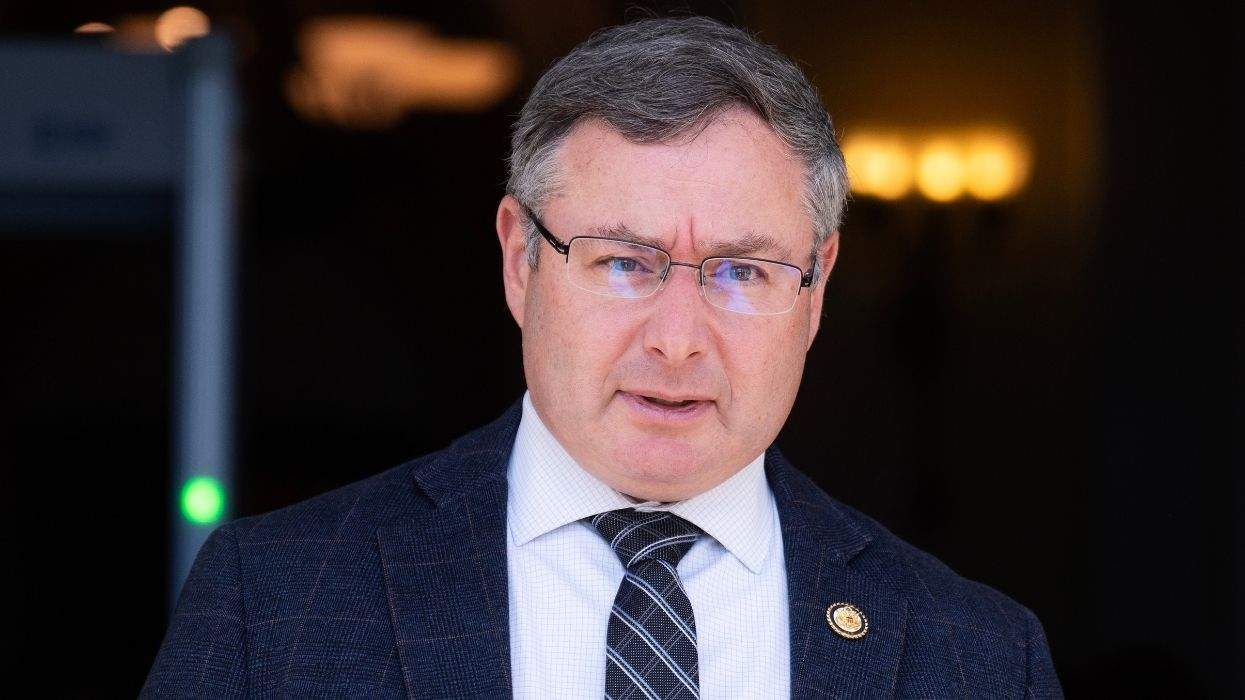
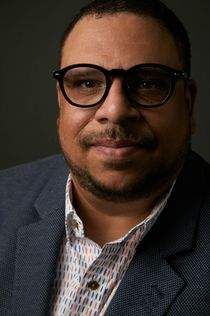
Rep. Eugene Vindman spent part of this spring praising a gay farming couple in rural Virginia as proof that LGBTQ+ people belong everywhere in his congressional district and in American life.
On Wednesday, Vindman voted for a bill critics say tells transgender children the opposite.
The first-term Virginia Democrat is facing fierce backlash from LGBTQ+ advocates after joining Republicans in support of H.R. 2616, the “Stopping Indoctrination and Protecting Kids Act,” that legislation opponents have labeled a national “Don’t Say LGBTQ+” bill. It would require schools to notify parents before affirming a transgender student’s identity and restrict federally funded schools from teaching what Republicans describe as “gender ideology.”
Vindman was one of eight Democrats who voted for the legislation alongside Republicans. The others were Reps. Cleo Fields, Henry Cuellar, Don Davis, Laura Gillen, Vicente Gonzalez, Marcy Kaptur, and Marie Gluesenkamp Perez.
Related: Meet the Gardening Gays, a couple planting the seeds of LGBTQ+ acceptance
Of those Democrats, Vindman, Gillen, and Gluesenkamp Perez are members of the Congressional Equality Caucus, the House group dedicated to advancing LGBTQ+ rights.
For many LGBTQ+ Virginians, the vote landed with particular force because Vindman had only weeks earlier spoken warmly and at length with The Advocate about visibility, acceptance, and progress in the 7th Congressional District, while discussing the Gardening Gays, a now well-known farm run by married couple Kevin Graham and Dragan Kurbalija in conservative King George County, southeast of Washington, D.C.
The congressman described the couple as neighbors, and the kind of people rural communities ultimately embrace once ideology gives way to familiarity.
“The labels are less important than who they are as people. And clearly they've demonstrated they're a dedicated business, they've provided a good product, and they're just good folks,” Vindman said during the March interview.
At another point, discussing backlash to a Virginia school board’s decision to block formation of a Gay-Straight Alliance, Vindman argued that LGBTQ+ people are already woven into the fabric of communities across his district.
“Look, LGBTQ members are in our communities, whether folks recognize it or not. And your neighbors, sometimes they're your friends, and they're just ordinary people living their lives,” Vindman said. “And so I think occasionally you'll run into resistance, but I think we're in 2026 now. And so American culture, American society is advancing and is progressing, and you may have some resistance from certain elements and maybe older generations, but progress will not be stopped.”
Related: Virginia school board adopts anti-transgender policy and blocks LGBTQ+ club
By Wednesday evening, LGBTQ+ organizations across Virginia and Washington were accusing him of helping to stop it anyway.
“With his vote, Rep. Vindman has turned his back on transgender students, their parents, and their teachers in his district,” Narissa Rahaman, executive director of Equality Virginia, said in a statement to The Advocate.
“No member of the Equality Caucus should vote in support of a bill that would require schools to forcibly out transgender students — especially if doing so would put the student in immediate danger. This administration has been weaponizing parents’ rights to undermine inclusive school environments, and is particularly focused at eroding protections for trans students,” Rahaman added.
Rahaman said Vindman and the other Democrats who supported the legislation “now join a small but vocal minority that is pushing against inclusion in schools.”
“As a father with two kids in Virginia public schools, he should know better than to put the government in our classrooms,” she said.
The Congressional Equality Caucus issued a blistering response after the bill's passage.
“Republicans claim to be the party of small government, but they have no problem bringing the full force of the federal government down against children,” caucus chair Mark Takano, a gay California congressman, said in a statement.
Takano, a former teacher, warned that the legislation’s forced outing provisions could place transgender students at risk of abuse at home.
“The forced outing provision of this bill puts teachers in an impossible situation by requiring them to out trans kids to their parents in certain situations — even if the teacher knows the student will likely face physical abuse. Students like these are who Republicans want to put in immediate physical danger with this bill,” Takano said.
Related: Virginia farm owned by the 'Gardening Gays' was vandalized with medical waste and human feces
The Human Rights Campaign similarly described the measure as a direct attack on transgender youth.
“All young people — including LGBTQ+ students — deserve to feel safe and respected in school. But MAGA Republicans, who don’t have any plans for skyrocketing gas prices, soaring health costs, or never-ending corruption in the White House, are once again returning to their obsession with attacking trans kids,” Sam Lau, the organization’s vice president of communications, said in a statement.
“HR 2616 is simply a national ‘Don’t Say LGBTQ+’ bill that tries to pretend trans kids don’t exist and even puts them at risk of harm. As last year’s elections proved, Americans are tired of these cynical and divisive moves that do nothing to improve their lives — and no representative will ever win any votes by leaving vulnerable kids behind,” Lau added.
Research has consistently found that supportive and affirming environments dramatically improve outcomes for transgender youth.
A March 2023 research brief from The Trevor Project found that transgender and nonbinary young people who reported having their pronouns respected by all or most people in their lives attempted suicide at roughly half the rate of those whose pronouns were not respected. The report also found that access to affirming spaces and supportive adults was associated with lower rates of depression and suicide risk among transgender youth.
The Movement Advancement Project has similarly reported that family acceptance, affirming schools, and community support are strongly associated with better mental health and well-being outcomes for LGBTQ+ young people, while rejection and forced concealment are linked to elevated risks of depression, anxiety, homelessness, and self-harm.
The American Civil Liberties Union condemned the legislation as well, warning it would “censor educators nationwide” and compel schools to forcibly out transgender students to their families.
Vindman’s office did not directly answer questions from The Advocate asking how the congressman reconciles his earlier remarks celebrating LGBTQ+ inclusion with voting for legislation critics say could endanger transgender children.
Instead, communications director Amanda Farnan pointed The Advocate to an online statement from Vindman emphasizing parental involvement in schools.
“As a dad to two public school kids, I believe parents must be included in their children’s decisions in school,” Vindman said. “Whether it’s what they put on their school forms, their academic performance, or athletics, parents need to be at the center because that is the key to every child’s success.”
Vindman said he disagreed with parts of the legislation but supported the bill because he believes parents should remain “at the center” of decisions involving their children at school.
“There are other policies in the bill I don’t agree with and will work to change, but I voted today to make sure parents like me can continue to support their kids at school, and I believe to my core that is what our kids need,” he said.
His statement did not address concerns raised by LGBTQ+ advocates that the legislation could force educators to disclose a student’s gender identity even in situations where doing so could place the child at risk of rejection or abuse.
The bill would require elementary and middle schools receiving federal funding to obtain parental consent before changing a student’s pronouns, preferred name, gender markers, or sex-based accommodations. It would also prohibit schools receiving federal education funds from teaching concepts tied to what the legislation calls “gender ideology.”
The Congressional Equality Caucus warned the language could have consequences far beyond pronouns or school forms, potentially restricting classroom discussion of transgender people, banning books featuring transgender characters, and undermining Gay-Straight Alliances and similar student organizations.