

CONTACTStaffCAREER OPPORTUNITIESADVERTISE WITH USPRIVACY POLICYPRIVACY PREFERENCESTERMS OF USELEGAL NOTICE
© 2024 Pride Publishing Inc.
All Rights reserved
All Rights reserved
By continuing to use our site, you agree to our Private Policy and Terms of Use.
SPOILER ALERT: The following article reveals key plot points from the film For Colored Girls.
COMMENTARY: I was rooting for Tyler Perry. I wanted him to win. To prove all of his critics wrong. To finally achieve the respect from Hollywood that has eluded him for his entire career -- the respect that seems to only be an afterthought publicly for Perry in the midst of his multimillion-dollar entertainment empire, legions of devoted fans, and media mogul status, but privately must be as important to him as it is to those who defend his desire to be considered a legitimate filmmaker.
I wanted to love For Colored Girls, and I wanted a new generation of women and men who may not have experienced the power of Ntozake Shange's original work to cry, feel, dance, sing, and marvel at the beauty of her words and the experiences of so many incredible black women as they leaped from the page to the screen in Perry's adaptation.
This did not happen. Instead what Perry gave us was a version of Shange's For Colored Girls Who Have Considered Suicide / When the Rainbow Is Enuf that is barely recognizable. If it were not for Shange's poetry interwoven into the typical Perry melodrama randomly assigned to his gifted actors, this film could have been any number of Perry's previous efforts minus the mature and often intense subject matter.
There is a clear distinction between Perry's and Shange's contributions to the impostor that bears the name of the Tony-nominated Broadway play that's currently in theaters. Shange's words and intentions soar, while Perry is seemingly intent on bringing her down to earth and packaging the complexity of the women whom she writes about in an accessible soap opera format filled with religious overtones to be consumed by the faithful.
The resilience and strength of black women that has carried us through slavery, segregation, and broken homes and that is present in Shange's original is nowhere to be found in the film; its characters are downtrodden, down low, down and out, and without hope. Once again black women are the victims and black men are the predators and cause of their pain.
This could not be more evident than in the Perry-crafted story line between Janet Jackson's character, Jo, and her down-low husband, played by Omari Hardwick, which served as the source of my ire and the catalyst for numerous antigay slurs that were hurled at the screen by the audience in my theater.
Jackson plays a successful and wealthy magazine editor who is oblivious to the plight of women she considers beneath her. On the surface she seems to be in denial about her troubled marriage and her husband's homosexuality, looking the other way as she notices her spouse glancing too long at the backside of an attractive man he passes on the street or as he unsuccessfully tries to ease into their bed after a night of anonymous sex without disturbing her. It doesn't take long before a recurring cough foreshadows sickness and forces Jo to visit her gynecologist, setting the stage for the ultimate showdown between Jo and her down-low spouse.
Perry and his best friend, Oprah Winfrey, are clearly competing to see who can create an even greater rift between black men and women by using the down-low monster to further strain relationships between heterosexual black couples while simultaneously blaming black gay men for the increase in new HIV infections among black women, a myth that has been debunked by the Center for Disease Control and Prevention yet still persists in many circles and is perpetuated by Perry in this film.
Surely Perry is smart enough to know that any adult who chooses to engage in sexual intercourse should be aware of the risks and responsible for his or her own sexual health, right? Surely Perry is using his art to empower black women to do so, right? As a resident of the city of Atlanta, home to one of the largest black LGBT populations in the country, surely Perry knows openly gay black men who defy the dishonest, deceitful, and down-low lowdown character made famous on his best friend's couch in 2004 and who makes an unnecessary and stereotypical appearance in his film, right? Apparently, wrong.
And it's Perry's alleged homosexuality and conflict with it, along with his Christian faith that finds its way into all of his films, that makes this aspect of For Colored Girls extremely hard to digest. One has to wonder if the words and scenarios Perry has written for this detestable down-low character were born out of his own experience as a supposed closeted gay man held prisoner by religious fundamentalism and the traditions of the black church.
I'm convinced that Perry's work will get better when he is able to write from a place of freedom and authenticity.
The powerful performances of his brilliant female cast, with standout turns from Anika Noni Rose, Thandie Newton, Kimberly Elise, and Phylicia Rashad, aren't enough to save Perry from himself and his tried-and-true formula of over-the-top melodrama. While we applaud Perry for his efforts and for employing black actresses who are often overlooked in Hollywood, they, along with his audience, deserve better material, and Ntozake Shange deserves an apology.
Want more breaking equality news & trending entertainment stories?
Check out our NEW 24/7 streaming service: the Advocate Channel!
Download the Advocate Channel App for your mobile phone and your favorite streaming device!
From our Sponsors
Most Popular


Here Are Our 2024 Election Predictions. Will They Come True?
November 07 2023 1:46 PM
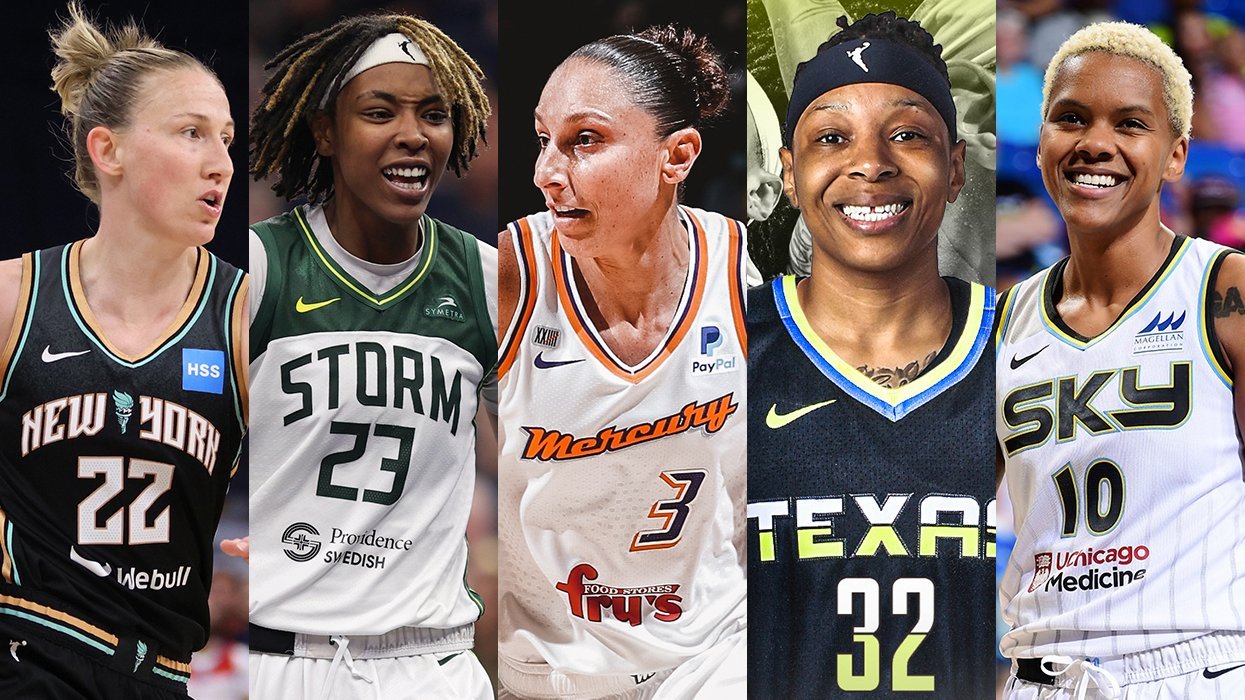
Meet all 37 of the queer women in this season's WNBA
April 17 2024 11:24 AM

17 Celebs Who Are Out & Proud of Their Trans & Nonbinary Kids
November 30 2023 10:41 AM

Here Are the 15 Most LGBTQ-Friendly Cities in the U.S.
November 01 2023 5:09 PM
Which State Is the Queerest? These Are the States With the Most LGBTQ+ People
December 11 2023 10:00 AM
These 27 Senate Hearing Room Gay Sex Jokes Are Truly Exquisite
December 17 2023 3:33 PM
10 Cheeky and Homoerotic Photos From Bob Mizer's Nude Films
November 18 2023 10:05 PM

42 Flaming Hot Photos From 2024's Australian Firefighters Calendar
November 10 2023 6:08 PM

These Are the 5 States With the Smallest Percentage of LGBTQ+ People
December 13 2023 9:15 AM

Here are the 15 gayest travel destinations in the world: report
March 26 2024 9:23 AM
Watch Now: The Daily
Trending stories from our video partner Advocate Channel.
For more videos and shows go to advocatechannel.com.
Trending stories from our video partner Advocate Channel.
For more videos and shows go to advocatechannel.com.
Latest Stories


How a lesbian's triumph on the Portland Timbers billboard broke barriers
April 24 2024 4:52 PM

‘Faces of Gun Violence’ exhibit unveiled at inaugural survivors’ summit
April 24 2024 4:46 PM
Trans woman Andrea Doria Dos Passos beaten to death in Miami Beach; arrest made
April 24 2024 4:36 PM

TikTok may be banned in the U.S. after Biden signs new law — Why?
April 24 2024 3:43 PM
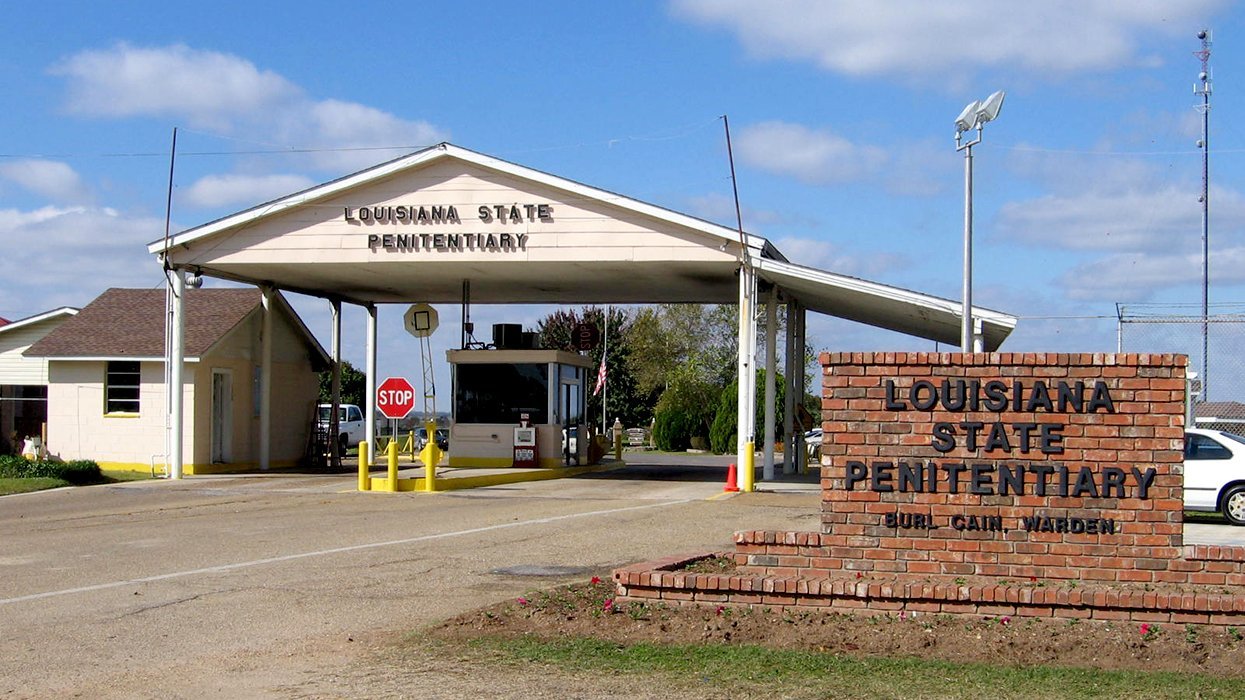
Serial killer of gay men in New Orleans released after 46 years in prison
April 24 2024 2:16 PM

The 'largest bi+ event in the world' is happening this year. Here's when and where
April 24 2024 12:42 PM

What happens if Donald Trump is jailed for criminal contempt?
April 24 2024 12:22 PM

Megan Rapinoe, Sue Bird, and more urge NCAA to stand up for trans inclusion
April 24 2024 8:00 AM


Over 90% of trans youth live in states pushing anti-trans legislation: report
April 23 2024 10:08 PM
Trending stories

Most Recent


Recommended Stories for You
