'%3E%3Cpath d='M16.3574 35.6519H12.9537L15.0491 18.8873L16.3574 35.6519ZM30.4229 54.0093L22.309 0.994385H7.91795L0 54.0093H10.6634L11.5802 46.3855H17.4014L17.9914 54.0093H30.4229Z' fill='%23971B20'/%3E%3Cpath d='M48.2073 41.8813C48.2073 43.4049 47.4892 44.0011 46.1144 44.0011H43.7595V11.0687H46.1144C47.4892 11.0687 48.2073 11.6636 48.2073 13.1885V41.8813ZM59.5273 43.6695V11.3326C59.5273 3.71323 53.5729 0.994385 47.8157 0.994385H31.7213V54.0093H47.8157C53.5729 54.0093 59.5273 51.29 59.5273 43.6695Z' fill='%23971B20'/%3E%3Cpath d='M90.183 0.994385H78.6039L75.0711 30.6157L71.9955 0.994385H59.4346L69.2474 54.0093H80.373L90.183 0.994385Z' fill='%23971B20'/%3E%3Cpath d='M107.063 42.3448C107.063 43.7359 105.951 44.5974 104.643 44.5974C103.269 44.5974 102.157 43.7359 102.157 42.3448V12.658C102.157 11.2676 103.269 10.4058 104.643 10.4058C105.951 10.4058 107.063 11.2676 107.063 12.658V42.3448ZM119.233 43.2723V11.7312C119.233 6.36384 112.952 -3.8147e-06 104.643 -3.8147e-06C96.2667 -3.8147e-06 89.9867 6.36384 89.9867 11.7312V43.2723C89.9867 48.6393 96.2667 55 104.643 55C112.952 55 119.233 48.6393 119.233 43.2723Z' fill='%23971B20'/%3E%3Cpath d='M150.976 43.9349V33.7309H139.069V42.3448C139.069 43.7359 137.957 44.5974 136.582 44.5974C135.076 44.5974 133.964 43.7359 133.964 42.3448V12.658C133.964 11.2676 135.076 10.4058 136.582 10.4058C137.957 10.4058 139.069 11.2676 139.069 12.658V21.2723H150.976V11.0687C150.976 5.70107 145.283 -3.8147e-06 136.582 -3.8147e-06C127.75 -3.8147e-06 121.796 5.70107 121.796 11.0687V43.9349C121.796 49.3022 127.75 55 136.582 55C145.283 55 150.976 49.3022 150.976 43.9349Z' fill='%23971B20'/%3E%3Cpath d='M167.478 35.6519H164.076L166.17 18.8873L167.478 35.6519ZM181.544 54.0093L173.432 0.994385H159.037L151.123 54.0093H161.785L162.704 46.3855H168.523L169.114 54.0093H181.544Z' fill='%23971B20'/%3E%3Cpath d='M205.412 10.4058V0.994385H177.081V10.4058H185.392V54.0093H197.428V10.4058H205.412Z' fill='%23971B20'/%3E%3Cpath d='M230.002 54.0093V43.9349H218.914V31.8746H226.635V21.8028H218.914V10.4058H230.002V0.994385H206.875V54.0093H230.002Z' fill='%23971B20'/%3E%3C/g%3E%3Cdefs%3E%3CclipPath id='clip0_260_7080'%3E%3Crect width='230' height='55' fill='white'/%3E%3C/clipPath%3E%3C/defs%3E%3C/svg%3E)
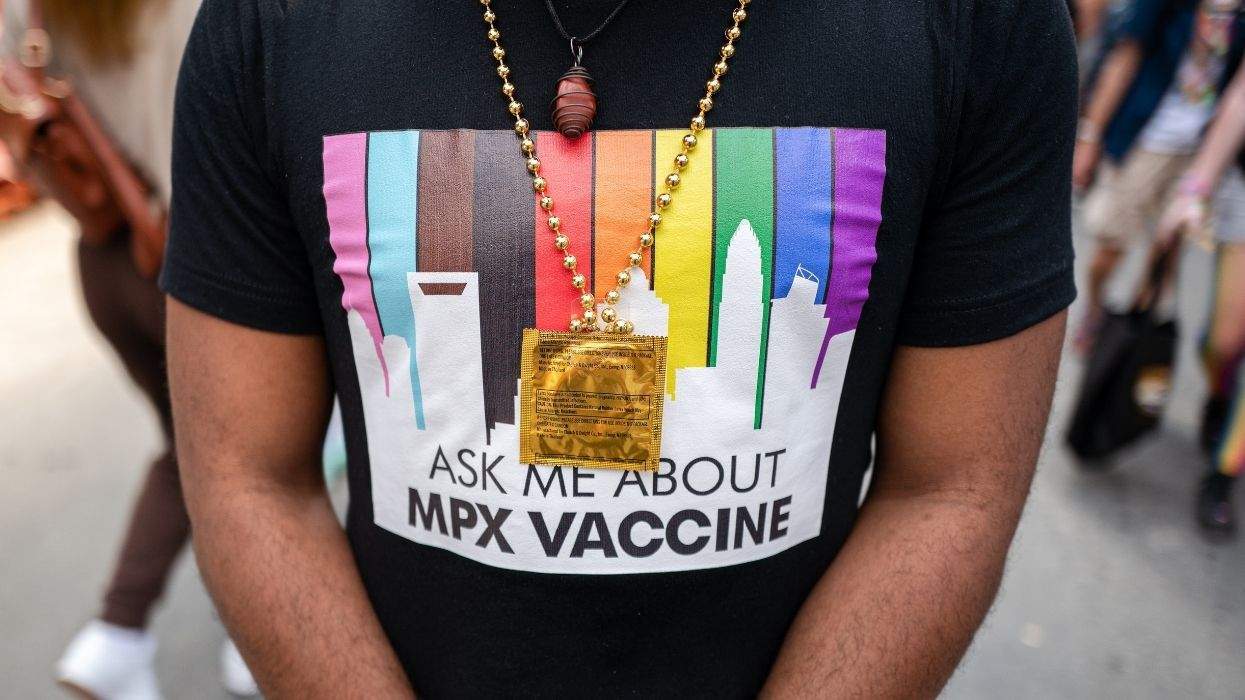

The Centers for Disease Control and Prevention, under Trump Health and Human Services Secretary Robert F. Kennedy Jr., has quietly removed a federal public health webpage offering explicit safer-sex and harm reduction guidance for mpox. The deletion confirms fears among LGBTQ+ health experts that the Trump administration is once again illegally scrubbing medically vetted information tied to queer communities from government websites.
As of Thursday evening, the CDC page titled “Safer Sex, Social Gatherings, and Monkeypox” returned a notification that reads, “The page you're looking for was not found.” The Advocate reviewed an archived version of the webpage preserved by the Wayback Machine, most recently captured on May 11, which featured a candid piece of federal health communication offering guidance on navigating Pride events, sex clubs, festivals, hookups, parties, and intimate contact during an infectious disease outbreak.
The page warned that mpox could spread through “close, sexual, or intimate contact” and acknowledged realities federal health agencies have often historically struggled to discuss plainly, including anonymous sex, commercial sex venues, multiple partners, and the practical ways people reduce risk in the real world.
Related: What public health experts want you to know about the severe mpox strain appearing in the U.S.
It advised readers to get vaccinated, avoid sexual contact when symptomatic, wash fabrics and sex toys, exchange contact information with partners when possible, and reduce skin-to-skin exposure in high-contact settings. It also specifically referenced “back rooms, saunas, sex clubs, or private and public sex parties” as environments where transmission risk could increase.
The Advocate also reviewed several CDC educational materials previously linked from the now-deleted webpage. Although the landing page itself has been removed, some of the underlying PDFs remain accessible through CDC media servers.
Those materials included downloadable flyers and safer-sex guidance.
Last July, Washington, D.C., U.S. District Judge John D. Bates ruled in Doctors for America v. Office of Personnel Management that the Trump administration likely violated federal law when it abruptly removed LGBTQ+, HIV, adolescent health, and infectious disease information from federal websites following executive orders targeting what the administration called “gender ideology.”
In his opinion, Bates sharply criticized what he described as a “slapdash” process within federal agencies, including the Department of Health and Human Services and the CDC, in which entire webpages were sometimes removed over isolated terms or references. The judge specifically referenced removals involving mpox-related materials and vaccination guidance.
He ultimately vacated directives that had driven the removals and ordered agencies to restore the affected information.
But the deletion now raises fresh questions about whether federal agencies are continuing to quietly erase public health resources despite the court’s ruling.
Dr. Demetre Daskalakis, chief medical officer at Callen-Lorde Community Health Center in New York City, who served as President Joe Biden’s White House deputy coordinator for the national mpox response and former director of the CDC’s National Center for Immunization and Respiratory Diseases, told The Advocate the removal was deliberate, ideological, and dangerously familiar.
“This is in effect high public health treason,” he said.
Daskalakis is widely regarded as one of the nation’s most trusted LGBTQ+ public health experts.
“It’s not a mistake,” Daskalakis said. “They purposely took it down because it doesn’t comport with the administration’s priorities.”
To Daskalakis, the disappearance of the page represents a return to the silence of an older, deadlier instinct in American public health.
He traced the philosophy behind the webpage to the earliest years of the AIDS epidemic and to How to Have Sex in an Epidemic, the groundbreaking 1983 safer-sex pamphlet written by gay activists Michael Callen and Richard Berkowitz before HIV had even been fully identified. During COVID-19 and later the mpox outbreak, Daskalakis said, he pushed government agencies to avoid repeating the failures of the 1980s, when officials often responded to queer sexual health crises with euphemism, stigma, or outright neglect.
“We learned our lesson from HIV,” Daskalakis said. “So we put together a document that gives people the best advice for what to do to stay safe.”
According to Daskalakis, the document underwent scientific clearance at the CDC and was grounded in epidemiological evidence.
An HHS spokesperson confirmed to The Advocate that the page was intentionally removed. “This page was not medically accurate, and does not align with Administration priorities,” the spokesperson said.
Daskalakis forcefully rejected the administration’s characterization of the page as medically unsound. “Literally they just Reaganed mpox,” Daskalakis said, invoking the Reagan administration’s notorious indifference during the early AIDS crisis.
Related: RFK Jr.’s damage to the CDC is ‘past the point of no return,’ Dr. Demetre Daskalakis warns
The HHS spokesperson did not explain what information it believed was medically inaccurate. HHS also declined to answer questions about whether the deletion complies with Bates’s court order or why the agency continues removing public health webpages amid growing concern over infectious disease preparedness, including recent developments on Ebola and hantavirus.
“Let's not pretend everyone's Googling this and pulling down this information. That's not what matters,” Daskalakis said. “What matters is that it's there if you need it, and the government actually doesn't look like a bunch of assholes. Our data says that commercial sex venues and multiple sex partners are potentially linked to mpox. So the only document that we have that actually acknowledges that and says what to do about it is gone.”
Jared Todd, a spokesperson for the Human Rights Campaign, said the disappearance reflects a broader erosion of trust in federal public health institutions under the Trump administration.
“We’re in a dangerous moment for public health,” Todd said. “Federal agencies are being undermined by leaders who dismiss science and silence experts, particularly when it involves LGBTQ+ people.”
Todd said marginalized communities have historically been underserved by public health systems and warned that removing medically vetted information further isolates vulnerable populations.
“Too often, BIPOC, transgender, and nonbinary people have been left behind by public health systems that were never designed with their needs in mind,” Todd said. “Everyone — no matter who they are or where they live — deserves the same access to vaccines, treatment, and accurate information.”
He added that LGBTQ+ communities have historically relied on mutual aid and community-based health networks when government institutions fail them.
“Our community will do what we’ve always done — we’ll show up for each other, we’ll get vaccinated, and we’ll look to trusted community health sources for information,” Todd said.
Dr. Reshma Ramachandran, a physician and board member of Doctors for America, said the deletion appears to undermine both the intent and spirit of the group’s successful legal challenge against the Trump administration over the removal of LGBTQ+ and public health information from federal websites.
“The fact that there’s not a scientific basis seemingly for removing such a page, and it’s really very much steeped in ideology … definitely runs afoul, at least to the spirit of the case that we brought before the courts,” Ramachandran told The Advocate in an interview.
Ramachandran said the CDC’s removal of evidence-based mpox guidance reflected a broader pattern within the administration.
“The agency has basically abandoned its role as a public health agency in removing this evidence-based information, not based on anything scientific, but again, based on ideology,” she said.
The original mpox outbreak response was widely viewed by LGBTQ+ advocates as one of the rare moments when the federal government spoke frankly and directly to queer communities about sex, risk, and survival without cloaking the message in shame.
That bluntness is precisely what now appears to have made the page politically vulnerable.
According to Daskalakis, federal officials intentionally wrote the guidance in plain, direct language because coded or euphemistic messaging has historically failed the communities most at risk.
“That’s why we did it,” he said.
Related: U.S. steps up response to more deadly mpox outbreak
He also suggested the removal may violate Bates’s order, though he noted he is not an attorney.
“I think that the answer is probably yes,” Daskalakis said. “I’m not a lawyer, but ... it’s very possible that this is probably illegal.”
Representatives for Public Citizen Litigation Group, which represents plaintiffs in the lawsuit, were unavailable to speak with The Advocate. Ramachandran said Doctors for America continues tracking federal webpages that disappear despite last year’s court ruling ordering restoration of LGBTQ+, HIV, and infectious disease information.
“Yes, this is still happening, unfortunately,” she said. “We’re having to be a police watchdog around these issues still.”
For Daskalakis, the consequences extend far beyond a single webpage.
“Every time you get another thing where they invisibilize your population and invisibilize the advice for the population, it starts to wear on the population,” he said.
He warned that repeated removals of LGBTQ+-specific health information are accelerating distrust in federal health institutions at the exact moment public confidence may matter most.
“What I hear is that this administration literally doesn’t care about the LGBTQ community and we are not their priority,” Daskalakis said.