'%3E%3Cpath d='M16.3574 35.6519H12.9537L15.0491 18.8873L16.3574 35.6519ZM30.4229 54.0093L22.309 0.994385H7.91795L0 54.0093H10.6634L11.5802 46.3855H17.4014L17.9914 54.0093H30.4229Z' fill='%23971B20'/%3E%3Cpath d='M48.2073 41.8813C48.2073 43.4049 47.4892 44.0011 46.1144 44.0011H43.7595V11.0687H46.1144C47.4892 11.0687 48.2073 11.6636 48.2073 13.1885V41.8813ZM59.5273 43.6695V11.3326C59.5273 3.71323 53.5729 0.994385 47.8157 0.994385H31.7213V54.0093H47.8157C53.5729 54.0093 59.5273 51.29 59.5273 43.6695Z' fill='%23971B20'/%3E%3Cpath d='M90.183 0.994385H78.6039L75.0711 30.6157L71.9955 0.994385H59.4346L69.2474 54.0093H80.373L90.183 0.994385Z' fill='%23971B20'/%3E%3Cpath d='M107.063 42.3448C107.063 43.7359 105.951 44.5974 104.643 44.5974C103.269 44.5974 102.157 43.7359 102.157 42.3448V12.658C102.157 11.2676 103.269 10.4058 104.643 10.4058C105.951 10.4058 107.063 11.2676 107.063 12.658V42.3448ZM119.233 43.2723V11.7312C119.233 6.36384 112.952 -3.8147e-06 104.643 -3.8147e-06C96.2667 -3.8147e-06 89.9867 6.36384 89.9867 11.7312V43.2723C89.9867 48.6393 96.2667 55 104.643 55C112.952 55 119.233 48.6393 119.233 43.2723Z' fill='%23971B20'/%3E%3Cpath d='M150.976 43.9349V33.7309H139.069V42.3448C139.069 43.7359 137.957 44.5974 136.582 44.5974C135.076 44.5974 133.964 43.7359 133.964 42.3448V12.658C133.964 11.2676 135.076 10.4058 136.582 10.4058C137.957 10.4058 139.069 11.2676 139.069 12.658V21.2723H150.976V11.0687C150.976 5.70107 145.283 -3.8147e-06 136.582 -3.8147e-06C127.75 -3.8147e-06 121.796 5.70107 121.796 11.0687V43.9349C121.796 49.3022 127.75 55 136.582 55C145.283 55 150.976 49.3022 150.976 43.9349Z' fill='%23971B20'/%3E%3Cpath d='M167.478 35.6519H164.076L166.17 18.8873L167.478 35.6519ZM181.544 54.0093L173.432 0.994385H159.037L151.123 54.0093H161.785L162.704 46.3855H168.523L169.114 54.0093H181.544Z' fill='%23971B20'/%3E%3Cpath d='M205.412 10.4058V0.994385H177.081V10.4058H185.392V54.0093H197.428V10.4058H205.412Z' fill='%23971B20'/%3E%3Cpath d='M230.002 54.0093V43.9349H218.914V31.8746H226.635V21.8028H218.914V10.4058H230.002V0.994385H206.875V54.0093H230.002Z' fill='%23971B20'/%3E%3C/g%3E%3Cdefs%3E%3CclipPath id='clip0_260_7080'%3E%3Crect width='230' height='55' fill='white'/%3E%3C/clipPath%3E%3C/defs%3E%3C/svg%3E)


Ozempic and other GLP-1 weight-loss medications are being heralded as miracle drugs — and they likely are for people with real health concerns — but they’re also having a distressing negative effect: an increase in toxic body image issues in the queer community.
These prescription drugs not only help patients lose weight, but also control Type 2 diabetes, lower blood pressure, and improve cholesterol levels. But these health benefits don’t come without drawbacks.
While there are no current studies detailing GLP-1 use within the LGBTQ+ community, Hollywood seems to be getting thinner and thinner recently, and queer celebs like Margaret Cho, Jonathan Van Ness, Rosie O’Donnell, Boy George, and Harvey Fierstein have all been touting the medication’s benefits.
So we talked to experts to get to the bottom of who should be taking GLP-1s, if there are any health concerns specific to queer people, and what kind of negative impact these medications have on the gay community, which already struggles with toxic gym culture and body shaming.
Who is Ozempic appropriate for?
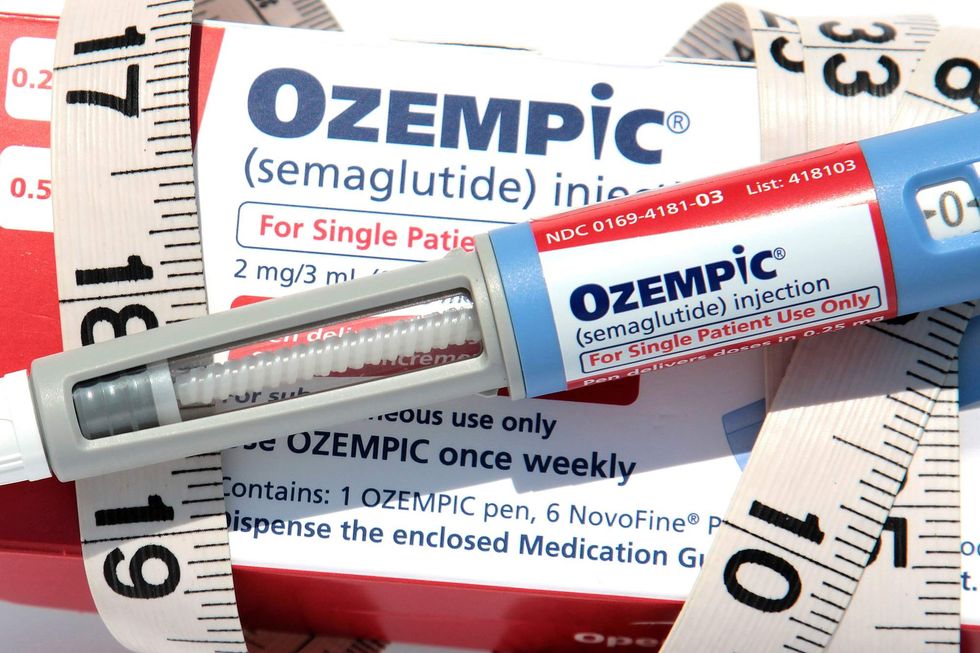
Ozempic.
mikeledray/Shutterstock
Ozempic, a.k.a. semaglutide, is the most well-known medication in a class of drugs called GLP-1 receptor agonists (others include Wegovy, Mounjaro, Zepbound, and Saxenda), which mimic the GLP-1 hormone that regulates blood sugar and appetite. These drugs were originally created to address Type 2 diabetes, but have since been approved for weight loss.
Dr. Kevin R. Gendreau, a gay double-board certified physician in both family medicine and obesity medicine, mostly prescribes GLP-1s for patients struggling to lose weight or control their Type 2 diabetes, but he also uses them to treat other chronic conditions like sleep apnea, pre-diabetes, cardiovascular disease, fatty liver, hypertension, and Polycystic Ovary Syndrome (PCOS). While he said these drugs make “you feel fuller quicker, decrease cravings and 'food noise,’ slow down gastric emptying, and work directly in the pancreas to dial down insulin resistance,” he warns that they also come with side effects and shouldn’t just be used for the pursuit of thinness.
But regardless of the reasons you are taking the medication, society has focused on people losing weight, which can intensify a culture that is already image-obsessed and rewards people for being skinny.
“A healthy patient may be taking the medicine to shrink their body simply to exist in a world filled with weight stigma that harshly judges anyone living in a larger body,” said Dr. Anne Marie O’Melia, a physician and psychiatrist who works in eating disorder recovery. “Prescribing GLP-1 agonists for cosmetic purposes refuels the cultural and medical mythology that weight is a choice and size is a disorder that needs correcting.”
How are GLP-1s impacting body image in gay men?

Naked male torsos.
Volodymyr TVERDOKHLIB/Shutterstock
"Thin is in" again in America, and this is especially true for gay men who have to deal with toxic gym culture, image-obsessed circuit party culture, and finding body-shaming phrases like “no fats, no femmes,” and “gym-fit only” all over dating apps like Grindr.
The immense pressure gay and bisexual men are under to be fit and have the perfect body means that they have disproportionate rates of eating disorders. A study by the National Library of Medicine found that “the proportion of gay and bisexual men with symptoms related to disordered eating was 10 times higher than among heterosexual men.” And the National Eating Disorder Association reports that the LGBTQ+ community experiences “higher rates of eating disorders compared to their heterosexual and cisgender peers” and deals with more “eating disorder symptoms” when they enter treatment.
“Gay and bisexual men already experience a lot of pressure around appearance, and the ideal body image in queer spaces can be extremely limiting,” said Licensed Psychotherapist Pam Skop, who specializes in therapy for LGBTQ+ patients. “So when medications that promise weight loss become available, that can intensify these pressures. If you already feel like your body determines your acceptance or desirability, these medications are likely just to become another tool to try to ‘fix' yourself rather than solely for improving health.”
Gendreau said that as a doctor and “a gay man who used to weigh 306 pounds with a history of binge-eating disorder,” he is uniquely qualified to speak to how GLP-1s can make disordered eating patterns worse, especially for gay men who are hyper vigilant about appearance.
“In a community that already deals with disproportionally high rates of body image pressure, suicidal ideation, and disordered eating, there is a real risk that these meds get co-opted to fuel restrictive eating or perfectionism rather than health improvements,” he said.
Are these drugs making the toxic body image issues within the gay community worse?
Man standing on a scale.
Dasha Petrenko/Shutterstock
There are serious benefits to these medications — including controlling chronic conditions, treating metabolic disease, and quieting “food noise” — but they don’t exist in a vacuum, and in a society that puts enormous pressure on gay men to look a certain way, they can be destructive.
“The medications themselves aren't really the root problem...the culture — diet image culture, body image culture, a societal obsession with thinness — is the problem,” Gendreau said. “The medications simply amplify what is already there. If someone already believes they need to look a certain way to be desired, rapid weight loss can pour gasoline on that fire.”
For some, taking Ozempic or a similar drug may make them feel more comfortable in their own body, and Skop said that patients should still take them when it is “medically appropriate,” but she warned against thinking it will fix their mental health.
“GLP-1s are being introduced into a world that already has strong messages about what bodies should look like and which bodies are valued,” she said. “Remember that a medication can change appearance or body size, but it doesn’t heal body shame or erase stigma."
Can you still bottom while taking Ozempic?

Two men cuddling in bed.
Rawpixel.com/Shutterstock
Gendreau also said that aside from the way the broad cultural acceptance of GLP-1s may be perpetuating body image issues, gay men should also be warned by their doctors about how the digestive problems associated with the drugs could make bottoming more difficult — at least at first.
“This doesn't get talked about enough — or at all? — and it should,” he said. “Common side effects like constipation, bloating, and cramping can absolutely affect how someone feels physically and sexually. For gay men, those symptoms can make intercourse uncomfortable.”
GLP-1s can cause nausea, vomiting, diarrhea, constipation, bloating, and irregular bowel habits, all of which can impact one's ability to participate in receptive anal intercourse.
To help manage these symptoms, Dr. Gendreau recommends staying hydrated by drinking 8 to 10 cups of water per day, making sure to get enough fiber, talking to one's doctor about adjusting dosage of the GLP-1, and remembering that many of these symptoms will decrease as your body adjusts to the medication. But ultimately, “clinicians should be proactively asking their patients about this, rather than waiting for them to bring it up," he said.
Sources cited:
Dr. Kevin R. Gendreau is a double-board-certified physician in both family medicine and obesity medicine.
Pam Skop is a licensed psychotherapist who specializes in therapy for LGBTQ+ patients and is the founder of EveryBody Psychotherapy NYC.
Dr. Anne Marie O’Melia is a physician and psychiatrist who works in eating disorder recovery, and is the chief clinical and quality officer at Eating Recovery Center and Pathlight Mood & Anxiety Center.