'%3E%3Cpath d='M16.3574 35.6519H12.9537L15.0491 18.8873L16.3574 35.6519ZM30.4229 54.0093L22.309 0.994385H7.91795L0 54.0093H10.6634L11.5802 46.3855H17.4014L17.9914 54.0093H30.4229Z' fill='%23971B20'/%3E%3Cpath d='M48.2073 41.8813C48.2073 43.4049 47.4892 44.0011 46.1144 44.0011H43.7595V11.0687H46.1144C47.4892 11.0687 48.2073 11.6636 48.2073 13.1885V41.8813ZM59.5273 43.6695V11.3326C59.5273 3.71323 53.5729 0.994385 47.8157 0.994385H31.7213V54.0093H47.8157C53.5729 54.0093 59.5273 51.29 59.5273 43.6695Z' fill='%23971B20'/%3E%3Cpath d='M90.183 0.994385H78.6039L75.0711 30.6157L71.9955 0.994385H59.4346L69.2474 54.0093H80.373L90.183 0.994385Z' fill='%23971B20'/%3E%3Cpath d='M107.063 42.3448C107.063 43.7359 105.951 44.5974 104.643 44.5974C103.269 44.5974 102.157 43.7359 102.157 42.3448V12.658C102.157 11.2676 103.269 10.4058 104.643 10.4058C105.951 10.4058 107.063 11.2676 107.063 12.658V42.3448ZM119.233 43.2723V11.7312C119.233 6.36384 112.952 -3.8147e-06 104.643 -3.8147e-06C96.2667 -3.8147e-06 89.9867 6.36384 89.9867 11.7312V43.2723C89.9867 48.6393 96.2667 55 104.643 55C112.952 55 119.233 48.6393 119.233 43.2723Z' fill='%23971B20'/%3E%3Cpath d='M150.976 43.9349V33.7309H139.069V42.3448C139.069 43.7359 137.957 44.5974 136.582 44.5974C135.076 44.5974 133.964 43.7359 133.964 42.3448V12.658C133.964 11.2676 135.076 10.4058 136.582 10.4058C137.957 10.4058 139.069 11.2676 139.069 12.658V21.2723H150.976V11.0687C150.976 5.70107 145.283 -3.8147e-06 136.582 -3.8147e-06C127.75 -3.8147e-06 121.796 5.70107 121.796 11.0687V43.9349C121.796 49.3022 127.75 55 136.582 55C145.283 55 150.976 49.3022 150.976 43.9349Z' fill='%23971B20'/%3E%3Cpath d='M167.478 35.6519H164.076L166.17 18.8873L167.478 35.6519ZM181.544 54.0093L173.432 0.994385H159.037L151.123 54.0093H161.785L162.704 46.3855H168.523L169.114 54.0093H181.544Z' fill='%23971B20'/%3E%3Cpath d='M205.412 10.4058V0.994385H177.081V10.4058H185.392V54.0093H197.428V10.4058H205.412Z' fill='%23971B20'/%3E%3Cpath d='M230.002 54.0093V43.9349H218.914V31.8746H226.635V21.8028H218.914V10.4058H230.002V0.994385H206.875V54.0093H230.002Z' fill='%23971B20'/%3E%3C/g%3E%3Cdefs%3E%3CclipPath id='clip0_260_7080'%3E%3Crect width='230' height='55' fill='white'/%3E%3C/clipPath%3E%3C/defs%3E%3C/svg%3E)
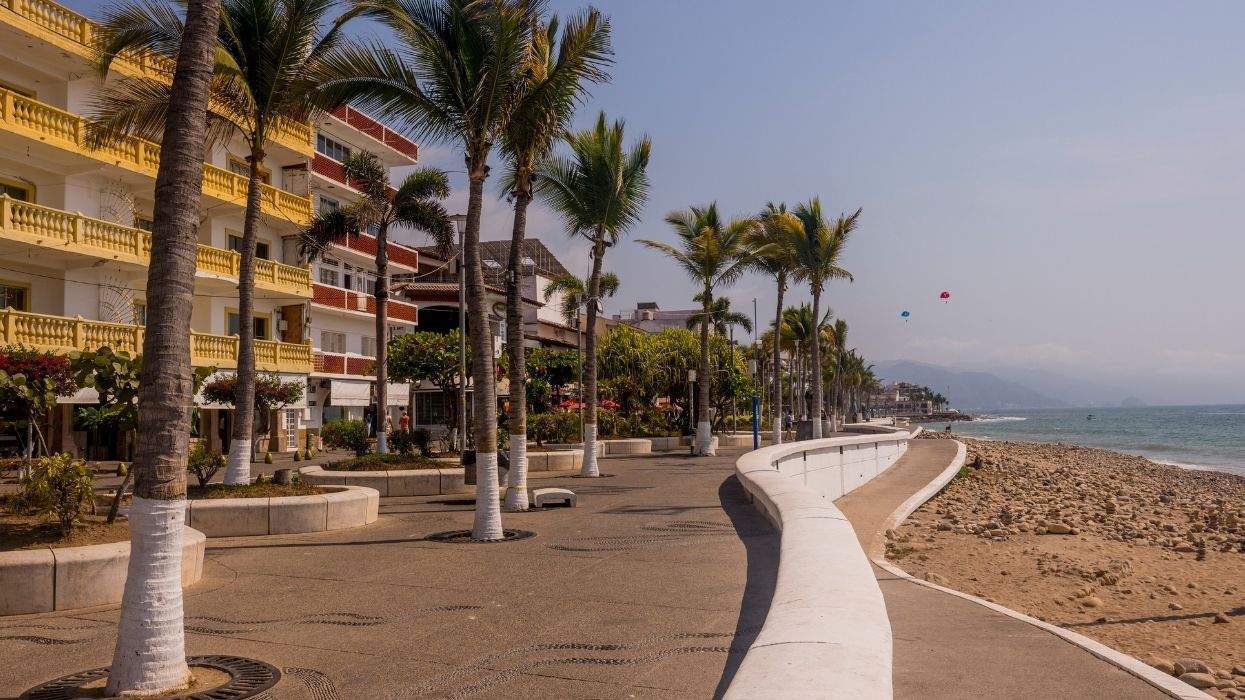
Shortly after mid-morning Sunday, black smoke began rising in staggered columns across the curve of Mexico’s Bay of Banderas, a familiar postcard vista that, by nightfall, had become a horizon of surging unrest.
Keep up with the latest in LGBTQ+ news and politics. Sign up for The Advocate's email newsletter.
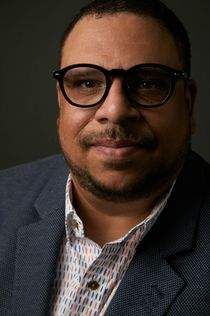
“It felt like The Purge,” Jimmy Martin, a 42-year-old gay American who has lived in Puerto Vallarta since 2020, told The Advocate in a Monday morning interview. He was referring to the 2013 dystopian thriller in which, for 12 hours, all crime becomes legal, and emergency services are suspended, forcing ordinary people to barricade themselves inside while violence unfolds outside. “There was nobody coming to help,” Martin said. “That’s what it felt like.”
Sunday’s chaos was sparked by the death of Nemesio “El Mencho” Oseguera Cervantes, the leader of the Jalisco New Generation Cartel and one of Mexico’s most powerful crime bosses. Mexican authorities killed him during a military operation in Tapalpa, Jalisco. The assault also left dozens of Mexican National Guard members dead in separate retaliatory attacks and unleashed waves of violence across the country.
In Puerto Vallarta, the moment that transformed confusion into dread was a real warning siren, a civil defense alert broadcast in Spanish telling residents to stay inside and lock their doors. Martin, who spoke through exhaustion after not sleeping, said the siren felt like a signal that ordinary life had just been suspended. Streets emptied. Doors bolted. People retreating to balconies and rooftops watched smoke and motorbikes moving through neighborhoods. No one had declared a nationwide purge, but for hours, the city felt eerily similar.
“It just came out of nowhere,” Martin said. “None of us knew it was coming at all.”
Hours after the sirens, the U.S. Embassy in Mexico City and the State Department issued alerts urging U.S. citizens in Jalisco state, including Puerto Vallarta, to shelter in place because of “ongoing security operations, related road blockages and criminal activity.” The advisories told Americans to avoid unnecessary movement, stay indoors when possible, avoid crowds, and monitor local media.
Related: Our 15 favorite destinations from Lonely Planet's new LGBTQ+ travel guide
Related: Puerto Vallarta Tourism Board Responds to Shooting of Gay Man, Insists City Is Safe
On the edge of Puerto Vallarta’s Romantic Zone, the heart of its LGBTQ+ nightlife, Martin said he watched smoke stretch across the horizon.
“I really mean hundreds of cars,” he said. “You could just see plumes of smoke from literally the beginning to the end, almost like New Year’s fireworks, but they were plumes of black smoke.”
Then came the soundscape of disorder: asynchronous blasts and the brittle crack of breaking glass.
“You just hear ‘boom, boom, boom,’” he said. “Giant plates of glass start shattering, and black smoke starts billowing.”
Martin described groups of men on motorcycles smashing windows and setting fires inside businesses by throwing black bags into storefronts. One blaze consumed a mattress store attached to residential buildings, raising fears that homes would ignite as well. Throughout it all, there appeared to be no visible police or fire response, Martin said, not just on his block but across tourist corridors where security patrols are usually constant.
“There were no fire trucks coming to put out all these fires,” Martin said. “There was no police trying to stop anything. It was like emergency services were just off.”
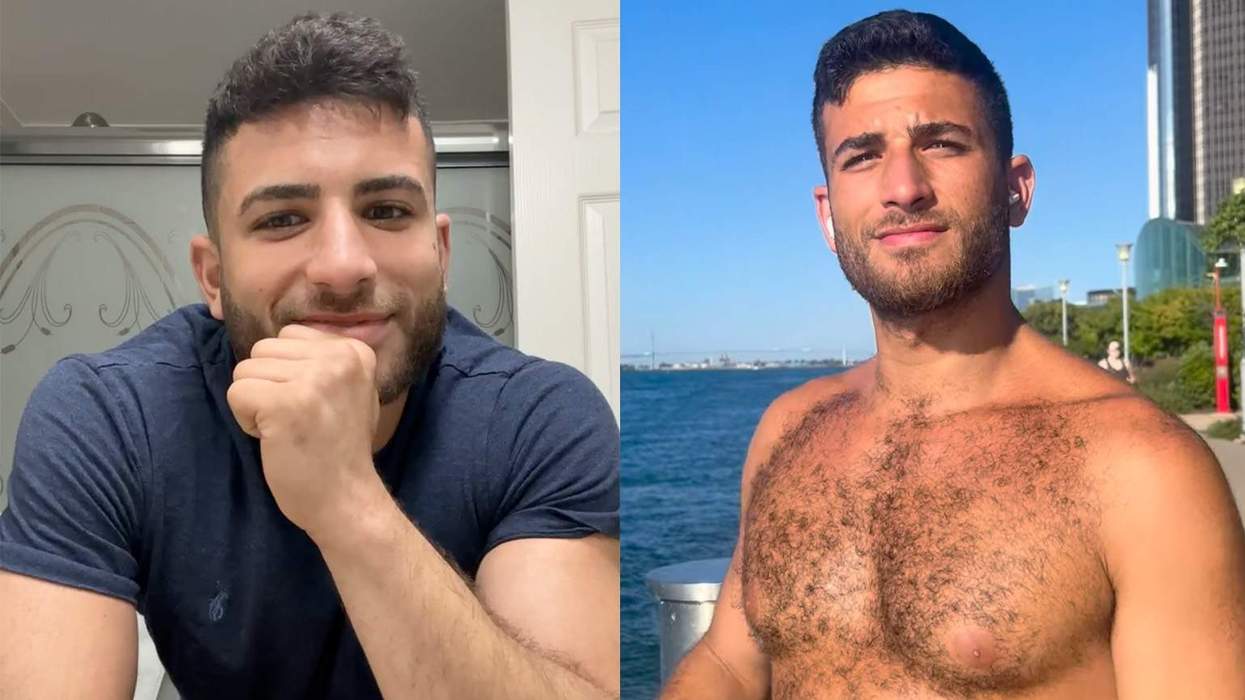
Yoni Pizer told NBC Chicago that he, his husband and friends feared for their lives when they were forced to abandon their SUV at gunpoint.
“The gunmen were following us and they were shooting,” Pizer said. “And they were attacking cars and pulling out drivers. At that point, we just ran as fast as we could.” He told NBC News that someone driving by helped the group escape after cartel members set the car on fire.
The day’s disorder quickly spread into travel chaos. Roadblocks and security disruptions prompted widespread flight cancellations at Puerto Vallarta’s international airport and other regional hubs, with major airlines including United, Southwest, American, and Air Canada suspending service as conditions deteriorated.
Martin said friends sent him videos from the airport showing crowds moving in panic across the tarmac.
“People were just sprinting away from the airport, and there was no direction,” he said.
Related: Here are the 15 gayest travel destinations in the world: report
Related: 23 Photos of Paradise, aka Puerto Vallarta Pride
On the ground, rental cars, taxis, and ride-hailing services were largely unavailable, Martin said. Buses and long-distance routes were halted. Travelers found themselves suddenly immobilized, waiting for updates that came slowly, if at all.
By late afternoon, Martin said, a military helicopter began circling low over the city, with armed personnel visible in the doors. After that, the city slipped into what he described as an eerie quiet.
“It was worse than COVID,” he said, recalling the early days of pandemic lockdowns, not because of isolation alone, but because of the tension that hung over darkened streets and shuttered businesses and the palpable fear of what might come next.
The following day, the Romantic Zone still looked hollowed out. Martin said many restaurants and shops remained closed.
“There are no taxis on the street. There are no Ubers on the street. There are no buses,” he said.
Residents rationed food, shared supplies, and waited for clearer guidance, he explained. Some ventured out only because they were hungry, lining up for hours at one of the few small shops that briefly reopened.
Drag queen Hedda Lettuce, who also lives in Puerto Vallarta and who shared videos of destruction during the day Sunday, wondered about what comes next for the city.
"Even in the most difficult times, things return to some sense of normalcy. No hint of the cartel causing any mischief today," she wrote on Instagram Monday. A day earlier, the scene was remarkably different.
"My neighborhood has been hit pretty hard," she wrote Sunday. "They are saying do not go outside as there is a high possibility of violence against civilians. No military or police in sight. Stay safe!"
For Martin, the emotional weight of the weekend reopened echoes of an earlier trauma. He said he was kidnapped in Mexico last year and held for several days, during which he was tortured and assaulted before escaping and then spending days navigating a fragmented legal process across multiple states. Still, he said, he feels safer in Puerto Vallarta that in Colorado where he’s from. “Colorado is the capital of mass shootings,” he said.
On Sunday, he said, the fear was different, but it registered in the same emotional language: the sense that no help was coming, and that whatever happened next would be determined by chance and the decisions of people with guns.
As fires burned and rumors coursed through the city, he said he found himself replaying old calculations: what to grab, where to go, whether it was safer to stay or run.
“It was that helpless feeling,” he said.
Even so, Martin said he has no immediate plans to leave Puerto Vallarta, which he moved to in part for its dense LGBTQ+ community and the sense of belonging he found there. But he acknowledged that, for now, the city he loves feels unrecognizable, its reputation as a place of refuge and celebration eclipsed, at least temporarily, by fear.
“If I were making a decision to come right now, I wouldn’t come at least for the next week or two,” he said, noting that the city remains far from normal.
For now, he said, uncertainty is the defining mood.
“Nobody knows if it’s over,” Martin said.
Editors note: This story has been updated with additional reporting.