'%3E%3Cpath d='M16.3574 35.6519H12.9537L15.0491 18.8873L16.3574 35.6519ZM30.4229 54.0093L22.309 0.994385H7.91795L0 54.0093H10.6634L11.5802 46.3855H17.4014L17.9914 54.0093H30.4229Z' fill='%23971B20'/%3E%3Cpath d='M48.2073 41.8813C48.2073 43.4049 47.4892 44.0011 46.1144 44.0011H43.7595V11.0687H46.1144C47.4892 11.0687 48.2073 11.6636 48.2073 13.1885V41.8813ZM59.5273 43.6695V11.3326C59.5273 3.71323 53.5729 0.994385 47.8157 0.994385H31.7213V54.0093H47.8157C53.5729 54.0093 59.5273 51.29 59.5273 43.6695Z' fill='%23971B20'/%3E%3Cpath d='M90.183 0.994385H78.6039L75.0711 30.6157L71.9955 0.994385H59.4346L69.2474 54.0093H80.373L90.183 0.994385Z' fill='%23971B20'/%3E%3Cpath d='M107.063 42.3448C107.063 43.7359 105.951 44.5974 104.643 44.5974C103.269 44.5974 102.157 43.7359 102.157 42.3448V12.658C102.157 11.2676 103.269 10.4058 104.643 10.4058C105.951 10.4058 107.063 11.2676 107.063 12.658V42.3448ZM119.233 43.2723V11.7312C119.233 6.36384 112.952 -3.8147e-06 104.643 -3.8147e-06C96.2667 -3.8147e-06 89.9867 6.36384 89.9867 11.7312V43.2723C89.9867 48.6393 96.2667 55 104.643 55C112.952 55 119.233 48.6393 119.233 43.2723Z' fill='%23971B20'/%3E%3Cpath d='M150.976 43.9349V33.7309H139.069V42.3448C139.069 43.7359 137.957 44.5974 136.582 44.5974C135.076 44.5974 133.964 43.7359 133.964 42.3448V12.658C133.964 11.2676 135.076 10.4058 136.582 10.4058C137.957 10.4058 139.069 11.2676 139.069 12.658V21.2723H150.976V11.0687C150.976 5.70107 145.283 -3.8147e-06 136.582 -3.8147e-06C127.75 -3.8147e-06 121.796 5.70107 121.796 11.0687V43.9349C121.796 49.3022 127.75 55 136.582 55C145.283 55 150.976 49.3022 150.976 43.9349Z' fill='%23971B20'/%3E%3Cpath d='M167.478 35.6519H164.076L166.17 18.8873L167.478 35.6519ZM181.544 54.0093L173.432 0.994385H159.037L151.123 54.0093H161.785L162.704 46.3855H168.523L169.114 54.0093H181.544Z' fill='%23971B20'/%3E%3Cpath d='M205.412 10.4058V0.994385H177.081V10.4058H185.392V54.0093H197.428V10.4058H205.412Z' fill='%23971B20'/%3E%3Cpath d='M230.002 54.0093V43.9349H218.914V31.8746H226.635V21.8028H218.914V10.4058H230.002V0.994385H206.875V54.0093H230.002Z' fill='%23971B20'/%3E%3C/g%3E%3Cdefs%3E%3CclipPath id='clip0_260_7080'%3E%3Crect width='230' height='55' fill='white'/%3E%3C/clipPath%3E%3C/defs%3E%3C/svg%3E)
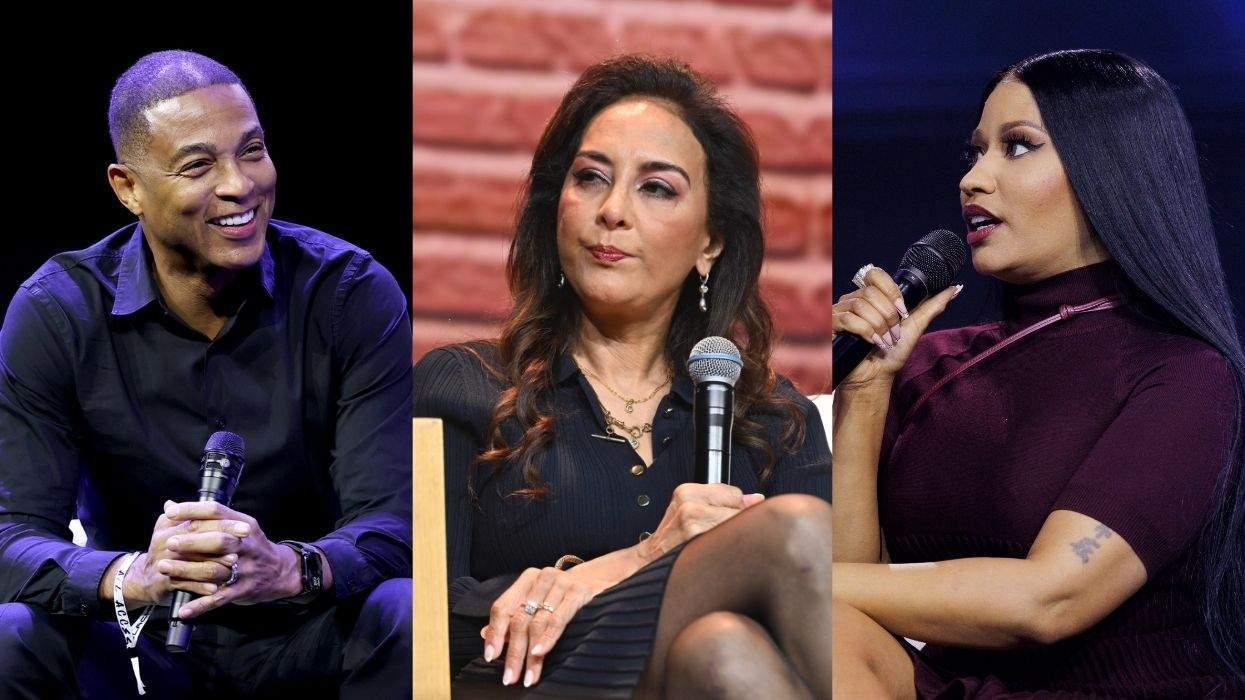
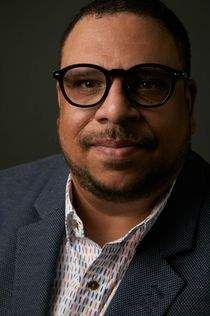
After the Department of Justice under President Donald Trump publicly warned that his coverage of an anti-ICE protest inside a Minnesota church could carry legal consequences, independent journalist Don Lemon has forcefully defended his journalism. Free press advocates say the administration’s posture reflects a broader, authoritarian, unlawful shift in how the federal government engages with journalists.
Keep up with the latest in LGBTQ+ news and politics. Sign up for The Advocate's email newsletter.
The former CNN anchor posted a recording Sunday evening on Bluesky showing him questioning Nekima Levy Armstrong, an activist who was among a group that entered Cities Church in St. Paul during a worship service to protest Immigration and Customs Enforcement. The recording appears to rebut claims that Lemon participated in or directed the protest, instead showing him questioning protesters about their motives moments before they entered the church.
“Why are you doing this?” Lemon asks at the start of the exchange, posted on TikTok.
@donlemon What Really Happened at the Minnesota Church Protest #ice #minneapolis
Armstrong responds by describing what she characterizes as a deliberate strategy to disrupt “business as usual” at locations activists view as complicit in immigration enforcement. She described the action as a response to the killing of Renee Nicole Good, a Minneapolis woman fatally shot by ICE agent Jonathan Ross earlier this month. That incident has fueled protests across the Twin Cities and beyond.
“So right now it’s kind of mayhem,” Lemon says in one scene from inside the church, where other people with cameras and microphones can be seen. “We’re not part of the activists, but we’re here just reporting.”
Lemon also interviews a pastor at the church, who says congregants were gathered for worship and that the pastor asked protesters to leave. He interviews a congregant who says that, while he doesn’t agree with all recent immigration enforcement actions, he opposes “fighting fire with fire.” In the same sequence, Lemon reflects on the visible tension inside the sanctuary, noting the discomfort of worshippers, including children, and questioning whether the disruption accomplished its intended goals.
“This shows you just how divided America is,” Lemon says in the footage, contrasting protesters chanting with congregants praying. “If these two groups could just get together, they might figure out what to do.”
DOJ warning and social media escalation
After the recording circulated, Harmeet Dhillon, the assistant attorney general for civil rights, publicly put Lemon “on notice,” arguing that his presence and reporting could implicate federal laws protecting houses of worship from interference. On X, Dhillon wrote that “a house of worship is not a public forum for your protest,” adding that federal criminal and civil laws protect such spaces and that the First Amendment does not shield what she described as “pseudo journalism of disrupting a prayer service.”
She amplified a post by Todd Starnes, a conservative commentator and host on the far-right Newsmax network, who accused Lemon of “storming the Minneapolis church” and “shutting down the worship service,” and questioned whether Lemon’s interpretation of the First Amendment would permit protesters to enter his private residence.
Dhillon responded directly to Starnes’s post, reiterating her position and concluding, “You are on notice.”
She suggested that Lemon’s actions could implicate him under federal statutes designed to protect places of worship. In remarks to far-right podcaster Benny Johnson, Dhillon went further, saying that while Lemon currently enjoys a presumption of innocence, “journalism is not a shield” from criminal liability if someone becomes part of a conspiracy to violate federal law in the course of covering a protest. She added that authorities were “getting our ducks in a row” and that “the fullest force of the federal government is going to come down” on similar actions in the future, warning that those involved “need to know they’re going to be held accountable” if they disrupt protected spaces.
In a statement to Fox News, Lemon rejected the notion that he crossed any legal line, saying he was being “cast as the face of a protest I was covering as a journalist,” and emphasizing that he was not the only reporter present.
“That framing is telling," Lemon said. "What’s even more telling is the barrage of violent threats, along with homophobic and racist slurs, directed at me online by MAGA supporters and amplified by parts of the right-wing press."
He continued, "If this much time and energy is going to be spent manufacturing outrage, it would be far better used investigating the tragic death of Renee Nicole Good — the very issue that brought people into the streets in the first place. I stand by my reporting."
Press freedom backlash
Press freedom and professional groups bristled at reports of DOJ action against a journalist for reporting.
“NLGJA: The Association of LGBTQ+ Journalists condemns any action taken by the federal government to restrict the constitutional rights of reporters engaged in legal and vital newsgathering,” Ken Miguel, president of NLGJA, told The Advocate. “Threats to limit free speech and a free press undermine the fundamental principles our founding fathers outlined in the Constitution. NLGJA stands with all journalists who are working to hold government agencies and elected officials accountable.”
Seth Stern, director of advocacy for the Freedom of the Press Foundation, was even more critical. “Even putting aside constitutional protections, the laws under which the administration is threatening Lemon are totally inapplicable to a journalist intending to document news, not to obstruct religious observance,” he said in a statement to The Advocate. “It’s the latest example of the administration coming up with far-fetched ‘gotcha’ legal theories to send a message to journalists to tread cautiously because the government is looking for any way to target them.”
Nicki Minaj’s 'homophobic' insult and Lemon’s response
The backlash against Lemon’s reporting expanded beyond politics when rapper Nicki Minaj attacked him on social media, using homophobic language and calling for his arrest. Lemon addressed the remarks in a separate video discussion with TMZ executive producer Charles Latibeaudiere, describing Minaj’s comments as part of what he described as a broader turn toward outrage-driven political engagement.
“I don’t think Nicki Minaj is that smart,” Lemon says in the video. “What she’s smart at is creating outrage and doing things that are outrageous because that works for her.” He argues that her intervention fueled division rather than understanding, adding that if she identifies as a Christian, “she should be trying to bring people together and not be so divisive.”
Lemon declined to expand on his remarks when reached by The Advocate for comment.
What the laws are — and why they matter
The FACE Act, enacted in 1994, makes it a federal crime to use force, threats, or physical obstruction to interfere with access to reproductive health facilities or places of religious worship. While most often applied in the context of abortion clinics, the statute also covers churches, synagogues, mosques, and other religious sites.
The Ku Klux Klan Act of 1871, passed during Reconstruction to combat organized white supremacist violence, includes sections that allow civil or criminal action when two or more people conspire to deprive others of constitutional rights, including the free exercise of religion.
The profession of journalism is protected under the First Amendment of the U.S. Constitution.
A wider chill on the press
Lemon’s dispute with the DOJ comes amid mounting concern in newsrooms about how the Trump administration’s Justice Department and federal law enforcement are engaging with the press. Last week, FBI agents executed a rare search warrant at the Virginia home of a Washington Post reporter, seizing electronic devices as part of a national security investigation, the paper reported.
That action alarmed editors and press freedom advocates, who called it an extraordinary escalation in targeting journalists. Attorney General Pam Bondi rescinded Biden-era guidelines limiting the Justice Department’s ability to seize journalists’ records, raising alarms among press advocates who say these changes, combined with visible government scrutiny in cases like Lemon’s, reflect mounting pressure on independent journalism.
Gabe Rottman, vice president of policy at the Reporters Committee for Freedom of the Press, raised concerns about the latest developments from the Trump administration. “The Justice Department’s raid on a Washington Post reporter’s home in a national security media leak case, the first time this has happened in U.S. history, is a major escalation in the administration’s efforts to intrude on constitutionally protected newsgathering and reporting," Rottman said. "Alongside our concern with federal officers injuring or detaining journalists covering protest activity, especially around immigration enforcement, all of these actions threaten to chill reporting and the public’s access to information that it needs to hold the government accountable.”