'%3E%3Cpath d='M16.3574 35.6519H12.9537L15.0491 18.8873L16.3574 35.6519ZM30.4229 54.0093L22.309 0.994385H7.91795L0 54.0093H10.6634L11.5802 46.3855H17.4014L17.9914 54.0093H30.4229Z' fill='%23971B20'/%3E%3Cpath d='M48.2073 41.8813C48.2073 43.4049 47.4892 44.0011 46.1144 44.0011H43.7595V11.0687H46.1144C47.4892 11.0687 48.2073 11.6636 48.2073 13.1885V41.8813ZM59.5273 43.6695V11.3326C59.5273 3.71323 53.5729 0.994385 47.8157 0.994385H31.7213V54.0093H47.8157C53.5729 54.0093 59.5273 51.29 59.5273 43.6695Z' fill='%23971B20'/%3E%3Cpath d='M90.183 0.994385H78.6039L75.0711 30.6157L71.9955 0.994385H59.4346L69.2474 54.0093H80.373L90.183 0.994385Z' fill='%23971B20'/%3E%3Cpath d='M107.063 42.3448C107.063 43.7359 105.951 44.5974 104.643 44.5974C103.269 44.5974 102.157 43.7359 102.157 42.3448V12.658C102.157 11.2676 103.269 10.4058 104.643 10.4058C105.951 10.4058 107.063 11.2676 107.063 12.658V42.3448ZM119.233 43.2723V11.7312C119.233 6.36384 112.952 -3.8147e-06 104.643 -3.8147e-06C96.2667 -3.8147e-06 89.9867 6.36384 89.9867 11.7312V43.2723C89.9867 48.6393 96.2667 55 104.643 55C112.952 55 119.233 48.6393 119.233 43.2723Z' fill='%23971B20'/%3E%3Cpath d='M150.976 43.9349V33.7309H139.069V42.3448C139.069 43.7359 137.957 44.5974 136.582 44.5974C135.076 44.5974 133.964 43.7359 133.964 42.3448V12.658C133.964 11.2676 135.076 10.4058 136.582 10.4058C137.957 10.4058 139.069 11.2676 139.069 12.658V21.2723H150.976V11.0687C150.976 5.70107 145.283 -3.8147e-06 136.582 -3.8147e-06C127.75 -3.8147e-06 121.796 5.70107 121.796 11.0687V43.9349C121.796 49.3022 127.75 55 136.582 55C145.283 55 150.976 49.3022 150.976 43.9349Z' fill='%23971B20'/%3E%3Cpath d='M167.478 35.6519H164.076L166.17 18.8873L167.478 35.6519ZM181.544 54.0093L173.432 0.994385H159.037L151.123 54.0093H161.785L162.704 46.3855H168.523L169.114 54.0093H181.544Z' fill='%23971B20'/%3E%3Cpath d='M205.412 10.4058V0.994385H177.081V10.4058H185.392V54.0093H197.428V10.4058H205.412Z' fill='%23971B20'/%3E%3Cpath d='M230.002 54.0093V43.9349H218.914V31.8746H226.635V21.8028H218.914V10.4058H230.002V0.994385H206.875V54.0093H230.002Z' fill='%23971B20'/%3E%3C/g%3E%3Cdefs%3E%3CclipPath id='clip0_260_7080'%3E%3Crect width='230' height='55' fill='white'/%3E%3C/clipPath%3E%3C/defs%3E%3C/svg%3E)


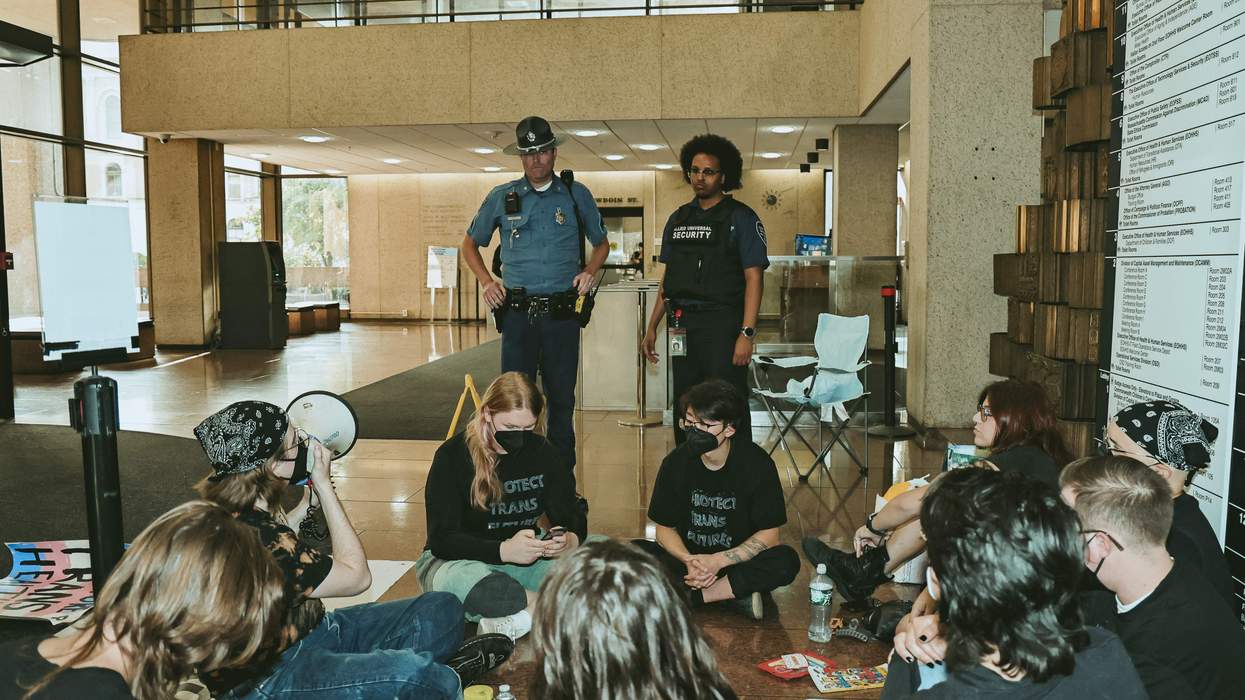
LGBTQ+ people are significantly more likely to report being stopped, detained, and falsely accused by law enforcement compared to non-LGBTQ+ people, and it's keeping them from calling for help.
A recent review of more than 25 years of research on interactions between LGBTQ+ people and law enforcement by the Williams Institute found that LGBTQ+ people were more likely than non-LGBTQ+ people to face mistreatment from police. LGBTQ+ people were more likely have been stopped (51 percent vs. 42 percent), searched (27 percent vs. 16 percent), arrested (20 percent vs. 14 percent), and held in custody (19 percent vs. 14 percent) over the course of their lives.
“Experiences of police mistreatment may discourage LGBTQ people from reporting crimes or engaging with law enforcement,” Joshua Arrayales, lead author and Law Fellow at the Williams Institute, said in a statement. “Reporting crimes is essential for accurate crime statistics, proper allocation of crime prevention resources, and support services that address the unique needs of LGBTQ survivors.”
Police still engage in tactics such as raids and entrapment, the report notes, leading to distrust between the community and law enforcement. Over one-fifth (21 percent) of LGBTQ+ people reported at least one police-initiated contact in the prior 12 months, compared to 15 percent of non-LGBTQ+ people. LGBQ people were nearly six times as likely as the general population (6 percent vs. 1 percent) to have been stopped by police in a public space.
Bisexual and transgender respondents were even more likely to report being stopped or detained by police, causing nearly half (46 percent) of trans people saying they would be reluctant to contact the police if they needed help, compared to one-third (33 percent) who would feel comfortable doing so.
LGBQ people felt similarly, with around 13 percent saying they did not call the police when they needed help. Almost one-fourth (22 percent) of LGBQ people said that they would not contact the police again, compared to 6 percent of the general population.
“Negative interactions with police affect LGBTQ people beyond the immediate incident,” said Christy Mallory, study author and Interim Executive Director and Legal Director at the Williams Institute. “Research has found associations between police violence and harassment and binge drinking, stress, depression, and other negative health outcomes.”