'%3E%3Cpath d='M16.3574 35.6519H12.9537L15.0491 18.8873L16.3574 35.6519ZM30.4229 54.0093L22.309 0.994385H7.91795L0 54.0093H10.6634L11.5802 46.3855H17.4014L17.9914 54.0093H30.4229Z' fill='%23971B20'/%3E%3Cpath d='M48.2073 41.8813C48.2073 43.4049 47.4892 44.0011 46.1144 44.0011H43.7595V11.0687H46.1144C47.4892 11.0687 48.2073 11.6636 48.2073 13.1885V41.8813ZM59.5273 43.6695V11.3326C59.5273 3.71323 53.5729 0.994385 47.8157 0.994385H31.7213V54.0093H47.8157C53.5729 54.0093 59.5273 51.29 59.5273 43.6695Z' fill='%23971B20'/%3E%3Cpath d='M90.183 0.994385H78.6039L75.0711 30.6157L71.9955 0.994385H59.4346L69.2474 54.0093H80.373L90.183 0.994385Z' fill='%23971B20'/%3E%3Cpath d='M107.063 42.3448C107.063 43.7359 105.951 44.5974 104.643 44.5974C103.269 44.5974 102.157 43.7359 102.157 42.3448V12.658C102.157 11.2676 103.269 10.4058 104.643 10.4058C105.951 10.4058 107.063 11.2676 107.063 12.658V42.3448ZM119.233 43.2723V11.7312C119.233 6.36384 112.952 -3.8147e-06 104.643 -3.8147e-06C96.2667 -3.8147e-06 89.9867 6.36384 89.9867 11.7312V43.2723C89.9867 48.6393 96.2667 55 104.643 55C112.952 55 119.233 48.6393 119.233 43.2723Z' fill='%23971B20'/%3E%3Cpath d='M150.976 43.9349V33.7309H139.069V42.3448C139.069 43.7359 137.957 44.5974 136.582 44.5974C135.076 44.5974 133.964 43.7359 133.964 42.3448V12.658C133.964 11.2676 135.076 10.4058 136.582 10.4058C137.957 10.4058 139.069 11.2676 139.069 12.658V21.2723H150.976V11.0687C150.976 5.70107 145.283 -3.8147e-06 136.582 -3.8147e-06C127.75 -3.8147e-06 121.796 5.70107 121.796 11.0687V43.9349C121.796 49.3022 127.75 55 136.582 55C145.283 55 150.976 49.3022 150.976 43.9349Z' fill='%23971B20'/%3E%3Cpath d='M167.478 35.6519H164.076L166.17 18.8873L167.478 35.6519ZM181.544 54.0093L173.432 0.994385H159.037L151.123 54.0093H161.785L162.704 46.3855H168.523L169.114 54.0093H181.544Z' fill='%23971B20'/%3E%3Cpath d='M205.412 10.4058V0.994385H177.081V10.4058H185.392V54.0093H197.428V10.4058H205.412Z' fill='%23971B20'/%3E%3Cpath d='M230.002 54.0093V43.9349H218.914V31.8746H226.635V21.8028H218.914V10.4058H230.002V0.994385H206.875V54.0093H230.002Z' fill='%23971B20'/%3E%3C/g%3E%3Cdefs%3E%3CclipPath id='clip0_260_7080'%3E%3Crect width='230' height='55' fill='white'/%3E%3C/clipPath%3E%3C/defs%3E%3C/svg%3E)

This story originally appeared on Them.
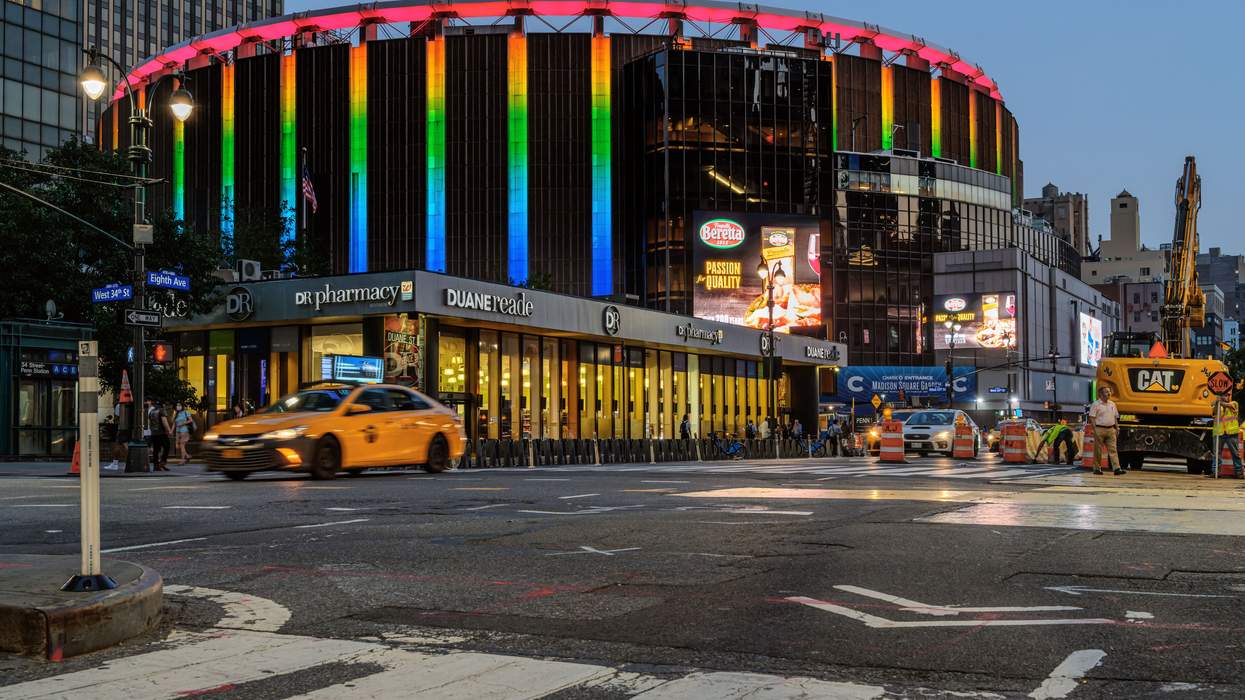
After Wired published a story earlier this month alleging that Madison Square Garden kept an ongoing database that categorized nearly 100 celebrities as “LGBTQIA,” the venue is now suing the tech outlet as well as the writer, Noah Shachtman, who led the reporting.
Madison Square Garden Entertainment Corp., the entity that owns the venue, filed a lawsuit in the New York State Supreme Court in Manhattan on July 16 against Wired, Shachtman, co-writer Maddy Varner, and Wired global editorial director Katie Drummond. The suit explicitly denounces Wired’s reporting, alleging that Wired “combed the dark web, obtained data stolen from MSG by an extortionist hacking group, and cherry-picked fragments of that data to manufacture a false narrative portraying MSG as targeting the LGBTQIA community for discriminatory purposes.”
The lawsuit specifically called out Wired’s July 9 story “Madison Square Garden Kept a List of Gay Celebrities” and said that the implication that the MSG Entertainment is anti-LGBTQ+ is false, calling the reporting “shockingly unethical conduct,” and alleging that the defendants “should be held accountable for their inexcusable action.”
“Nothing could be further from the truth — MSG is a fervent supporter of the LGBTQIA community with a long history of inclusion, not exclusion,” the lawsuit reads.
Per Wired’s reporting, which was based off a database leaked by hacker collective Shiny Hunters, the venue allegedly kept a list of LGBTQ+ celebrities who might visit the venue, including a specific label indicating their gender identity or sexual orientation. The database of venue VIPs allegedly included labels such as “low risk,” for people such as Edie Falco and Ben Stiller, “medium risk” for rappers such as Fat Joe, and “high risk” for rapper Lil Jon.
According to Wired, the database included the label “LGBTQIA” for celebs such as Ricky Martin, Phoebe Bridgers, transgender Geese guitarist Emily Green, and bisexual rapper Ice Spice, who was at the venue earlier this month for Taylor Swift’s wedding.
Wired’s reporting on the database comes after an April report, also lead-authored by Shachtman, alleging that MSG tracked a trans woman’s movement through the venue, including bathroom breaks, down to the second.
MSG’s lawsuit alleges that Wired’s subsequent promotion of the article after publication was done “without concern for the truth” and with “intent to cause maximal public impact.”
“With the apparent permission of its parent company, Wired has published several false articles about MSG that are more focused on manipulating information to fit a salacious story than with reporting the facts,” the lawsuit reads.
In the lawsuit, MSG Entertainment says that it gathered names of LGBTQ+ celebrities only to extend invitations to LGBTQ+ events, as well as identify “sales and sponsorship opportunities,” as well as to make charitable donations.
“Defendants knew there was no nefarious ‘list’ of gay celebrities, and Defendants knew that the stolen data contained dozens of fields per customer—including mundane fields such as address, phone number, and dietary restrictions—used for relationship management purposes, not discrimination.”
Wired stood by its “accurate reporting” in a statement on social media.
“We stand by this reporting, and plan to vigorously defend it against this baseless and ridiculous lawsuit,” the outlet wrote.
A statement from WIRED leadership. pic.x.com/06d9qTD9dy
— WIRED (@WIRED) July 17, 2026
“We look forward to continuing our coverage of MSG, and on billionaire James Dolan’s use of technology across his entertainment empire,” Wired wrote on X. “It’s one part of our wider mission and the critical job of journalists, now more than ever: holding power to account.”
Per the lawsuit, MSG is seeking a correction or retraction of the article, along with punitive damages at trial.
Get the best of what’s queer. Sign up for Them’s newsletters.