'%3E%3Cpath d='M16.3574 35.6519H12.9537L15.0491 18.8873L16.3574 35.6519ZM30.4229 54.0093L22.309 0.994385H7.91795L0 54.0093H10.6634L11.5802 46.3855H17.4014L17.9914 54.0093H30.4229Z' fill='%23971B20'/%3E%3Cpath d='M48.2073 41.8813C48.2073 43.4049 47.4892 44.0011 46.1144 44.0011H43.7595V11.0687H46.1144C47.4892 11.0687 48.2073 11.6636 48.2073 13.1885V41.8813ZM59.5273 43.6695V11.3326C59.5273 3.71323 53.5729 0.994385 47.8157 0.994385H31.7213V54.0093H47.8157C53.5729 54.0093 59.5273 51.29 59.5273 43.6695Z' fill='%23971B20'/%3E%3Cpath d='M90.183 0.994385H78.6039L75.0711 30.6157L71.9955 0.994385H59.4346L69.2474 54.0093H80.373L90.183 0.994385Z' fill='%23971B20'/%3E%3Cpath d='M107.063 42.3448C107.063 43.7359 105.951 44.5974 104.643 44.5974C103.269 44.5974 102.157 43.7359 102.157 42.3448V12.658C102.157 11.2676 103.269 10.4058 104.643 10.4058C105.951 10.4058 107.063 11.2676 107.063 12.658V42.3448ZM119.233 43.2723V11.7312C119.233 6.36384 112.952 -3.8147e-06 104.643 -3.8147e-06C96.2667 -3.8147e-06 89.9867 6.36384 89.9867 11.7312V43.2723C89.9867 48.6393 96.2667 55 104.643 55C112.952 55 119.233 48.6393 119.233 43.2723Z' fill='%23971B20'/%3E%3Cpath d='M150.976 43.9349V33.7309H139.069V42.3448C139.069 43.7359 137.957 44.5974 136.582 44.5974C135.076 44.5974 133.964 43.7359 133.964 42.3448V12.658C133.964 11.2676 135.076 10.4058 136.582 10.4058C137.957 10.4058 139.069 11.2676 139.069 12.658V21.2723H150.976V11.0687C150.976 5.70107 145.283 -3.8147e-06 136.582 -3.8147e-06C127.75 -3.8147e-06 121.796 5.70107 121.796 11.0687V43.9349C121.796 49.3022 127.75 55 136.582 55C145.283 55 150.976 49.3022 150.976 43.9349Z' fill='%23971B20'/%3E%3Cpath d='M167.478 35.6519H164.076L166.17 18.8873L167.478 35.6519ZM181.544 54.0093L173.432 0.994385H159.037L151.123 54.0093H161.785L162.704 46.3855H168.523L169.114 54.0093H181.544Z' fill='%23971B20'/%3E%3Cpath d='M205.412 10.4058V0.994385H177.081V10.4058H185.392V54.0093H197.428V10.4058H205.412Z' fill='%23971B20'/%3E%3Cpath d='M230.002 54.0093V43.9349H218.914V31.8746H226.635V21.8028H218.914V10.4058H230.002V0.994385H206.875V54.0093H230.002Z' fill='%23971B20'/%3E%3C/g%3E%3Cdefs%3E%3CclipPath id='clip0_260_7080'%3E%3Crect width='230' height='55' fill='white'/%3E%3C/clipPath%3E%3C/defs%3E%3C/svg%3E)
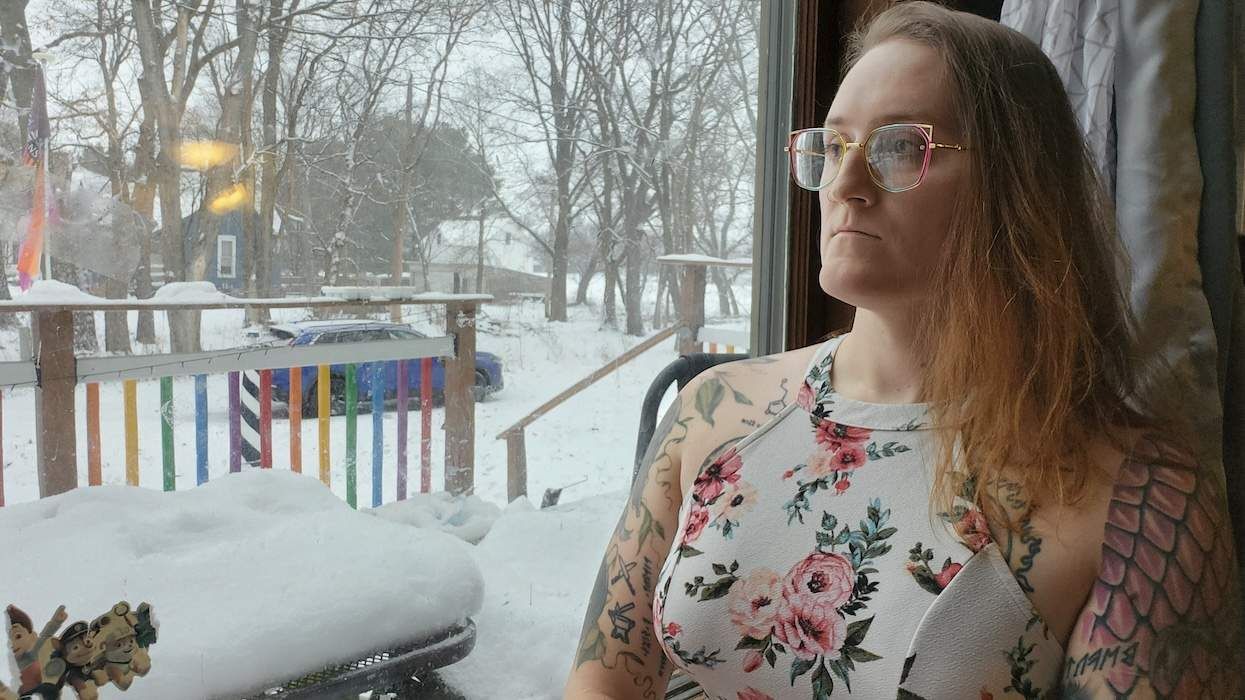

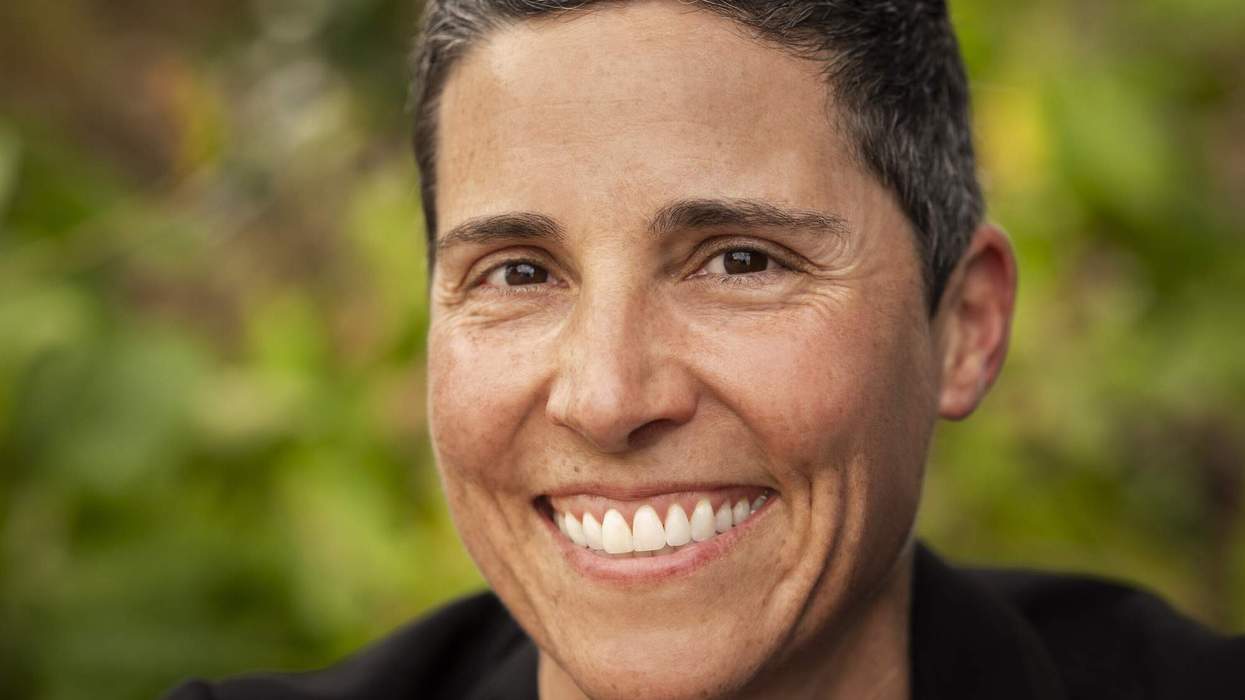
LeAnne Withrow always wanted to be in the military, like her father and grandfather, and she fulfilled that ambition by serving as a soldier in the Illinois National Guard from 2010 to 2023, receiving many honors for her work. Now she’s a civilian employee of the Guard, still being recognized for outstanding service, but a Trump administration policy is making her life difficult by restricting where she can perform basic bodily functions.
Keep up with the latest in LGBTQ+ news and politics. Sign up for The Advocate's email newsletter.
Withrow is transgender, having come out about a decade ago, and until recently, she could use the women’s restrooms at Camp Lincoln in Springfield, Illinois, where she is stationed, and the 12 other Guard facilities she visits as part of her job as lead military and family readiness specialist. That all changed when Donald Trump issued his executive order titled “Defending Women from Gender Ideology Extremism and Restoring Biological Truth to the Federal Government,” which, among other thing,s directs federal agencies to exclude trans and intersex people from single-sex spaces that align with their gender identity.
Withrow filed a class action lawsuit in November against the Trump administration in U.S. District Court for the District of Columbia, contending that the exclusionary restroom policy violates Title VII of the Civil Rights Act of 1964, which prohibits sex discrimination in the workplace. In its 2020 ruling in Bostock v. Clayton County, the U.S. Supreme Court found that sex discrimination includes discrimination based on gender identity or sexual orientation.
It names as defendants numerous administration officials, including Defense Secretary Pete Hegseth, Secretary of State Marco Rubio, and Secretary of Homeland Security Kristi Noem. She is represented by Democracy Forward, the American Civil Liberties Union, the ACLU of D.C., and the ACLU of Illinois. She filed the suit after receiving no resolution from the complaints she filed with the Army National Guard Bureau Equal Opportunity Office and the Equal Employment Opportunity Commission. She didn’t really expect satisfaction from those agencies, given that they’re under the Trump administration.
Related: Lawsuit challenges EEOC's failure to investigate anti-transgender discrimination
“I think that it’s important to fight for what’s right, even if it becomes more difficult or inconvenient,” she tells The Advocate of why she brought the suit.
“It’s a question of human dignity, it’s a question of equal treatment under the law, and I was not raised to back down from either of those things,” she adds.
She’s “one of those oddballs” who didn’t join the military in order to get money for college or because she needed a job, Withrow says. “I really, truly wanted to give back to the United States and to my community, and the National Guard seemed like the best way to do that,” she explains. “I always wanted to serve, and it was the privilege of a lifetime to be able to serve in the National Guard for 13 years and do the things that I got to do there, meet the people that I met. But really, it was about service to others, which I think is an important thing for all of us to keep in mind and something we should dedicate a little bit of our time to every day.”
When Withrow took the military’s aptitude test, she scored in the 99th percentile, and the recruiter told her she could be an astronaut. But she chose to enter as a cook, “because it’s sort of the definition of serving others, right?” she says. Then she moved into public affairs and was a military photojournalist, and she eventually rose to the rank of staff sergeant and chief public affairs officer.
She participated in military exercises in South Korea, Jordan, Alaska, and elsewhere. She served at the 2012 NATO Summit in Chicago and Guantanamo Bay in Cuba in 2016. She helped with flood duty in 2019 with Operation Ready Response, with civil disturbance missions in Chicago, and COVID-related operations at the height of the pandemic.
As a public affairs officer, “I got to tell people’s stories,” she says. “I got to tell the stories of the guy filling sandbags on a levee. I got to tell stories about other food service professionals and infantrymen and artillerymen and medics and surgeons and all these other people doing amazing things that maybe weren’t getting the spotlight.”
She has received numerous honors, including the Meritorious Service Medal, Army Commendation Medal, Joint Meritorious Unit Award, Army Achievement Medal, Army Reserve Component Achievement Medal, Global War on Terrorism Service Medal, and Illinois National Guard Abraham Lincoln Medal of Freedom.
Now she works in the State Family Programs Office, which assists service members, veterans, and their families with resources and referrals. As lead military and family readiness specialist, she oversees a dozen field offices, develops training programs, reviews all the casework that employees do, and gets directly involved in especially challenging or complex cases. She also interacts with National Guard commanders at all levels to ensure the readiness of soldiers and that those soldiers’ families are taken care of.
She never expected a policy like Trump’s. She came out as trans in 2016, when Ash Carter, Defense secretary under President Barack Obama, lifted the ban on open service by trans troops. “I thought we were past this as a country, as an organization,” she says. A year later, Trump, in his first term, tweeted that the ban would return, and Withrow waited “in a weird sort of limbo” to see if she’d be grandfathered in, and she was. After the ban was lifted again by President Joe Biden in 2021, she thought all would be well. Late last year, she realized that if the election went a certain way, there would be restrictions again. “I didn’t really think it would get to this point, at least not this quickly,” she says, adding that the Trump policy was “an incredibly low blow.”
“I immediately started strategizing about how I was going to push back on this because it’s never the wrong time to do the right thing, and letting a policy that is so obviously discriminatory go unchallenged is not the right thing to do,” Withrow says.
Related: Transgender Air Force members sue Trump administration over revoked retirements
As a civilian employee, she’s not subject to Trump’s renewed trans military ban, although she is helping trans service members plan their transition out of the military. But the restroom restrictions are far more than an inconvenience. There is only one single-user restroom she can use at work, and none of the other buildings at Camp Lincoln have single-user restrooms. She worries about being called into an urgent meeting at any of them. Of the 12 National Guard facilities she must visit to supervise the work of other department employees, eight do not have any single-user restrooms.
To avoid having to use the restroom at work, Withrow skips breakfast and often lunch or eats only a granola bar or a spoonful of peanut butter, except on special occasions or when she’s reasonably sure she won’t be called away from her building. Most days she drinks a single cup of coffee and as little water as possible, leading to dehydration. “I know that I have to operate within the bounds of the policies as they currently exist, and I intend to do my job well and fully, and so in order to do that, I’m making that sacrifice,” she says.
“It wears on you,” she adds. “Imagine being a manager at a local McDonald’s and you find out that the CEO of McDonald’s personally dislikes people like you. It’s deeply uncomfortable and it sort of makes it feel like you’re walking on eggshells all the time because I feel the compulsion to be the model minority.”
“I think that the Family Programs Office has an incredibly important task, and that’s taking care of soldiers and their families and veterans, and that mission is the thing I would like to be focusing all my attention on,” she continues. “So it’s frustrating to realize that I have to logistically plan out which bathroom am I going to be allowed to use today, where I’m at, at a given time, instead of just focusing on that mission.”
“I need to be on top of everything all the time, for risk of people saying, look, see, trans people can’t cut it here,” she notes. “It's a really stressful environment, even being surrounded by people that I do for the most part trust and like, and I’ve worked with many of them for many years. You never really know, right?”
While going to court is not an easy thing to do, Withrow says, often doing the right thing is not easy — and she is optimistic about the outcome.
“I sort of, in the back of my mind, always believe that the good guy is going to win,” she says. “And I think we’re the good guy in this. … And I believe the law is on our side on this. I think the team that I’m working with is amazing.”
“I’m optimistic because I think we’re doing the right thing.”