'%3E%3Cpath d='M16.3574 35.6519H12.9537L15.0491 18.8873L16.3574 35.6519ZM30.4229 54.0093L22.309 0.994385H7.91795L0 54.0093H10.6634L11.5802 46.3855H17.4014L17.9914 54.0093H30.4229Z' fill='%23971B20'/%3E%3Cpath d='M48.2073 41.8813C48.2073 43.4049 47.4892 44.0011 46.1144 44.0011H43.7595V11.0687H46.1144C47.4892 11.0687 48.2073 11.6636 48.2073 13.1885V41.8813ZM59.5273 43.6695V11.3326C59.5273 3.71323 53.5729 0.994385 47.8157 0.994385H31.7213V54.0093H47.8157C53.5729 54.0093 59.5273 51.29 59.5273 43.6695Z' fill='%23971B20'/%3E%3Cpath d='M90.183 0.994385H78.6039L75.0711 30.6157L71.9955 0.994385H59.4346L69.2474 54.0093H80.373L90.183 0.994385Z' fill='%23971B20'/%3E%3Cpath d='M107.063 42.3448C107.063 43.7359 105.951 44.5974 104.643 44.5974C103.269 44.5974 102.157 43.7359 102.157 42.3448V12.658C102.157 11.2676 103.269 10.4058 104.643 10.4058C105.951 10.4058 107.063 11.2676 107.063 12.658V42.3448ZM119.233 43.2723V11.7312C119.233 6.36384 112.952 -3.8147e-06 104.643 -3.8147e-06C96.2667 -3.8147e-06 89.9867 6.36384 89.9867 11.7312V43.2723C89.9867 48.6393 96.2667 55 104.643 55C112.952 55 119.233 48.6393 119.233 43.2723Z' fill='%23971B20'/%3E%3Cpath d='M150.976 43.9349V33.7309H139.069V42.3448C139.069 43.7359 137.957 44.5974 136.582 44.5974C135.076 44.5974 133.964 43.7359 133.964 42.3448V12.658C133.964 11.2676 135.076 10.4058 136.582 10.4058C137.957 10.4058 139.069 11.2676 139.069 12.658V21.2723H150.976V11.0687C150.976 5.70107 145.283 -3.8147e-06 136.582 -3.8147e-06C127.75 -3.8147e-06 121.796 5.70107 121.796 11.0687V43.9349C121.796 49.3022 127.75 55 136.582 55C145.283 55 150.976 49.3022 150.976 43.9349Z' fill='%23971B20'/%3E%3Cpath d='M167.478 35.6519H164.076L166.17 18.8873L167.478 35.6519ZM181.544 54.0093L173.432 0.994385H159.037L151.123 54.0093H161.785L162.704 46.3855H168.523L169.114 54.0093H181.544Z' fill='%23971B20'/%3E%3Cpath d='M205.412 10.4058V0.994385H177.081V10.4058H185.392V54.0093H197.428V10.4058H205.412Z' fill='%23971B20'/%3E%3Cpath d='M230.002 54.0093V43.9349H218.914V31.8746H226.635V21.8028H218.914V10.4058H230.002V0.994385H206.875V54.0093H230.002Z' fill='%23971B20'/%3E%3C/g%3E%3Cdefs%3E%3CclipPath id='clip0_260_7080'%3E%3Crect width='230' height='55' fill='white'/%3E%3C/clipPath%3E%3C/defs%3E%3C/svg%3E)


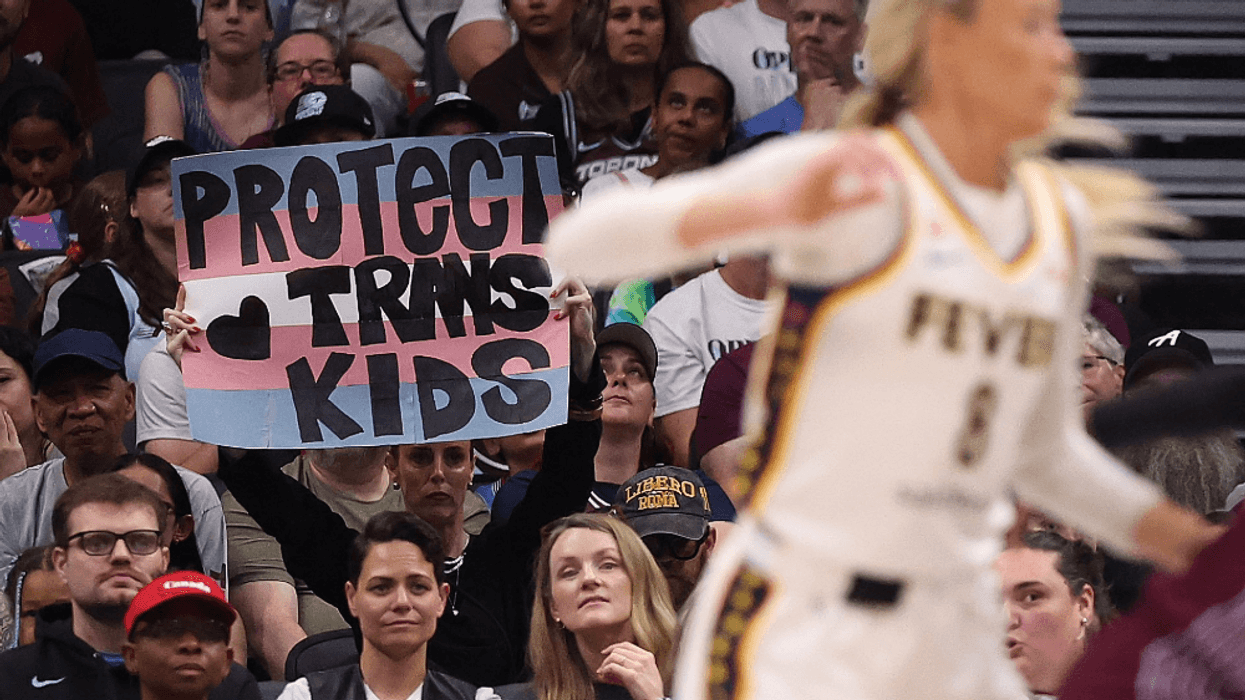
The U.S. Supreme Court appears to side with states with anti-trans laws barring transgender women and girls from participating in school sports. But how remains to be seen.
The cases, West Virginia v. BPJ and Little v. Hecox, hold that state laws in West Virginia and Idaho violate both Title IX and the Constitution’s Equal Protection clause.
Lindsay Hecox is a trans woman student at Boise State University who is the lead plaintiff in a suit against Idaho’s law, filed shortly after Gov. Brad Little signed it in 2020. She sought to try out for the women’s track and cross-country teams at the university. When she became eligible to try out, she didn’t make the team, but she has competed at the club level. Last year, she dropped her suit for personal reasons, including the death of her father, and urged the Supreme Court not to hear it, but it has taken up the case anyway.
Related: How Runner Lindsay Hecox Is Fighting for Trans Athletes
In West Virginia, trans girl Becky Pepper-Jackson filed suit against that state’s ban shortly after it was enacted in 2021. She is now 15 and a member of the girls’ track and field team at her school.
Related: Meet the West Virginian Middle School Student Challenging a Trans Sports Ban in Federal Court
Even though lower courts have consistently ruled in favor of trans athletes who had legally challenged the laws, Tuesday's three-plus hours of oral arguments indicate the high court will not continue that trend.
More than half of states have laws banning trans girls and women from school sports teams that align with their gender identity.
Conservative justices, who hold a majority on the court, seemed to agree with state laws in Idaho and West Virginia that prohibit trans women and girls from playing on women's sports teams. They seemed ready, according to the Associated Press, to rule that the anti-trans laws do not violate the Constitution or the Title IX law, which bans discrimination in educational settings based on sex.
The three liberal judges attempted to steer the court into a narrow ruling that would have allowed the trans athletes at the heart of the cases to participate, the AP reports.
Shannon Minter, the legal director for the National Center for LGBTQ Rights, told the 19th that he was hopeful in the questions asked by the justices.
“I was encouraged,” Minter told the outlet. “I think a majority of the justices seem to recognize that if … individual unfairness can be challenged in an equal protection case, that these girls would win.”
“Whatever they rule in this case, they do not seem at all inclined to try to impose a ban on the entire country,” he explained. “They seem very committed to leaving the door open for states that want to permit transgender girls to play on girls’ teams.”
Rulings in the two cases are expected at the end of the court term, which is in June.
Leading up to Tuesday, Lambda Legal CEO Kevin Jennings told The Advocate he is “to be 100 percent honest, anxious” about how the high court will rule.
“This is not the friendliest Supreme Court to LGBTQ+ rights,” he said. “But we will take a stand for what’s right, and the chips will fall where they may.”
“Our schools should be pillars of fairness and equality, where all kids can try new things, make friends, and feel free to be themselves. But as today’s oral arguments made clear, there is nothing fair about excluding kids from school sports teams simply for who they are," Human Rights Campaign president Kelley Robinson said in a statement on Tuesday. "There is nothing fair about targeting children and stripping away opportunities for them to learn, grow and bond with their peers simply because of dislike or disapproval of who they are."
She went on to say, “Anti-transgender sports bans do not protect women. Instead, they police gender for everyone and put all women and girls at risk."