'%3E%3Cpath d='M16.3574 35.6519H12.9537L15.0491 18.8873L16.3574 35.6519ZM30.4229 54.0093L22.309 0.994385H7.91795L0 54.0093H10.6634L11.5802 46.3855H17.4014L17.9914 54.0093H30.4229Z' fill='%23971B20'/%3E%3Cpath d='M48.2073 41.8813C48.2073 43.4049 47.4892 44.0011 46.1144 44.0011H43.7595V11.0687H46.1144C47.4892 11.0687 48.2073 11.6636 48.2073 13.1885V41.8813ZM59.5273 43.6695V11.3326C59.5273 3.71323 53.5729 0.994385 47.8157 0.994385H31.7213V54.0093H47.8157C53.5729 54.0093 59.5273 51.29 59.5273 43.6695Z' fill='%23971B20'/%3E%3Cpath d='M90.183 0.994385H78.6039L75.0711 30.6157L71.9955 0.994385H59.4346L69.2474 54.0093H80.373L90.183 0.994385Z' fill='%23971B20'/%3E%3Cpath d='M107.063 42.3448C107.063 43.7359 105.951 44.5974 104.643 44.5974C103.269 44.5974 102.157 43.7359 102.157 42.3448V12.658C102.157 11.2676 103.269 10.4058 104.643 10.4058C105.951 10.4058 107.063 11.2676 107.063 12.658V42.3448ZM119.233 43.2723V11.7312C119.233 6.36384 112.952 -3.8147e-06 104.643 -3.8147e-06C96.2667 -3.8147e-06 89.9867 6.36384 89.9867 11.7312V43.2723C89.9867 48.6393 96.2667 55 104.643 55C112.952 55 119.233 48.6393 119.233 43.2723Z' fill='%23971B20'/%3E%3Cpath d='M150.976 43.9349V33.7309H139.069V42.3448C139.069 43.7359 137.957 44.5974 136.582 44.5974C135.076 44.5974 133.964 43.7359 133.964 42.3448V12.658C133.964 11.2676 135.076 10.4058 136.582 10.4058C137.957 10.4058 139.069 11.2676 139.069 12.658V21.2723H150.976V11.0687C150.976 5.70107 145.283 -3.8147e-06 136.582 -3.8147e-06C127.75 -3.8147e-06 121.796 5.70107 121.796 11.0687V43.9349C121.796 49.3022 127.75 55 136.582 55C145.283 55 150.976 49.3022 150.976 43.9349Z' fill='%23971B20'/%3E%3Cpath d='M167.478 35.6519H164.076L166.17 18.8873L167.478 35.6519ZM181.544 54.0093L173.432 0.994385H159.037L151.123 54.0093H161.785L162.704 46.3855H168.523L169.114 54.0093H181.544Z' fill='%23971B20'/%3E%3Cpath d='M205.412 10.4058V0.994385H177.081V10.4058H185.392V54.0093H197.428V10.4058H205.412Z' fill='%23971B20'/%3E%3Cpath d='M230.002 54.0093V43.9349H218.914V31.8746H226.635V21.8028H218.914V10.4058H230.002V0.994385H206.875V54.0093H230.002Z' fill='%23971B20'/%3E%3C/g%3E%3Cdefs%3E%3CclipPath id='clip0_260_7080'%3E%3Crect width='230' height='55' fill='white'/%3E%3C/clipPath%3E%3C/defs%3E%3C/svg%3E)
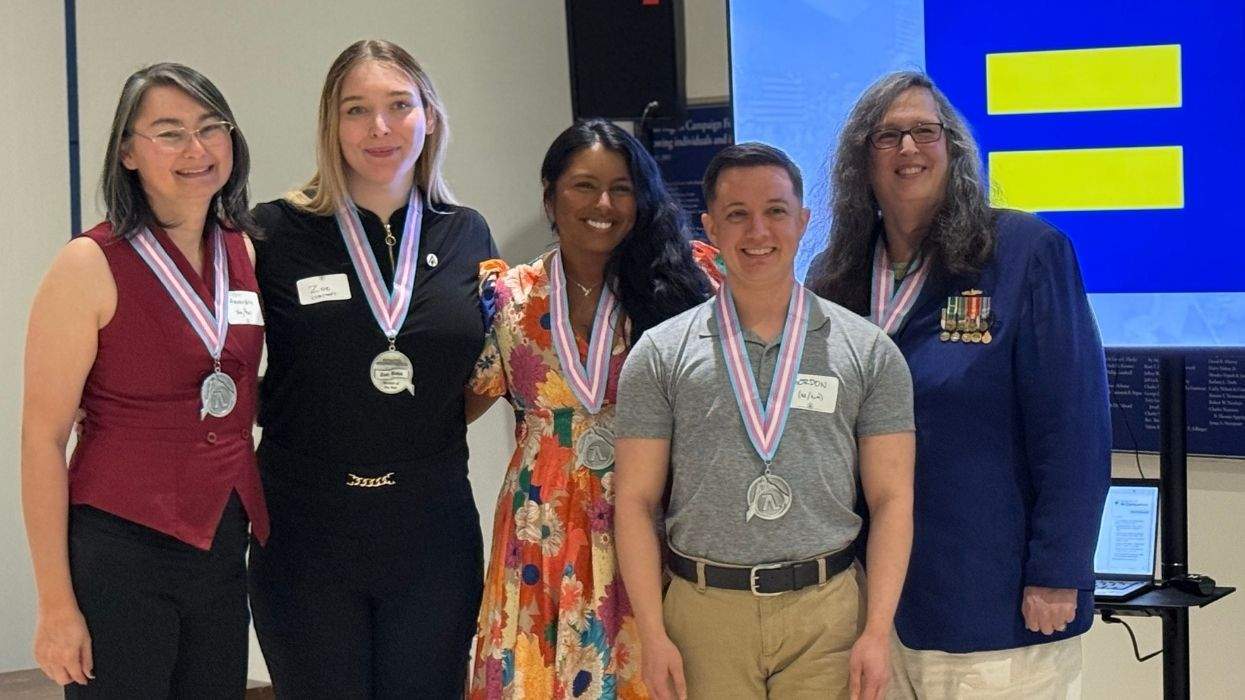
On Saturday, a room at the Human Rights Campaign headquarters in Washington, D.C., filled with transgender service members, veterans, allies, and advocates for SPARTA Pride's annual Albert Cashier Awards. The ceremony honors those who have fought for transgender military service, named after a trans Civil War soldier who served in the 95th Illinois Infantry, fought in 40 battles, and lived as a man until his death in 1915.
Keep up with the latest in LGBTQ+ news and politics. Sign up for The Advocate's email newsletter.
The evening began with instructions that have become a quiet ritual of survival: if you don't want to be photographed, wear a red dot on your nametag.
It is the second Transgender Day of Visibility season, which falls this Tuesday, under President Donald Trump's administration, actively working to remove trans people from military service. And it is playing out while the United States is engaged in active military conflict with Iran, a fact that hung over the evening with particular weight, given that some of the people being honored should, by their own account, be deployed right now.
Related: Trans service members have always been part of U.S. history
Related: Pentagon spent more on lobster in one month than it did on trans health care all year
The ceremony arrived on the heels of a week of whiplash. Just days earlier, the Justice Department asked a federal court to dismiss most of the plaintiffs in Logan Ireland et al. v. United States, arguing that because the service members were still on active duty and receiving pay, they had not yet suffered legal harm.
The case centers on a pattern that has come to define the administration’s approach to trans troops: promise, then revoke; approve, then rescind. The Air Force had granted early retirement orders to trans service members with 15 to 18 years of service, many of whom had already purchased homes and enrolled children in schools, before an August 2025 memo nullified those approvals without a case-by-case review.
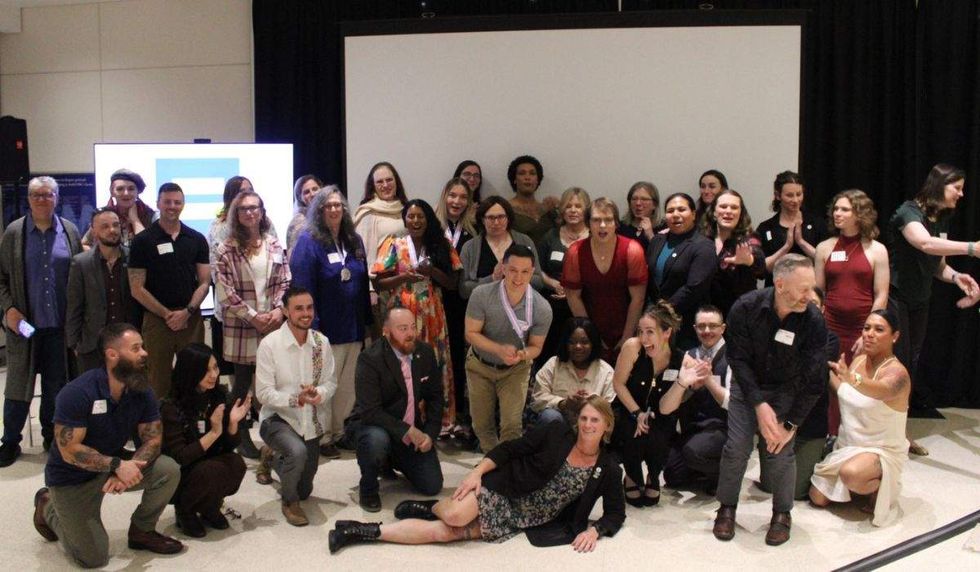 A group of trans service members and allies at the Albert Cashier Awards.Sylis McHenry
'Our new battlefield is in the courtroom'
Air Force Master Sgt. Logan Ireland is, depending on the day, a decorated special agent working in intelligence, a lead plaintiff in federal litigation, and a man who learned last summer, from a social media post, that his retirement orders had been voided. He flew from Honolulu for the ceremony.
"I should be out there with my guys right now overseas," he told The Advocate. "They are now without their leader. They are one less person in the fight with them." When asked how it made sense to remove trained personnel while the country is at war with Iran, his answer was blunt: "It doesn't."
Related: DOJ hedges on Trump's anti-trans views while defending military ban in federal appeals court
Related: Meet the transgender Army lieutenant who is challenging Donald Trump's military ban
"Right now, our new battlefield is in the courtroom," he said. "That's how we're going to get our stories to be heard and our fight to move forward."
His wife, Laila Ireland, a former Army sergeant and trans woman of color who was forced out for being trans in 2015, emceed the evening and described the gathering in more personal terms. In an interview with The Advocate, she spoke about what it means to mark joy in the middle of a crisis.
"Right now, because we are experiencing these really dark moments, remembering the moments that we can celebrate is going to be important, because that's what's going to carry us through," she said. "If we forget those moments, then we cease to exist as a community." She also reflected on the identity she has held onto since leaving the Army, one that she said never required a uniform to be real. "My uniform has come off, but my commitment to serve is still going to stay with me," she said. It is a mantra, she told The Advocate, that has carried her since the day she was forced to hang up her uniform and one she hopes those now facing separation will find their own version of.
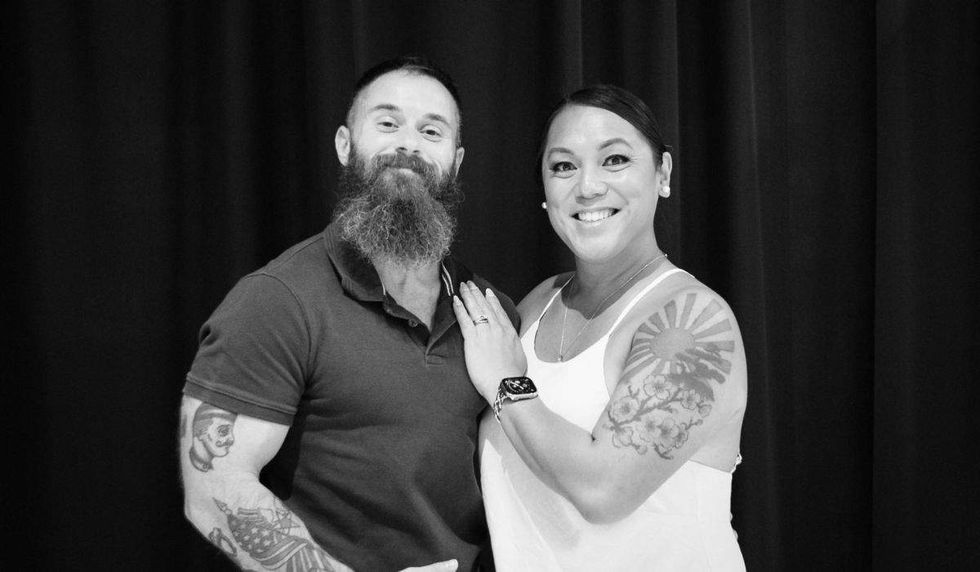 Master Sergeant Logan Ireland and his wife, former Army sergeant Laila Ireland.Sylis McHenry
'This fight is so much bigger than us'
Army Major Kara Corcoran, SPARTA Pride's newly installed executive director, placed the moment in a broader context. "This whole fight is so much bigger than us," she told The Advocate. "It's way past just trans people. It's an attack on women. It's an attack on people of color."
On the administration’s rationale for readiness, she pushed back sharply. "You have people that are ready, who have actually proven through studies to be less likely to have mental health or physical problems because they transitioned. You're taking a healthier population that's also optimized their performance,” she said.
A recent review of 58 empirical studies, published in the International Journal of Transgender Health, found no evidence that transgender service members harm unit cohesion, cost more than comparable medical populations, or are less deployable than their peers. The research did not appear in any of the administration’s filings.
Standing before the room, Corcoran invoked the Buffalo Soldiers, women who served in the Revolutionary War, and gay service members discharged after World War II. "The military has been the thing that has forged civil rights in America," she said, "because it is the quintessential place where you can show that it does not matter what the color of your skin is, what your religion is, what your sexual orientation or sex identity is."
The awards
The Lifetime Impact Award went to Paula Neira, a Naval Academy graduate who was forced to leave the Navy in 1991 and later became the founding Clinical Program Director of the Johns Hopkins Center for Transgender Health. Accepting the award, she spoke with rawness about leaving a calling and understanding it didn't end with the uniform. "The end of my Navy career was a course change," she said. "It wasn't the end of the voyage."
To those facing separation, she said, "You did not fail. Our country, our service, your chain of command failed you."
The Courage Under Fire Award went to retired Air Force Master Sergeant Alexandria Holder, who was investigated and stripped of her security clearance after speaking to the media about the ban. "I fight because I believe in it," she told the room. "I believe in this community."
Other honorees included Navy veteran Abigail Heffernan, who helped more than 20 separating trans service members file VA disability claims free of charge; psychologist Dr. Brandy Hellman, who spent a decade coordinating care for trans service members at Walter Reed; and Army Captain Gordon Herrero, who built militarytransrights.org, a coalition resource hub, while simultaneously attending the Naval Postgraduate School, commanding a company in Korea, and serving as a plaintiff in Talbott v. Trump, against the trans military ban.
"Some people cope with these times by disconnecting," Herrero told the audience. "I have been coping by staying in the mix of things and being close to the light."
Outside, discharge notices were going out. Court filings were accumulating. And somewhere in the Indo-Pacific, teams were doing their work one person short.
"They're putting their boots on one day at a time and still doing the damn job," Logan Ireland said.